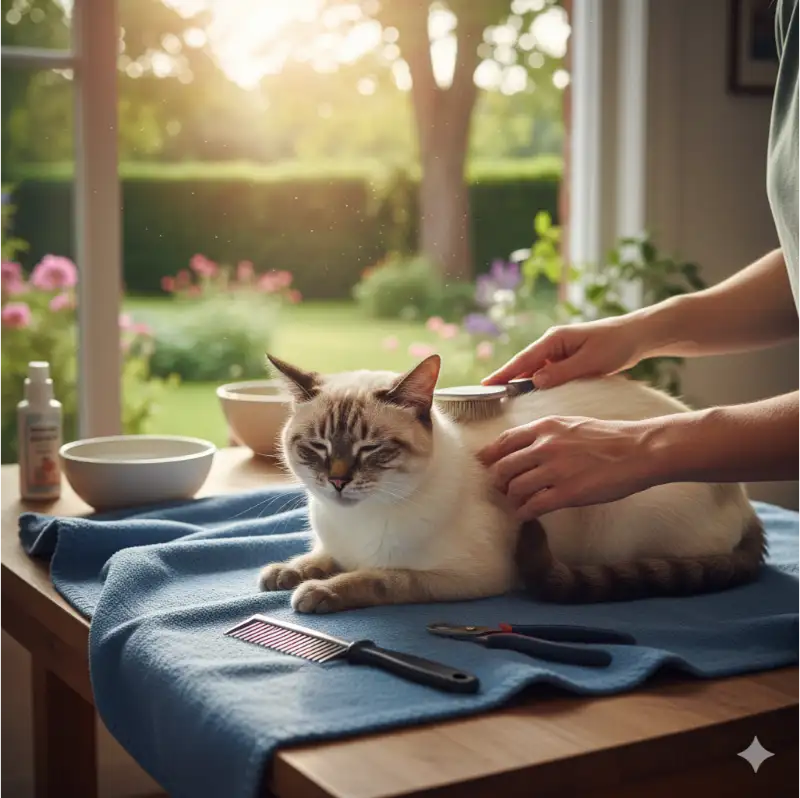
Many people believe Siamese cats do not need grooming because they have short hair. This is only partly true. Siamese cats have a short, fine coat that lies close to the body. It does not mat easily like long-haired breeds. However, short hair does not mean no care. Regular grooming keeps their skin healthy, reduces loose hair, and helps you notice early signs of health problems.
Siamese cats have very fine fur and very little undercoat. Because of this, their shedding can feel lighter than other cats, but they still shed. The loose hairs are small and often stick to fabric or float lightly in the air. Brushing once or twice a week helps remove this loose fur before your cat swallows it during self-grooming. This can reduce hairballs and improve coat shine.
Another reason grooming matters is bonding. Siamese cats are very social and attached to their owners. When grooming is done gently and calmly, it becomes a time of trust and connection. Many Siamese enjoy soft brushing if it is not forced. They often respond to your voice and tone, so speaking softly during grooming helps them stay relaxed.
Indoor Siamese usually stay cleaner than outdoor cats. Still, they collect dust, dander, and natural skin oils. Outdoor Siamese may need more frequent checks for dirt, small scratches, or parasites. Even if your cat looks clean, routine grooming allows you to check ears, eyes, nails, and skin for problems before they become serious.
Here is a simple comparison to help you understand their coat:
| Feature | Siamese Cat | Typical Domestic Shorthair |
|---|---|---|
| Coat Type | Short, fine, close-lying | Short to medium |
| Undercoat | Very little | Moderate |
| Matting Risk | Very low | Low to moderate |
| Shedding | Moderate but light strands | Moderate |
In short, Siamese cats are low maintenance compared to long-haired breeds, but they still need a simple and steady grooming routine to stay healthy and comfortable.
The Essential Siamese Grooming Routine (Step-by-Step Overview)
A Siamese grooming routine does not need to be complicated. Simple care done regularly works best. The key is to keep sessions short and calm. Many Siamese do not like long handling, but they respond well to routine.
Brushing should be done once or twice a week. Use a soft brush or grooming mitt. Start by petting your cat with your hand first. This helps you check for bumps or skin changes. Brush gently in the direction of hair growth. Focus on the back, sides, and base of the tail. Be gentle around the belly and chest. If your cat’s tail starts flicking quickly or ears go flat, stop early.
Nail trimming is also important. Indoor Siamese cats often need nail trims every 2–4 weeks. Long nails can catch on fabric and cause pain. Trim only the sharp tip. Avoid cutting into the pink area inside the nail, called the quick. If your cat becomes stressed, trim one or two nails and continue later.
Ears and eyes should be checked weekly. Siamese ears are large and can collect dust. A small amount of light brown wax is normal. A strong smell, thick discharge, or redness is not normal. For eyes, gently wipe away small tears with a damp cotton pad. Never push anything deep into the ear canal.
Dental care is often forgotten. Siamese cats can be prone to dental issues. Brushing teeth with cat-safe toothpaste helps prevent plaque. If brushing is not possible, speak with your vet about safe alternatives. Watch for bad breath, drooling, or difficulty eating.
Bathing is rarely needed. Healthy Siamese cats groom themselves very well. Only bathe if your cat is very dirty, has gotten into something sticky, or your vet suggests it. Too many baths can dry out their skin.
Here is a quick overview of core tasks:
| Task | Why It Matters | Beginner Safety Tip |
|---|---|---|
| Brushing | Removes loose hair, spreads natural oils | Use light pressure |
| Nail Trimming | Prevents overgrowth and injury | Trim small amounts |
| Ear Check | Detects infection early | Never insert deep tools |
| Eye Wipe | Keeps eyes clean | Use soft damp cotton |
| Dental Care | Prevents gum disease | Use cat-safe products |
| Bathing | Removes heavy dirt only | Avoid frequent washing |
Grooming Frequency Guide for Siamese Cats
Many owners ask, “How often should I groom my Siamese?” The answer depends on age, health, and lifestyle. A kitten may need short training sessions. An adult indoor cat may need less frequent bathing but regular nail trims. A senior cat may need more brushing because older cats groom themselves less.
Brushing once or twice a week is usually enough. During seasonal shedding, you may notice more loose hair. In that case, brush three times a week. Do not brush daily unless needed. Over-brushing can irritate their thin skin.
Nail trimming is usually needed every 2–4 weeks. If you hear nails clicking on the floor, they are too long. Senior cats may need more frequent trims because they scratch less.
Ear and eye checks should be done weekly. Cleaning is only needed if you see buildup. Dental care should be done several times per week if possible, but even weekly brushing helps.
Bathing is rare. Many Siamese may only need one bath every few months, or none at all, unless they get dirty.
Here is a clear frequency guide:
| Grooming Task | Typical Frequency | Adjust If… |
|---|---|---|
| Brushing | 1–2 times per week | Increase during shedding |
| Nail Trimming | Every 2–4 weeks | If nails click or snag |
| Ear Check | Weekly | If wax buildup increases |
| Eye Wipe | As needed | If tear staining appears |
| Dental Care | 2–3 times weekly | Daily if plaque forms |
| Bathing | Rarely | Only if very dirty |
Handling & Stress: Grooming a Vocal or Sensitive Siamese
Siamese cats are known for being vocal. During grooming, they may meow loudly. Not all noise means fear. Sometimes they are just talking. It is important to watch body language, not only listen to sound.
If your cat’s tail moves slowly, they are likely calm. If the tail flicks quickly back and forth, they may be annoyed. Flat ears, wide eyes, growling, or skin twitching are signs you should stop. Ending the session early is better than forcing it.
Keep grooming sessions short, around 5–10 minutes. Choose a quiet room. Avoid grooming after playtime when your cat is too excited. Soft talking and gentle petting between steps help reduce stress.
Training kittens early makes grooming easier later. Touch their paws gently when they are young. Reward calm behavior. For nervous adult cats, break grooming into small parts. For example, brush today and trim nails tomorrow.
Here is a simple stress guide:
| Body Signal | What It Means | What You Should Do |
|---|---|---|
| Slow blinking | Relaxed | Continue gently |
| Fast tail flick | Irritated | Pause or stop |
| Ears flat | Stressed | End session |
| Growling | Warning | Stop immediately |
| Trying to leave | Overstimulated | Let them go |
If your Siamese becomes aggressive or impossible to handle, it is safer to ask a professional groomer or veterinarian for help.
Common Siamese Grooming Mistakes & When to Call a Professional
One common mistake is over-bathing. Because Siamese have short hair, owners may think frequent baths keep them extra clean. In reality, too many baths remove natural oils and cause dry skin.
Another mistake is over-brushing. Their skin is thin. Harsh brushing can cause redness or small scratches. Gentle and limited brushing works best.
Cutting nails too short is also common. Always trim only the sharp tip. If you accidentally cause bleeding, stay calm and use styptic powder if available. If bleeding does not stop, contact a vet.
Some owners clean ears too deeply. Never push cotton swabs into the ear canal. This can cause injury. Only clean what you can see on the outer part.
Here is a quick safety guide:
| Situation | Safe at Home? | Action |
|---|---|---|
| Mild shedding | Yes | Brush weekly |
| Slight dirt on coat | Yes | Wipe with damp cloth |
| Minor nail bleeding | Sometimes | Apply styptic, monitor |
| Strong ear odor | No | See a vet |
| Skin wounds | No | Seek vet care |
| Severe aggression | No | Use professional help |
Grooming should feel safe for both you and your cat. If you ever feel unsure, asking a professional is the best choice.
For more detailed feline care advice from veterinary professionals, you can visit the American Veterinary Medical Association website: https://www.avma.org/resources-tools/pet-owners/petcare/cat-care

Ata Ur Rehman is the founder of Pet Age in Human Years Calculator, an educational platform that provides age conversion charts and lifespan guides for dogs, cats, birds, and other companion animals. His work focuses on helping pet owners understand how animal ages translate into human years using commonly accepted age conversion formulas and published lifespan averages.
The website compiles breed and species lifespan data from kennel clubs, breed organizations, and general animal lifespan studies to present simple and easy-to-understand guides for pet owners worldwide.
This website was created to centralize animal age conversion charts into one easy reference platform for pet owners.