The first cost most people think about is the price of getting a Siamese cat. This price can change a lot depending on where you get the cat. Some people adopt from shelters or rescue groups, while others buy from breeders. Both choices have different price ranges and things included in the cost.
Buying a Siamese kitten from a breeder usually costs more than adopting. Breeders often charge higher prices because they focus on genetics, health testing, and breed standards. Many responsible breeders include early vaccinations, health checks, and sometimes microchipping in the price. Show-quality kittens, which match strict breed standards, often cost more than pet-quality kittens that are meant only as companions.
Adopting a Siamese from a shelter or rescue is often less expensive. Adoption fees usually help cover basic medical care, such as vaccinations or spay and neuter surgery. Some rescue organizations also provide microchipping and health screenings before placing the cat into a new home. Adoption can also be a good choice for owners who want to help a cat in need while saving money on upfront costs.
It is important to be careful with prices that seem too low. Extremely cheap Siamese kittens may come from unhealthy breeding environments or may not be purebred at all. Owners sometimes face high vet bills later if the kitten has hidden health problems. Paying a reasonable upfront price from a trusted source can sometimes reduce future medical costs.
Breeder vs Adoption Cost Comparison
| Source | Typical Cost Range | What’s Included | Risk Level |
|---|---|---|---|
| Breeder | Medium to high | Vaccines, health check, pedigree, early social care | Usually lower if breeder is responsible |
| Shelter/Rescue | Low to medium | Basic vaccines, spay/neuter, microchip sometimes | Moderate, depends on cat history |
| Private Seller | Low to medium | Often limited or no medical care | Higher risk |
Monthly and Annual Cost of Owning a Siamese Cat
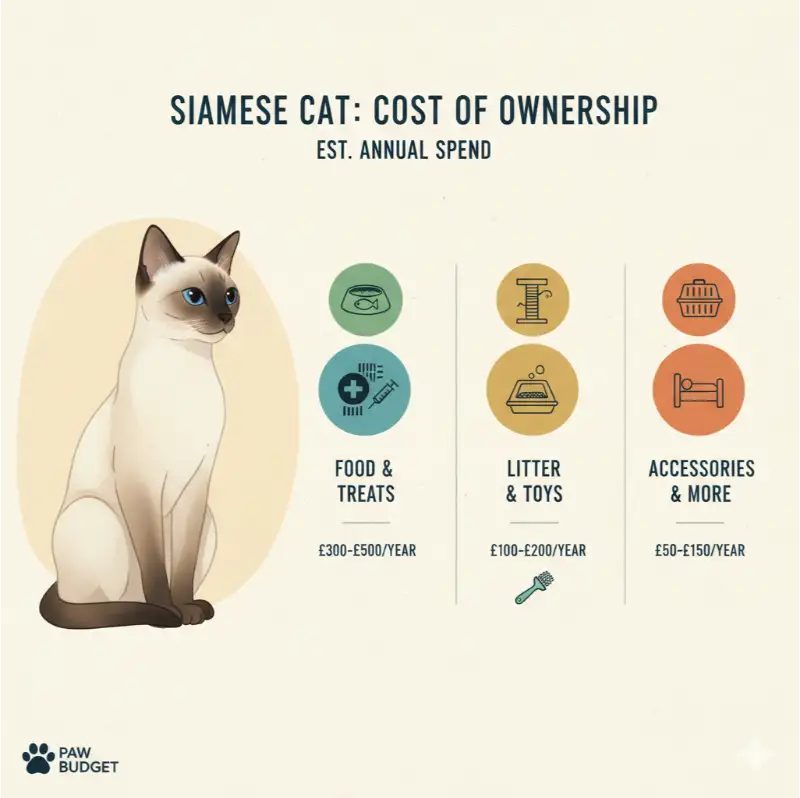
Owning a Siamese cat means paying regular costs every month. These costs include food, litter, healthcare, grooming, and toys. Siamese cats are active and smart, which means they often need more play and mental activity than many other cat breeds. This can slightly increase spending on toys and enrichment.
Food is one of the biggest monthly expenses. Siamese cats usually do best on high-protein diets that support muscle and energy levels. Owners can choose between budget, mid-range, or premium food options. Higher quality food often costs more, but it can help support better long-term health. The amount a Siamese eats depends on age, size, and activity level.
Litter is another steady cost. Most owners buy clumping clay litter or natural plant-based litter. The type and quality of litter can change the monthly cost. Many owners also replace litter boxes or liners over time. Clean litter helps prevent odor problems and encourages proper bathroom habits.
Preventive healthcare includes parasite control and routine medications when needed. Even indoor cats may need flea or worm prevention. Grooming costs for Siamese cats are usually low because their coats are short. However, nail trimming and dental care supplies are still important. Tooth care helps prevent expensive dental disease later in life.
Toys and scratchers wear out quickly, especially with playful Siamese cats. They enjoy climbing, jumping, and interactive play. Replacing scratched posts or damaged toys is part of normal ownership. Many owners also invest in climbing trees to keep the cat active and reduce boredom.
Estimated Monthly Cost Breakdown
| Expense Category | Low Budget | Average Owner | High-End Owner |
|---|---|---|---|
| Food | Low | Medium | High |
| Litter | Low | Medium | Medium |
| Preventive Healthcare | Low | Medium | High |
| Toys & Enrichment | Low | Medium | High |
| Grooming & Hygiene | Low | Low | Medium |
Annual Recurring Expenses
| Category | Estimated Annual Range |
|---|---|
| Vet Checkups | Low to medium |
| Vaccines | Low to medium |
| Dental Supplies | Low |
| Boarding or Pet Sitting | Medium to high |
Unexpected and Long-Term Health Costs
Even with good care, cats can have sudden medical problems. Emergency vet visits are one of the biggest financial surprises for pet owners. These visits can happen due to accidents, infections, or sudden illness. Costs can vary widely depending on the seriousness of the problem and the treatment needed.
Siamese cats are generally healthy but may have some genetic health risks. Some may develop breathing issues, dental disease, or kidney concerns later in life. Early detection through regular vet visits can help manage these conditions. However, long-term treatment may increase medical spending.
Dental cleaning is another cost owners sometimes forget. Many cats need professional dental cleaning during their lives. If dental disease becomes severe, extractions or surgery may be required. Preventive brushing at home can reduce these risks but may not fully prevent dental problems.
Senior Siamese cats usually require more frequent vet visits and lab tests. As cats age, they may develop arthritis, kidney disease, or thyroid issues. These conditions often require medication and monitoring. Medical costs usually rise during senior years, which owners should plan for in advance.
End-of-life care is also part of long-term ownership. This may include pain management, special diets, or supportive care to maintain comfort. Planning emotionally and financially for this stage helps owners provide kind and responsible care when the time comes.
Common Emergency Cost Ranges
| Scenario | Mild Case | Severe Case |
|---|---|---|
| Injury Treatment | Low to medium | High |
| Infection Treatment | Low | Medium |
| Surgery | Medium | Very high |
| Hospitalization | Medium | Very high |
Estimated Lifetime Cost of a Siamese Cat
Siamese cats are known for long lifespans. Many live between 15 and 20 years when cared for properly. This long lifespan increases total ownership cost but also gives owners many years of companionship. Lifetime cost depends on lifestyle, healthcare choices, and unexpected medical events.
Low-budget ownership usually includes basic food, minimal enrichment purchases, and standard veterinary care. Average ownership includes better-quality food, routine preventive care, and regular toy replacement. High-investment ownership may include premium diets, advanced medical care, and frequent boarding or enrichment upgrades.
Indoor Siamese cats often cost less medically because they face fewer risks from traffic, wildlife, or infectious diseases. Outdoor or partially outdoor cats may require more vet visits and may face higher emergency care costs. Indoor living also tends to increase lifespan, which can increase total lifetime spending but often improves overall health.
Single-cat households usually cost less overall, but some owners find Siamese cats benefit emotionally from companionship. Multi-cat homes may save money on shared items like litter boxes or toys, but food and medical costs usually double with each additional cat.
Lifetime Cost Scenarios (15–20 Years)
| Ownership Style | Estimated Lifetime Cost |
|---|---|
| Low Budget | Moderate total cost |
| Average Responsible Care | Medium to high total cost |
| High-End Ownership | Very high total cost |
Can You Afford a Siamese Cat? Honest Budget Planning
Owning a Siamese cat requires steady financial planning. Monthly costs are usually manageable for most prepared owners, but emergency costs can create stress without savings. Planning ahead helps owners avoid difficult choices during medical emergencies.
Many new owners forget to budget for replacement items. Cat trees, litter boxes, and carriers wear out over time. Toy replacement is also common because Siamese cats play actively and often destroy weaker toys quickly. Small replacement costs can add up over many years.
Emergency funds are important for responsible pet ownership. Even healthy cats can develop sudden medical problems. Owners who prepare for unexpected vet bills are better able to provide fast treatment when needed. Financial planning also reduces emotional stress during emergencies.
Another common mistake is underestimating long-term commitment. Siamese cats are very social and form strong bonds with their owners. Some households may need to spend extra money on pet sitting, interactive toys, or additional companionship if the cat spends long hours alone. Lifestyle planning is just as important as budgeting.
Potential owners should also consider housing stability, future income, and family changes. A Siamese cat may live nearly two decades, so long-term stability helps ensure the cat receives consistent care. Responsible ownership means planning for the cat’s full life, not just the first few years.
Quick Affordability Checklist
| Question | Yes | No |
|---|---|---|
| Can you afford monthly food and litter? | ||
| Can you pay for yearly vet visits? | ||
| Do you have emergency savings for medical care? | ||
| Can you afford enrichment and toy replacement? | ||
| Can you commit financially for 15–20 years? |
For additional guidance on general pet ownership expenses, you can visit:
https://www.aspca.org/pet-care/general-pet-care/costs-owning-pet

Ata Ur Rehman is the founder of Pet Age in Human Years Calculator, an educational platform that provides age conversion charts and lifespan guides for dogs, cats, birds, and other companion animals. His work focuses on helping pet owners understand how animal ages translate into human years using commonly accepted age conversion formulas and published lifespan averages.
The website compiles breed and species lifespan data from kennel clubs, breed organizations, and general animal lifespan studies to present simple and easy-to-understand guides for pet owners worldwide.
This website was created to centralize animal age conversion charts into one easy reference platform for pet owners.