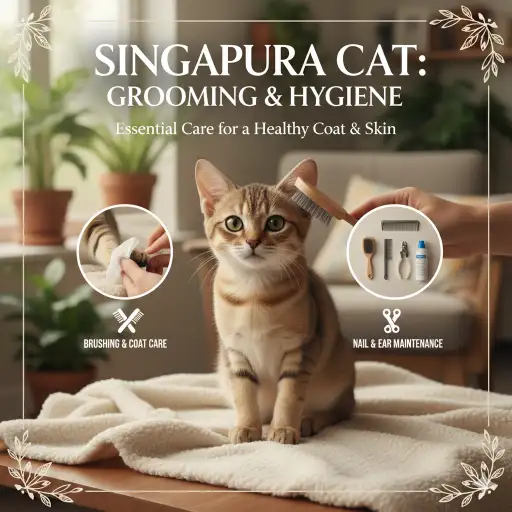
The Singapura is often called a “low-maintenance” cat. Many owners believe that because this breed has short hair, it does not need much grooming. While it is true that Singapuras are easier to groom than long-haired breeds, they still need regular care. Grooming is not just about looks. It helps keep the skin healthy, reduces shedding around your home, and allows you to spot health problems early.
Singapuras have a short, fine, close-lying coat with a ticked pattern. The fur feels soft and smooth. Because the coat is short and does not have a thick undercoat, it does not mat easily. This makes brushing simple. However, their fine coat can still collect loose hair, dust, and dander. Regular brushing removes this buildup and keeps the coat shiny.
In terms of shedding, Singapuras shed lightly throughout the year. They are not heavy shedders, but you may notice more loose hair during seasonal changes, especially in spring and fall. Indoor Singapuras may shed less than outdoor cats because they are not exposed to changing temperatures. Still, brushing once a week helps control hair around the house.
Many first-time owners ask if Singapura cats are high maintenance. The answer is no—but they are not “no maintenance.” Grooming for this breed mainly includes brushing, nail trimming, ear checks, and dental care. Bathing is rarely needed. With a simple routine, grooming becomes easy and even enjoyable bonding time.
Here is a quick comparison to help you understand their grooming needs:
| Grooming Need | Singapura | Typical Long-Haired Cat |
|---|---|---|
| Shedding Level | Low to Moderate | Moderate to High |
| Mat Risk | Very Low | High |
| Brushing Frequency | Once a week | 3–5 times a week |
| Bathing Need | Rare | Sometimes needed |
| Professional Grooming | Rarely needed | Often helpful |
As you can see, Singapuras are easier to manage than many breeds. But simple weekly care keeps their coat smooth and their skin healthy. Next, we will talk about how to brush a Singapura safely and how often you should do it.
Brushing a Singapura: How Often and How to Do It Safely
Brushing a Singapura is simple and does not take much time. In most homes, brushing once a week is enough. During shedding seasons, you can brush twice a week. Regular brushing removes loose hair and spreads natural oils across the coat. This keeps the fur shiny and soft.
Use a soft-bristle brush or a gentle grooming mitt. Because the coat is short and fine, you do not need heavy tools. Avoid hard slicker brushes or tools made for thick undercoats. These can irritate the skin. Always brush gently. Light pressure is enough for this breed.
Start brushing from the head and move toward the tail. Follow the direction of hair growth. Keep your movements slow and calm. Many Singapuras enjoy brushing if it feels like gentle petting. Watch your cat’s body language. If the tail starts flicking hard or the ears turn back, stop and give your cat a break.
Here is a simple brushing checklist:
- Choose a quiet time when your cat is relaxed
- Use a soft brush or grooming mitt
- Brush gently from head to tail
- Check under the arms and near the base of the tail
- Keep sessions short (5–10 minutes)
Avoid these common brushing mistakes:
| Do | Don’t |
|---|---|
| Brush gently once a week | Over-brush daily |
| Watch for stress signals | Ignore tail flicking or growling |
| Use soft tools | Use harsh metal tools |
| Keep sessions short | Force long sessions |
Brushing should feel calm and safe. If your Singapura walks away, do not chase or force grooming. Try again later. Short, positive sessions build trust.
Nail, Ear, and Dental Care for Singapura Cats
Even though Singapuras are active cats, indoor cats do not wear down their nails naturally. This means nail trimming is important. Most Singapuras need nail trimming every 2–4 weeks. If you hear clicking sounds on the floor, the nails are likely too long.
When trimming nails, use small cat nail clippers. Gently press the paw to extend the nail. Trim only the sharp tip. Avoid the pink part inside the nail, called the quick. Cutting the quick can cause pain and bleeding. If you are unsure, trim just a tiny amount.
Ear care is simple for this breed. Check the ears once a week. Healthy ears look pale pink and clean. A small amount of light brown wax is normal. If you see thick discharge, redness, or smell a bad odor, contact a vet. Only clean ears if there is visible dirt, and use a vet-approved ear cleaner on a soft cotton pad. Never push anything deep inside the ear.
Dental care is often forgotten, but it is very important. Small breeds like the Singapura can develop dental problems if teeth are not cleaned. Brushing your cat’s teeth 2–3 times a week is ideal. Use a cat-safe toothbrush and toothpaste. If brushing is not possible, speak with your vet about safe alternatives.
Here is a helpful care guide:
| Task | How Often | Why It Matters |
|---|---|---|
| Nail Trimming | Every 2–4 weeks | Prevents overgrowth and pain |
| Ear Check | Weekly | Detects infection early |
| Ear Cleaning | Only if dirty | Prevents buildup |
| Teeth Brushing | 2–3 times weekly | Reduces dental disease |
If your cat becomes stressed during nail trimming or teeth brushing, stop and try again later. It is better to do one paw at a time than to cause fear.
Bathing a Singapura: When It’s Necessary (and When It’s Not)
Many people believe cats never need baths. While it is true that cats clean themselves, there are times when bathing is helpful. Singapuras rarely need baths because their coat is short and easy to maintain. In most homes, brushing is enough.
Bathing may be needed if your cat gets into something sticky, dirty, or smelly. It may also be needed if a vet recommends it for skin problems. Healthy indoor Singapuras usually do not need regular baths.
Here is a simple guide:
| Bath Needed | Bath Not Needed |
|---|---|
| Rolled in dirt or grease | Light shedding |
| Strong bad smell | Normal self-grooming |
| Vet advice for skin issue | Small dusty spots (can wipe with cloth) |
If you must bathe your Singapura, keep it simple. Use lukewarm water and a mild cat shampoo. Wet the body gently, avoiding the head. Massage shampoo softly into the coat and rinse well. Dry with a towel. Because the coat is fine, it dries quickly. Keep your cat warm until fully dry.
Keep the bath short. Speak in a calm voice. Never force your cat into water. If your cat is very stressed, stop and ask a professional groomer or vet for advice.
Singapura Grooming Schedule, Safety Tips & When to Get Professional Help
Having a simple schedule makes grooming easy. Singapuras do not need daily grooming, but regular checks prevent problems. Short weekly sessions are better than waiting too long.
Here is a full grooming schedule for different life stages:
| Task | Kitten | Adult | Senior |
|---|---|---|---|
| Brushing | Once weekly | Once weekly | 1–2 times weekly |
| Nail Trim | Every 3–4 weeks | Every 2–4 weeks | Every 2–3 weeks |
| Ear Check | Weekly | Weekly | Weekly |
| Teeth Care | 2–3 times weekly | 2–3 times weekly | 3 times weekly |
| Bath | Rare | Rare | Only if needed |
Senior cats may need more help because they groom themselves less. Arthritis can make it hard for them to clean properly. You may need to brush seniors more often.
Always watch your cat’s body language during grooming. Here are common stress signs:
| Calm Signs | Stress Signs |
|---|---|
| Soft eyes | Wide eyes |
| Relaxed tail | Fast tail flicking |
| Gentle purring | Growling or hissing |
| Loose body posture | Ears flat back |
If you see stress signs, pause the session. Give your cat space. Forcing grooming can lead to fear and aggression.
You should contact a professional groomer or vet if:
- Nails are very overgrown or curling
- You see skin redness, bald spots, or sores
- There is thick ear discharge
- Your cat becomes aggressive during grooming
- You feel unsure about trimming nails safely
Most Singapura cats do not need professional grooming often. But expert help is useful if a problem develops.
In summary, Singapura grooming is simple. Brush once a week, trim nails every few weeks, check ears weekly, and care for teeth regularly. Keep sessions short and calm. Watch your cat’s signals. Grooming should build trust, not fear.
With a gentle routine, your Singapura will stay clean, healthy, and comfortable for many years.
For more detailed information about general cat care and health, you can visit the American Veterinary Medical Association website: https://www.avma.org/resources-tools/pet-owners/petcare/cat-care

Ata Ur Rehman is the founder of Pet Age in Human Years Calculator, an educational platform that provides age conversion charts and lifespan guides for dogs, cats, birds, and other companion animals. His work focuses on helping pet owners understand how animal ages translate into human years using commonly accepted age conversion formulas and published lifespan averages.
The website compiles breed and species lifespan data from kennel clubs, breed organizations, and general animal lifespan studies to present simple and easy-to-understand guides for pet owners worldwide.
This website was created to centralize animal age conversion charts into one easy reference platform for pet owners.