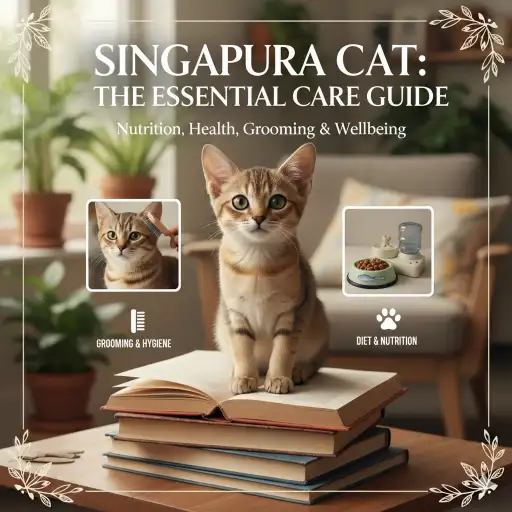
The Singapura cat may be the smallest domestic cat breed in the world, but do not let the tiny size fool you. This cat is full of energy, curiosity, and strong feelings for its people. If you are thinking about getting one, or you already share your home with one, understanding proper Singapura cat care is very important. This breed needs more than food and a litter box. They need attention, play, mental activity, and a safe home setup.
Singapura cats are known for their big eyes, large ears, and warm sepia-colored coat. They look delicate, but they are active and athletic. Most adults weigh between 4 to 8 pounds. Because they are small, even small changes in weight can affect their health. This means portion control and regular weight checks matter more than many owners expect.
Their personality is one of their most special traits. Singapura cats are often called “people cats.” They follow their owners from room to room. They love sitting on shoulders, climbing onto desks, and being involved in daily life. If left alone too long without stimulation, they may become bored or stressed. This is not a breed that enjoys being ignored.
They are also very intelligent. They learn routines quickly and can even learn simple tricks. Because of this intelligence, they need daily mental challenges. Without toys, climbing spaces, and playtime, they may start knocking objects down, scratching furniture, or meowing more than usual. Good Singapura care starts with understanding that this breed thrives on interaction, not isolation.
Daily Care Routine and Feeding Guide
A healthy Singapura needs a simple but consistent daily routine. Feeding, playtime, litter cleaning, and bonding time should happen around the same time each day. Cats feel safe when life is predictable.
Most adult Singapura cats do best with two measured meals per day. Free feeding can lead to weight gain, especially because this breed has a small body frame. High-quality cat food with strong animal protein as the first ingredient is best. Fresh water should always be available.
Playtime is not optional. This breed needs at least 20 to 30 minutes of active play each day. Kittens need even more. Use wand toys, feather teasers, or small balls. Try to end play sessions with food. This copies the natural hunt-eat-rest cycle and helps prevent night zoomies.
Here is your feeding and activity guide in a clean table format:
| Life Stage | Meals Per Day | Playtime Needed | Special Notes |
|---|---|---|---|
| Kitten (2–12 months) | 3 small meals | 30–45 minutes | High energy, growth support diet |
| Adult (1–7 years) | 2 measured meals | 20–30 minutes | Watch weight closely |
| Senior (7+ years) | 2 smaller meals | 15–25 minutes | Monitor joints and appetite |
Each morning, take one minute to check your cat’s eyes, ears, coat, and energy level. A healthy Singapura should look bright and alert. Sudden changes in appetite, low energy, or hiding can be early signs of a problem.
Grooming, Litter and Home Setup
The Singapura has a short, fine coat that is easy to care for. They do not shed heavily, but weekly brushing helps remove loose hair and keeps the coat shiny. A soft rubber brush or grooming glove works well. Brushing is also a good time to check for skin issues or small wounds.
Nail trimming is very important for this breed. Because they love climbing, long nails can get caught in fabric or carpets. Trim nails every two to three weeks. If you hear clicking sounds on hard floors, it is time for a trim.
Dental care should not be ignored. Small breeds can be more prone to dental disease. Try brushing teeth several times a week with cat-safe toothpaste. If brushing is hard, ask your vet about dental treats or water additives.
| Task | How Often | Why It Matters |
|---|---|---|
| Brushing coat | Once a week | Reduces shedding and checks skin |
| Nail trimming | Every 2–3 weeks | Prevents injury and damage |
| Teeth cleaning | 2–3 times weekly | Reduces dental disease |
| Litter scooping | Daily | Prevents stress and bad habits |
Litter boxes should be cleaned daily. Even though the Singapura is small, do not use a tiny litter box. Choose a full-size box so they can turn around easily. In multi-cat homes, follow the rule: number of cats plus one box.
Vertical space is very important. Cat trees, wall shelves, and window perches help meet their climbing needs. Without high spaces, they may climb kitchen counters or bookshelves. Give them safe places to climb instead of trying to stop the behavior completely.
Health and Behavior: Common Issues and Solutions
Singapura cats are generally healthy, but like all breeds, they have some known risks. One genetic issue found in the breed is pyruvate kinase deficiency (PKDef), a condition that can cause anemia. Responsible breeders test for this. Always ask for health screening records when buying a kitten.
Because of their small size, obesity can happen quickly. Even one extra pound is significant. Feel your cat’s ribs gently. You should be able to feel them without pressing hard. If you cannot, your cat may be overweight.
Dental disease is another common issue. Bad breath, drooling, or trouble eating dry food can be warning signs. Early dental care prevents pain later.
Behavior problems in Singapura cats are often linked to boredom or stress. They may over-groom, scratch furniture, or meow loudly. These are not “bad” behaviors. They are signs the cat needs more attention or enrichment.
| Sign | Possible Cause | Action |
|---|---|---|
| Loss of appetite | Illness, stress | Call vet if lasts over 24 hours |
| Pale gums | Possible anemia | Immediate vet visit |
| Hiding suddenly | Pain or fear | Monitor and consult vet |
| Overgrooming | Anxiety or allergy | Vet check |
If behavior changes suddenly, always rule out medical causes first. Pain can look like aggression or hiding. When in doubt, speak with a veterinarian.
FAQs and Final Care Advice
Many people ask if Singapura cats are high maintenance. The answer is yes and no. Their coat is easy to manage, but their emotional and mental needs are high. They need daily play and attention.
Can Singapura cats be left alone? They can stay home while you work, but they should not be ignored for long hours every day. Provide toys, puzzle feeders, and climbing areas. If you travel often, this breed may become lonely.
Are they good with children and other pets? In most cases, yes. They are gentle and social. However, children should be taught to handle them carefully because of their small size.
Are Singapura cats good for apartments? Yes. Their small body fits well in small spaces, but they still need vertical climbing areas and daily exercise.
Here is a quick summary of what Singapura care requires:
| Care Area | Key Focus |
|---|---|
| Feeding | Measured meals, high protein |
| Exercise | Daily active play |
| Grooming | Weekly brushing, nail trims |
| Health | Weight checks, dental care |
| Emotional Needs | Daily bonding time |
Living with a Singapura means sharing your space with a curious, loving shadow. They will sit on your keyboard, climb your shoulder, and greet you at the door. If you give them time, structure, and enrichment, they reward you with strong loyalty and affection.
Before bringing one home, think about your schedule. This breed does best with owners who enjoy daily interaction. They are not decorative pets. They are active family members.
For more detailed breed health information, you can visit the Cat Fanciers’ Association website at https://cfa.org.

Ata Ur Rehman is the founder of Pet Age in Human Years Calculator, an educational platform that provides age conversion charts and lifespan guides for dogs, cats, birds, and other companion animals. His work focuses on helping pet owners understand how animal ages translate into human years using commonly accepted age conversion formulas and published lifespan averages.
The website compiles breed and species lifespan data from kennel clubs, breed organizations, and general animal lifespan studies to present simple and easy-to-understand guides for pet owners worldwide.
This website was created to centralize animal age conversion charts into one easy reference platform for pet owners.