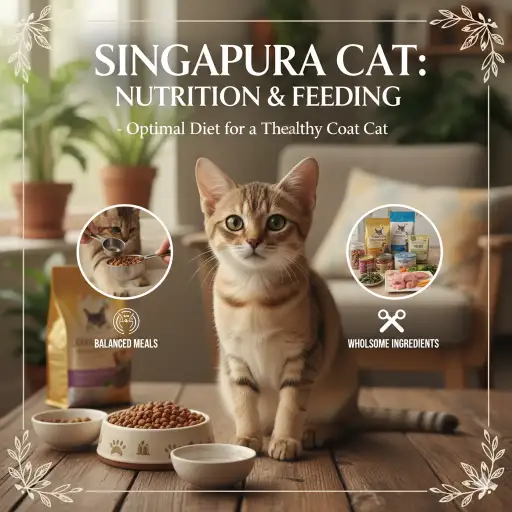
The Singapura is one of the smallest cat breeds in the world, but do not let the tiny size fool you. These cats are active, alert, and full of energy. Because of their small body and fast metabolism, what they eat matters a lot. Even small feeding mistakes can affect their weight, muscle tone, and overall health more quickly than in larger cats. A proper Singapura cat diet supports strong muscles, steady energy, healthy digestion, and a shiny coat.
Like all cats, the Singapura is an obligate carnivore. This means they are built to eat mostly animal-based foods. Their bodies depend on nutrients found in meat, such as taurine and certain amino acids. They cannot stay healthy on plant-based diets alone. Understanding this basic fact helps owners avoid common feeding myths and marketing tricks.
Because the Singapura is naturally lean and fine-boned, weight gain can sneak up quickly. Just a small increase in body fat can be noticeable on their petite frame. On the other hand, underfeeding can also be risky, especially in kittens. This guide will help you understand how to feed your Singapura in a safe, balanced, and practical way.
In this article, you will learn about Singapura nutritional needs, best food types, portion control, feeding schedules, treats, hydration, and common feeding mistakes. This is an educational guide and not a replacement for personal veterinary advice. Always talk to your veterinarian if your cat has health problems or sudden diet changes.
Nutritional Needs of Singapura Cats
All Singapura cats need a diet rich in high-quality animal protein. Protein helps build and maintain muscle. Because this breed has a lean body and small frame, protein quality is more important than just the percentage listed on the label. Look for named animal sources such as chicken, turkey, or fish as the first ingredient. Avoid foods that list fillers or vague terms like “meat by-products” without clear sources.
Fat is another important nutrient. Healthy fats provide energy and help absorb certain vitamins. Since Singapuras are playful and active, they use energy quickly. Fat also supports healthy skin and a smooth coat. However, because dry food is often high in calories, portion size must be watched carefully.
Cats do not have a strong need for carbohydrates. They can digest small amounts, but carbs should not replace animal protein. Some dry foods contain higher carbohydrate levels to help form kibble. This does not mean all dry food is bad, but owners should understand that moisture and protein matter more than grain-free labels or marketing claims.
Moisture is a very important part of feline nutrition. In the wild, cats get most of their water from prey. Many house cats do not drink enough water on their own. Wet food can help support hydration because it contains much more water than dry food. Proper hydration supports kidney health and urinary function.
Essential nutrients such as taurine, vitamin A, vitamin D, and certain minerals must be present in the right balance. Taurine is especially important for heart and eye health. Commercial cat foods labeled “complete and balanced” meet standards set by groups like AAFCO. These foods are designed to provide all required nutrients when fed as directed.
When reading a cat food label, check for:
- A named animal protein as the first ingredient
- A statement that it is complete and balanced
- Feeding guidelines based on weight
- Calorie content listed per cup or per can
Understanding these basics helps you choose food that supports your Singapura’s health.
Best Foods & Feeding Strategies for Singapura Cats
Choosing the best food for Singapura cats depends on age, activity level, and body condition. Both wet and dry foods can work when fed correctly. Many owners use a mixed feeding approach to combine benefits.
Wet food has high moisture content and often fewer carbohydrates. It can help with hydration and may help cats feel full with fewer calories. This is helpful for indoor Singapuras who may not burn as many calories.
Dry food is convenient and often more affordable. It is calorie dense, which means small amounts contain many calories. Because Singapuras are small, even a little extra kibble can lead to weight gain. Measuring portions with a kitchen scale or measuring cup is important.
Mixed feeding uses both wet and dry food. This can offer hydration benefits while still being practical for busy owners. The key is to count total daily calories from both types.
Below is a simple comparison table:
Food Type Comparison for Singapura Cats
| Feature | Wet Food | Dry Food | Mixed Feeding |
|---|---|---|---|
| Moisture Level | High | Low | Medium |
| Calorie Density | Moderate | High | Balanced |
| Hydration Support | Excellent | Low | Good |
| Portion Control | Easier to manage | Must measure carefully | Requires planning |
| Cost | Higher per meal | Lower per meal | Moderate |
Feeding frequency also matters. Adult Singapuras usually do well with two measured meals per day. Kittens need three to four small meals daily because they grow quickly and have small stomachs. Senior cats may need smaller, more frequent meals if appetite decreases.
Free-feeding, where food is left out all day, often leads to overeating in indoor cats. Measured meals help you track intake and notice changes in appetite early.
Here is a general feeding guide example. These are broad ranges and not medical prescriptions:
General Daily Calorie Guide
| Life Stage | Approx. Calories per Day | Feeding Notes |
|---|---|---|
| Kitten | 200–300 kcal | Divide into 3–4 meals |
| Adult (active) | 180–250 kcal | Split into 2 meals |
| Adult (indoor/low activity) | 160–220 kcal | Monitor weight |
| Senior | 150–220 kcal | Adjust based on body condition |
Always adjust based on your cat’s body condition, not just numbers on the scale.
Treats, Hydration & Common Feeding Mistakes
Treats should make up no more than about 10% of your Singapura’s daily calories. Because this breed is small, even a few extra treats can add up quickly. Many owners use treats to show love, but playtime and brushing can also strengthen your bond.
Some human foods are safe in tiny amounts, while others are dangerous. Always avoid foods that are toxic to cats.
Safe and Unsafe Human Foods
| Safe in Small Amounts | Unsafe or Toxic |
|---|---|
| Plain cooked chicken | Onion and garlic |
| Plain cooked fish (boneless) | Chocolate |
| Small amount of plain pumpkin | Grapes and raisins |
| Tiny bit of boiled egg | Alcohol |
Never give seasoned, fried, or heavily salted foods.
Hydration is just as important as solid food. Many Singapuras prefer moving water. A pet fountain can encourage drinking. Feeding wet food daily also increases water intake. Signs your cat may not be drinking enough include dry gums, low energy, or very concentrated urine. If you notice these signs, speak with your veterinarian.
Common feeding mistakes include:
- Overestimating how much a small cat needs
- Not measuring dry food
- Switching foods too quickly
- Ignoring slow weight gain
- Feeding too many high-calorie treats
After spaying or neutering, a cat’s metabolism may slow down. You may need to reduce calories slightly while keeping protein levels high to protect muscle.
Practical Feeding Tables & Everyday Tips
Many owners ask, “How much should a Singapura cat eat daily?” The answer depends on weight and activity level. Watching body shape is often more helpful than watching the number on the scale.
You should be able to feel your cat’s ribs without pressing hard, but not see them clearly. From above, your cat should have a slight waist. If the belly hangs low or ribs are hard to feel, portions may need adjustment.
Example Daily Feeding Schedule
| Owner Routine | Feeding Plan | Notes |
|---|---|---|
| Works full time | Wet food morning, dry measured evening | Use automatic feeder if needed |
| Home most of day | Two wet meals | Encourages hydration |
| Kitten household | 3–4 small meals | Supports growth |
| Multi-cat home | Separate bowls | Prevents food stealing |
In multi-cat homes, it is important to monitor each cat’s intake. Singapuras are social but may eat quickly if they feel competition.
Indoor Singapuras benefit from puzzle feeders. These slow eating and add mental stimulation. Slower eating can reduce begging and boredom.
If your Singapura suddenly stops eating, loses weight, vomits often, or drinks much more water than usual, contact a veterinarian. Early attention can prevent bigger problems.
Feeding a Singapura does not have to be complicated. Focus on high-quality animal protein, proper portions, hydration, and regular monitoring. Avoid extreme diets and sudden changes. Small adjustments over time are safer and easier for your cat.
For more science-based information about balanced pet nutrition standards, you can visit the Association of American Feed Control Officials (AAFCO) website at https://www.aafco.org.

Ata Ur Rehman is the founder of Pet Age in Human Years Calculator, an educational platform that provides age conversion charts and lifespan guides for dogs, cats, birds, and other companion animals. His work focuses on helping pet owners understand how animal ages translate into human years using commonly accepted age conversion formulas and published lifespan averages.
The website compiles breed and species lifespan data from kennel clubs, breed organizations, and general animal lifespan studies to present simple and easy-to-understand guides for pet owners worldwide.
This website was created to centralize animal age conversion charts into one easy reference platform for pet owners.