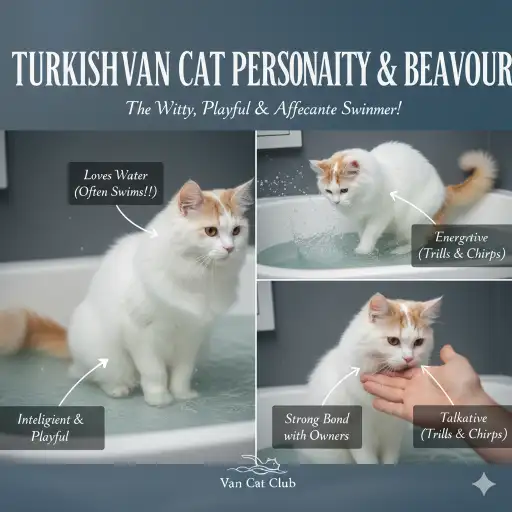
The Turkish Van personality is often described as bold, athletic, and highly intelligent. But those simple words do not fully explain what it feels like to live with one. This is not a quiet lap cat that blends into the background. A Turkish Van notices everything. They watch, assess, and move with confidence. Many owners say their cat seems more like a small wild animal mixed with a loyal companion. They are alert, curious, and very aware of their surroundings.
One of the first things people notice is the energy level. Turkish Vans are active cats with strong muscles and powerful back legs. They love to jump to high places, run across the room in sudden bursts, and explore shelves, counters, and tall furniture. This energy is not chaos. It is natural athleticism. They were shaped in a rugged region around Lake Van in modern-day Turkey, which helped create their strong and capable build. Because of this background, they often feel most comfortable when they have vertical space to climb and observe.
Affection in this breed is unique. A Turkish Van can be deeply loyal, but they often choose how and when they show it. Some are “proximity cats,” meaning they stay close to their favorite person without always sitting in their lap. They may follow you from room to room, rest beside you, or sleep near your feet. This does not mean they are distant. It means they value independence while still forming strong bonds. Many owners say their Turkish Van clearly picks one or two favorite people in the home.
There are also common myths about this breed. Some people believe all Turkish Vans love water or act wild and aggressive. In truth, personality varies from cat to cat. Some may play in water bowls or show curiosity about running taps, while others do not care at all. Rough play is often mistaken for aggression, but most of the time it is simply high prey drive and strong hunting instinct. Understanding their personality helps prevent mislabeling normal behavior as a problem.
Here is a quick personality snapshot to help you understand the breed at a glance:
| Trait | Level | What It Means in Real Life |
|---|---|---|
| Energy Level | High | Needs daily active play and space to jump |
| Affection Style | Selective | Bonds deeply but chooses when to cuddle |
| Intelligence | Very High | Learns routines and solves simple problems |
| Independence | Moderate–High | Enjoys company but not clingy |
| Vocalization | Moderate | Communicates clearly but not constantly loud |
This breed is best suited for people who enjoy active pets and respect a cat’s personal space. If someone wants a quiet cat that sits calmly for long periods, this may not be the best match. But for those who appreciate confidence, intelligence, and strong loyalty, the Turkish Van can be an unforgettable companion.
Core Turkish Van Behavior Traits Explained
The Turkish Van is known for movement. They rarely sit still for long when young. You may see them sprint across the room, leap to the highest shelf, or balance along narrow surfaces with ease. This is not random behavior. It is part of their natural instinct to explore and monitor their territory. A bored Turkish Van will create their own entertainment, which is why mental and physical activity is important in their daily life.
Their intelligence stands out quickly. Many owners report their Turkish Van learning how to open doors, figure out feeding schedules, or respond to patterns in the household. They watch closely. If you open a cabinet the same way every day, they may try it themselves. This smart nature makes them curious problem-solvers. It also means they need stimulation. Puzzle toys and interactive play can help keep their minds busy.
Territory matters to this breed. Turkish Vans like to claim favorite perches or sleeping spots. They may return to the same high shelf each day because it gives them a sense of control and safety. This does not mean they are aggressive. It simply means they value space. Vertical territory, like cat trees or shelves, helps them feel secure and confident in their home.
Night activity is another common topic. Like many cats, Turkish Vans can become active at dawn or dusk. These are natural hunting times. Short bursts of running, often called “zoomies,” are normal. Owners sometimes worry that this means something is wrong. In most cases, it is healthy energy release.
Here is a helpful comparison to explain common misunderstandings:
| Behavior | What Owners Think | What It Actually Means |
|---|---|---|
| Rough play with hands | Aggressive | Strong prey instinct and excitement |
| Avoids being held long | Doesn’t love me | Prefers control over contact |
| Climbs high shelves | Naughty | Feels safest with vertical view |
| Watches guests quietly | Aloof | Assessing new situation |
Understanding the difference between instinct and aggression is important. True aggression usually includes fear, tension, and defensive signals. Play behavior is loose, fast, and often followed by relaxed body posture. Knowing this difference builds trust between cat and owner.
Turkish Van Social Behavior with Humans, Cats & Dogs
Turkish Vans often form strong attachments to their main caregiver. They may greet that person at the door, follow them into different rooms, and watch their daily routine with interest. They enjoy being part of activity. However, they usually prefer interaction on their terms. Forced holding or long restraint may cause them to squirm away. This is not rejection. It is a sign of independence.
With children, Turkish Vans can do well if the child understands gentle handling. They are not fragile, but they do not enjoy rough grabbing. Older children who respect boundaries are often a better match. The cat may even engage in playful chasing games or interactive toy sessions.
When strangers visit, many Turkish Vans stay alert and observant. Some will confidently walk up to investigate. Others may watch from a higher perch. This behavior shows awareness, not fear. Their strong presence can sometimes make them seem like “house guardians,” calmly scanning new people before relaxing.
In multi-cat homes, personality balance matters. A confident Turkish Van may take the lead role in the household. This does not mean constant fighting. It may simply mean they choose the best resting spot or initiate play. Providing enough space and vertical levels reduces tension. With dogs, especially calm and respectful ones, Turkish Vans often adapt well. Their bold nature helps them hold boundaries if needed.
Communication and Body Language in Turkish Vans
Understanding body language is key to understanding this breed. Turkish Vans are expressive, but their signals can be subtle. Their tail often stands upright with a slight curve when they feel confident and friendly. A gently swaying tail can mean focus or excitement. A fast flicking tail, however, may signal irritation or overstimulation.
Their eyes also tell a story. Slow blinking usually shows trust and relaxation. Wide, alert eyes often mean curiosity. If the pupils are very large and the body looks tense, the cat may feel overstimulated or unsure. Watching the full body, not just one part, gives better information.
Ears are another helpful clue. Forward-facing ears show interest. Slightly turned ears show they are listening carefully. Flattened ears pressed back usually signal discomfort or fear. When owners learn these signs, they can respond calmly and avoid pushing the cat beyond its comfort level.
Turkish Vans are moderately vocal. They may chirp, trill, or use soft meows to communicate. Some use louder calls when they want attention or food. Silence does not mean they are distant. Often, they are simply observing quietly.
Here is a simple guide to comfort versus stress signals:
| Body Signal | Relaxed Meaning | Stress Meaning |
|---|---|---|
| Tail | Upright and soft | Rigid or fast flicking |
| Eyes | Slow blink | Wide stare with tension |
| Ears | Forward or neutral | Flattened back |
| Body Posture | Loose and stretched | Low crouch or stiff stance |
Recognizing these small signs helps prevent misunderstandings and builds a stronger relationship.
Behavior Changes Across Life Stages and Common Questions
As kittens, Turkish Vans are extremely active. They test boundaries, chase anything that moves, and explore every corner. This stage can feel intense, but it is normal development. They are building coordination and learning how their environment works.
During adolescence, energy remains high, but independence increases. They may challenge limits more and show stronger territorial behavior. This stage is often when owners notice how smart and determined the breed truly is.
In adulthood, personality becomes more stable. They still enjoy play, but routines become important. Many adult Turkish Vans develop predictable habits, like greeting their person at a certain time each day. Loyalty becomes very clear during this stage.
Senior Turkish Vans often slow down slightly. They may prefer quiet observation over long play sessions. Predictability and comfort become more important. Their bond with trusted humans often deepens even more with age.
Here is a life stage overview:
| Life Stage | Common Personality Traits |
|---|---|
| Kitten | Very high energy, curious, playful |
| Adolescent | Independent, boundary testing |
| Adult | Loyal, structured, confident |
| Senior | Calmer, routine-focused, deeply bonded |
Common questions include whether Turkish Vans are aggressive, if they truly love water, and if they are good for first-time owners. In most cases, aggression is rare and usually linked to fear or misunderstanding. Water interest varies by individual. They can be suitable for first-time owners who are active, patient, and willing to learn feline body language.
Overall, the Turkish Van is a confident, intelligent, and loyal companion. They are not passive cats. They want engagement, space, and respect. When their natural instincts are understood, they become deeply rewarding pets.
For more general information about feline behavior and communication, you can explore educational resources from the Cornell Feline Health Center at https://www.vet.cornell.edu/departments-centers-and-institutes/cornell-feline-health-center

Ata Ur Rehman is the founder of Pet Age in Human Years Calculator, an educational platform that provides age conversion charts and lifespan guides for dogs, cats, birds, and other companion animals. His work focuses on helping pet owners understand how animal ages translate into human years using commonly accepted age conversion formulas and published lifespan averages.
The website compiles breed and species lifespan data from kennel clubs, breed organizations, and general animal lifespan studies to present simple and easy-to-understand guides for pet owners worldwide.
This website was created to centralize animal age conversion charts into one easy reference platform for pet owners.