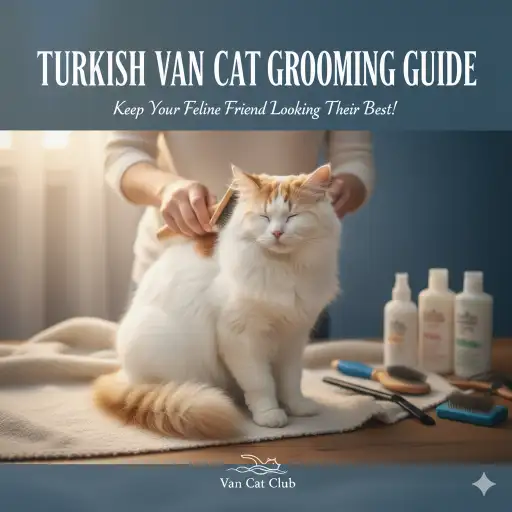
The Turkish Van has a very special coat that many owners misunderstand at first. When people see the semi-long fur and fluffy tail, they often assume this breed needs heavy daily grooming like a Persian. That is not true. The Turkish Van has a single-layer coat with very little undercoat. This means the fur feels soft and silky, and it does not tangle as easily as double-coated breeds. However, “low undercoat” does not mean “no grooming.” Understanding the coat is the first step to grooming your Turkish Van the right way.
One of the most important things to know is that Turkish Vans shed in seasons. In spring, many owners are shocked by how much fur comes out. This is called a seasonal coat blow. During this time, brushing becomes more important. In summer, the coat becomes lighter and easier to manage. In winter, it grows fuller and thicker. Indoor cats may shed more evenly throughout the year because home heating and cooling affect their natural cycle.
Because the Turkish Van does not have a heavy undercoat, matting is less common than in many long-haired breeds. But it can still happen. The most common places for small mats are behind the legs, on the belly, and around the tail base. Owners sometimes ignore these areas because the rest of the coat looks smooth. That is a mistake. Regular gentle checks prevent small tangles from becoming painful knots.
Many people ask if Turkish Vans are high maintenance. The honest answer is no, but they are not “no maintenance” either. They need consistent but simple grooming. With the right routine, most Turkish Vans stay clean and beautiful with only moderate effort. The key is understanding their coat type instead of treating them like heavy double-coated cats.
Turkish Van Coat vs Double-Coated Breeds
| Feature | Turkish Van | Double-Coated Breeds |
|---|---|---|
| Undercoat | Light or minimal | Thick and dense |
| Matting Risk | Low to moderate | High |
| Shedding | Heavy in seasons | Heavy year-round |
| Heavy De-shedding Tools | Usually not needed | Often needed |
Turkish Van Brushing and Shedding Management
Brushing is the most important grooming task for a Turkish Van. The good news is that it does not have to be daily. In normal seasons, brushing one to two times a week is enough for most adult cats. During heavy shedding seasons, especially spring, you may need to brush three to four times a week. This helps remove loose fur before it spreads around your home.
Always brush gently and slowly. Start from the back and move toward the tail. Then carefully brush the sides and chest. Leave the belly for last because many cats are sensitive there. Use calm hands. If your cat flicks its tail fast or flattens its ears, that means it is getting stressed. Stop and try again later. Short, positive sessions are better than long stressful ones.
Pay special attention to the “britches,” which is the longer fur on the back legs. Also check the armpits and the base of the tail. These areas move a lot when your cat jumps and runs. Small tangles can form here. If you find a small knot, do not pull it. Use your fingers to gently loosen it. If it is tight or close to the skin, it is safer to see a professional groomer instead of cutting it yourself.
Do not use heavy undercoat rakes made for thick double-coated breeds. These tools can damage the Turkish Van’s soft top coat. Over-brushing can also thin the fur and make it look uneven. The goal is to remove loose hair, not scrape the skin. Gentle brushing with a suitable comb or soft slicker brush is usually enough.
Bathing, Nail Trimming, and Basic Hygiene Care
Many people believe Turkish Vans love water and enjoy baths. It is true that this breed is known for being curious about water. Some may play with dripping taps or dip their paws into a bowl. But this does not mean they want full baths. Liking water play and tolerating shampoo are two very different things.
Most Turkish Vans do not need regular baths. Cats clean themselves very well. A bath is only needed if your cat is very dirty, gets into something sticky, or has a medical reason given by a veterinarian. Over-bathing removes natural oils from the coat and can cause dry skin. If you must bathe your cat, use lukewarm water and a small amount of cat-safe shampoo. Rinse very well. Leftover shampoo can cause itching.
Nail trimming is often ignored, especially for active breeds. Even if your Turkish Van climbs and runs a lot, indoor cats still need nail trims about every three to four weeks. Long nails can hook into fabric or make a clicking sound on hard floors. When trimming, cut only the sharp tip. Avoid the pink area inside the nail, which is called the quick. If you are unsure, ask a vet or groomer to show you.
Ear checks should be done every two to three weeks. Look inside the ear for dark buildup or bad smell. A small amount of light wax is normal. Clean only the visible outer area with a soft cloth if needed. Never push cotton swabs deep inside. Eye corners may collect small tear stains, especially because the breed often has white fur. Gently wipe with a damp cloth if needed. Dental care is also important. Brushing your cat’s teeth several times a week helps prevent plaque and bad breath.
Grooming Frequency Guide for Turkish Vans
Keeping a simple schedule makes grooming easier. When owners try to guess each time, they often forget. A clear routine reduces stress for both you and your cat. Grooming does not need to be long. Even five to ten calm minutes can make a big difference.
Kittens should be introduced to brushing and nail trimming early. Short sessions help them learn that grooming is safe. Adult cats usually follow a steady routine. Senior cats may need more help because they groom themselves less, especially if they have joint pain.
During shedding season, increase brushing slightly. Do not panic and overdo it. Gentle, regular sessions are better than one long brushing session once a week.
Turkish Van Grooming Schedule
| Task | Normal Season | Shedding Season | Notes |
|---|---|---|---|
| Brushing | 1–2 times weekly | 3–4 times weekly | Focus on tail and back legs |
| Nail Trim | Every 3–4 weeks | Same | Check for sharp tips |
| Ear Check | Every 2–3 weeks | Same | Clean only if dirty |
| Dental Care | 2–3 times weekly | Same | Daily is best |
| Bath | Rarely | Rarely | Only if very dirty |
Common Grooming Mistakes and When to Seek Help
One common mistake is shaving a Turkish Van in summer. Many owners think this will reduce shedding or keep the cat cool. In reality, shaving can damage the coat and affect natural temperature control. The coat protects the skin from sunburn and heat. Shaving should only be done for medical reasons under professional advice.
Another mistake is over-bathing because of the water-loving reputation. Even if your cat plays with water, frequent baths are not healthy. Too much washing strips natural oils and can cause flaky skin. Simple brushing is usually enough to keep the coat clean and shiny.
Ignoring small mats is also a problem. Because matting is less common in this breed, owners sometimes feel relaxed and stop checking hidden areas. A small knot can tighten quickly. If a mat is large, very tight, or close to the skin, do not cut it with scissors. Many home injuries happen this way. It is safer to visit a professional groomer.
Forceful grooming can damage trust. Turkish Vans are intelligent and independent. If you hold them down or continue when they show stress signals like stiff body, fast tail flicking, or flattened ears, they may become aggressive in future sessions. Keep sessions short and calm. End on a positive note.
You should contact a professional groomer if your cat has heavy matting, strong resistance, or if you feel unsure about nail trimming. A veterinarian should be consulted if you see skin redness, ear infection signs, bleeding nails, or sudden coat changes. Grooming is part of health care, not just beauty care.
If you want to learn more about general feline coat health and hygiene from a veterinary source, you can visit the American Veterinary Medical Association website at https://www.avma.org/resources-tools/pet-owners/petcare/cat-care which provides reliable guidance for cat owners.

Ata Ur Rehman is the founder of Pet Age in Human Years Calculator, an educational platform that provides age conversion charts and lifespan guides for dogs, cats, birds, and other companion animals. His work focuses on helping pet owners understand how animal ages translate into human years using commonly accepted age conversion formulas and published lifespan averages.
The website compiles breed and species lifespan data from kennel clubs, breed organizations, and general animal lifespan studies to present simple and easy-to-understand guides for pet owners worldwide.
This website was created to centralize animal age conversion charts into one easy reference platform for pet owners.