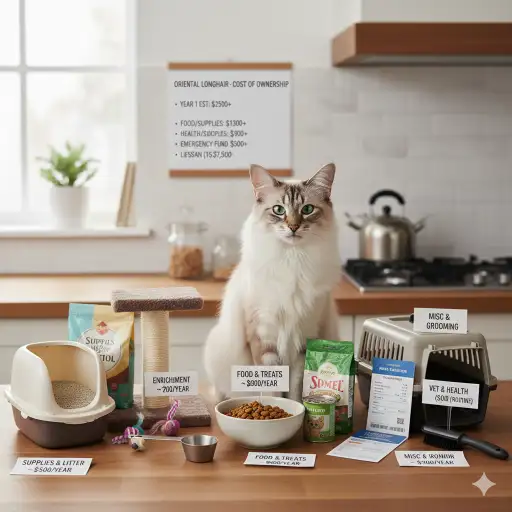
Before bringing this elegant and active breed into your home, it is important to understand both the one-time and ongoing costs involved. Planning ahead can prevent surprises and help you provide the best care for your cat. This guide breaks down the costs clearly so you can make an informed decision.
Oriental Longhairs are known for their long, silky coats, playful personalities, and social nature. While their grooming needs are moderate compared to other long-haired breeds, their active lifestyle and curiosity can lead to higher spending on toys, scratching posts, and enrichment activities. Knowing these factors can help you budget realistically.
Many first-time cat owners underestimate lifetime costs. While the initial adoption or purchase might seem manageable, recurring expenses such as food, litter, veterinary care, and unexpected emergencies can add up quickly over the years. Understanding these costs early ensures that you can provide for your cat’s health and happiness for its full life span, which can range from 12 to 20 years.
Planning also includes understanding lifestyle differences. Indoor cats generally have fewer medical risks, but they still need proper stimulation to stay happy and healthy. Outdoor access may increase veterinary and emergency costs due to higher risks of injury or illness. This guide will cover all of these aspects in detail, providing realistic ranges and practical advice to help you make the best decisions.
One-Time and Setup Costs
The first expenses you will encounter with an Oriental Longhair include adoption or purchase, initial veterinary care, and the supplies needed to set up your home for a cat. Adoption fees for cats from shelters can range from $50 to $200, while purchasing from a breeder can cost between $400 and $1,200 depending on pedigree, age, and breeder reputation. Choosing adoption often reduces initial cost while giving a cat a second chance at a loving home.
Spaying or neutering is an essential one-time cost, usually ranging from $150 to $300. Initial vaccinations and wellness exams are also necessary for your cat’s health, averaging $100 to $250. Microchipping is highly recommended and costs around $40 to $60, providing peace of mind if your cat ever goes missing.
Essential supplies are another major one-time investment. You will need at least one litter box, a bed, scratching posts, feeding bowls, toys, and grooming tools. Quality litter boxes cost $20 to $60, while beds and scratching posts can range from $25 to $100 each. Grooming tools for an Oriental Longhair, including brushes and nail clippers, typically cost $15 to $50.
Setting up your home safely for an active Oriental Longhair may include window perches, cat trees, and secure play areas. While optional, these items improve the cat’s quality of life and reduce destructive behaviors. On average, expect to spend an additional $50 to $150 for enrichment equipment during initial setup. Altogether, first-year one-time costs for an Oriental Longhair can range from $350 on the low end (adoption + essentials) to $1,500 or more for a purchased cat with full setup and breeder fees.
Recurring Monthly and Annual Expenses
Once your Oriental Longhair is settled into your home, you will face recurring monthly and annual costs. These include food, litter, routine veterinary care, grooming, parasite prevention, and occasional boarding or pet-sitting. Tracking these expenses helps you avoid financial stress and ensures your cat’s health and happiness.
Food is a significant monthly cost. Oriental Longhairs are medium-sized cats with active metabolisms. High-quality dry and wet food combined can cost $30 to $80 per month. You may also need to budget for treats or supplements if your veterinarian recommends them. Litter is another ongoing cost, averaging $15 to $40 per month depending on type and usage.
Routine grooming is important even for short to medium long-haired cats. Brushing two to three times per week reduces shedding and prevents matting. While most grooming can be done at home, occasional professional grooming may be needed, costing $40 to $80 per session. Parasite prevention, including flea, tick, and worm control, costs approximately $10 to $30 per month.
Routine veterinary care includes annual wellness exams, vaccines, and preventive testing. This typically costs $100 to $300 per year but can vary depending on your location and your cat’s needs. Dental checkups or cleanings may be recommended periodically, adding another $100 to $300 annually. Boarding or pet-sitting when traveling can cost $25 to $50 per day, which adds up if you travel frequently.
Here’s a table summarizing the monthly and annual costs:
| Expense Type | Monthly Cost | Annual Cost |
|---|---|---|
| Food | $30–$80 | $360–$960 |
| Litter | $15–$40 | $180–$480 |
| Grooming | $5–$10 | $60–$120 |
| Parasite Prevention | $10–$30 | $120–$360 |
| Routine Vet Care | $8–$25 | $100–$300 |
| Boarding / Pet-Sitting | Varies | $0–$500 |
Unexpected and Emergency Costs
Even with careful planning, unexpected and emergency expenses are inevitable in cat ownership. Illnesses, injuries, and chronic conditions can occur at any age, and Oriental Longhairs, like all cats, are prone to specific health concerns such as dental disease, urinary tract issues, and occasional gastrointestinal problems. Emergency veterinary visits can cost $200 to $1,000 depending on the severity of the condition.
Hospitalization for serious illnesses or surgery can increase costs significantly. For example, a routine spay or neuter complication or minor surgery may cost $500 to $1,500, while more complex procedures such as dental surgery, urinary obstruction treatment, or fracture repair can exceed $2,000. Medications for chronic conditions or post-surgery care can add $20 to $100 per month.
Aging cats often require additional care, including supplements, special diets, and more frequent veterinary visits. Expect higher costs from year 10 onwards as your Oriental Longhair enters senior age. This may include additional monitoring for kidney health, arthritis, or heart conditions.
It’s important to build an emergency fund specifically for your cat’s health. Financial planners recommend setting aside at least $500 to $1,000 for unexpected vet visits, increasing this as your cat ages. This fund ensures that you can respond quickly without compromising your cat’s care.
Lifetime Cost Summary & Responsible Ownership Tips
Owning an Oriental Longhair over its full lifetime requires careful budgeting and realistic planning. The total lifetime cost depends on initial setup, recurring expenses, and the likelihood of unexpected health issues. Based on the costs outlined above, here is a skimmable summary:
| Cost Type | Low Estimate | Average Estimate | High Estimate |
|---|---|---|---|
| One-Time Setup | $350 | $800 | $1,500 |
| Annual Recurring Expenses | $700 | $1,400 | $2,500 |
| Emergency / Health Contingency | $500 | $1,000 | $3,000+ |
| Lifetime Cost (12–20 years) | $10,000 | $18,000 | $35,000+ |
Indoor cats generally incur fewer emergency costs, while outdoor access increases risk and potentially doubles medical expenses. Multi-cat households may share some resources, reducing per-cat costs slightly, but can increase litter and feeding expenses. Careful budgeting for food, litter, enrichment, and preventive care ensures your Oriental Longhair stays healthy and happy throughout its life.
Responsible ownership also includes providing enrichment and mental stimulation. Toys, scratching posts, interactive play, and safe window perches reduce stress and prevent behavioral problems. Investing in quality supplies may increase initial costs but reduces long-term damage to furniture and saves on replacement costs. Regular veterinary care and preventive measures often reduce long-term expenses compared to reactive spending.
Practical tips for managing costs include: buying high-quality food in bulk, setting up automatic savings for veterinary visits, and monitoring your cat’s health closely to catch issues early. Planning for the full life of the cat ensures you are prepared financially and emotionally for the long-term commitment.
Next steps for readers: if you are considering adopting or purchasing an Oriental Longhair, calculate your budget using the tables above, plan for emergencies, and ensure that your lifestyle can accommodate this active, social, and elegant breed. With proper planning, you can enjoy the companionship of your Oriental Longhair without financial stress.
For more detailed guidance on cat care and budgeting, you can visit The Humane Society of the United States.

Ata Ur Rehman is the founder of Pet Age in Human Years Calculator, an educational platform that provides age conversion charts and lifespan guides for dogs, cats, birds, and other companion animals. His work focuses on helping pet owners understand how animal ages translate into human years using commonly accepted age conversion formulas and published lifespan averages.
The website compiles breed and species lifespan data from kennel clubs, breed organizations, and general animal lifespan studies to present simple and easy-to-understand guides for pet owners worldwide.
This website was created to centralize animal age conversion charts into one easy reference platform for pet owners.