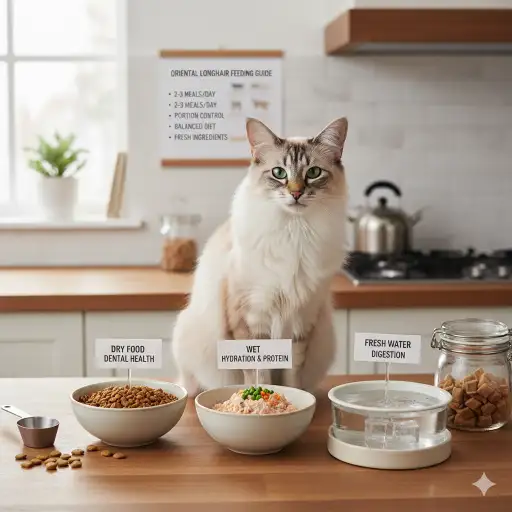
Oriental Longhairs are active, slender cats with a high metabolism, so their nutrition needs are different from other breeds. Like all cats, they are obligate carnivores, which means their bodies are built to use protein and fat from animal sources as their main energy. Protein is essential for maintaining their lean muscles, healthy coat, and overall growth, especially in kittens and young adults. Feeding a diet low in protein can lead to muscle loss, poor coat quality, and even long-term health problems.
Fats are another important part of the Oriental Longhair diet. Healthy fats provide energy, help absorb certain vitamins, and support skin and coat health. Essential fatty acids, like omega-3 and omega-6, are particularly important for keeping their fur shiny and preventing dryness or irritation. Fat also helps active cats maintain their energy throughout the day, which is useful for Oriental Longhairs, who often love to play and climb.
Moisture is often overlooked but is crucial for Oriental Longhairs. Cats naturally have a low thirst drive, meaning they may not drink enough water on their own. Wet foods or mixed feeding can help increase water intake, which supports kidney and urinary tract health. Keeping your cat hydrated also aids digestion and prevents constipation. Observing your cat’s litter box and water consumption can give early clues about hydration and urinary health.
Energy needs vary by age, activity, and whether your cat is spayed or neutered. Kittens and young adults need more calories to support growth and play, while older or less active cats require fewer calories to avoid weight gain. Neutered cats may have slightly slower metabolism, so adjusting portion sizes is important. Monitoring weight, body condition, and coat quality helps ensure your Oriental Longhair is getting the right balance of nutrients.
What to Feed: Food Types & Comparison
Choosing the right type of food is one of the most important decisions for an Oriental Longhair owner. Wet food, dry food, or a combination of both each have benefits. Wet food contains more moisture and usually has higher protein, making it closer to a cat’s natural diet. Dry food is convenient, easier to store, and helps with dental hygiene to some extent. Mixed feeding allows your cat to enjoy both, keeping meals interesting while balancing hydration and convenience.
Reading labels is an important step in choosing the best food. Look for high-quality protein sources listed as the first ingredients, such as chicken, turkey, or fish. Avoid foods that rely heavily on fillers like corn, wheat, or soy. While small amounts of carbohydrates are okay, Oriental Longhairs do not need high-carb diets. Check for essential nutrients like taurine, which supports heart and eye health, and omega fatty acids for skin and coat support.
Here is a comparison table to make food choices easier:
| Food Type | Protein Content | Moisture | Convenience | Pros | Cons |
|---|---|---|---|---|---|
| Wet Food | High | 70–80% | Needs refrigeration after opening | Hydration, high protein, closer to natural diet | More expensive, shorter shelf life |
| Dry Food | Moderate | 10% | Easy to store and measure | Convenient, helps teeth slightly, less messy | Low moisture, may encourage overfeeding |
| Mixed Feeding | Moderate to High | 30–60% | Flexible | Combines benefits of wet and dry, variety for cats | Needs careful portion control, planning required |
Oriental Longhairs can thrive on any of these options as long as the diet meets their protein and fat requirements. Some owners find feeding a mix of wet and dry food works best, as it supports hydration, provides protein, and keeps cats interested in meals. Introducing new foods gradually is important to avoid digestive upset.
Feeding Amounts & Schedules for Oriental Longhairs
Feeding the right amount is key to keeping your Oriental Longhair healthy. Overfeeding can lead to obesity, while underfeeding may result in nutrient deficiencies. Portion sizes depend on age, weight, activity level, and metabolism. Kittens need more calories per pound of body weight because they are growing rapidly. Adult cats require less energy, but active cats may need extra to maintain muscle and play energy. Seniors usually need fewer calories but may benefit from added nutrients for joint health.
Here is a feeding guide chart for daily portions:
| Age / Life Stage | Weight (lbs) | Daily Wet Food (grams) | Daily Dry Food (grams) | Notes |
|---|---|---|---|---|
| Kitten (2–6 months) | 2–4 | 150–200 | 40–60 | Feed 3–4 small meals/day |
| Kitten (6–12 months) | 4–6 | 200–250 | 60–80 | Feed 2–3 meals/day |
| Adult (1–7 years) | 6–10 | 180–220 | 50–70 | Feed 2 meals/day |
| Senior (7+ years) | 6–10 | 150–200 | 40–60 | Monitor weight, adjust calories |
Meal frequency matters too. Kittens benefit from several small meals daily, which helps steady energy levels and supports digestion. Adult and senior cats can thrive on two meals per day. Free-feeding (leaving food out all day) is an option with dry food but can lead to overeating, especially in less active cats. Observing your cat’s body condition regularly is the best way to adjust portions and meal timing.
Activity level also plays a role in feeding. Oriental Longhairs are playful and agile, often requiring more calories than other breeds of similar size. Providing opportunities for exercise and interactive play can help balance their energy intake. Treats should be counted as part of the daily calories to avoid weight gain.
Avoiding Common Diet & Feeding Mistakes
Even when feeding a high-quality diet, mistakes can undermine your cat’s health. One of the most common errors is overfeeding, which leads to obesity. Obesity in cats increases the risk of diabetes, arthritis, and heart problems. Using a feeding chart and weighing portions helps prevent this. Another mistake is giving too many treats or human food. Many treats are high in calories, and human foods can be toxic or nutritionally unbalanced.
Carbohydrates are often misunderstood. Some cat owners think cats need grains or high-carb diets, but too many carbs can contribute to weight gain and digestive issues. Choosing foods that prioritize protein over fillers helps Oriental Longhairs maintain lean muscles. Watch labels for hidden carbs in “grain-free” products, which may use starches like potatoes or peas that still raise carb levels.
Hydration mistakes are common too. Cats may not drink enough water on their own, especially if they eat mostly dry food. Signs of dehydration include reduced urination, dry gums, and lethargy. Encouraging water through wet food or fountains helps prevent kidney and urinary issues.
A simple do/don’t list helps clarify:
| Do | Don’t |
|---|---|
| Measure portions | Free-feed high-calorie dry food |
| Use high-protein food | Over-rely on treats |
| Provide fresh water | Feed toxic human foods (chocolate, onions, etc.) |
| Monitor weight & coat | Ignore changes in appetite or energy |
Practical Owner Tips & When to Seek Help
Monitoring your Oriental Longhair’s body condition is key. Look for a visible waistline when viewed from above and a slight tummy tuck when viewed from the side. You should be able to feel their ribs without pressing hard, but they should not be overly prominent. Tracking weight monthly helps identify trends early before health issues arise.
Indoor cats may need fewer calories than outdoor cats due to lower activity levels. Neutered or spayed cats often have slower metabolism, so portion sizes may need to be reduced. Multi-cat households can present challenges, as some cats eat more than others. Feeding cats separately or using timed feeders ensures each cat receives the right amount.
Transitioning diets should be done gradually over 7–10 days to avoid stomach upset. Mix increasing amounts of the new food with the old food each day. Sudden changes can cause diarrhea or vomiting, especially in sensitive cats. Introduce new flavors and textures slowly to keep your cat interested.
Watch for signs that nutrition may be inadequate. Dull fur, weight loss, poor energy, or digestive issues may indicate a problem. Always consult a veterinarian if these signs persist. They can provide guidance tailored to your cat’s individual needs, including lab tests if necessary.
For more guidance on feline nutrition, you can visit the American Association of Feline Practitioners.

Ata Ur Rehman is the founder of Pet Age in Human Years Calculator, an educational platform that provides age conversion charts and lifespan guides for dogs, cats, birds, and other companion animals. His work focuses on helping pet owners understand how animal ages translate into human years using commonly accepted age conversion formulas and published lifespan averages.
The website compiles breed and species lifespan data from kennel clubs, breed organizations, and general animal lifespan studies to present simple and easy-to-understand guides for pet owners worldwide.
This website was created to centralize animal age conversion charts into one easy reference platform for pet owners.