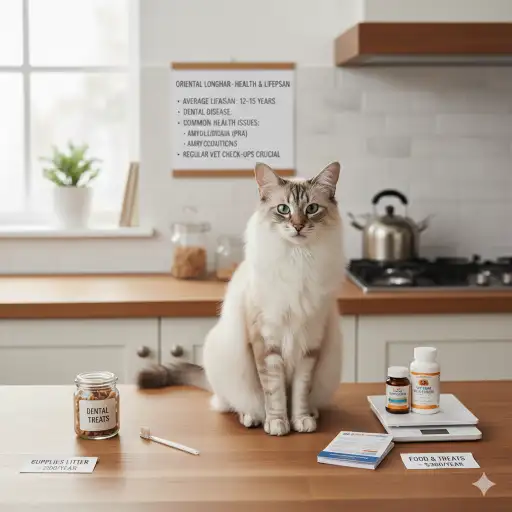
The Oriental Longhair is a striking cat breed with a sleek body, large ears, and bright eyes. Many people choose this breed for its friendly nature and playful personality. Like all cats, Oriental Longhairs have unique health needs and a typical lifespan range. This guide will help you understand general health trends, common concerns, and how to support a long, happy life for your cat. The goal is to give clear information that is easy to read and useful. This is educational and not a substitute for veterinary advice.
In this guide, you will learn what to expect in terms of life expectancy, common health issues, and simple ways to support your cat’s wellbeing. We also explain early warning signs that owners should notice and why regular checkups with a vet matter. If you have questions, you should always reach out to your veterinarian. Reading this will help you become a more confident and informed cat owner.
Every cat is different, and not all Oriental Longhairs will get the same health problems or live the same number of years. These cats can live into their teens and sometimes beyond with good care. How long a cat lives depends on many things like diet, environment, and preventive care. Understanding these basics will help you make better choices for your cat’s health.
Whether you are thinking about bringing home an Oriental Longhair or already have one, this guide is designed to help you see the big picture. We keep the language simple so that even young readers or new owners can follow along. This blend of facts, gentle guidance, and practical tips can support you in giving your cat a happy life.
Lifespan Expectations: What Owners Should Know
Most Oriental Longhairs live longer when they stay inside and have safe, steady care. Indoor cats are protected from car accidents, fights with other animals, and many infections that outdoor cats face. While no two cats are exactly the same, many indoor Oriental Longhairs have life expectancies in the mid-teens and beyond.
Here is a simple table to show typical lifespan expectations:
Lifespan Comparison
| Lifespan Type | Average Years |
|---|---|
| Indoor cats | 12–18+ |
| Outdoor cats | 7–12 |
| Mixed care | 10–15 |
Indoor cats generally live longer because they face fewer dangers. Outdoor cats have more risks from traffic, predators, and infections. A cat that spends time both inside and outdoors may have a health risk that is somewhere in between. Some owners choose supervised outdoor time or a secured outdoor space to give their cats fresh air without the full risks of free roaming.
The number of years a cat lives can also depend on the care it receives each day. Good nutrition, regular play, and a low-stress environment help support long-term health. Early vet visits and routine screenings can find problems before they grow serious. Knowing what to watch for and having a plan can help your cat enjoy more healthy years.
Like people, cats may age at different rates. Some live long, active lives with few issues. Others may show changes earlier. Understanding the typical expectations gives you a baseline, but your cat may vary.
Top Health Concerns in Oriental Longhairs
Oriental Longhairs are generally healthy, but like all breeds, they can be prone to certain conditions more than others. The list below highlights common health issues in simple terms. This is not a diagnostic list, but it helps owners know what things veterinarians watch for. If you see changes in your cat’s behavior or health, your vet can help evaluate what is happening.
| Condition | What It Is | Typical Age & Notes |
|---|---|---|
| Progressive Retinal Atrophy (PRA) | Eye condition where vision slowly declines | Often adult years; early detection helps planning |
| Amyloidosis | Protein buildup that can affect organs | Seen more in some lines; vet screens may help |
| Heart Conditions | Heart muscle or valve issues | All ages; regular listening and checkups matter |
| Dental Disease | Gum and tooth problems | Common as cats age; regular dental checks help |
| Weight & Metabolic Issues | Weight gain or loss, diabetes risk | Any age; obesity raises many health risks |
| Respiratory Sensitivities | Sneezing and breathing changes | May occur in some cats; manage environment |
Progressive Retinal Atrophy (PRA)
PRA is a condition where the retina, the part of the eye that senses light, slowly changes over time. This can lead to vision loss. Early stages might be hard to notice, but a vet can help detect changes before you do. Most cats adapt well to vision changes with safe environments and support.
Amyloidosis
This health issue involves certain proteins that may build up in body tissues like the liver or kidneys. Over time, this buildup can affect how organs work. Not all Oriental Longhairs will get this, but veterinarians are aware of its possibility in the breed. Bloodwork and screenings during routine visits can help catch signs early.
Heart Conditions
Some cats have heart conditions that develop over time. This may include thickening of the heart muscle or issues with heart valves. Heart conditions sometimes don’t show clear signs until they are more advanced, so regular vet checkups are important. Listening to the heart with a stethoscope and occasional imaging may be part of preventive care.
Dental Disease
Dental issues are common in many breeds, including Oriental Longhairs. Gingivitis, plaque, and tooth decay can lead to pain and infection. Regular dental checks and home brushing where possible help keep mouths healthier. A vet can recommend safe dental care routines and professional cleanings when needed.
Weight & Metabolic Issues
Weight management is a key part of long-term health. Obesity can raise the risk of diabetes and joint stress, while sudden weight loss might signal an underlying problem. Balanced nutrition and activity help keep weight at a healthy level. Regular weighing at home or at the vet clinic supports early action.
Respiratory Sensitivities
Some cats have sensitive noses or slight conformational traits that make them sneeze or have mild breathing changes. These are not always serious but deserve attention if they become frequent or severe. Keep the home air quality clean and low in dust to support easier breathing.
Preventive Care & Early Detection Essentials
Preventive care helps catch small issues before they become big ones. Getting into a routine with your vet and at home can build a strong foundation for your cat’s health. Routine care includes checkups, vaccinations, parasite control, and dental checks. These steps help your cat stay well across the years.
Here’s a simple preventive care checklist:
Preventive Care Checklist
| Care Type | What It Includes | Frequency |
|---|---|---|
| Routine vet exam | Physical check, discuss concerns | Every 6–12 months |
| Vaccinations | Shots to protect from disease | As recommended by vet |
| Dental exam | Look at teeth and gums | At least annually |
| Weight check | Monitor body condition score | Every few months |
| Parasite prevention | Flea, tick, and worm control | Year‑round |
Routine Vet Exams
A vet exam gives your cat a professional health look‑over. These exams catch subtle changes in weight, coat condition, mouth health, and behavior. Your vet can also recommend vaccines based on your lifestyle and local disease risk. Young adult cats often need annual exams, while older cats may benefit from exams every six months.
Vaccines protect cats from common infectious diseases. Your vet will tailor a vaccine plan to your cat’s lifestyle and health status. Parasite control covers protection against fleas, ticks, and worms. These pests can cause discomfort and disease, so following a year‑round prevention plan is recommended.
Vaccinations & Parasite Prevention
Dental Checks
Even if your cat seems to eat fine, dental issues can be hiding below the surface. Gum disease and broken teeth can cause slow‑to‑notice pain. A dental checkup can find problems early, and your vet can suggest safe home care and professional cleanings when needed.
Weight Monitoring
Keeping an eye on your cat’s weight helps prevent obesity and detect weight loss early. A light rib feel with a tuck at the waist usually shows a healthy weight. If you notice your cat eating less, gaining too much weight, or losing weight fast, these are reasons to talk with your vet.
Early Warning Signs Owners Should Never Ignore
Knowing when something feels off can make a big difference. These signs don’t always mean something serious, but they do mean a vet visit may be helpful. Some changes are sudden, while others develop slowly.
Watch for:
• Change in appetite or drinking habits
• Sudden weight loss or gain
• Trouble using the litterbox
• Lethargy or hiding more than usual
• Bad breath or drooling
• Sneezing, coughing, or labored breathing
• Limping or stiffness
A healthy cat may have small changes now and then, but ongoing or multiple changes should prompt a checkup. Keeping a simple journal of eating, drinking, activity, and litterbox habits helps you notice shifts over time.
Supporting Health & Quality of Life Through the Years
As Oriental Longhairs age, their needs may shift. Older cats sometimes need softer food, gentler play, and more frequent low‑effort activities. Quality of life means both physical health and emotional wellbeing. Enrichment through toys, climbing spaces, and quiet resting areas helps keep life engaging.
Mobility Support
Cats can become less steady as they get older. Providing low ramps, non‑slip surfaces, and easy‑to‑reach food and water supports comfort. Gentle play sessions encourage movement without stress.
Mental Enrichment
Interactive toys, puzzle feeders, and safe outdoor viewing spaces give your cat fun and challenge. Routine and stability in the home can lower stress and improve behavior.
Comfortable Home Environment
A warm, quiet bed in a calm part of the house helps cats relax. Clean litterboxes in quiet places encourage good bathroom habits. Good light and low noise support a stress‑free home.
When to Consult a Veterinarian
Even with great preventive care, sometimes cats need extra support. Contact your veterinarian if you see persistent signs that worry you, if a known medical condition changes, or if your cat’s behavior is different than normal. Asking questions and sharing observations helps your vet partner with you in care.
FAQs
How long do Oriental Longhairs usually live?
Most live into their teens, with many reaching 12–18 years with indoor care.
Are Oriental Longhairs prone to specific diseases?
They can be at higher risk for a few conditions like PRA and dental disease, but many live healthy lives.
Can preventive care really help lifespan?
Yes. Routine checkups and care help catch many problems early.
How often should my cat see a vet?
Once a year for young adults and twice a year for senior cats is often recommended.
What should I feed my cat?
Balanced, age‑appropriate food suited to your cat’s lifestyle supports good health.
When should I worry about weight changes?
Sudden or unexplained weight change deserves veterinary attention.
Final Thoughts
Oriental Longhairs are beautiful, lively companions with potential for many happy years. Understanding common health concerns, supporting preventive care, and noticing early signs of change can make a real difference in your cat’s life. With a careful eye and loving home, your cat can thrive and enjoy a high quality of life. For more breed health information, you can visit the Cat Fanciers’ Association at https://cfa.org

Ata Ur Rehman is the founder of Pet Age in Human Years Calculator, an educational platform that provides age conversion charts and lifespan guides for dogs, cats, birds, and other companion animals. His work focuses on helping pet owners understand how animal ages translate into human years using commonly accepted age conversion formulas and published lifespan averages.
The website compiles breed and species lifespan data from kennel clubs, breed organizations, and general animal lifespan studies to present simple and easy-to-understand guides for pet owners worldwide.
This website was created to centralize animal age conversion charts into one easy reference platform for pet owners.