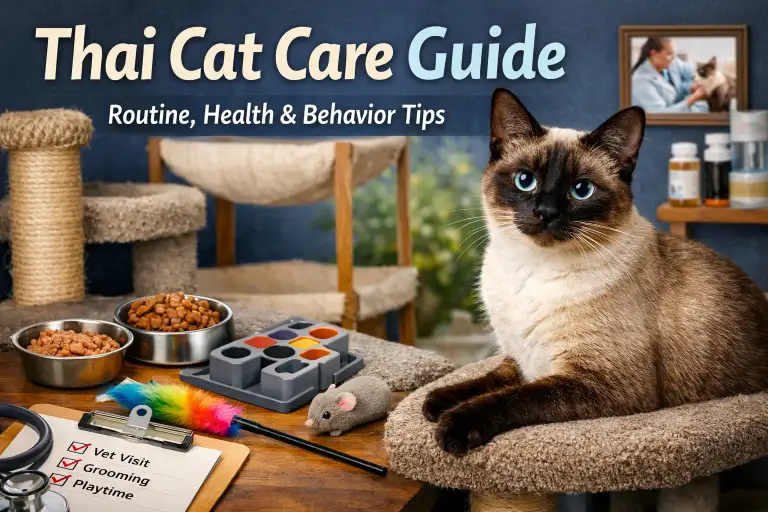
Before setting up feeding schedules or buying toys, it’s important to understand what living with a Thai cat is actually like day to day. Many care problems happen not because owners are careless — but because they underestimate how socially intense, intelligent, and emotionally sensitive this breed can be.
Thai cats are not low-interaction pets. They are companion-oriented cats that actively seek engagement.
Thai Cat Trait Snapshot
| Trait | What It Means for Owners | Daily Impact |
|---|---|---|
| High sociability | Strong need for human interaction | Requires daily engagement, not just passive presence |
| Vocal communication | Frequently “talks” to people | Owners must tolerate and respond to meowing |
| High intelligence | Needs mental stimulation | Puzzle toys and structured play are essential |
| Strong bonding tendency | Forms deep attachments | Can develop separation anxiety if ignored |
Temperament and Social Needs
Thai cats are known for forming strong bonds with their people. Many owners notice that their Thai follows them from room to room, waits outside the bathroom, or greets them at the door. This isn’t clinginess in a negative sense — it’s a breed trait rooted in social orientation.
However, this also means they do poorly in homes where they are left alone for long hours without stimulation. A bored Thai cat may:
- Vocalize excessively
- Scratch furniture
- Demand attention constantly
- Develop stress-related behaviors
If you work long shifts, consider interactive enrichment (timed feeders, puzzle toys, window perches) or even a compatible feline companion.
Energy Level and Mental Stimulation
Thai cats are active and mentally sharp. They tend to stay playful well into adulthood. Owners often report that a simple ball or random toy won’t hold their attention for long. They prefer interactive play — wand toys, chase games, climbing structures.
Most adult Thai cats benefit from at least 20–40 minutes of active play daily, ideally split into two sessions. Kittens require even more structured stimulation.
Without adequate mental engagement, boredom can quickly turn into behavioral problems.
Are Thai Cats High Maintenance?
Physically, no. Emotionally and mentally, yes.
Their short coat is easy to maintain and grooming is minimal compared to long-haired breeds. But their social and intellectual needs are above average. They thrive in homes where owners enjoy interacting with their pets rather than expecting a completely independent cat.
They are generally suitable for first-time owners — but only if the owner understands that companionship is part of the commitment.
Indoor vs Outdoor Adaptability
Thai cats adapt well to indoor living when properly enriched. In fact, indoor environments are often safer and better for maintaining long-term health. However, they require:
- Vertical climbing options
- Window views
- Interactive play
- Scratching outlets
- Rotating enrichment
If allowed outdoors, supervision or secure outdoor setups are strongly recommended due to their curiosity and sociability.
Who Should Own a Thai Cat?
A Thai cat is ideal for:
- People who want an interactive companion
- Families who spend time at home
- Owners willing to play daily
- Homes comfortable with vocal communication
They may not be ideal for:
- Owners seeking a quiet, independent cat
- Households where the cat will be alone most of the day
- People easily annoyed by frequent meowing
Understanding these personality traits is the foundation of proper Thai cat care. When expectations align with temperament, most behavior and stress-related issues can be prevented before they begin.
Daily Thai Cat Care Routine (Feeding, Play, Hygiene & Enrichment)
This is the heart of Thai cat care. A simple daily routine prevents most health and behavior problems. Thai cats do best when their day feels predictable, active, and interactive.
If you follow this routine consistently, your cat will stay healthier, calmer, and happier.
Thai Cat Daily & Weekly Care Checklist
| Task | Frequency | Simple Owner Tip |
|---|---|---|
| Feed measured meals | 2 times daily (3–4 for kittens) | Do not leave food out all day |
| Provide fresh water | Daily | Clean bowl before refilling |
| Interactive play | 20–40 minutes daily | Split into 2 short sessions |
| Scoop litter box | At least once daily | Twice daily is better |
| Quick health check | Daily | Look at eyes, nose, coat |
| Brush coat | Once a week | Helps reduce shedding |
| Trim nails | Every 2–3 weeks | Trim small amount only |
| Brush teeth | 2–3 times weekly | Start slowly if new |
Feeding Your Thai Cat
Thai cats can gain weight easily if overfed. Free-feeding (leaving dry food out all day) often leads to overeating.
Instead:
- Feed 2 measured meals per day for adults
- Feed 3–4 smaller meals for kittens
- Seniors may need softer food if teeth are weak
- Use a kitchen scale or measuring cup
Wet food helps with hydration. Many Thai cats do not drink enough water on their own. A water fountain can help increase water intake.
Feeding by Life Stage
| Life Stage | Meals Per Day | Main Focus |
|---|---|---|
| Kitten | 3–4 small meals | Growth and energy |
| Adult | 2 meals | Weight control |
| Senior | 2 meals | Easy digestion |
Interactive Play Is Not Optional
Thai cats need active play every day. This is not just fun — it keeps their brain healthy.
Good play ideas:
- Wand toys
- Feather teasers
- Small balls for chase
- Puzzle feeders
- Climbing trees
Try to play before meals. This matches a cat’s natural hunt-eat-rest pattern.
If your Thai cat is meowing a lot, scratching furniture, or acting restless, it is often because they need more play.
Litter Box Care
A dirty litter box causes stress. Thai cats are very clean animals.
Basic rules:
- Scoop at least once daily
- Wash the full box every 2–4 weeks
- Use unscented litter
- Keep box in a quiet place
- Have one box per cat, plus one extra
Never punish litter problems. Always check cleanliness first.
Grooming and Hygiene
Thai cats have short coats, so grooming is simple.
- Brush once weekly
- Check ears for dirt
- Wipe eye corners if needed
- Trim nails every few weeks
- Start dental care early
Even short-haired cats benefit from brushing. It spreads natural oils and strengthens bonding.
Quick Daily Health Check
Spend one minute each day checking:
- Is the coat shiny?
- Are the eyes clear?
- Is your cat moving normally?
- Is appetite normal?
Small changes are easier to fix early.
When this daily routine becomes a habit, Thai cat care feels simple instead of stressful.
Thai Cat Health Care, Warning Signs & Vet Schedule
Keeping your Thai cat healthy is not only about food and play. You must also watch for small changes in behavior and body signs. Cats are very good at hiding pain. Many owners miss early warning signs because the changes seem small.
A simple health routine helps prevent serious problems.
Basic Vet Visit Schedule
- Kittens: several visits in the first year for vaccines
- Adults: once a year for a full check-up
- Seniors (7+ years): every 6–12 months
Even if your cat looks healthy, yearly check-ups are important. The vet can find problems you cannot see at home.
Vaccines and Parasite Prevention
Indoor cats still need basic vaccines. Germs can enter through shoes, clothes, or open windows.
Outdoor cats need:
- Strong parasite protection
- Regular flea and tick prevention
- Deworming as advised by the vet
Never skip parasite treatment if your cat goes outside.
Dental Health Is Very Important
Many cats develop dental disease by age three. Bad teeth can cause pain, weight loss, and even organ problems.
Watch for:
- Bad breath
- Drooling
- Dropping food while eating
- Red or swollen gums
Brushing your cat’s teeth a few times per week can prevent many dental issues.
Early Warning Signs Owners Often Miss
| Small Change | What It Could Mean | What To Do |
|---|---|---|
| Eating a little less | Dental pain or illness | Watch closely for 1–2 days |
| Sleeping more than usual | Stress or sickness | Check energy level |
| Hiding more often | Pain or fear | Monitor behavior |
| Slight weight change | Diet issue or health problem | Weigh monthly |
| Drinking much more water | Kidney or diabetes issue | Call vet |
If a change lasts more than 24–48 hours, contact your vet.
Emergency Warning Signs
| Symptom | Urgency |
|---|---|
| Trouble breathing | Emergency – go immediately |
| Not peeing at all | Emergency – go immediately |
| Continuous vomiting | Urgent – same day visit |
| Sudden collapse | Emergency |
| Seizures | Emergency |
Never wait if breathing or urination problems happen. These can become life-threatening very fast.
Monthly Home Health Check
Once a month, take five minutes to:
- Weigh your cat
- Check ears for dirt or smell
- Look at teeth and gums
- Feel body for lumps
- Watch how your cat walks
Senior Thai cats need closer watching. They may develop joint pain, kidney problems, or dental disease as they age.
Most serious health problems start with small signs. When you notice changes early, treatment is easier and cheaper.
Common Thai Cat Behavior Problems & Practical Solutions
Thai cats are smart and very social. Because of this, they can develop behavior problems if their needs are not met. Most problems are not “bad behavior.” They are signs that something is missing — attention, play, comfort, or safety.
The good news is that most issues can be fixed with simple changes at home.
Behavior Problem → Likely Cause → What To Do
| Behavior | Likely Cause | Simple Fix |
|---|---|---|
| Loud, constant meowing | Boredom or attention seeking | Add more play and interaction |
| Scratching furniture | No proper scratching post | Add tall and sturdy scratchers |
| Hiding often | Stress, fear, or illness | Check environment and health |
| Not using litter box | Dirty box or stress | Clean box and review setup |
| Acting aggressive | Overstimulation or pain | Reduce stress and monitor health |
| Not playing anymore | Boredom or sickness | Try new toys and observe closely |
Excessive Meowing
Thai cats are naturally talkative. But if the meowing suddenly increases, ask yourself:
- Has play time decreased?
- Has feeding time changed?
- Has something stressful happened at home?
Many Thai cats meow when they are bored. Try adding two short play sessions daily. Use wand toys or chase games.
If the meowing sounds painful or strange, call your vet.
Scratching Furniture
Scratching is normal cat behavior. It keeps claws healthy and helps mark territory.
To reduce furniture damage:
- Provide at least one tall vertical scratching post
- Add a horizontal scratching pad
- Place scratchers near sleeping areas
- Reward your cat for using them
Never punish scratching. Instead, make the correct option more attractive.
Litter Box Problems
If your Thai cat avoids the litter box:
- Scoop more often
- Use unscented litter
- Place box in a quiet area
- Add an extra box if you have more than one cat
Stress is a common cause. Even small changes in the home can upset sensitive cats.
Clinginess and Separation Anxiety
Thai cats bond strongly with their owners. Some may follow you everywhere or cry when you leave.
To reduce anxiety:
- Keep a regular routine
- Leave puzzle toys when away
- Provide window views
- Avoid sudden long absences
If anxiety becomes severe, speak to your vet.
Hiding Behavior
Short periods of hiding can be normal. But if your cat hides all day and avoids contact, check for:
- Illness
- Loud noises
- New pets
- Changes in furniture or layout
Thai cats are sensitive to changes. Keep their environment stable and calm.
Most behavior problems are early warning signs. They tell you something needs attention. When you adjust the routine or environment quickly, problems usually improve fast.
Special Care Situations (Kittens, Seniors, Indoor Homes & Multi-Cat Living)
Thai cats need slightly different care depending on their age and living situation. A kitten does not need the same care as a senior cat. A single cat home is also different from a multi-cat home.
Understanding these differences helps prevent stress and health problems.
Care Adjustments by Life Stage
| Life Stage | Main Priority | Common Mistake |
|---|---|---|
| Kitten | Socialization and play | Not enough stimulation |
| Adult | Weight control and routine | Free-feeding too much |
| Senior | Joint comfort and health checks | Ignoring small behavior changes |
Thai Kitten Care
Kittens have high energy and strong curiosity.
They need:
- 3–4 small meals daily
- Safe spaces to explore
- Daily play (short but frequent sessions)
- Early litter training
- Gentle handling for social skills
The first few months are very important. Positive experiences during this time help prevent fear and anxiety later.
Adult Thai Cat Care
Adult Thai cats need structure.
Focus on:
- Measured meals twice daily
- Daily interactive play
- Weight checks
- Clean litter setup
- Stable daily routine
Many adult Thai cats become overweight if owners leave food out all day. Controlled feeding is very important.
Senior Thai Cat Care
Around age 7 and older, cats enter their senior stage.
Watch for:
- Slower movement
- Jumping less
- Sleeping more
- Weight loss or gain
- Dental problems
Make small changes:
- Provide soft bedding
- Keep litter boxes easy to enter
- Add steps near high places
- Schedule vet visits more often
Indoor Thai Cat Care
Indoor cats live longer but need more enrichment.
Provide:
- Climbing trees
- Window perches
- Rotating toys
- Scratching posts
- Daily play sessions
Without stimulation, indoor Thai cats may become bored and loud.
Multi-Cat Home Tips
Thai cats can live with other cats, but resources must be managed correctly.
Multi-Cat Resource Rule
| Resource | Recommended Rule |
|---|---|
| Litter boxes | One per cat plus one extra |
| Food bowls | Separate feeding spots |
| Water bowls | More than one location |
| Scratching posts | Multiple types and areas |
| Resting spots | More beds than cats |
Never force cats to share everything. This reduces stress and fighting.
Apartment Living
Thai cats can live happily in apartments if:
- They get daily play
- Vertical space is available
- Loud noises are limited
- Routine is stable
They do not need outdoor access to be happy. They need attention and mental activity.
For more detailed veterinary guidance on preventive feline healthcare, visit the American Association of Feline Practitioners (AAFP).

Ata Ur Rehman is the founder of Pet Age in Human Years Calculator, an educational platform that provides age conversion charts and lifespan guides for dogs, cats, birds, and other companion animals. His work focuses on helping pet owners understand how animal ages translate into human years using commonly accepted age conversion formulas and published lifespan averages.
The website compiles breed and species lifespan data from kennel clubs, breed organizations, and general animal lifespan studies to present simple and easy-to-understand guides for pet owners worldwide.
This website was created to centralize animal age conversion charts into one easy reference platform for pet owners.