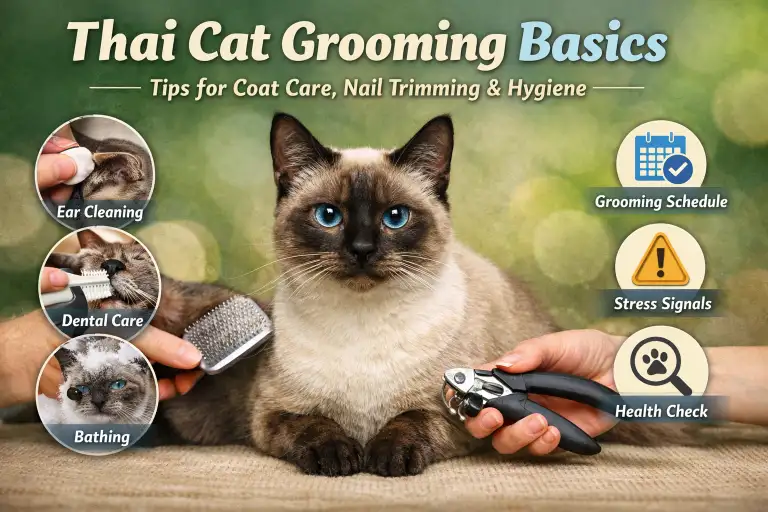
Thai cats (often called traditional Siamese) have a short, fine, close-lying coat that looks low-maintenance — and compared to long-haired breeds, it is. But “short-haired” does not mean “no grooming required.” In practice, Thai cats benefit from light, consistent grooming to control shedding, reduce hairballs, and catch small health changes early.
Their coat does not mat easily, but it does shed steadily year-round, with heavier shedding during seasonal transitions (especially spring and early fall). Because the hair is fine and lies close to the body, loose fur often stays trapped until you pet or brush them — which is why owners sometimes think shedding is minimal until it shows up on clothing or furniture.
Thai cats are also known for their thin, sleek coat. This means:
- Skin irritation becomes visible quickly
- Over-brushing can cause redness
- Harsh tools can scrape or overstimulate the skin
- Temperature sensitivity is slightly higher than in double-coated breeds
From hands-on grooming experience, Thai cats usually fall into two categories during grooming: highly cooperative and highly opinionated. They are intelligent, alert, and very aware of what you’re doing. If grooming feels forced, they will protest — often vocally. If it feels like interaction and bonding, they tend to participate willingly.
That temperament matters. Grooming a Thai cat successfully is less about restraint and more about timing and approach.
Here’s a quick overview of what their coat type means in practical terms:
| Feature | What It Means for Grooming |
|---|---|
| Short, fine coat | Low mat risk but regular loose hair buildup |
| Moderate year-round shedding | Weekly brushing recommended |
| Seasonal shed increases | Temporary increase in brushing frequency |
| Thin coat | Avoid aggressive tools or excessive brushing |
| Active, vocal temperament | Use calm handling and short sessions |
Another common misconception is that Thai cats “take care of themselves.” While they are excellent self-groomers, they cannot:
- Trim their own nails
- Clean tartar from their teeth
- Remove all loose hair during heavy shedding
- Address ear debris buildup
- Signal subtle skin irritation before it worsens
Regular grooming isn’t about styling — it’s about maintenance and monitoring. During brushing or nail trimming, you may notice:
- Small scabs
- Early dental redness
- Mild ear debris
- Unusual shedding patterns
- Weight changes
These are things owners often miss without structured grooming time.
In short, Thai cat grooming is light but consistent. It’s preventive care wrapped inside bonding time. When approached calmly and routinely, most Thai cats adapt well — and many even begin to expect it.
Brushing and Coat Care for Thai Cats
Brushing is the most important grooming task for a Thai cat. Even though their coat is short, they still shed. Loose hair builds up along the back, near the base of the tail, and along the sides of the body. If you do not brush it out, your cat will swallow more hair while self-grooming, which can lead to hairballs.
The good news: Thai cats do not need long grooming sessions. Short, gentle brushing works best.
How often should you brush a Thai cat?
- Normal months: 1–2 times per week
- Heavy shedding season (spring and fall): 3–4 times per week
- Indoor cats: Usually steady shedding all year
- Outdoor cats: May shed more during season changes
If you see more hair on furniture or clothing, increase brushing slightly. Do not jump from once a week to daily brushing right away. Increase slowly.
Simple step-by-step brushing routine:
- Choose a calm time. Do not brush right after playtime.
- Let your cat sniff the brush first.
- Start with gentle petting.
- Brush in the direction the hair grows.
- Use light pressure. The coat is thin.
- Keep sessions short — about 5 to 7 minutes.
Where Thai cats shed most:
- Along the spine
- At the base of the tail
- On the sides (flanks)
- Under the chest
Be gentle around the belly. Many Thai cats are sensitive there.
Signs you are brushing too much:
- Red skin
- Skin twitching
- Tail flicking
- Your cat suddenly walking away
- Vocal protest
If your Thai cat resists brushing:
- Make sessions shorter
- Try brushing after a meal (cats are calmer)
- Stop before your cat gets annoyed
- Reward with praise or gentle petting
Never hold your cat down tightly just to finish brushing. Grooming should feel safe, not forced.
Thai cats do not usually get mats because their coat is short. If you feel a small knot, do not pull hard. Gently work it out with slow strokes. If the knot is tight or close to the skin, it is safer to ask a professional groomer for help.
Regular brushing keeps shedding under control, reduces hairballs, and helps you check the skin for small problems early.
Nail Trimming, Ear Cleaning and Dental Care Basics
Brushing is only one part of grooming. Thai cats also need nail care, ear checks, and dental care. These tasks do not take long, but they are very important for your cat’s health.
Nail trimming basics
Indoor Thai cats cannot wear down their nails enough on their own. If nails grow too long, they can:
- Get stuck in fabric
- Curl into the paw pad
- Cause pain while walking
- Scratch people by accident
How often to trim:
- Every 2 to 4 weeks
- Senior cats may need trimming more often
Simple nail trimming steps:
- Choose a quiet room with good light.
- Hold your cat gently on your lap or table.
- Press the paw pad softly to make the claw come out.
- Look for the pink area inside the nail. This is called the quick.
- Cut only the clear tip, not the pink part.
- Trim one or two nails at a time if your cat gets restless.
Stop if you see:
- Fast tail flicking
- Ears going flat
- Growling
- Trying to pull away strongly
It is better to stop early than to force the session.
Ear care basics
Check your Thai cat’s ears once a month.
Healthy ears look:
- Light pink
- Clean
- No bad smell
You may see a small amount of light brown wax. That is normal.
Call a vet if you notice:
- Thick dark debris
- Strong smell
- Swelling
- Head shaking or scratching
Only clean the outer part of the ear. Never push anything deep inside the ear canal. That can cause injury.
Dental care basics
Many Thai cats develop dental buildup as they age. Without care, this can lead to gum disease.
How often to brush teeth:
- 2 to 3 times per week
- Daily is best if your cat allows it
Signs of dental problems:
- Red gums
- Bad breath
- Drooling
- Trouble eating
If you see heavy yellow or brown tartar, a professional vet cleaning may be needed.
Here is a simple care overview table:
| Task | How Often | What to Watch For | When to Call a Vet |
|---|---|---|---|
| Nail trimming | Every 2–4 weeks | Nails curling | Bleeding or split nails |
| Ear check | Once a month | Dark debris, smell | Swelling or discharge |
| Teeth brushing | 2–3 times weekly | Red gums | Heavy tartar buildup |
These small checks help you find problems early before they become serious.
Bathing Thai Cats — When It’s Necessary and When to Avoid It
Many people ask, “Do Thai cats need baths?”
Most of the time, the answer is no.
Thai cats are very clean animals. They groom themselves every day. Their short coat does not trap dirt easily. Regular brushing is usually enough to keep them clean.
When you do NOT need to bathe your Thai cat:
- Normal shedding
- Light dust or loose fur
- Healthy indoor cat with clean coat
- No bad smell
Brushing is better than bathing in these cases.
When bathing may be needed:
- Greasy or sticky coat
- Flea dirt or heavy dirt
- Your cat rolled in something messy
- Senior cat who cannot groom well anymore
Here is a simple guide to help you decide:
| Situation | Bathe at Home? | Notes |
|---|---|---|
| Normal shedding | No | Brush instead |
| Greasy coat | Maybe | If your cat is calm |
| Flea dirt | Yes | Use proper flea care plan |
| Skin problem | No | See a vet first |
If you decide to bathe your Thai cat, keep it simple and calm.
Safe bathing steps:
- Use lukewarm water, not hot or cold.
- Keep water level low. Do not fully submerge your cat.
- Avoid the face and ears.
- Work quickly and gently.
- Rinse very well. Soap left on skin can cause itching.
- Dry with a soft towel right away.
Important safety tips:
- Never use human shampoo.
- Never force your cat into water.
- Never leave your cat alone in water.
- Do not bathe too often. Over-bathing can dry the skin.
Thai cats can become stressed during baths. Watch for:
- Loud crying
- Fast breathing
- Wide eyes
- Trying to climb out
If your cat becomes very stressed, stop and dry them. For very nervous cats, a professional groomer may be safer.
Bathing should be rare. For most Thai cats, regular brushing and basic hygiene are enough to keep them clean.
Grooming Frequency Guide, Safety Signals and Common Mistakes
Now let’s put everything together in one simple guide. This section helps you remember how often to groom and what signs to watch during each session.
Complete grooming frequency guide
| Grooming Task | Normal Schedule | During Heavy Shedding | Notes |
|---|---|---|---|
| Brushing | 1–2 times per week | 3–4 times per week | Keep sessions short |
| Nail trimming | Every 2–4 weeks | Same | Seniors may need more often |
| Ear check | Once a month | Same | Clean only if needed |
| Teeth brushing | 2–3 times per week | Same | Daily is best |
| Bathing | Rarely | Rarely | Only when truly needed |
This table gives you a simple routine. You do not need to groom every day. Small, regular care is better than long, stressful sessions.
Safety signals to watch during grooming
Thai cats are expressive. They will show you when they are uncomfortable. Pay attention to body language.
| Body Signal | What It Means | What You Should Do |
|---|---|---|
| Tail flicking fast | Getting annoyed | Slow down or pause |
| Ears flat back | Feeling stressed | Stop session |
| Big wide eyes | Fear or worry | Speak softly, give space |
| Growling or hissing | Strong warning | End grooming right away |
| Trying to escape | Overwhelmed | Let your cat go |
Never ignore these signals. Grooming should build trust, not damage it.
Common grooming mistakes to avoid
- Brushing too hard
- Bathing too often
- Cutting nails too short
- Forcing your cat to stay still
- Ignoring dental care
- Using tools made for dogs
If grooming always turns into a struggle, take a break and try shorter sessions next time. You can also ask a professional groomer or your vet for help.
For more detailed guidance on feline dental health and why regular teeth care matters, you can read the American Veterinary Medical Association’s official dental care advice for pet owners.

Ata Ur Rehman is the founder of Pet Age in Human Years Calculator, an educational platform that provides age conversion charts and lifespan guides for dogs, cats, birds, and other companion animals. His work focuses on helping pet owners understand how animal ages translate into human years using commonly accepted age conversion formulas and published lifespan averages.
The website compiles breed and species lifespan data from kennel clubs, breed organizations, and general animal lifespan studies to present simple and easy-to-understand guides for pet owners worldwide.
This website was created to centralize animal age conversion charts into one easy reference platform for pet owners.