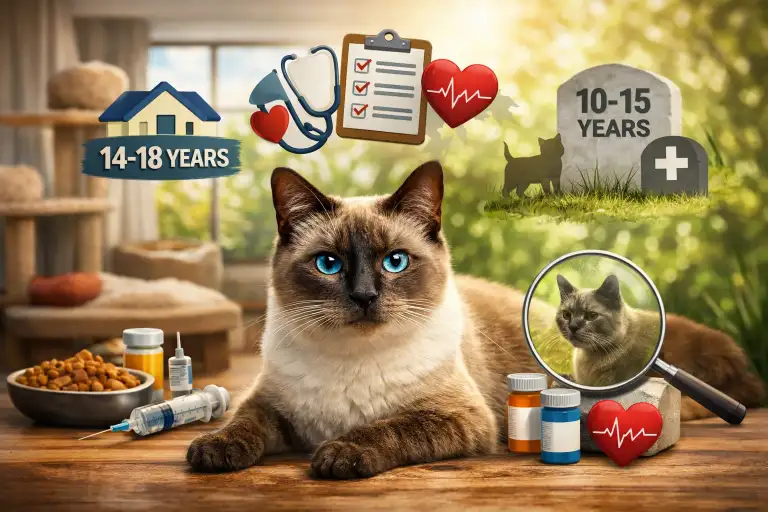
Thai cats are widely known for forming strong bonds with their families — and many owners are pleasantly surprised by how long these elegant, intelligent companions can live. While every cat is an individual, understanding typical lifespan ranges helps set realistic and reassuring expectations.
Average Thai Cat Lifespan
Most indoor Thai cats live between 14 and 18 years, and it is not uncommon for well-cared-for individuals to reach their late teens. Some even live beyond 18 years with consistent preventive care and a safe living environment.
Like most domestic cats, lifespan can vary depending on several factors — especially whether the cat lives indoors, outdoors, or a combination of both.
Indoor vs. Outdoor Lifespan Differences
| Living Environment | Typical Lifespan Range | Why It Varies |
|---|---|---|
| Indoor Thai Cat | 14–18+ years | Protection from traffic, predators, infectious disease exposure |
| Indoor/Outdoor | 10–15 years | Moderate exposure to environmental risks |
| Mostly Outdoor | Often shorter | Higher risk of injury, parasites, illness, and environmental hazards |
Indoor living significantly reduces preventable risks. Access to regular veterinary care, controlled nutrition, and a stable environment often contributes to longer, healthier lives.
How Thai Cats Compare to Other Cats
The Thai cat (sometimes called the traditional or old-style Siamese) is generally considered a relatively robust breed. When compared to the average domestic cat lifespan — often cited around 12 to 16 years for indoor cats — Thai cats tend to fall on the longer-living end of the spectrum.
That said, longevity is never guaranteed by breed alone. Genetics, lifestyle, preventive care, and early detection of health changes all influence outcomes over time.
Why Lifespan Varies Between Individual Thai Cats
Even within the same household, two Thai cats may age differently. Common factors that influence longevity include:
- Genetics and responsible breeding practices
- Maintaining a healthy body weight
- Quality and consistency of nutrition
- Regular veterinary wellness exams
- Dental care and parasite prevention
- Activity level and mental stimulation
- Stress levels within the home
It’s also important to remember that aging itself is natural. A Thai cat entering its senior years is not necessarily unhealthy — many simply slow down gradually while remaining comfortable and engaged.
For most owners, the takeaway is reassuring: with attentive care, a safe environment, and proactive monitoring, Thai cats often enjoy long, fulfilling lives well into their teens.
Common Thai Cat Health Issues Owners Should Know
Most Thai cats are healthy and strong. But like all cats, they can develop certain health problems over time. Knowing what is common helps you notice small changes early. Early attention often makes a big difference.
This section gives a simple overview. It is not a diagnosis guide — just helpful awareness for owners.
Health Overview Snapshot
| Condition | When It’s More Common | Early Signs Owners May Notice | Preventive Focus |
|---|---|---|---|
| Dental Disease | Any age, often after 3–4 years | Bad breath, drooling, chewing on one side | Regular dental checks |
| Obesity | Adult indoor cats | Weight gain, low energy | Portion control, daily play |
| Kidney Changes | Middle-aged and senior cats | Drinking more water, weight loss | Routine blood tests |
| Urinary Issues | Any age | Straining in litter box, frequent trips | Hydration, low stress |
| Diabetes | Overweight adults | Increased thirst, weight loss | Healthy weight |
| Heart Concerns | Some bloodlines | Tiring easily, breathing changes | Regular wellness exams |
| Arthritis | Senior cats | Hesitating to jump, stiff movement | Weight control, comfort support |
Dental Disease
Dental problems are very common in cats. Plaque builds up slowly over time. Many cats show no clear pain signs at first. Owners may only notice bad breath or a change in eating habits. Regular vet checks help catch problems early.
Obesity and Weight Gain
Thai cats love attention and may enjoy food a little too much. Indoor cats that do not move enough can gain weight easily. Extra weight puts stress on the heart, joints, and organs. Keeping your cat at a healthy weight supports a longer life.
Kidney Changes in Older Cats
Kidney disease is one of the most common age-related problems in cats. It usually develops slowly. Increased thirst or subtle weight loss can be early signs. Routine blood work during wellness visits helps detect changes before they become serious.
Urinary Tract Issues
Some cats are sensitive to stress, and this can affect their urinary system. You may notice frequent litter box visits or straining. Clean litter boxes, fresh water, and a calm home environment can help reduce risk.
Diabetes Awareness
Diabetes is more likely in overweight cats. It often develops slowly. Increased thirst and changes in weight can appear early. Managing weight is one of the best ways to lower risk.
Heart Health Considerations
Like other Siamese-related breeds, some Thai cats may have heart conditions in certain bloodlines. Not all cats are affected. Regular wellness exams allow veterinarians to listen for changes over time.
Age-Related Joint Changes
As Thai cats grow older, their joints may become stiff. You may notice they jump less or sleep more. These changes can be normal with aging, but monitoring helps ensure comfort.
Most of these conditions develop gradually. That is why simple observation at home and regular vet visits matter so much.
Factors That Influence Thai Cat Longevity
Thai cats can live long lives, but lifespan is not based on luck alone. Many small daily choices affect how healthy a cat stays over the years. The good news is that owners have more influence than they may think.
Here are the biggest factors that shape a Thai cat’s life expectancy.
Healthy Body Weight
Keeping your Thai cat at a healthy weight is one of the most important things you can do. Extra weight puts pressure on the heart, kidneys, and joints. It can also raise the risk of diabetes.
Simple habits that help:
- Measure food portions
- Avoid too many treats
- Encourage daily play
- Weigh your cat during vet visits
Nutrition Quality
Cats need balanced food made for their life stage. Kittens, adults, and senior cats all have different needs. Fresh water should always be available. Good nutrition supports organ health and energy levels.
Indoor Living
Indoor Thai cats usually live longer than outdoor cats. Staying indoors protects them from:
- Traffic accidents
- Fights with other animals
- Parasites
- Infectious diseases
Some owners choose supervised outdoor time or secure enclosures for safety.
Routine Veterinary Care
Regular wellness exams help detect small health changes before they become big problems. Many diseases develop slowly. Early detection often improves long-term outcomes.
Routine care may include:
- Physical exams
- Dental checks
- Bloodwork for adult and senior cats
- Vaccination updates
- Parasite prevention
Dental Monitoring
Dental disease is common and often silent at first. Healthy teeth and gums help protect the whole body. Regular checks reduce long-term problems.
Mental Stimulation and Activity
Thai cats are intelligent and social. They need play and interaction. Boredom can lead to stress, weight gain, or behavior problems.
Helpful ideas:
- Puzzle toys
- Climbing spaces
- Interactive play
- Daily bonding time
Low-Stress Home Environment
Cats are sensitive to stress. Big changes, loud noise, or conflict with other pets can affect their health over time. A calm, stable home supports overall wellness.
Small, consistent care habits often matter more than rare big efforts. Over time, these habits can help a Thai cat live a longer, healthier life.
Thai Cat Aging: Senior Health Changes and Warning Signs
Thai cats often age slowly and gracefully. Many stay playful well into their teen years. But as cats grow older, small changes begin to appear. Some changes are normal. Others should be discussed with a veterinarian.
Most Thai cats are considered senior around 10 years of age. After this point, regular monitoring becomes even more important.
Normal Aging vs. Changes Worth Discussing
| Common Change | Often Normal With Age | Talk to a Vet If You Notice… |
|---|---|---|
| Sleeping more | Yes | Extreme tiredness or weakness |
| Moving slower | Yes | Signs of pain or limping |
| Slight weight change | Sometimes | Fast weight loss or gain |
| Drinking a little more | Sometimes | Large increase in thirst |
| Less jumping | Common in seniors | Refusing to move or climb |
| Mild behavior change | Possible | Hiding, confusion, or withdrawal |
Sleeping More
Older cats rest more during the day. This is normal. However, if your cat seems weak or uninterested in everything, that should be checked.
Changes in Weight
A small shift in body shape can happen with age. But fast weight loss is not normal. Regular weigh-ins help track changes early.
Increased Thirst or Urination
Some senior cats drink a bit more water. A big increase, though, should always be discussed with a vet. Changes in litter box habits are important to notice.
Reduced Jumping or Climbing
Arthritis can make jumping uncomfortable. You may see hesitation before jumping onto furniture. Soft bedding and easy access to favorite spots can help comfort aging joints.
Grooming Changes
Older cats may groom less. Their coat may look rough or messy. This can be due to stiffness or dental discomfort. Gentle brushing at home can support them.
Behavior Changes
Mild slowing down is normal. But strong personality changes are not. Hiding more, acting confused, or becoming unusually vocal should be checked.
When to Contact a Veterinarian
Contact your vet if you notice:
- Sudden appetite loss
- Rapid weight change
- Trouble breathing
- Repeated vomiting
- Straining in the litter box
- Major behavior changes
Many health problems in senior cats develop slowly. Early attention often helps manage them more easily.
Supporting a Long, Healthy Life: Practical Thai Cat Care
Thai cats are loving, smart, and very connected to their families. The good news is that simple daily care can help them live long and happy lives. You do not need anything fancy. You just need steady, thoughtful habits.
Create a Safe Indoor Home
Indoor cats usually live longer. Keeping your Thai cat indoors protects them from cars, fights, and disease. If you want them to enjoy fresh air, use a safe enclosure or supervised time.
Maintain a Healthy Weight
A healthy weight protects the heart, kidneys, and joints.
Simple tips:
- Feed measured meals, not free feeding all day
- Limit treats
- Use playtime as exercise
- Ask your vet about body condition scoring
Small weight control habits over many years make a big difference.
Provide Daily Mental Stimulation
Thai cats are intelligent and social. They need mental activity to stay happy.
Helpful ideas:
- Interactive wand toys
- Puzzle feeders
- Cat trees for climbing
- Short daily play sessions
- Talking and bonding time
Mental stimulation reduces stress and supports overall health.
Adjust the Home as Your Cat Ages
Older Thai cats may need small changes to stay comfortable.
Helpful adjustments:
- Soft bedding
- Easy-to-reach litter boxes
- Steps or ramps near favorite spots
- Quiet rest areas
These changes support comfort without changing your cat’s independence.
Keep Up With Regular Vet Visits
Routine wellness exams help catch small problems early. Senior cats may benefit from more frequent checkups. Preventive care often protects long-term quality of life.
Watch Without Worrying
It is good to observe your cat daily. Notice eating habits, water intake, litter box use, and energy level. Most changes happen slowly. Calm observation is more helpful than panic.
Final Summary
Thai cats often live long, fulfilling lives — many reaching their mid to late teens. While some health issues can happen with age, steady preventive care, a healthy weight, mental stimulation, and regular vet visits support longevity.
Most importantly, strong daily bonding and attentive care create the best foundation for a healthy life.
For more general guidance on feline preventive care and healthy aging, you can visit the American Association of Feline Practitioners (AAFP), which provides educational resources for cat owners.
.

Ata Ur Rehman is the founder of Pet Age in Human Years Calculator, an educational platform that provides age conversion charts and lifespan guides for dogs, cats, birds, and other companion animals. His work focuses on helping pet owners understand how animal ages translate into human years using commonly accepted age conversion formulas and published lifespan averages.
The website compiles breed and species lifespan data from kennel clubs, breed organizations, and general animal lifespan studies to present simple and easy-to-understand guides for pet owners worldwide.
This website was created to centralize animal age conversion charts into one easy reference platform for pet owners.