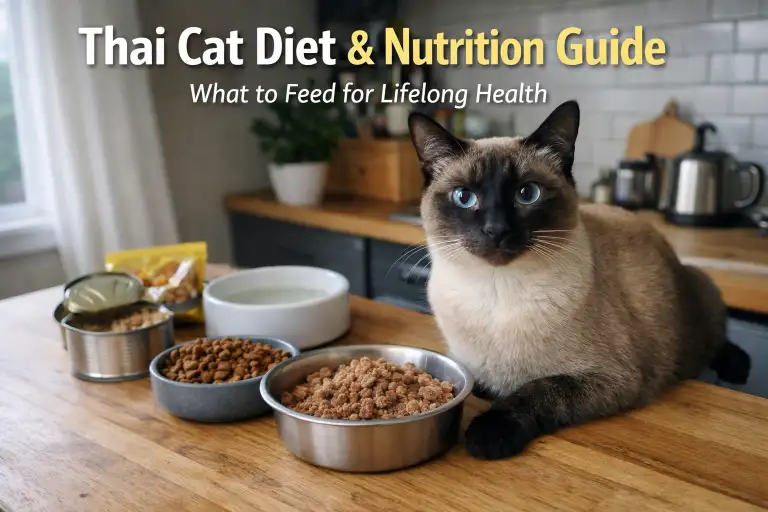
Thai cats, often associated with the traditional Siamese type, are typically lean, muscular, and highly active. Their sleek build and energetic personality can sometimes make owners assume they need “special” or exotic diets. In reality, their nutritional needs follow the same biological principles as all domestic cats — but their activity level, metabolism, and body composition make portion control and protein quality especially important.
Before choosing a brand or debating wet versus dry food, it’s essential to understand what a Thai cat’s body is designed to eat and process.
Cats Are Obligate Carnivores
Thai cats are obligate carnivores. This means their bodies are biologically adapted to rely on nutrients found primarily in animal tissues. Unlike omnivores, cats:
- Require preformed vitamin A (from animal sources)
- Cannot synthesize enough taurine on their own
- Have a high protein requirement compared to dogs
- Use protein and fat as primary energy sources
This doesn’t mean carbohydrates are “toxic” or must be eliminated entirely. It means that animal-based protein must form the nutritional foundation of their diet.
Protein: Quality Matters More Than Percentage
Protein supports:
- Lean muscle maintenance
- Immune system function
- Enzyme and hormone production
- Healthy skin and coat
Thai cats, with their naturally athletic build, benefit from consistent intake of high-quality animal protein. When evaluating cat food, the source of protein matters more than the crude protein percentage on the label. Animal-based proteins (chicken, turkey, beef, fish) provide complete amino acid profiles, including essential amino acids cats cannot produce themselves.
A food can list a high protein percentage but still rely heavily on plant-based protein concentrates. That’s why ingredient quality and overall formulation are more important than marketing claims.
Fat: A Primary Energy Source
Fat is not the enemy in feline nutrition. For cats, dietary fat:
- Provides concentrated energy
- Supports absorption of fat-soluble vitamins
- Maintains skin and coat health
- Supplies essential fatty acids
Because Thai cats are often active and metabolically efficient, fat helps meet energy needs without requiring excessive food volume. However, since fat is calorie-dense, portion awareness remains important, especially for indoor or neutered cats.
Carbohydrates: Understanding the Role
Carbohydrates are not biologically essential for cats in the same way protein and fat are. However, they are not inherently harmful when included in moderate, digestible amounts within a complete and balanced commercial diet.
In dry food especially, carbohydrates help provide structure and energy. The key is balance. Extremely high carbohydrate formulas may contribute to excess calorie intake, while moderate levels in a well-formulated diet are generally well tolerated by healthy cats.
Avoid extreme thinking. The goal is nutritional balance, not elimination.
Taurine and Essential Nutrients
One of the most critical nutrients in any cat’s diet is taurine. Taurine supports:
- Heart function
- Vision
- Reproductive health
- Immune function
Deficiency can lead to serious health problems, which is why reputable commercial cat foods are formulated to meet established nutritional standards.
In addition to taurine, Thai cats require:
- Arginine (another essential amino acid)
- Preformed vitamin A
- Vitamin D
- B-complex vitamins
- Calcium and phosphorus in appropriate ratios
- Magnesium in controlled amounts
This is why feeding a properly formulated “complete and balanced” diet is far safer than attempting to build meals without veterinary nutritional guidance.
Moisture Matters More Than Many Owners Realize
Cats naturally have a low thirst drive. In the wild, they would obtain much of their hydration from prey. Modern Thai cats often eat dry kibble, which contains very little moisture.
Chronic low moisture intake can contribute to:
- Concentrated urine
- Urinary tract stress
- Increased kidney strain over time
Incorporating moisture-rich foods or encouraging consistent water intake can support long-term urinary and kidney health.
Indoor vs Active Thai Cats
Thai cats are known for being intelligent, interactive, and often very active. However, many live exclusively indoors, where activity levels can vary significantly.
Highly active Thai cats may maintain lean body condition even with slightly higher calorie intake. Indoor, less active, or neutered Thai cats may require closer portion monitoring to prevent gradual weight gain.
The key indicator is not appetite — it is body condition.
Essential Nutrients for Thai Cats
| Nutrient | Why It Matters | Common Sources |
|---|---|---|
| Animal Protein | Muscle maintenance, metabolism | Poultry, beef, fish |
| Taurine | Heart and eye health | Animal tissues |
| Fat | Energy, coat quality | Animal fats, fish oil |
| Vitamins & Minerals | Organ and immune support | Balanced commercial diets |
| Moisture | Urinary and kidney support | Wet food, fresh water |
Understanding these fundamentals makes every feeding decision clearer. Once you know what your Thai cat’s body truly requires, choosing the right type of food and determining proper portions becomes far less confusing.
Choosing the Right Food: Wet, Dry, or Mixed?
One of the biggest questions Thai cat owners ask is:
“Should I feed wet food or dry food?”
The honest answer is — it depends on your cat, your budget, and your lifestyle. Both wet and dry food can be healthy if they are complete and balanced. What matters most is overall nutrition, not the format alone.
Wet Food: Benefits and Limits
Wet food contains a lot of water, often around 70–80%. This is very helpful because cats naturally do not drink a lot of water. Extra moisture supports:
- Kidney health
- Urinary tract health
- Better hydration overall
Wet food is also usually lower in calories per gram compared to dry food. This can help with weight control.
However, wet food can:
- Cost more
- Spoil faster once opened
- Be less convenient for free feeding
Dry Food: Benefits and Limits
Dry food (kibble) is easy to store and often costs less. Many owners like it because:
- It is convenient
- It stays fresh longer
- It can be measured easily
Dry food is more calorie-dense. That means a small amount contains more calories. This makes portion control very important, especially for indoor or neutered Thai cats.
Dry food is not “bad” by default. The key is choosing a high-quality, complete and balanced formula and feeding the right amount.
Wet vs Dry vs Mixed Feeding
Many owners choose mixed feeding. This means feeding both wet and dry food. This can provide:
- Better hydration from wet food
- Convenience from dry food
- More variety in texture and taste
Here is a simple comparison:
| Feature | Wet Food | Dry Food | Mixed Feeding |
|---|---|---|---|
| Water Content | High | Very Low | Moderate |
| Calories per Portion | Lower | Higher | Balanced |
| Hydration Support | Strong | Weak | Moderate |
| Convenience | Moderate | High | Moderate |
| Cost | Higher | Lower | Medium |
Reading Cat Food Labels (Simple Guide)
When choosing food for your Thai cat, look for:
- A statement that says “complete and balanced”
- AAFCO nutritional adequacy statement
- Animal protein listed in the first ingredients
- Clear feeding guidelines on the label
Do not focus only on “high protein” claims. A balanced diet is more important than one single number on the package.
What About Grain-Free Food?
Many people think grain-free food is healthier. In reality:
- Cats do not require grains
- But grains are not harmful for most healthy cats
- What matters is the overall nutrient balance
Avoid choosing food based on trends. Choose it based on balance and your cat’s body condition.
Choosing Based on Your Thai Cat’s Lifestyle
You may adjust your choice depending on your cat’s situation:
- Indoor Thai cats may benefit from portion control and moisture support
- Very active Thai cats may need slightly more calories
- Food-driven or vocal Thai cats may need structured meal times
The best diet is one your cat eats well, digests well, and maintains a healthy body weight on.
How Much and How Often to Feed a Thai Cat
Feeding the right food is important. But feeding the right amount is just as important.
Many Thai cats love food. They may act hungry even when they are not. That is why you should not feed based only on how much your cat asks for food. You should feed based on body condition and proper portion size.
How Often Should a Thai Cat Eat?
Most adult Thai cats do well with 2 to 3 meals per day. Kittens need more frequent meals because they are growing fast.
Here is a simple guide:
| Life Stage | Meals Per Day | What to Watch |
|---|---|---|
| Kitten (under 1 year) | 3–4 meals | Steady growth and energy |
| Adult (1–7 years) | 2–3 meals | Healthy body shape |
| Senior (7+ years) | 2–3 meals | Weight and muscle tone |
Free feeding means leaving dry food out all day. This can work for some cats, but it often leads to overeating, especially in indoor Thai cats. Meal feeding gives you better control and helps you notice appetite changes faster.
How Much Should You Feed?
The exact amount depends on:
- Your cat’s weight
- Activity level
- Age
- Whether your cat is spayed or neutered
- The calorie content of the food
Always check the feeding guide on the food package first. Then adjust based on your cat’s body shape.
Remember: dry food has more calories in a small amount. Wet food has fewer calories per gram because it contains more water.
Why Spayed or Neutered Cats Need Portion Control
After being spayed or neutered, many cats burn fewer calories. Their appetite may stay the same or even increase. This can lead to slow weight gain over time.
If your Thai cat has been neutered, watch for:
- A rounder belly
- Hard-to-feel ribs
- Less visible waist
You may need to slightly reduce portions if weight increases.
Body Condition Is More Important Than the Scale
Instead of focusing only on weight, look at body condition.
Here is a simple check:
| Body Area | Healthy Cat | Overweight Cat |
|---|---|---|
| Ribs | Can feel them easily but not see them | Hard to feel |
| Waist (from above) | Clear inward curve | No curve |
| Belly (from side) | Slight tuck up | Hanging or round |
If your Thai cat looks round from above, it may be time to adjust food portions.
Signs of Overfeeding
- Weight gain
- Less energy
- Always begging for food
- Soft stool from too many treats
Signs of Underfeeding
- Visible ribs
- Low energy
- Constant hunger
- Weight loss
Feeding in a Multi-Cat Home
If you have more than one cat:
- Feed in separate areas
- Watch who finishes first
- Make sure each cat gets the correct portion
Some Thai cats eat quickly. Slow feeder bowls can help prevent fast eating.
The goal is simple: keep your Thai cat lean, active, and stable in weight.
Life Stage and Lifestyle Feeding Considerations
Thai cats go through different life stages. Their food needs can change as they grow, age, or change activity level. Feeding the same way for life may not always work.
Understanding these changes helps you prevent problems before they start.
Feeding Thai Kittens
Kittens grow fast. They need:
- More protein
- More calories
- More meals per day
Choose food labeled for growth or “all life stages.” These formulas support bone, muscle, and brain development.
Watch for:
- Steady weight gain
- High energy
- Normal stool
Do not switch to adult food too early. Most Thai cats can move to adult food around 10–12 months of age.
Feeding Adult Thai Cats
Adult Thai cats should stay lean and muscular. At this stage:
- Focus on portion control
- Keep meals consistent
- Monitor body shape monthly
Many adult Thai cats are very active and vocal. They may ask for food often. This does not always mean they are hungry. Stick to a schedule to avoid overfeeding.
Feeding Senior Thai Cats
As Thai cats age, they may:
- Lose muscle
- Sleep more
- Become less active
Senior cats still need good protein to protect muscle. Do not lower protein without veterinary advice. Instead, focus on:
- Easy-to-chew textures if dental issues appear
- Monitoring weight closely
- Watching for appetite changes
Sudden weight loss in senior cats should always be checked by a veterinarian.
Indoor vs Active Thai Cats
Not all Thai cats move the same amount.
Here is a simple guide:
| Lifestyle | Feeding Focus |
|---|---|
| Indoor only | Watch calories closely |
| Very active | May need slightly more food |
| Less active senior | Prevent weight gain |
| Outdoor access | Monitor body condition often |
Indoor cats usually burn fewer calories. Even small extra treats can slowly cause weight gain.
Spayed or Neutered Thai Cats
After surgery, metabolism may slow down. Appetite often stays strong.
If you notice slow weight gain:
- Measure food carefully
- Reduce portions slightly
- Avoid free feeding
Small changes early prevent big problems later.
Managing Food-Loving or Vocal Thai Cats
Thai cats are known for being talkative. Some learn that meowing brings food.
Instead of feeding every time they ask:
- Stick to set meal times
- Use puzzle feeders for mental stimulation
- Offer play sessions before meals
This keeps them busy and prevents emotional overeating.
Changing Food Safely
If you switch foods:
- Mix new food slowly over 7–10 days
- Increase the new food a little each day
- Watch for vomiting or diarrhea
Slow transitions protect your cat’s stomach.
Treats, Hydration, Common Mistakes, and When to See a Veterinarian
Food is not just meals. Treats, water, and feeding habits also affect your Thai cat’s health.
Small daily choices can make a big difference over time.
Treats: How Much Is Too Much?
Treats should be a small part of your cat’s diet.
A simple rule:
Treats should not be more than 10% of your cat’s daily calories.
Too many treats can cause:
- Weight gain
- Picky eating
- Upset stomach
- Nutrient imbalance
If your Thai cat loves treats, try:
- Giving smaller pieces
- Using part of their daily kibble as rewards
- Playing or brushing instead of feeding as a reward
Safe and Unsafe Human Foods
Some plain human foods are safer in small amounts. Others are dangerous.
Here is a simple guide:
| Generally Safer (Plain, Small Amounts) | Unsafe or Toxic |
|---|---|
| Cooked chicken (no salt or spices) | Onion |
| Cooked turkey | Garlic |
| Plain cooked fish | Chocolate |
| Small pieces of egg | Xylitol (artificial sweetener) |
| Plain pumpkin | Grapes and raisins |
Never feed foods with spices, sauces, salt, or oils. When in doubt, do not share.
Hydration: Why Water Is So Important
Cats naturally drink less water than dogs. Thai cats are no different.
Low water intake over time can stress:
- Kidneys
- Bladder
- Urinary tract
To help your cat drink more:
- Offer fresh water daily
- Use a water fountain (many cats prefer moving water)
- Place water bowls in different areas
- Add wet food to meals
Signs of dehydration can include:
- Dry gums
- Low energy
- Less urination
If you notice these signs, contact your veterinarian.
Common Feeding Mistakes
Many feeding problems happen slowly and are easy to miss.
Watch out for:
- Feeding based only on begging
- Free feeding without measuring
- Giving too many treats
- Switching food too quickly
- Ignoring slow weight gain
- Believing marketing claims without checking labels
The goal is balance, not perfection.
When to See a Veterinarian
Food changes can sometimes signal health problems.
Contact your veterinarian if you notice:
- Sudden loss of appetite
- Rapid weight loss or gain
- Vomiting or diarrhea lasting more than 1–2 days
- Drinking much more or much less water
- Trouble urinating
Nutrition supports health, but it does not replace medical care.
For general feline nutrition standards and how “complete and balanced” diets are defined, you can review the AAFCO pet food nutrient profiles.
.

Ata Ur Rehman is the founder of Pet Age in Human Years Calculator, an educational platform that provides age conversion charts and lifespan guides for dogs, cats, birds, and other companion animals. His work focuses on helping pet owners understand how animal ages translate into human years using commonly accepted age conversion formulas and published lifespan averages.
The website compiles breed and species lifespan data from kennel clubs, breed organizations, and general animal lifespan studies to present simple and easy-to-understand guides for pet owners worldwide.
This website was created to centralize animal age conversion charts into one easy reference platform for pet owners.