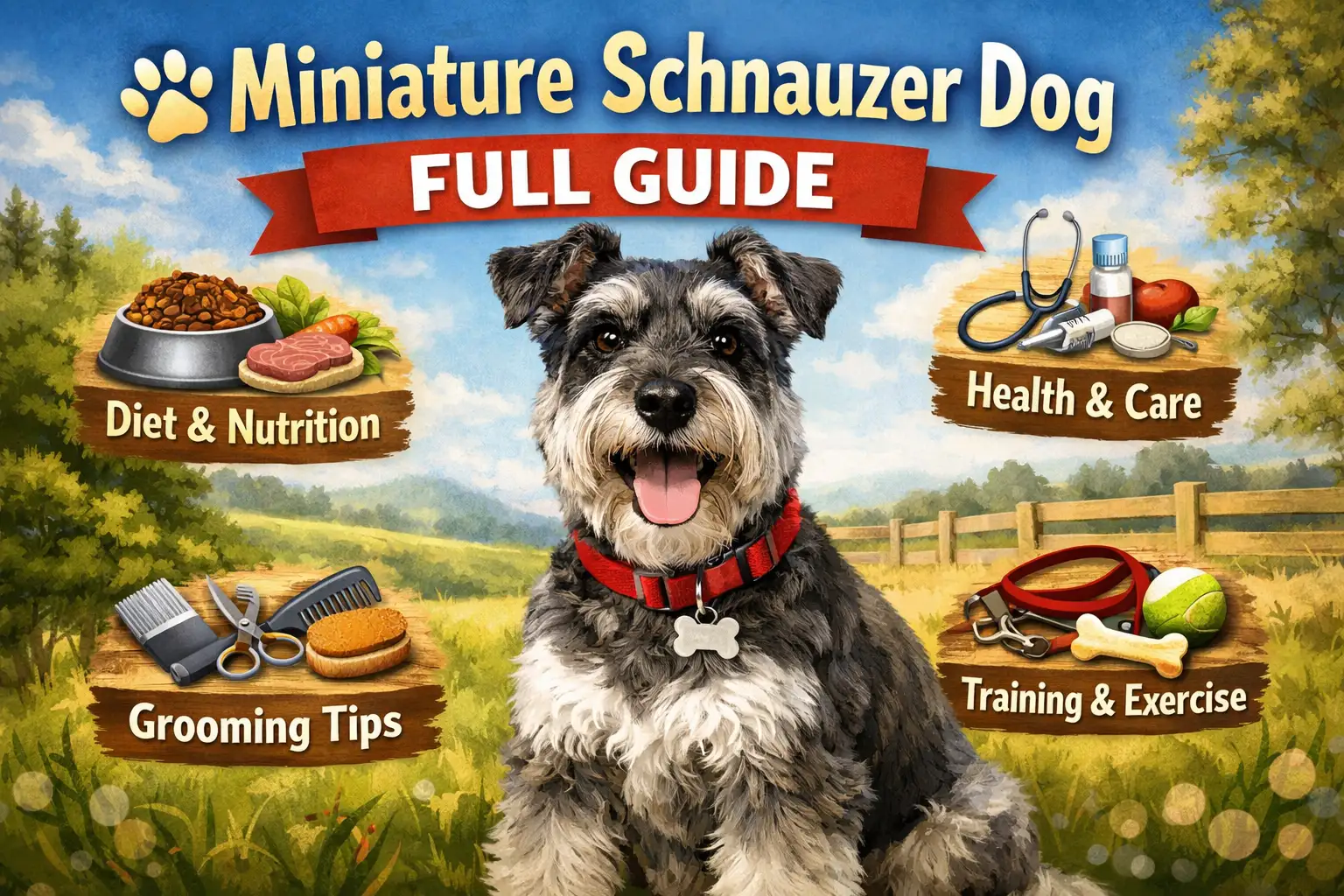
The Miniature Schnauzer Dog is a small, intelligent, and alert breed known for its wiry coat, bold personality, and strong attachment to family. Although it is compact in size, this breed was originally developed as a working farm dog, which explains its confident nature, watchdog instincts, and high mental energy.
If you are considering a Miniature Schnauzer, the most important things to understand are its temperament, size, lifespan, grooming needs, barking habits, and daily care requirements. This breed can be a wonderful companion for families, apartment owners, seniors, and first-time dog owners, but it is not a completely low-maintenance dog.
This Miniature Schnauzer dog breed guide will help you understand what daily life with this breed is really like. You will learn how big Miniature Schnauzers get, how they behave around people and pets, how long they usually live, and whether this smart, vocal, and loyal dog is the right match for your home.
Miniature Schnauzer Dog Breed at a Glance
The Miniature Schnauzer is best described as a small dog with a big-dog attitude. It is alert, affectionate, energetic, and highly people-focused. Most Miniature Schnauzers do well in family homes and apartments, but they need regular grooming, daily activity, and consistent training to manage barking and stubborn behavior.
| Breed Feature | Miniature Schnauzer Details |
|---|---|
| Breed Group | Small dog breed |
| Average Height | 12–14 inches |
| Average Weight | 10–20 pounds |
| Typical Lifespan | 12–15 years |
| Temperament | Smart, alert, loyal, vocal, confident |
| Exercise Needs | Moderate; daily walks and play |
| Grooming Needs | High; brushing and regular trimming needed |
| Shedding Level | Low |
| Good for Apartments | Yes, if barking and exercise are managed |
| Good for First-Time Owners | Yes, with training and grooming commitment |
Want to understand your dog’s age better? Use our Miniature Schnauzer Age Calculator to estimate your Miniature Schnauzer’s age in human years and understand its current life stage.
Miniature Schnauzer Owner Resources
If you already own this breed or are planning to bring one home, these related Miniature Schnauzer guides can help you go deeper into specific care topics:
- Miniature Schnauzer Age Calculator
- Miniature Schnauzer Age Chart
- Miniature Schnauzer Training Guide
- Miniature Schnauzer Grooming Basics
- Miniature Schnauzer Nutrition and Feeding
- Miniature Schnauzer Cost of Ownership
Miniature Schnauzer History and Breed Background
The Miniature Schnauzer comes from Germany, where it was developed as a small farm dog. Its original job was to catch rats, watch over property, and help around barns and stables. Farmers wanted a dog that was small enough to manage easily but still tough, alert, and brave enough to work.
This working background still shows in the breed today. Miniature Schnauzers are quick learners, highly aware of their surroundings, and naturally interested in movement, sounds, and new activity around the home. They may be small, but they often behave like serious little watchdogs.
Unlike some small companion dogs, the Miniature Schnauzer was not created only to sit on laps or look decorative. It was bred to think, react, and stay involved. This is why many owners describe the breed as active, expressive, and strongly connected to daily family life.
Miniature Schnauzer Size: Height, Weight, and Full-Grown Measurements
A full-grown Miniature Schnauzer is a small but sturdy dog. Most adults stand around 12–14 inches tall and weigh between 10–20 pounds. This makes the breed easy to manage in smaller homes, but it should not be treated like a fragile toy dog.
The Miniature Schnauzer has a square, strong body with firm legs and a confident posture. A healthy dog should look compact and balanced, not overly thin or overweight. Because this breed can gain weight if overfed, owners should pay close attention to body condition, food portions, and daily exercise.
Here is a simple Miniature Schnauzer size and weight overview:
| Category | Average Height | Average Weight |
|---|---|---|
| Male Miniature Schnauzer | 12–14 inches | 11–20 pounds |
| Female Miniature Schnauzer | 12–14 inches | 10–18 pounds |
| Full-Grown Miniature Schnauzer | 12–14 inches | 10–20 pounds |
So, how big does a Miniature Schnauzer get? In most cases, this breed stays small enough for apartment living but strong enough for active daily walks, playtime, and family life.
Miniature Schnauzer Appearance and Coat
The Miniature Schnauzer has one of the most recognizable looks in the dog world. Its thick eyebrows, long beard, square body, and wiry coat give it a serious and expressive face. Many people first notice the breed because of this unique appearance.
The coat has two layers: a softer undercoat and a wiry outer coat. Miniature Schnauzers are often considered low-shedding dogs, but low shedding does not mean low grooming. Their coat needs regular brushing, trimming, and beard care to stay clean and healthy.
Common Miniature Schnauzer coat features include:
| Coat Feature | Details |
|---|---|
| Coat Type | Double coat with wiry outer hair |
| Shedding Level | Low |
| Common Colors | Salt and pepper, black, black and silver |
| Grooming Needs | Regular brushing and trimming required |
| Beard Care | Needs cleaning because food and water can collect |
For a deeper grooming routine, see our Miniature Schnauzer grooming guide.
Miniature Schnauzer Temperament, Personality, and Behavior
The Miniature Schnauzer temperament is usually smart, alert, loyal, playful, and vocal. This breed likes to know what is happening around the home and often reacts quickly to sounds, visitors, movement, or changes in routine.
Miniature Schnauzers are very people-focused dogs. Many follow their owners from room to room and want to be part of family activity. They usually enjoy attention, training games, and daily interaction, but they may become bored or noisy if ignored for long periods.
This breed is often confident with its family but cautious around strangers. Barking is common because the Miniature Schnauzer has strong watchdog instincts. This does not always mean aggression. In many cases, the dog is simply alerting the household that something is happening.
Here is a simple Miniature Schnauzer temperament overview:
| Temperament Trait | Level | What It Means for Owners |
|---|---|---|
| Intelligence | Very High | Learns quickly but may become stubborn without structure |
| Affection | High | Usually bonds closely with family |
| Alertness | High | Notices sounds, visitors, and changes quickly |
| Barking | High | Needs training to manage alert barking |
| Energy Level | Moderate | Needs daily walks, play, and mental activity |
| Prey Drive | Medium | May chase small animals because of working roots |
Are Miniature Schnauzers Good Family Dogs?
Miniature Schnauzers can be good family dogs when children are taught to treat them gently. They are playful, loyal, and usually enjoy being included in family routines. However, because they are alert and expressive, they do best in homes that can provide training, attention, and clear boundaries.
Are Miniature Schnauzers Good With Other Pets?
Many Miniature Schnauzers can live well with other dogs, especially when socialized early. Cats may also be accepted if introductions are slow and controlled. Small pets like hamsters, rabbits, or birds can be more difficult because the breed was originally used to chase and catch rodents.
Are Miniature Schnauzers Good for Apartments?
Miniature Schnauzers can do well in apartments because of their small size, but barking must be managed. They need daily walks, mental stimulation, and training so they do not become noisy or restless indoors.
Overall, the Miniature Schnauzer is best for owners who want an involved, intelligent, and expressive dog. This breed is not silent or passive, but for the right owner, it can be a loyal and entertaining companion.
Miniature Schnauzer Care: Training, Exercise, and Grooming Needs
Miniature Schnauzer care is not difficult, but it does require consistency. This breed needs regular training, daily exercise, mental stimulation, and ongoing grooming. Because Miniature Schnauzers are intelligent and alert, they do best with owners who can give them structure instead of leaving them to make their own rules.
The Miniature Schnauzer is a very smart dog, but smart dogs can sometimes be challenging. They learn quickly, but they may also test boundaries if training is unclear. For this reason, early and consistent Miniature Schnauzer training is important.
Short training sessions usually work best. Miniature Schnauzers enjoy learning commands, tricks, and games that make them think. Many owners notice that their dog listens well at home but becomes distracted outside when there are new smells, sounds, people, or other dogs nearby. This is normal for the breed and improves with steady practice.
Exercise is also important, but this breed does not need extreme activity. Most Miniature Schnauzers do well with daily walks, short play sessions, and time to explore safely. Mental exercise matters just as much as physical exercise. Without enough stimulation, this breed may bark too much, become restless, or look for trouble around the home.
Here is a practical Miniature Schnauzer care overview:
| Care Area | What Miniature Schnauzers Usually Need |
|---|---|
| Daily Exercise | About 45–60 minutes of walks, play, and movement |
| Mental Stimulation | Training games, puzzle toys, scent games, and short learning sessions |
| Training Difficulty | Moderate; smart but sometimes stubborn |
| Barking Management | Needs early training because alert barking is common |
| Brushing | 2–3 times per week, especially beard, legs, and chest |
| Professional Grooming | Usually every 4–6 weeks |
Grooming is one of the biggest ownership commitments with this breed. Miniature Schnauzers are low-shedding dogs, but their coat still needs regular care. Brushing helps prevent mats, especially around the beard, chest, legs, and underarms.
The beard needs special attention because food and water can collect in it. Wiping the beard regularly helps reduce smell, staining, and skin irritation. Ears, nails, and teeth should also be checked as part of normal care.
There are two common grooming methods for this breed: clipping and hand-stripping. Most pet owners choose clipping because it is easier and more practical, while hand-stripping is usually used by owners who want to maintain a harsher coat texture.
| Grooming Method | Best For | What to Know |
|---|---|---|
| Clipping | Most pet owners | Easier, faster, and more common for family pets |
| Hand-Stripping | Show-style coat maintenance | Helps maintain wiry coat texture but takes more skill and time |
For a deeper step-by-step routine, see the full Miniature Schnauzer grooming basics guide.
Overall, the Miniature Schnauzer does best with owners who enjoy an active, involved dog. This breed is not extremely high-energy, but it does need daily attention, regular grooming, and clear training to stay happy and well-behaved.
Miniature Schnauzer Lifespan, Age, and Health
The Miniature Schnauzer lifespan is usually around 12–15 years. Many dogs from this breed live long, active lives when they receive good food, regular exercise, proper grooming, weight control, and routine veterinary care.
Because Miniature Schnauzers are small dogs with relatively long lifespans, their life stages can feel very different from larger breeds. A Miniature Schnauzer may stay energetic for many years, but owners should still pay attention to age-related changes in weight, teeth, eyes, movement, and energy levels.
If you want to understand your dog’s current life stage, use the Miniature Schnauzer Age Calculator to estimate your Miniature Schnauzer’s age in human years.
Here is a simple Miniature Schnauzer age and lifespan overview:
| Age Topic | Miniature Schnauzer Details |
|---|---|
| Average Lifespan | Usually around 12–15 years |
| Adult Stage | Often begins after puppy growth is complete |
| Senior Stage | Often starts around 8–10 years, depending on health |
| Important Senior Care | Weight checks, dental care, joint support, and regular vet visits |
| Helpful Tool | Miniature Schnauzer Age Calculator |
You can also review the full Miniature Schnauzer age chart if you want a more detailed year-by-year view of this breed’s age in human years.
Like all breeds, Miniature Schnauzers can be prone to certain health concerns. Not every dog will experience these problems, but owners should know what to watch for so they can act early.
Common Miniature Schnauzer health problems may include pancreatitis, diabetes, eye problems, skin allergies, dental issues, and weight-related problems. A healthy diet, controlled portions, regular exercise, and routine vet checkups are especially important for this breed.
Here is a simple Miniature Schnauzer health overview:
| Health Area | What Owners Should Know |
|---|---|
| Weight Control | Important because extra weight can affect long-term health |
| Digestive Sensitivity | Some Miniature Schnauzers may be prone to stomach or pancreas issues |
| Dental Care | Small breeds often need regular teeth cleaning and dental checks |
| Skin and Coat | Allergies or irritation can appear if grooming and diet are poor |
| Eye Health | Owners should watch for cloudiness, irritation, or vision changes |
| Prevention | Good nutrition, grooming, exercise, and regular vet visits |
Food quality and portion control play a major role in this breed’s long-term health. For more help with feeding routines, see the full Miniature Schnauzer nutrition and feeding guide.
Miniature Schnauzer Cost and Ownership Suitability
The cost of owning a Miniature Schnauzer can be higher than some other small breeds because of grooming, vet care, quality food, and regular maintenance. The breed may be small, but it is not always a low-cost dog to own.
Puppy prices can vary depending on location, breeder reputation, health testing, and demand. Ongoing costs usually include grooming appointments, routine vet care, food, dental care, toys, training supplies, and possible pet insurance.
Here is a simple Miniature Schnauzer cost overview:
| Expense | Estimated Cost Range |
|---|---|
| Puppy Price | $800–$2,500 |
| Professional Grooming Per Year | $600–$1,200 |
| Routine Vet Care Per Year | $500–$1,000 |
| Monthly Insurance | $25–$45 |
| Food and Supplies | Varies by location, brand, and dog needs |
For a more detailed breakdown, see the full Miniature Schnauzer cost of ownership guide.
When it comes to lifestyle, the Miniature Schnauzer can fit many homes, but it is not right for everyone. This breed usually does well in apartments if it gets enough exercise and barking is managed. It can also be a good match for families, seniors, and first-time owners who are ready for training and grooming responsibilities.
People looking for a very quiet, independent, or low-maintenance dog may find the Miniature Schnauzer too demanding. This breed wants attention, reacts to its environment, and needs regular care to stay balanced.
Here is a quick Miniature Schnauzer suitability check:
| Owner or Home Type | Is a Miniature Schnauzer a Good Match? |
|---|---|
| Apartment Living | Yes, if barking and exercise are managed |
| Families with Children | Yes, with gentle handling and supervision |
| Seniors | Yes, if grooming and walking needs are manageable |
| First-Time Dog Owners | Yes, with training commitment |
| Busy Owners Away All Day | Not ideal without support and stimulation |
| Low-Maintenance Homes | Not the best match |
In short, the Miniature Schnauzer is best for people who want an alert, loving, intelligent, and involved companion. The breed gives a lot of personality and loyalty in return, but it also needs time, structure, grooming, and daily attention.
Miniature Schnauzer Age Chart Preview
Miniature Schnauzers usually live around 12–15 years, so understanding their age in human years can help owners adjust care, exercise, food, and vet checkups at the right time. The table below gives a simple preview of how a Miniature Schnauzer’s age may compare to human years.
| Miniature Schnauzer Age | Life Stage | Approximate Human Years |
|---|---|---|
| 1 year | Young adult | About 15 human years |
| 3 years | Adult | About 28 human years |
| 7 years | Mature adult | About 44 human years |
| 10 years | Senior | About 56 human years |
| 13 years | Older senior | About 68 human years |
This is only a simple preview. For a more complete year-by-year breakdown, visit the full Miniature Schnauzer Age Chart or use the Miniature Schnauzer Age Calculator to check your dog’s age directly.
Miniature Schnauzer FAQs
How big does a Miniature Schnauzer get?
A full-grown Miniature Schnauzer usually stands around 12–14 inches tall and weighs about 10–20 pounds. This makes it a small dog breed, but it still has a sturdy body and an active personality.
What is the lifespan of a Miniature Schnauzer?
The average Miniature Schnauzer lifespan is usually around 12–15 years. Good food, regular exercise, grooming, dental care, weight control, and routine vet visits can all support a healthier life.
Are Miniature Schnauzers good family dogs?
Yes, Miniature Schnauzers can be good family dogs. They are loyal, playful, and people-focused. They are best with children who understand how to treat dogs gently, and younger children should always be supervised around any dog.
Do Miniature Schnauzers bark a lot?
Miniature Schnauzers can bark more than some other small breeds because they are alert watchdogs. They often bark at visitors, sounds, movement, or changes around the home. Early training can help reduce unnecessary barking.
Are Miniature Schnauzers hypoallergenic?
Miniature Schnauzers are often considered a low-shedding breed, which may make them easier for some allergy-sensitive owners. However, no dog is completely hypoallergenic, so it is best to spend time around the breed before bringing one home.
Are Miniature Schnauzers good apartment dogs?
Yes, Miniature Schnauzers can do well in apartments because they are small and adaptable. The main challenge is barking. They need daily walks, mental stimulation, and training so they do not become noisy or restless indoors.
How much exercise does a Miniature Schnauzer need?
Most Miniature Schnauzers need around 45–60 minutes of daily activity. This can include walks, indoor play, training games, and safe outdoor exploration. Mental stimulation is also important because this breed is very intelligent.
When is a Miniature Schnauzer considered senior?
Many Miniature Schnauzers are considered senior around 8–10 years old, depending on their health, energy, and mobility. Senior dogs may need more regular health checks, weight management, dental care, and adjustments to exercise.
Check Your Miniature Schnauzer’s Age in Human Years
If you want to better understand your dog’s current life stage, use our Miniature Schnauzer Age Calculator. It can help you estimate your Miniature Schnauzer’s age in human years and make better care decisions as your dog grows older.
Related Miniature Schnauzer Guides
To continue learning about this breed, explore these related Miniature Schnauzer guides:
- Miniature Schnauzer Age Calculator
- Miniature Schnauzer Age Chart
- Miniature Schnauzer Training Guide
- Miniature Schnauzer Grooming Basics
- Miniature Schnauzer Nutrition and Feeding
- Miniature Schnauzer Cost of Ownership

Ata Ur Rehman is the founder of Pet Age in Human Years Calculator, an educational platform that provides age conversion charts and lifespan guides for dogs, cats, birds, and other companion animals. His work focuses on helping pet owners understand how animal ages translate into human years using commonly accepted age conversion formulas and published lifespan averages.
The website compiles breed and species lifespan data from kennel clubs, breed organizations, and general animal lifespan studies to present simple and easy-to-understand guides for pet owners worldwide.
This website was created to centralize animal age conversion charts into one easy reference platform for pet owners.