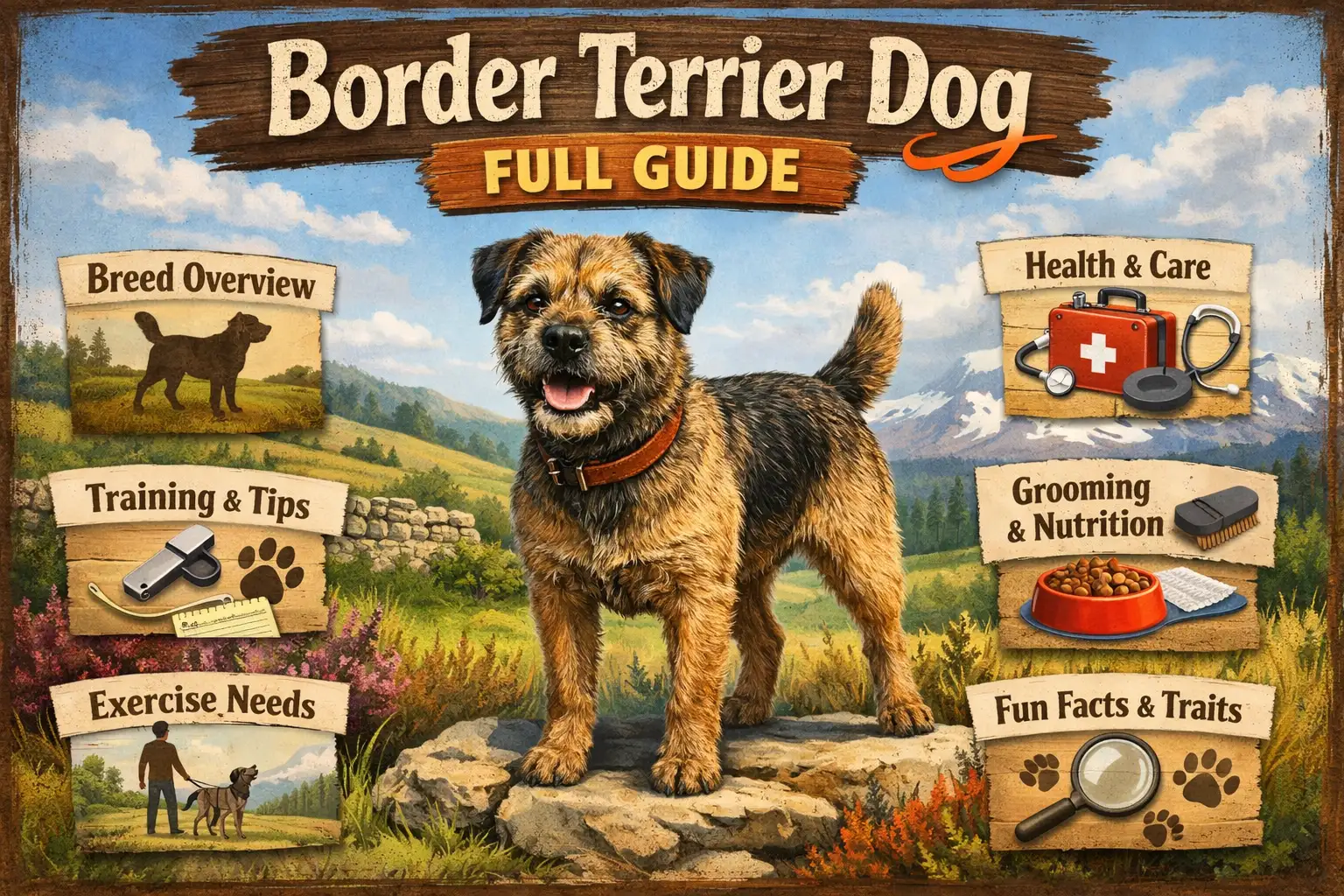
The Border Terrier temperament is one of the biggest reasons this breed is loved by active families. Border Terriers are affectionate, alert, brave, playful, and people-focused, but they are also real working terriers with strong instincts. They may be small in size, but they are not lazy lap dogs.
The Border Terrier dog breed was originally developed along the rugged border between England and Scotland to work beside farmers, huntsmen, and other dogs. That working background still shapes the breed today. A Border Terrier can be loving and calm at home, but it also needs daily exercise, mental stimulation, and clear training to stay balanced.
Most people researching this breed want honest answers to practical questions: Are Border Terriers good family dogs? Do Border Terriers bark a lot? Are they easy to train? How big does a Border Terrier get? Are they good with other dogs? This guide answers those questions clearly so you can decide whether this energetic terrier fits your home and lifestyle.
In simple terms, the Border Terrier personality is friendly, determined, curious, and busy. Compared with some sharper terriers, Border Terriers are often more adaptable and easier to live with, but they still have a strong prey drive and an independent mind. In the right home, they are cheerful, loyal companions. In the wrong home, they may become bored, noisy, stubborn, or destructive.
This Border Terrier guide covers temperament, personality, size, weight, lifespan, care needs, training, grooming, health, and ownership costs. It is written for families, first-time owners, active individuals, and anyone seriously considering whether a Border Terrier is the right dog for them.
Want to understand your Border Terrier’s age in human years? Use our Border Terrier Age Calculator to estimate your dog’s human age and life stage.
Border Terrier at a Glance
| Trait | Border Terrier Overview |
|---|---|
| Breed Group | Terrier |
| Size | Small dog breed |
| Average Weight | About 11–15.5 pounds |
| Height | About 10–11 inches |
| Temperament | Affectionate, alert, brave, playful, and determined |
| Personality | Friendly, curious, energetic, and independent |
| Energy Level | High |
| Barking Level | Moderate, especially when bored or alerting |
| Shedding | Low to moderate, with coat maintenance needed |
| Lifespan | Usually around 12–15 years |
| Trainability | Moderate; smart but sometimes stubborn |
| Good With Families | Yes, especially active families |
| Best For | Active homes, outdoor owners, families who can provide daily exercise |
If you want a very calm dog that needs little exercise, the Border Terrier may not be the best match. But if you want a tough, cheerful, people-loving terrier that can enjoy long walks, games, training, and family time, this breed is worth serious consideration.
Border Terrier History, Origin & Breed Purpose
The Border Terrier comes from the rough border country between England and Scotland. This area has cold weather, farms, hills, rocky land, and demanding outdoor conditions. Dogs bred in this region had to be tough, fast, smart, and able to work for long periods without giving up.
Border Terriers were originally used by farmers and huntsmen for fox bolting and pest control. Their job required courage, stamina, and a body small enough to enter tight spaces. This is why the breed developed a narrow chest, strong legs, wiry coat, and determined personality.
Unlike some terriers that worked more independently, Border Terriers often worked around people, horses, and other dogs. This helped shape their more social and cooperative side. They are still terriers, but many Border Terriers are less sharp and more easygoing than some other high-drive terrier breeds.
Today, most Border Terriers are companion dogs, but their working roots still matter. Their energy, confidence, prey drive, and love of outdoor activity are not random behavior problems. They are part of the breed’s original purpose.
Border Terrier History Snapshot
| History Point | What It Means for Owners Today |
|---|---|
| Original Region | England and Scotland border country |
| Original Work | Fox bolting, farm work, and pest control |
| Working Style | Built to work around people, horses, and other dogs |
| Body Design | Small, narrow, athletic, and built for stamina |
| Modern Role | Family companion with strong working instincts |
Understanding this history makes the Border Terrier easier to understand. A Border Terrier is affectionate and family-friendly, but it is also active, curious, and instinctive. Owners who respect that background usually have a better experience with the breed.
Border Terrier Size, Weight & Physical Characteristics
The Border Terrier is a small dog breed, but it is stronger and more athletic than many people expect. A typical Border Terrier weighs about 11 to 15.5 pounds and stands around 10 to 11 inches tall. Males are usually slightly larger than females, but both should look fit, balanced, and ready to move.
If you are wondering how big a Border Terrier gets, the answer is simple: this is a compact, lightweight dog with a working build. The breed should not look heavy, bulky, or fragile. A healthy Border Terrier has enough strength and stamina for long walks, outdoor play, and active family life.
One of the most recognizable Border Terrier characteristics is the breed’s narrow body. Their chest is not too wide, which historically helped them move through tight spaces while working. Their legs are relatively long for their size, giving them better speed, balance, and endurance than many small companion breeds.
The head is another important feature. Border Terriers are known for their famous “otter head”, meaning the head is broad, short, and slightly rounded with a strong muzzle. Their dark eyes, folded ears, and alert expression give them a friendly but focused look.
The coat is rough and wiry on the outside, with a softer undercoat beneath. This double coat helps protect the dog from cold weather, rain, and rough outdoor conditions. The coat is practical rather than decorative, which fits the breed’s working background.
Border Terrier Size and Weight Chart
| Feature | Typical Border Terrier Details |
|---|---|
| Size Category | Small |
| Average Height | About 10–11 inches |
| Average Weight | About 11–15.5 pounds |
| Male Size | Usually slightly larger and heavier |
| Female Size | Usually slightly smaller and lighter |
| Body Type | Narrow, athletic, and sturdy |
| Coat Type | Wiry double coat |
| Common Colors | Red, wheaten, grizzle and tan, blue and tan |
| Head Shape | Otter-like head |
| Overall Build | Small but strong working terrier |
A healthy Border Terrier should look lean and athletic, not overweight. Because this breed is small, even a few extra pounds can affect movement, comfort, and long-term health. Regular exercise, proper feeding, and weight checks are important parts of Border Terrier care.
Because of their size, coat, and stamina, Border Terriers can suit many homes, including houses and apartments. However, apartment life only works well when the dog gets enough daily walking, play, training, and mental stimulation.
Border Terrier Temperament, Personality & Lifestyle Fit
The Border Terrier temperament is best described as affectionate, alert, brave, playful, and determined. This breed is usually friendly with its family and enjoys being involved in daily life, but it still has the mind of a working terrier. That means a Border Terrier can be loving and easygoing at home while still being independent, energetic, and quick to chase movement outdoors.
The Border Terrier personality is one of the breed’s strongest qualities. These dogs are often cheerful, curious, loyal, and people-focused. Many Border Terriers like to follow their owners around the house, sit close to the family, and join in whatever is happening. They are not usually distant dogs, but they are also not always calm lap dogs.
With strangers, Border Terriers are usually polite but alert. They may bark when someone comes to the door or when they notice unusual activity, but they are not true guard dogs. Once properly introduced, many Border Terriers warm up quickly and show their social side.
Border Terriers are often good family dogs when their exercise and training needs are met. They can do well with children, especially when raised around them, but children should still be taught to handle dogs gently. This breed enjoys play, but rough handling, teasing, or chasing games can create bad habits.
With other dogs, many Border Terriers are social and confident. However, they have a strong prey drive, so homes with cats, rabbits, hamsters, birds, or other small pets need extra caution. Some Border Terriers can learn to live with cats if introduced early and managed carefully, but chasing small animals is still a natural instinct for the breed.
Border Terrier Temperament Overview
| Trait | What It Means in Daily Life |
|---|---|
| Affection | Loyal, people-focused, and often enjoys being close to family |
| Energy Level | High; needs daily walks, play, and mental activity |
| Intelligence | Learns quickly but may think independently |
| Trainability | Good with patience, consistency, and reward-based training |
| Barking | Moderate; often barks when alerting or bored |
| Prey Drive | Strong; may chase small animals |
| Stubbornness | Can be stubborn if under-exercised or poorly motivated |
| Cuddling | Many enjoy affection, but they still need activity first |
Are Border Terriers Good Family Dogs?
Yes, Border Terriers can be good family dogs for active homes. They are usually affectionate, playful, and loyal, and they often enjoy being part of family routines. The key is making sure they get enough exercise, structure, and attention. A bored Border Terrier may bark, dig, chew, or look for trouble.
This breed is best for families that enjoy walks, outdoor time, games, and regular training. It may not be ideal for owners who want a very quiet, low-energy dog that spends most of the day doing nothing.
Do Border Terriers Bark a Lot?
Border Terriers are not usually nonstop barkers, but they can be vocal. They may bark to alert the family, respond to outdoor sounds, show excitement, or release boredom. Barking is more likely when a Border Terrier is under-exercised, left alone too long, or not given enough mental stimulation.
Consistent training, daily activity, and calm routines can help reduce unwanted barking. If barking is already becoming a problem, read the Border Terrier training guide for more focused behavior and training support.
Border Terrier Lifestyle Suitability
| Home Type | Suitability | Owner Notes |
|---|---|---|
| Families with children | Good | Best with gentle handling and daily activity |
| First-time owners | Possible | Better for owners willing to train consistently |
| Apartment living | Possible | Only works with enough walking, play, and stimulation |
| Seniors | Depends | Best for active seniors who can meet exercise needs |
| Homes with other dogs | Often good | Socialization is still important |
| Homes with small pets | Caution | Prey drive can be a serious issue |
| Active owners | Excellent | Great fit for walking, hiking, games, and outdoor routines |
Border Terriers are happiest with owners who enjoy movement and routine. They do not need extreme exercise every day, but they do need regular physical and mental outlets. A well-exercised Border Terrier is usually easier to train, easier to live with, and more settled indoors.
Is a Border Terrier Right for You?
A Border Terrier can be a great choice if you want a small dog with a big personality, strong stamina, and a loyal nature. This breed is best for people who enjoy daily walks, outdoor time, training, and regular interaction with their dog. Border Terriers are affectionate and family-friendly, but they are not the right fit for every home.
You may enjoy living with a Border Terrier if you want an active, cheerful, and intelligent terrier that can join family routines. They are usually good with children, often social with other dogs, and small enough for many homes. However, they still need structure, exercise, and patient training.
This breed may not be ideal if you want a very calm, low-energy dog or a dog that can safely be trusted off leash in every situation. Border Terriers have a strong prey drive, so they may chase small animals, ignore recall when distracted, or become frustrated if they do not get enough activity.
Best Fit vs Poor Fit
| Good Fit For | Not Ideal For |
|---|---|
| Active families and outdoor owners | Owners wanting a very lazy lap dog |
| People who can provide daily walks and play | Homes where the dog will be left bored for long hours |
| Owners willing to train consistently | People expecting perfect off-leash reliability |
| Homes that enjoy a playful, alert dog | Homes with unmanaged small pets |
| Families who want a small but sturdy companion | Owners who dislike barking, digging, or terrier instincts |
Border Terrier Pros and Cons
Like every breed, the Border Terrier has both strengths and challenges. Understanding the pros and cons can help you decide whether the Border Terrier personality matches your lifestyle before bringing one home.
| Pros | Cons |
|---|---|
| Affectionate and people-focused | Can be stubborn during training |
| Small size but strong and athletic | Strong prey drive around small animals |
| Often good with active families | Needs daily exercise and mental stimulation |
| Low to moderate shedding | Wiry coat needs proper maintenance |
| Usually cheerful, alert, and playful | May bark, dig, or chew when bored |
| Can adapt to different homes with enough activity | Not always reliable off leash |
The biggest advantage of the Border Terrier is balance. It is small enough for many homes, but active enough for owners who want a real walking or outdoor companion. The biggest challenge is that this breed still thinks like a terrier, so training, recall, prey drive, and boredom management matter.
Border Terrier Puppy vs Adult Dog
A Border Terrier puppy and an adult Border Terrier can feel very different to live with. Puppies are curious, energetic, mouthy, and still learning basic manners. Adult Border Terriers are usually more settled, but they still need exercise, training, and mental stimulation.
If you choose a Border Terrier puppy, expect to spend time on toilet training, socialization, bite control, crate training, recall, and calm behavior around distractions. This stage is important because early habits can shape the dog’s adult temperament and confidence.
An adult Border Terrier may already have a clearer personality. This can make it easier to judge energy level, barking habits, confidence, and behavior with other dogs. However, adult dogs may also arrive with existing habits that need patient training.
Puppy vs Adult Border Terrier Comparison
| Factor | Border Terrier Puppy | Adult Border Terrier |
|---|---|---|
| Energy | Very playful and busy | Still active, but often more settled |
| Training Needs | Needs full foundation training | May need habit correction or refresher training |
| Personality | Still developing | Easier to assess |
| Exercise | Needs age-appropriate activity | Needs regular daily exercise |
| Socialization | Very important during early months | Still useful, especially in new environments |
| Best For | Owners ready for time, patience, and consistency | Owners who want a more predictable dog |
Whether you choose a puppy or an adult dog, the main needs remain the same: exercise, structure, training, companionship, and safe management around small animals.
Border Terrier Lifespan, Aging & Life Stages
The average Border Terrier lifespan is usually around 12 to 15 years. Many Border Terriers stay active into their senior years when they receive proper care, regular exercise, good nutrition, dental care, and routine vet checkups.
As a Border Terrier grows older, its needs may change. Puppies need socialization, training, and controlled growth. Adult dogs need regular exercise, weight control, and mental stimulation. Senior Border Terriers may need gentler activity, more health monitoring, and extra support for joints, teeth, weight, and comfort.
Border Terrier Life Stages
| Life Stage | Typical Focus | Owner Priority |
|---|---|---|
| Puppy | Growth, learning, socialization | Training, routine, gentle exposure, safe play |
| Adult | Energy, fitness, behavior stability | Exercise, feeding control, grooming, dental care |
| Senior | Comfort, mobility, health monitoring | Vet checks, weight control, softer exercise, early issue detection |
If you want to estimate your dog’s current life stage, use the Border Terrier Age Calculator. For a more detailed year-by-year breakdown, read the Border Terrier age chart in human years.
Border Terrier Care, Training, Health & Ownership Costs
Border Terrier care is not complicated, but it does require consistency. This breed needs daily exercise, regular training, coat care, proper feeding, and routine health checks. Because Border Terriers are active and food-motivated, owners should pay close attention to both activity levels and weight management.
Most Border Terriers need around 60 to 90 minutes of daily activity. This can include walks, play, sniffing games, training practice, and safe outdoor time. A short walk around the block is usually not enough for a young or energetic Border Terrier.
Training should start early and continue throughout life. Border Terriers are smart, but they may ignore commands if something more exciting catches their attention. Recall training is especially important because their prey drive can make them chase squirrels, cats, birds, or other small animals. For a deeper plan, visit the Border Terrier training guide.
Grooming needs are moderate. Border Terriers have a wiry double coat that benefits from regular brushing and occasional hand stripping. Clipping may change the coat texture over time, so owners should understand the difference before choosing a grooming method. For coat care details, read the Border Terrier grooming guide.
Feeding should match the dog’s age, size, activity level, and body condition. Because this is a small breed, even a little extra weight can make a difference. If you need help with meal planning, see the Border Terrier nutrition and feeding guide.
Daily Border Terrier Care Requirements
| Care Area | What to Expect |
|---|---|
| Exercise | About 60–90 minutes per day |
| Mental Stimulation | Very important for preventing boredom |
| Training | Ongoing; focus on recall, manners, and impulse control |
| Grooming | Moderate; brushing and coat maintenance needed |
| Shedding | Low to moderate, depending on coat care |
| Feeding | Needs portion control to avoid weight gain |
| Best Routine | Walks, play, training, rest, and family interaction |
Border Terrier Health Issues and Lifespan
Border Terriers are generally considered sturdy dogs, but they can still face health problems like any breed. Possible concerns include seizures, allergies, heart issues, hip problems, and digestive sensitivity. Regular vet checks, responsible breeding, good nutrition, dental care, and weight control all support long-term health.
The average Border Terrier lifespan is usually around 12 to 15 years. Many stay active into their senior years when they receive proper care, regular movement, and early attention to health changes. To estimate your dog’s age stage, use the Border Terrier Age Calculator.
Common Border Terrier Health Issues
| Health Issue | Owner Notes |
|---|---|
| Seizures or epilepsy | Can occur in some lines; vet guidance is important |
| Allergies | May affect skin, ears, or digestion |
| Heart problems | Routine vet checks can help detect concerns early |
| Hip issues | Less common than in larger breeds, but still possible |
| Weight gain | Small dogs can gain excess weight quickly |
| Dental disease | Regular dental care is important for long-term health |
Border Terrier Ownership Costs
The cost of owning a Border Terrier includes more than the puppy price. Owners should also plan for food, grooming, routine vet care, vaccinations, parasite prevention, dental care, toys, training, and possible insurance. For a full breakdown, read the Border Terrier cost of ownership guide.
| Expense Type | Cost Level | Notes |
|---|---|---|
| Puppy or adoption cost | Medium to high | Varies by breeder, location, health testing, and availability |
| Food | Moderate | Small breed, but quality and portion control matter |
| Grooming | Low to moderate | Higher if using professional hand stripping |
| Vet care | Moderate | Routine checkups and preventive care are needed |
| Training | Optional but useful | Helpful for recall, barking, manners, and socialization |
| Insurance | Optional | May help with unexpected health costs |
Before choosing this breed, think honestly about your time, energy, budget, and lifestyle. A Border Terrier can be a loving and entertaining companion, but this breed does best with owners who are ready for an active, intelligent, and instinctive terrier.
Border Terrier Care Hub: Helpful Next Guides
If you are planning to own a Border Terrier or already have one, these related guides can help you understand the breed in more detail. Start with the calculator if you want to estimate your dog’s current age stage, then use the care guides for training, grooming, feeding, and ownership planning.
- Border Terrier Age Calculator — estimate your Border Terrier’s age in human years and understand their current life stage.
- Border Terrier Age Chart — see a year-by-year age chart and human years comparison.
- Border Terrier Training Guide — learn how to manage recall, barking, stubbornness, and terrier behavior.
- Border Terrier Grooming Guide — understand coat care, brushing, hand stripping, and shedding.
- Border Terrier Nutrition and Feeding Guide — plan meals, portions, and weight control for this active small breed.
- Border Terrier Cost of Ownership Guide — estimate the long-term costs of food, grooming, vet care, training, and insurance.
Border Terrier FAQs
Are Border Terriers good family dogs?
Yes, Border Terriers can be good family dogs for active homes. They are usually affectionate, playful, loyal, and people-focused. However, they need daily exercise, training, and structure. They are best for families that can give them walks, playtime, attention, and calm rules around children.
What is the temperament of a Border Terrier?
The Border Terrier temperament is affectionate, alert, brave, playful, and determined. They are friendly with family and often social with people, but they still have strong terrier instincts. This means they can be independent, energetic, and interested in chasing small animals.
Do Border Terriers bark a lot?
Border Terriers can bark, but they are not usually nonstop barkers. They may bark when alerting, excited, bored, or under-exercised. Daily activity, mental stimulation, and consistent training can help reduce unwanted barking.
How big does a Border Terrier get?
A Border Terrier is a small dog breed. Most Border Terriers stand around 10 to 11 inches tall and weigh about 11 to 15.5 pounds. They are compact, narrow, athletic, and stronger than many people expect for their size.
Are Border Terriers easy to train?
Border Terriers are smart and can learn quickly, but they are not always easy to train. They may be stubborn or distracted by smells, movement, and small animals. Training works best when it is consistent, reward-based, and started early.
Can Border Terriers live in apartments?
Yes, Border Terriers can live in apartments if their exercise needs are met. They need daily walks, play, training, and mental stimulation. Without enough activity, they may bark, dig, chew, or become restless indoors.
Are Border Terriers good with other dogs?
Many Border Terriers are good with other dogs, especially when socialized early. They often enjoy canine company, but they can still be confident and determined. Proper introductions and supervision are important, especially with unfamiliar dogs.
Are Border Terriers good with cats?
Some Border Terriers can live with cats if introduced carefully and managed well, especially from a young age. However, the breed has a strong prey drive, so chasing cats or small animals can be a real issue in some homes.
How long do Border Terriers live?
Border Terriers usually live around 12 to 15 years. Good nutrition, regular exercise, weight control, dental care, routine vet checks, and early attention to health changes can help support a longer and healthier life.
Are Border Terriers hypoallergenic?
Border Terriers are not truly hypoallergenic. They may shed less than some breeds, especially when their coat is maintained properly, but they can still produce dander and allergens. People with allergies should spend time around the breed before choosing one.

Ata Ur Rehman is the founder of Pet Age in Human Years Calculator, an educational platform that provides age conversion charts and lifespan guides for dogs, cats, birds, and other companion animals. His work focuses on helping pet owners understand how animal ages translate into human years using commonly accepted age conversion formulas and published lifespan averages.
The website compiles breed and species lifespan data from kennel clubs, breed organizations, and general animal lifespan studies to present simple and easy-to-understand guides for pet owners worldwide.
This website was created to centralize animal age conversion charts into one easy reference platform for pet owners.