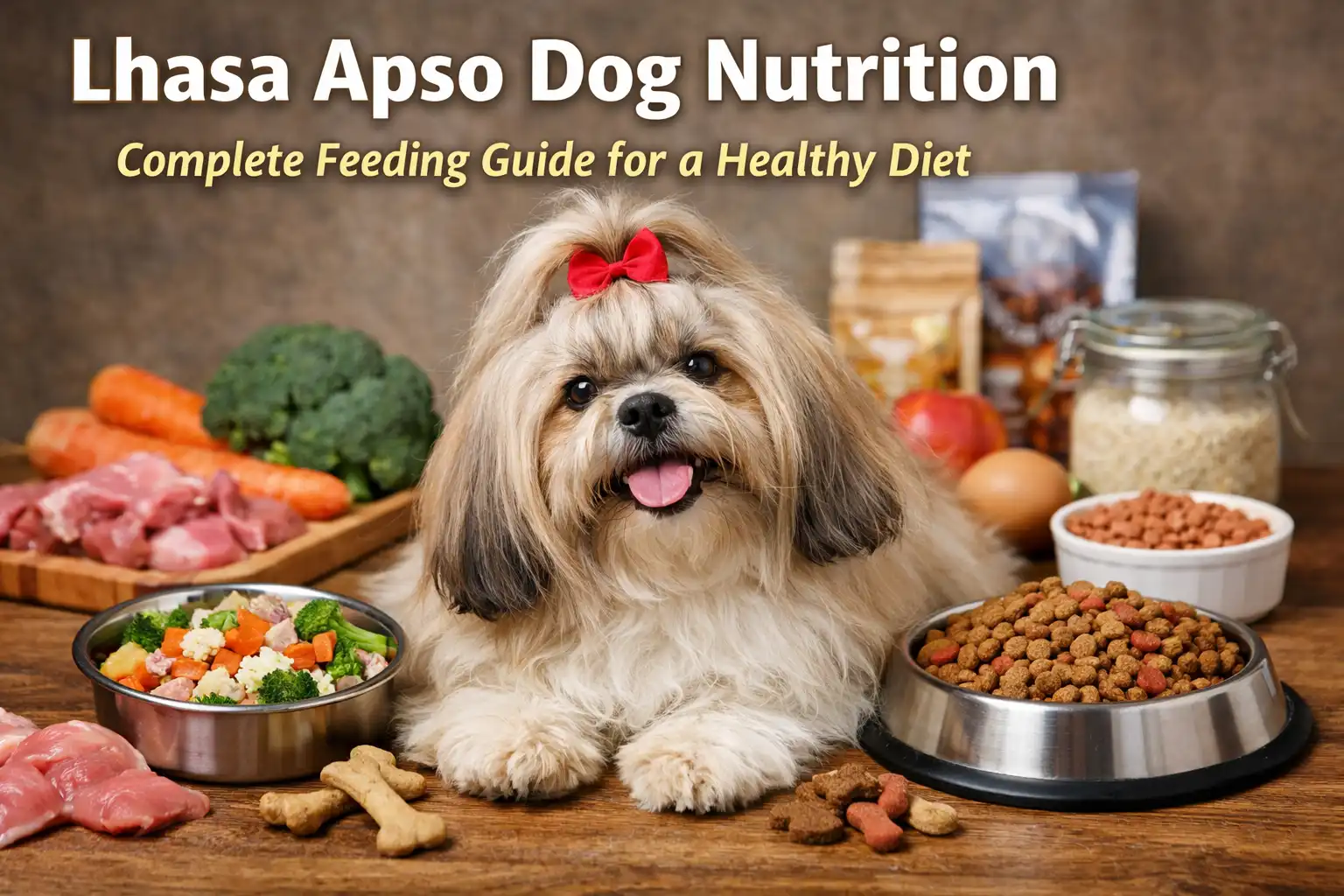
Lhasa Apso Food Chart and Feeding Guide
Part of our complete Lhasa Apso breed guide series, this feeding guide explains what to feed a Lhasa Apso, how much food they need by age and weight, which foods to avoid, and how nutrition supports long-term health.
Recommended Dog Care Products
Based on your dog’s age, these products may help with comfort, health, grooming, and daily care.

Purina Pro Plan Veterinary Supplements
Daily probiotics for dogs to support digestive and gut health.
View on Amazon ↗
Earth Rated Poop Bags for Dogs
Leak-proof, extra thick waste bag refill rolls with lavender scent.
View on Amazon ↗
Greenies Pill Pockets for Dogs
Large dog treats for capsule medication, peanut butter flavor.
View on Amazon ↗
HONEY CARE All-Absorb Dog Wrap
Small male dog wraps, 50 count, useful for daily care support.
View on Amazon ↗
Seresto Flea & Tick Collar
Flea and tick treatment and prevention for dogs over 18 lbs.
View on Amazon ↗
Milk-Bone MaroSnacks
Small dog treats with real bone marrow in a 40 oz canister.
View on Amazon ↗
Vital Essentials Dog Treats
Freeze dried beef liver dog treats, grain free and single ingredient.
View on Amazon ↗
Stain & Odor Eliminator
Enzyme cleaner for pet stains, carpet messes, and strong odors.
View on Amazon ↗
Pur Luv Chicken Jerky Treats
Dog treats made with real chicken breast, high protein and chew-friendly.
View on Amazon ↗
Milk-Bone Flavor Snacks
Mini crunchy dog biscuits in a 36 oz canister for small rewards.
View on Amazon ↗As an Amazon Associate, we may earn from qualifying purchases.
Lhasa Apso Food Quick Guide
- Best food type: Complete and balanced small-breed dog food
- Adult meals per day: 2 measured meals
- Puppy meals per day: 3 small meals
- Daily calories: About 200–350 calories for most adults, depending on weight and activity
- Best nutrients: Animal protein, healthy fats, digestible carbohydrates, vitamins, minerals, and fresh water
- Foods to avoid: Chocolate, grapes, raisins, onions, garlic, xylitol, salty foods, fatty scraps, and overfeeding
Quick answer: Most adult Lhasa Apsos do best on a complete small-breed dog food served in two measured meals per day. A typical adult Lhasa Apso may need about 200–350 calories daily, but the right amount depends on age, weight, activity level, body condition, and overall health.
Choosing the right Lhasa Apso food is one of the most important decisions you can make for your dog’s long-term health. Although Lhasa Apsos are small, their nutritional needs are not simple. Their compact body, long coat, moderate activity level, and tendency to gain weight mean that food quality and portion control both matter.
A balanced Lhasa Apso diet should support healthy weight, steady energy, digestion, skin, coat condition, immune function, and muscle maintenance. Since many Lhasa Apsos live well into their senior years, consistent feeding habits can also support better quality of life as they age.
Nutrition also connects with other parts of breed care. Proper feeding can support coat quality alongside a consistent Lhasa Apso grooming routine, and healthy weight becomes even more important as your dog gets older. You can also use the Lhasa Apso dog age calculator to understand your dog’s life stage in human years.
What is the best food for a Lhasa Apso?
The best food for a Lhasa Apso is a complete and balanced small-breed formula made with high-quality animal protein, controlled calories, healthy fats, and digestible ingredients. The best choice is not always the richest or most expensive food. It is the food your dog digests well, maintains a healthy weight on, and can eat consistently without stomach upset or coat problems.
At its core, a healthy Lhasa Apso diet should include:
- high-quality animal protein to support muscle and coat growth
- healthy fats to support energy, skin health, and coat condition
- digestible carbohydrates for steady fuel and fiber
- balanced vitamins and minerals for bones, organs, metabolism, and immunity
- fresh water available at all times
Because some Lhasa Apsos can be picky eaters, nutrient density matters. When a small dog eats smaller portions, every meal needs to provide useful nutrition without relying heavily on fillers, artificial flavors, or unnecessary calories.
Essential Nutrients for a Lhasa Apso
| Nutrient | Why it matters | Practical notes for owners |
|---|---|---|
| Protein | Supports muscle, immunity, and coat growth | Look for animal-based protein as a main ingredient |
| Healthy fats | Supports energy, skin, and coat condition | Omega-3 and omega-6 fatty acids are especially useful |
| Carbohydrates | Provides energy and dietary fiber | Choose digestible sources that do not upset the stomach |
| Vitamins | Supports metabolism, vision, skin, and immune health | Should come mainly from complete dog food, not random supplements |
| Minerals | Supports bones, teeth, nerves, and body function | Balanced calcium and phosphorus are important |
| Water | Supports digestion, circulation, and temperature control | Keep fresh water available, especially with dry food diets |
Understanding these basics makes every other feeding decision easier. Once the foundation is right, owners can choose the right food type, measure portions more accurately, and adjust meals as their Lhasa Apso moves from puppyhood to adulthood and senior life.
Recommended Dog Care Products
Based on your dog’s age, these products may help with comfort, health, grooming, and daily care.
Purina Pro Plan Veterinary Supplements
Daily probiotics for dogs to support digestive and gut health.
View on Amazon ↗
Earth Rated Poop Bags for Dogs
Leak-proof, extra thick waste bag refill rolls with lavender scent.
View on Amazon ↗
Greenies Pill Pockets for Dogs
Large dog treats for capsule medication, peanut butter flavor.
View on Amazon ↗
HONEY CARE All-Absorb Dog Wrap
Small male dog wraps, 50 count, useful for daily care support.
View on Amazon ↗
Seresto Flea & Tick Collar
Flea and tick treatment and prevention for dogs over 18 lbs.
View on Amazon ↗
Milk-Bone MaroSnacks
Small dog treats with real bone marrow in a 40 oz canister.
View on Amazon ↗
Vital Essentials Dog Treats
Freeze dried beef liver dog treats, grain free and single ingredient.
View on Amazon ↗
Stain & Odor Eliminator
Enzyme cleaner for pet stains, carpet messes, and strong odors.
View on Amazon ↗
Pur Luv Chicken Jerky Treats
Dog treats made with real chicken breast, high protein and chew-friendly.
View on Amazon ↗
Milk-Bone Flavor Snacks
Mini crunchy dog biscuits in a 36 oz canister for small rewards.
View on Amazon ↗As an Amazon Associate, we may earn from qualifying purchases.
Best Lhasa Apso Food: What to Feed Your Dog
The best Lhasa Apso dog food is usually a high-quality small-breed formula. Small-breed foods are often easier for Lhasa Apsos to chew, more calorie-controlled per serving, and designed for smaller stomachs. This matters because even a small amount of extra food can lead to weight gain in a small dog.
You do not need a complicated diet to feed a Lhasa Apso well. The goal is to choose food that is complete, safe, balanced, easy to digest, and appropriate for your dog’s age. Food quality and portion control also affect the long-term cost of owning a Lhasa Apso, especially if your dog needs premium food or special formulas.
Common Food Options for Lhasa Apso
| Food type | Benefits | Things to be careful about |
|---|---|---|
| Dry food / kibble | Easy to measure, easy to store, budget-friendly, and useful for daily feeding | Choose small-breed kibble and avoid low-quality fillers |
| Wet food | Good for picky eaters and adds moisture to the diet | Can be calorie-dense, so portions must be controlled |
| Fresh food | Often highly palatable and easy to digest | Can be expensive and must be complete and balanced |
| Freeze-dried food | Nutrient-dense and convenient for some owners | May need rehydration and careful portion control |
| Homemade food | Allows control over ingredients | High risk of nutrient imbalance unless properly formulated |
What to Look for in Good Lhasa Apso Food
- real animal protein such as chicken, turkey, lamb, fish, or egg
- small-breed or toy-breed feeding suitability
- healthy fats for skin and coat support
- controlled calories to help prevent weight gain
- digestible ingredients for sensitive stomach support
- complete and balanced nutrition for your dog’s life stage
- limited artificial colors, added sugars, and unnecessary fillers
Avoid choosing food only because the label looks premium. For a Lhasa Apso, the best food is the one that keeps your dog at a healthy weight, supports a shiny coat, produces normal stools, and provides steady energy without causing itching, vomiting, gas, or picky eating habits.
Best Lhasa Apso Food by Type
Best dry food for Lhasa Apso: Choose small-breed kibble with animal protein as a main ingredient, moderate fat levels, and controlled calories. Dry food is often the easiest option for measured daily feeding.
Best wet food for Lhasa Apso: Wet food can help picky eaters and dogs that need more moisture in their diet. Because wet food may be higher in calories per serving, measure portions carefully.
Homemade food for Lhasa Apso: Homemade meals should only be used as a main diet when they are properly balanced. Plain chicken and rice can be useful short term in some situations, but they are not a complete long-term diet by themselves.
Grain-free food for Lhasa Apso: Grain-free food is not automatically better. Unless your dog has a confirmed sensitivity or your veterinarian recommends it, a balanced diet with digestible grains can be suitable for many Lhasa Apsos.
Puppy food for Lhasa Apso: Lhasa Apso puppies need a small-breed puppy formula with enough calories and nutrients for growth. Puppies usually need smaller, more frequent meals than adults.
Can Lhasa Apsos eat human food?
Some plain human foods are safe in small amounts, such as cooked chicken, cooked rice, carrots, pumpkin, and apple slices without seeds. These should be occasional extras, not the main diet. Avoid chocolate, grapes, raisins, onions, garlic, xylitol, salty snacks, fried foods, and fatty scraps.
Different Lhasa Apsos respond differently to food. Some do well on kibble, while others prefer wet or fresh food. The right diet is the one your dog eats well, digests well, and stays healthy on.
Recommended Dog Care Products
Based on your dog’s age, these products may help with comfort, health, grooming, and daily care.
Purina Pro Plan Veterinary Supplements
Daily probiotics for dogs to support digestive and gut health.
View on Amazon ↗
Earth Rated Poop Bags for Dogs
Leak-proof, extra thick waste bag refill rolls with lavender scent.
View on Amazon ↗
Greenies Pill Pockets for Dogs
Large dog treats for capsule medication, peanut butter flavor.
View on Amazon ↗
HONEY CARE All-Absorb Dog Wrap
Small male dog wraps, 50 count, useful for daily care support.
View on Amazon ↗
Seresto Flea & Tick Collar
Flea and tick treatment and prevention for dogs over 18 lbs.
View on Amazon ↗
Milk-Bone MaroSnacks
Small dog treats with real bone marrow in a 40 oz canister.
View on Amazon ↗
Vital Essentials Dog Treats
Freeze dried beef liver dog treats, grain free and single ingredient.
View on Amazon ↗
Stain & Odor Eliminator
Enzyme cleaner for pet stains, carpet messes, and strong odors.
View on Amazon ↗
Pur Luv Chicken Jerky Treats
Dog treats made with real chicken breast, high protein and chew-friendly.
View on Amazon ↗
Milk-Bone Flavor Snacks
Mini crunchy dog biscuits in a 36 oz canister for small rewards.
View on Amazon ↗As an Amazon Associate, we may earn from qualifying purchases.
How Much and How Often to Feed a Lhasa Apso
Feeding the right amount is just as important as choosing the right food. Lhasa Apsos are small dogs, so even small changes in portion size can affect weight quickly. Feeding too much can cause obesity, while feeding too little may lead to low energy, poor coat condition, or loss of muscle.
Most adult Lhasa Apsos do best with two measured meals per day. Puppies usually need three smaller meals, while senior dogs may need slightly fewer calories depending on activity level and body condition.
Lhasa Apso Food Chart by Weight
This Lhasa Apso food chart gives a general daily feeding range based on body weight. Most adult Lhasa Apsos need two measured meals per day, but the exact amount depends on age, activity level, metabolism, body condition, and the calorie density of the food.
| Lhasa Apso weight | Daily calories | Meals per day | Feeding note |
|---|---|---|---|
| 5–7 lb (2–3 kg) | 180–220 calories | 2 meals | Best for smaller or less active adults |
| 8–10 lb (3.5–4.5 kg) | 230–280 calories | 2 meals | Common range for many adult Lhasa Apsos |
| 11–14 lb (5–6.5 kg) | 300–350 calories | 2 meals | May suit larger or more active adults |
| 15+ lb (6.8+ kg) | 350+ calories | 2 meals | Check body condition carefully to avoid overfeeding |
How much should a Lhasa Apso eat per day? Most adult Lhasa Apsos eat about 200–350 calories per day, usually divided into two meals. Smaller, older, or less active dogs may need less, while active dogs may need slightly more.
Use the calorie label on your dog’s food bag or can to convert calories into cups, grams, or trays. A cup of one food may contain far more calories than a cup of another, so measuring by calories is more accurate than guessing by volume.
Lhasa Apso Feeding Chart by Age
A Lhasa Apso’s feeding schedule changes with age. Puppies need more frequent meals for growth, adults need stable portions for weight control, and seniors may need calorie adjustments to protect muscle and avoid excess weight.
| Life stage | Age | Meals per day | Feeding notes |
|---|---|---|---|
| Puppy | 2–6 months | 3 small meals | Use small-breed puppy food with enough calories for growth |
| Young dog | 6–12 months | 2–3 meals | Begin preparing for a gradual transition to adult food |
| Adult | 1–7 years | 2 meals | Keep portions measured to prevent weight gain |
| Senior | 8+ years | 2 smaller meals | May need fewer calories but still needs quality protein |
Feeding by age: Lhasa Apso puppies usually need three small meals per day, adult Lhasa Apsos usually do best with two measured meals, and senior Lhasa Apsos may need smaller portions if their activity level drops.
Healthy weight becomes more important as your dog ages. To understand your dog’s life stage more clearly, use the Lhasa Apso dog age calculator and adjust feeding based on age, activity, and body condition.
Lhasa Apso Body Condition Check
A food chart is only a starting point. The best way to confirm whether you are feeding the right amount is to check your Lhasa Apso’s body condition regularly.
- You should be able to feel the ribs without pressing hard.
- The ribs should not be sharply visible.
- Your dog should have a visible waist when viewed from above.
- Your dog should have a slight abdominal tuck when viewed from the side.
- Your dog should not feel heavy, round, or difficult to pick up.
If your Lhasa Apso seems hungry all the time, gains weight quickly, loses weight, refuses food, or has low energy, the feeding amount may need adjustment. Always measure food with a kitchen scale or measuring cup because guessing often leads to overfeeding.
Recommended Dog Care Products
Based on your dog’s age, these products may help with comfort, health, grooming, and daily care.
Purina Pro Plan Veterinary Supplements
Daily probiotics for dogs to support digestive and gut health.
View on Amazon ↗
Earth Rated Poop Bags for Dogs
Leak-proof, extra thick waste bag refill rolls with lavender scent.
View on Amazon ↗
Greenies Pill Pockets for Dogs
Large dog treats for capsule medication, peanut butter flavor.
View on Amazon ↗
HONEY CARE All-Absorb Dog Wrap
Small male dog wraps, 50 count, useful for daily care support.
View on Amazon ↗
Seresto Flea & Tick Collar
Flea and tick treatment and prevention for dogs over 18 lbs.
View on Amazon ↗
Milk-Bone MaroSnacks
Small dog treats with real bone marrow in a 40 oz canister.
View on Amazon ↗
Vital Essentials Dog Treats
Freeze dried beef liver dog treats, grain free and single ingredient.
View on Amazon ↗
Stain & Odor Eliminator
Enzyme cleaner for pet stains, carpet messes, and strong odors.
View on Amazon ↗
Pur Luv Chicken Jerky Treats
Dog treats made with real chicken breast, high protein and chew-friendly.
View on Amazon ↗
Milk-Bone Flavor Snacks
Mini crunchy dog biscuits in a 36 oz canister for small rewards.
View on Amazon ↗As an Amazon Associate, we may earn from qualifying purchases.
Special Diets, Health Issues, and Common Feeding Problems
Some Lhasa Apsos need extra care with food because of age, weight gain, sensitive stomachs, allergies, dental issues, or picky eating habits. The right diet should support digestion, coat health, energy, and a stable body weight without adding unnecessary calories.
Common Feeding Issues and How to Handle Them
| Problem | What it may look like | Feeding approach |
|---|---|---|
| Sensitive stomach | Gas, loose stool, vomiting, or poor digestion | Use simple, digestible food and avoid sudden food changes |
| Food allergies or sensitivities | Itchy skin, ear issues, licking paws, or stomach upset | Consider a limited-ingredient diet after discussing symptoms with a vet |
| Overweight | Round body shape, low energy, or fast weight gain | Reduce extra treats, measure meals, and avoid table scraps |
| Picky eating | Refuses meals, waits for treats, or eats inconsistently | Use a consistent schedule and avoid changing food too often |
| Low energy | Tiredness, dull coat, or reduced interest in activity | Review calorie intake, food quality, and overall health |
Feeding a Lhasa Apso With a Sensitive Stomach
If your Lhasa Apso has stomach trouble, choose food with simple, digestible ingredients. Sudden food changes often cause digestive upset, so switch foods gradually over 7–10 days. A sensitive dog may also do better with consistent meal times and fewer rich treats.
Managing Lhasa Apso Weight Safely
Lhasa Apsos can gain weight quickly because they are small dogs with relatively low daily calorie needs. Extra weight can put stress on the joints, heart, breathing, and overall mobility. Measure every meal, keep treats limited, and avoid feeding from the table.
What to Do If Your Lhasa Apso Is a Picky Eater
Many Lhasa Apsos can become picky if they learn that refusing food leads to treats or frequent food changes. Offer meals at set times, leave the bowl down for 15–20 minutes, and avoid replacing regular food with table scraps. A consistent routine also supports behavior and training, especially when following a structured Lhasa Apso training guide.
If your dog refuses food for more than 24 hours, has vomiting or diarrhea, loses weight, or seems unwell, speak with a veterinarian before making major diet changes.
Lhasa Apso Foods to Avoid
Knowing which Lhasa Apso foods to avoid is just as important as choosing the best food. Some human foods are toxic to all dogs, while others are simply too salty, fatty, sugary, or difficult for a small dog to digest.
| Food to avoid | Why it is unsafe | Safer alternative |
|---|---|---|
| Chocolate | Toxic to dogs and can cause serious illness | Dog-safe treats in small amounts |
| Grapes and raisins | Can be dangerous for dogs even in small amounts | Small apple slices without seeds |
| Onions and garlic | Can harm red blood cells and cause illness | Plain cooked chicken with no seasoning |
| Xylitol | Highly toxic sweetener found in some gum, candy, and sugar-free foods | Plain dog-safe snacks |
| Fried or fatty foods | Can upset digestion and add too many calories | Plain cooked lean meat in tiny amounts |
| Salty or spicy foods | Can cause stomach upset and poor eating habits | Plain cooked vegetables such as carrots |
| Cooked bones | Can splinter and cause choking or internal injury | Vet-approved dental chews |
Safe Human Foods for Lhasa Apso Dogs
Some human foods can be safe for Lhasa Apsos in small amounts, but they should be treated as extras, not the main diet. Keep portions small and avoid seasoning, sauces, butter, salt, sugar, and spices.
| Safe food | How to serve it | Important note |
|---|---|---|
| Plain cooked chicken | Skinless, boneless, and unseasoned | Use as a small topper, not a full diet |
| Cooked rice | Plain and soft | Useful short term, but not complete nutrition |
| Carrots | Raw in tiny pieces or cooked plain | Good low-calorie snack |
| Pumpkin | Plain pumpkin only | Avoid sweetened pie filling |
| Apples | Small slices with seeds and core removed | Feed only occasionally |
| Eggs | Fully cooked and plain | Use small portions due to calories |
Lhasa Apso Food FAQs
How much food should a Lhasa Apso eat per day?
Most adult Lhasa Apsos need about 200–350 calories per day, usually divided into two measured meals. Smaller, older, or less active dogs may need less, while active dogs may need slightly more.
How many times a day should a Lhasa Apso eat?
Adult Lhasa Apsos usually eat two meals per day. Puppies often need three small meals per day, while senior dogs may do better with two smaller, measured meals.
What is the best food for a Lhasa Apso?
The best food for a Lhasa Apso is a complete and balanced small-breed dog food with quality animal protein, controlled calories, healthy fats, and digestible ingredients.
What foods should a Lhasa Apso avoid?
Lhasa Apsos should avoid chocolate, grapes, raisins, onions, garlic, xylitol, cooked bones, fried foods, salty snacks, spicy foods, and fatty table scraps.
Can Lhasa Apsos eat rice and chicken?
Yes, plain cooked rice and skinless cooked chicken can be given in small amounts. However, rice and chicken alone should not replace complete dog food long term because they do not provide balanced nutrition.
Can Lhasa Apsos eat eggs?
Yes, fully cooked plain eggs can be safe in small portions. Avoid butter, oil, salt, spices, and raw eggs.
Can Lhasa Apsos eat human food?
Some plain human foods are safe in small amounts, such as cooked chicken, rice, carrots, pumpkin, apples without seeds, and cooked eggs. Human food should only be an occasional extra, not the main diet.
Is homemade food good for a Lhasa Apso?
Homemade food can work only if it is properly balanced. Random homemade meals may miss important vitamins, minerals, fats, or calcium levels, so they should not be used as a long-term diet without proper guidance.
When should I see a vet about my Lhasa Apso’s diet?
Speak with a veterinarian if your Lhasa Apso stops eating for more than 24 hours, has ongoing vomiting or diarrhea, gains or loses weight quickly, has itchy skin or ear problems, or needs a special diet for a medical condition.
Final Thoughts on Lhasa Apso Food and Feeding
A good Lhasa Apso diet is built around complete small-breed dog food, measured portions, safe treats, and regular body condition checks. The right food should help your dog maintain a healthy weight, steady energy, good digestion, and a healthy coat.
This Lhasa Apso food chart and feeding guide is for general education only. Feeding needs can vary by health, age, weight, activity level, and medical history. If your dog has allergies, ongoing digestive issues, weight changes, or a medical condition, speak with a licensed veterinarian before making major diet changes.
For broader breed care, visit the complete Lhasa Apso guide, or check your dog’s life stage using the Lhasa Apso dog age calculator.

Ata Ur Rehman is the founder of Pet Age in Human Years Calculator, an educational platform that provides age conversion charts and lifespan guides for dogs, cats, birds, and other companion animals. His work focuses on helping pet owners understand how animal ages translate into human years using commonly accepted age conversion formulas and published lifespan averages.
The website compiles breed and species lifespan data from kennel clubs, breed organizations, and general animal lifespan studies to present simple and easy-to-understand guides for pet owners worldwide.
This website was created to centralize animal age conversion charts into one easy reference platform for pet owners.