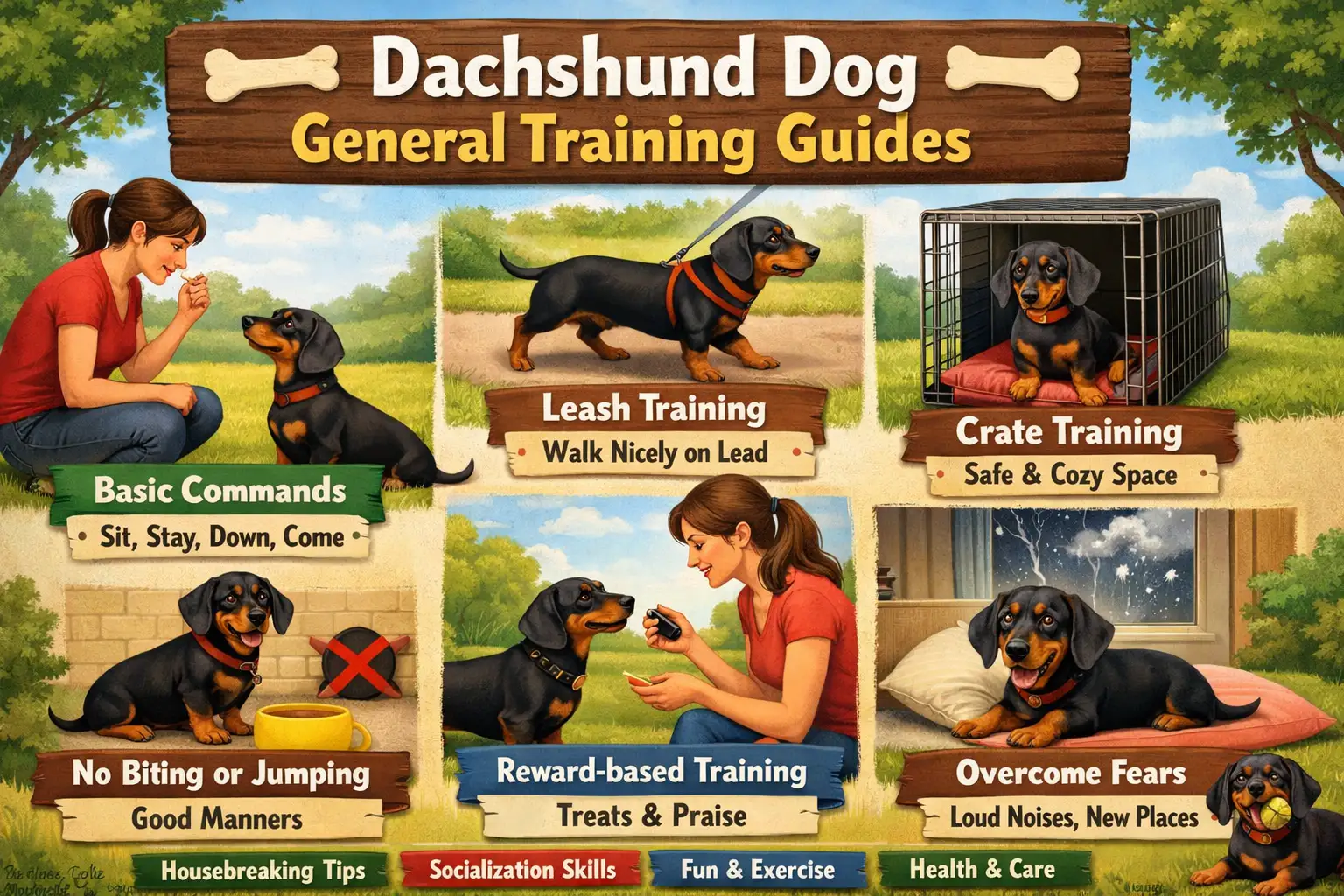
Dachshund training is not about forcing obedience—it’s about understanding how this intelligent, independent breed learns and making training work with their instincts, not against them. Many owners are told Dachshunds are “stubborn” or “hard to train,” but in reality, they are problem-solvers with strong scent-driven motivation and a low tolerance for repetitive or unfair training methods.
This guide is designed for real-life Dachshund owners: first-time puppy parents, people adopting adult or rescue Dachshunds, and experienced owners who are frustrated that traditional training advice hasn’t worked. Whether you live in an apartment, a busy household, or a quiet home, the principles here focus on practical, humane, and effective training you can apply immediately.
Rather than jumping straight into commands, this article helps you understand why Dachshunds behave the way they do, how to structure training so it sticks, and what to do when progress stalls. The goal isn’t a perfectly obedient dog—it’s a Dachshund that listens reliably, feels secure, and fits calmly into everyday life.
If you’ve ever felt your Dachshund hears you but chooses not to respond, you’re not failing—and your dog isn’t being difficult. You just need a training approach built for how Dachshunds actually think and learn.
Understanding Dachshund Behavior and Temperament
To train a Dachshund well, you must first understand how they think. Many training problems start because owners expect Dachshunds to behave like other dogs. They are not built that way.
Dachshunds were bred to hunt. Their job was to follow smells underground and make decisions on their own. Because of this, they rely heavily on their nose and prefer to think before they act. This does not mean they are disobedient. It means they are independent thinkers.
Here are a few common Dachshund traits and what they really mean:
- Strong sense of smell
Your Dachshund may ignore you when they find an interesting scent. Their nose can easily overpower voice commands, especially outdoors. - Independent nature
Dachshunds like to decide if something is worth doing. If training feels boring or confusing, they may stop paying attention. - Alert and vocal behavior
Barking is often their way of communicating, not bad behavior. They were bred to alert humans. - Smart but selective
Dachshunds learn quickly, but they may choose when to use what they know.
Age also matters.
- Puppies are curious and learn fast but have short attention spans.
- Adult Dachshunds may already have habits, good or bad, and need patience and consistency.
- Rescue Dachshunds may need extra time to feel safe before training works.
Your home environment affects training too. Busy homes, loud noises, or many pets can make learning harder. Calm, short sessions work best for this breed.
Once you understand that Dachshunds are not trying to be difficult, training becomes less stressful and more successful.
How to Train a Dachshund Step by Step
Training a Dachshund works best when it is short, calm, and clear. This breed learns quickly, but only if training feels fair and rewarding. Long or strict sessions usually fail.
Below is a simple step-by-step way to train your Dachshund.
Step 1: Keep training sessions short
Dachshunds lose focus fast. Short sessions work better than long ones.
- Train 5 to 10 minutes at a time
- Do 2 to 4 sessions per day
- Stop before your dog gets bored
Step 2: Choose the right rewards
Most Dachshunds are food-motivated, but they can be picky.
- Use small, soft treats
- Give the reward right after the correct behavior
- Praise in a calm, happy voice
Step 3: Start in a quiet place
Always begin training where there are few distractions.
- Start indoors
- Move outside only after your dog listens well
- Add distractions slowly
Step 4: Teach focus before commands
Before teaching sit, stay, or come, teach your Dachshund to pay attention.
- Say their name once
- Reward when they look at you
- Practice this daily
Step 5: Be consistent and patient
Dachshunds notice patterns quickly.
- Use the same words every time
- Train at the same times each day
- Do not repeat commands many times
Ideal Dachshund Training Session Setup
| Dog Age | Session Length | Sessions Per Day | Best Rewards | Training Area |
|---|---|---|---|---|
| Puppy | 3–5 minutes | 3–4 | Soft treats | Quiet indoor space |
| Adult | 5–10 minutes | 2–3 | Treats + praise | Low distraction area |
Realistic Training Progress Timeline
| Time Period | What Improves | What Is Still Normal |
|---|---|---|
| Week 1–2 | Better focus, name response | Ignoring commands sometimes |
| Week 3–4 | Basic commands improving | Outdoor distractions |
| Week 5–6 | More reliable listening | Strong scent distractions |
If training feels slow, that does not mean it is failing. Dachshunds learn in small steps, and steady progress matters more than speed
Common Dachshund Training Problems and How to Fix Them
Many Dachshund owners face the same problems during training. These issues are common and normal for this breed. The key is to fix them early and in the right way.
Here are the most common training problems and what usually works best.
Common Dachshund Training Problems and Practical Fixes
| Problem | Why It Happens | What Not to Do | What Works Better |
|---|---|---|---|
| Not listening | Strong nose and independence | Yelling or repeating commands | Use better rewards and train in quiet areas |
| Excessive barking | Alert nature and boredom | Punishing or shouting | Teach calm behavior and reward quiet moments |
| House training accidents | Small bladder or weak routine | Scolding after accidents | Stick to a strict schedule and reward success |
| Pulling on leash | Following smells | Using harsh leash corrections | Stop, wait, and reward loose leash walking |
| Digging | Boredom or instinct | Blocking access only | Give mental games and supervised digging areas |
Some problems come from small owner mistakes:
- Training for too long
- Expecting fast results
- Changing rules often
- Training only when problems happen
Fixing these habits can improve training quickly.
Remember, Dachshunds do not forget training. They test limits. Calm, steady rules help them feel safe and confident.
If a problem does not improve after several weeks of regular training, it may need extra help.
When to Get Professional Help With Dachshund Training
Most Dachshund training problems can be solved at home with time, patience, and consistency. However, some signs mean your dog may need professional help. Getting help early can prevent small problems from becoming serious ones.
You should consider professional support if you notice:
- Growling, snapping, or biting
- Strong fear of people, dogs, or sounds
- Severe separation anxiety
- Training has not improved after 6 to 8 weeks of steady effort
- Your Dachshund seems stressed, shut down, or overwhelmed
DIY Training vs Professional Help
| Behavior Issue | How Long to Try at Home | Risk if Ignored | Who Can Help |
|---|---|---|---|
| Basic obedience delays | 4–6 weeks | Low | Dog trainer |
| Excessive barking | 4–6 weeks | Medium | Dog trainer |
| Fear or anxiety | 2–3 weeks | High | Certified trainer or behaviorist |
| Aggression signs | Do not wait | Very high | Veterinary behaviorist |
Choose trainers who use positive reinforcement and understand small breeds. Avoid anyone who suggests pain, fear, or harsh tools.
Asking for help is not failure. It means you care about your Dachshund’s safety and happiness.
With the right guidance, even difficult behavior can improve.
For more science-backed guidance on humane, effective dog training methods, you can also explore resources from the American Veterinary Society of Animal Behavior, which promotes positive, evidence-based approaches to dog behavior and training: https://avsab.org

Ata Ur Rehman is the founder of Pet Age in Human Years Calculator, an educational platform that provides age conversion charts and lifespan guides for dogs, cats, birds, and other companion animals. His work focuses on helping pet owners understand how animal ages translate into human years using commonly accepted age conversion formulas and published lifespan averages.
The website compiles breed and species lifespan data from kennel clubs, breed organizations, and general animal lifespan studies to present simple and easy-to-understand guides for pet owners worldwide.
This website was created to centralize animal age conversion charts into one easy reference platform for pet owners.