Many owners grow up hearing that one dog year equals seven human years, but this rule doesn’t accurately reflect how dogs age—especially dachshunds. Most dachshunds are considered seniors around 9 years of age, later than many larger breeds. Dachshunds are a small-breed dog with a unique growth pattern, longer average lifespan, and slower aging in adulthood compared to larger breeds. That’s why using a generic dog-age formula can be misleading.
If you’re new to the breed, this guide on dachshund traits and breed characteristics can help you understand what makes dachshunds age differently.
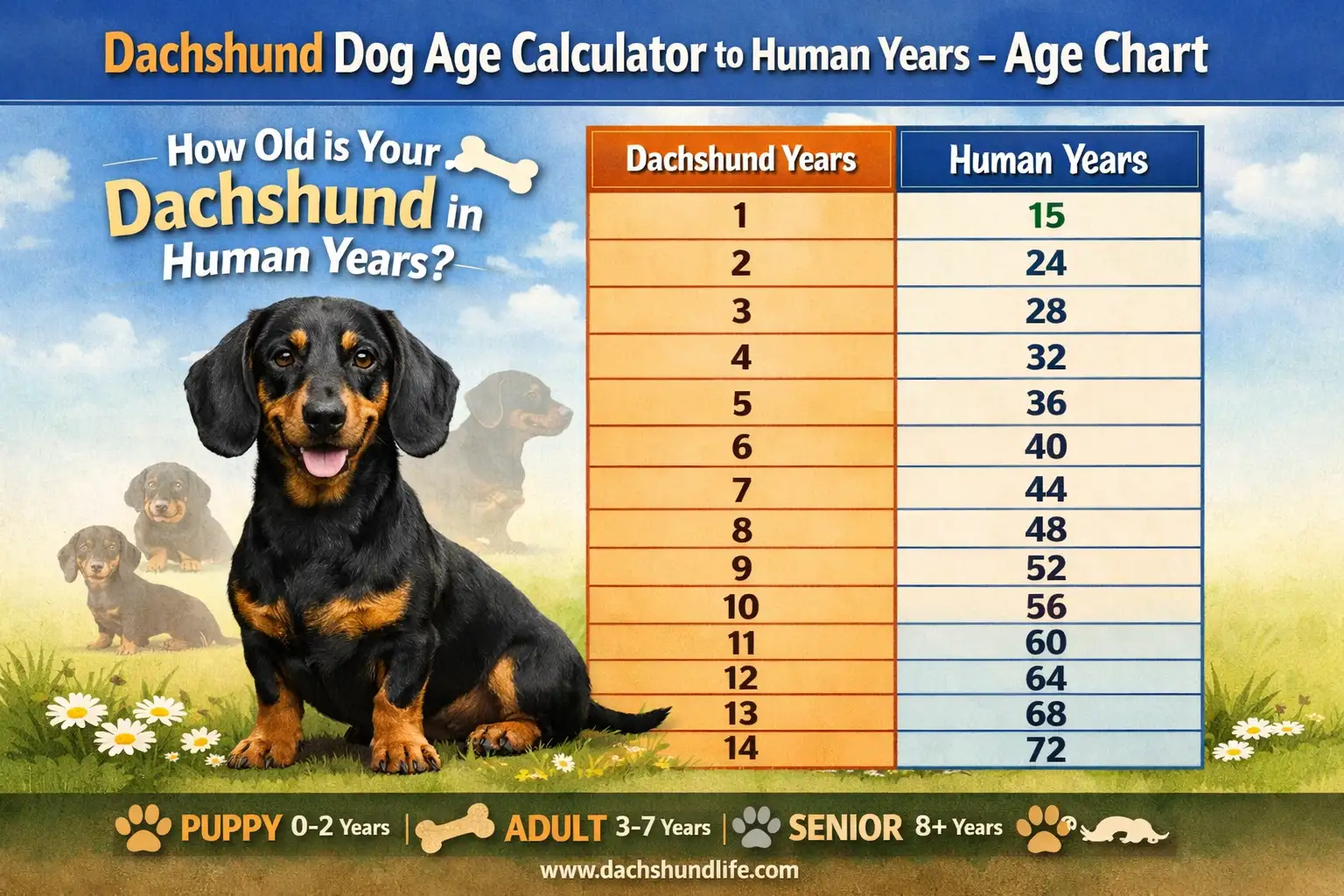
A dachshund’s age in human years is calculated by accounting for rapid puppy growth and slower aging in adulthood. For example, a 1-year-old dachshund is roughly equal to a 15-year-old human, while each additional year adds fewer human years as the dog matures.
Dogs age rapidly during their first year of life. A dachshund puppy reaches physical maturity far faster than a human child, going from birth to full size in under a year. After this early growth phase, aging slows down significantly. From adulthood onward, dachshunds tend to age more gradually, which is one reason many live well into their teens.
Human aging, by contrast, follows a more linear path. People take many years to reach adulthood, and aging changes occur steadily over decades. Dogs experience a steep early curve followed by a long, slower aging phase. This difference is the core reason simple one-to-one comparisons don’t work.
Dachshunds also benefit from the small-breed longevity advantage. Smaller dogs generally live longer than large or giant breeds, and they enter their senior years later. A 10-year-old dachshund, for example, is not equivalent to a 10-year-old large-breed dog in health or aging terms.
This guide uses a dachshund-specific age calculation approach, rather than a generic dog formula. By accounting for early rapid development, slower adult aging, and small-breed lifespan trends, the age chart and calculator in the next sections provide a much more realistic estimate of your dachshund’s age in human years.
Understanding this foundation makes the age chart easier to interpret—and helps you make better decisions about care, nutrition, and veterinary checkups as your dachshund grows older.
The Science Behind Dachshund Aging and Lifespan
Dogs do not age the same way humans do, and dachshunds are a good example of this difference. Their bodies grow fast at the beginning of life, then slow down as they get older. This pattern is very different from human aging, which happens more evenly over time.
Scientists have studied how dogs age by looking at changes in their DNA over time. A major study in 2019 showed that dogs age very quickly in their early months, then much more slowly during adulthood. This explains why a one-year-old dachshund is already similar to a human teenager, but the next few dog years do not add the same amount of “human age.”
Dachshunds also belong to the small-breed group of dogs. Small breeds usually live longer than large or giant breeds. They tend to stay healthy for more years and enter old age later. This longer lifespan is one reason dachshunds need their own age chart instead of a general dog-age formula.
Another key point is how aging speed changes over time. Dachshunds mature fast as puppies, reach adulthood early, and then age at a slower pace for many years. Only in the later part of life does aging begin to speed up again.
The table below shows how dachshund aging compares with large-breed dogs. This makes the science easier to understand at a glance.
Dachshund Aging Compared to Large-Breed Dogs
| Aging Factor | Dachshund (Small Breed) | Large-Breed Dogs |
|---|---|---|
| Early growth | Very fast | Fast |
| Aging after adulthood | Slow | Faster |
| Average lifespan | Longer | Shorter |
| When senior years start | Later in life | Earlier in life |
Because of these biological differences, using a dachshund-specific age calculator gives a much more accurate picture of how old your dog really is in human years.
Dachshund Age Calculator to Human Years (With Age Chart)
This section helps you quickly find how old your dachshund is in human years. Instead of guessing or using the old 7-year rule, this guide uses a dachshund-specific method that matches how small dogs really age.
Dachshunds grow very fast in their first year. After that, each year adds fewer “human years” compared to early life. This is why a puppy’s age jumps quickly at first, then slows down during adulthood.
Use the table below to find your dachshund’s age. Look for your dog’s age on the left, then read across to see the human-age estimate and life stage.
If you want to calculate it instantly instead of using the chart, try this dachshund age calculator for a quick human-years estimate.
Dachshund Age to Human Years Chart
| Dachshund Age | Human Age Equivalent | Life Stage |
|---|---|---|
| 1 year | about 15 years | Puppy |
| 2 years | about 24 years | Young Adult |
| 3 years | about 28 years | Adult |
| 5 years | about 36 years | Adult |
| 8 years | about 48 years | Mature Adult |
| 10 years | about 56 years | Senior |
| 12 years | about 64 years | Senior |
| 15 years | about 76 years | Very Senior |
A 15-year-old dachshund is roughly equal to a 75–76-year-old human. At this age, most dachshunds are considered very senior and may benefit from gentler exercise, joint support, and more frequent veterinary checkups to stay comfortable and healthy.
Here are a few simple examples to make the chart easier to understand:
A 5-year-old dachshund is similar to a 36-year-old human.
A 10-year-old dachshund is closer to a person in their mid-50s.
A 15-year-old dachshund is more like someone in their mid-70s.
Remember, this chart shows average aging, not exact years. Diet, exercise, weight, and health care can all affect how fast or slow a dachshund ages.
Dachshund Life Stages: Puppy, Adult, and Senior Years
Knowing your dachshund’s life stage helps you understand their behavior, energy level, and health needs. Even if two dogs are the same age, how they feel and act can be very different depending on their life stage.
Dachshund puppies grow fast. In the first year, they learn basic skills, build muscles, and gain confidence. This is the best time for training, social time, and healthy habits. For step-by-step help during the puppy stage, see this dachshund training guide. Puppies are playful and curious, but they can also get tired quickly.
Adult dachshunds are usually between one and eight years old. These years are their strongest and most active. Most adult dachshunds enjoy daily walks, games, and learning new things. Their behavior is more stable, and their body has finished growing.
Senior dachshunds are usually nine years or older. At this stage, dogs may move more slowly, sleep more, and show less interest in rough play. Some dachshunds may have stiff joints, weight changes, or trouble with their back and spine. This does not mean they cannot enjoy life—many seniors are still happy and loving, just at a slower pace.
The table below shows dachshund life stages in a simple way.
Dachshund Life Stages Overview
| Life Stage | Age Range | What You May Notice |
|---|---|---|
| Puppy | 0–12 months | Fast growth, training, high energy |
| Adult | 1–8 years | Strong body, steady behavior |
| Senior | 9+ years | Slower movement, more rest |
Understanding these stages helps you give the right care at the right time. What your dachshund needs as a puppy is very different from what they need as a senior.
Helping Your Dachshund Age Healthily and Live Longer
Good care can help your dachshund live a longer, happier life. Small daily habits make a big difference as your dog gets older.
Healthy food is very important at every age. Along with nutrition, basic care routines matter too—here’s a simple guide to dachshund grooming basics to support comfort and hygiene as your dog ages. Dachshunds gain weight easily, and extra weight puts stress on their long back and joints. Feeding the right amount and avoiding too many treats helps protect their spine and keeps them active.
If you want a clear feeding approach by life stage, this dachshund nutrition and feeding guide explains what to focus on as your dog grows older.
Exercise should match your dachshund’s age. Puppies need short play times and gentle walks. Adult dogs enjoy regular walks and games. Senior dachshunds still need movement, but slower walks and light play are usually better than running or jumping.
Vet visits become more important as your dachshund ages. Regular checkups can catch problems early, such as joint pain, dental issues, or back problems. Early care often means better comfort and a longer life.
Simple changes at home also help aging dachshunds. Using ramps instead of stairs, soft beds, and non-slip floors can make daily life easier and safer for older dogs.
The table below shows basic care focus by age.
Age-Based Care Guide for Dachshunds
| Age Group | Main Care Focus |
|---|---|
| Puppy | Training, balanced food, safe play |
| Adult | Weight control, daily exercise |
| Senior | Joint support, vet checkups, comfort |
By understanding your dachshund’s age and life stage, you can make better choices that support their health over time. Small steps taken early can help prevent bigger problems later. If you’re planning long-term care, this guide on the cost of owning a dachshund breaks down common expenses as they age.
Frequently Asked Questions About Dachshund Age in Human Years
Do dachshunds age slower than other dogs?
Yes, dachshunds generally age more slowly than large-breed dogs after reaching adulthood. As a small breed, they tend to live longer and enter their senior years later, which is why breed-specific age charts are more accurate than general dog-age formulas.
Is the 7-year rule accurate for dachshunds?
No, the 7-year rule is not accurate for dachshunds. Dogs age very quickly during their first year and then slow down in adulthood. Dachshunds, in particular, follow a different aging curve that makes simple one-to-seven comparisons misleading.
At what age is a dachshund considered old?
Most dachshunds are considered seniors around 9 years of age. However, many remain active and healthy well into their teens, especially with proper diet, exercise, and regular veterinary care.
For a reliable overview of dachshund traits, lifespan, and breed details, you can also review the official American Kennel Club profile here: Dachshund breed information from the AKC.

Ata Ur Rehman is the founder of Pet Age in Human Years Calculator, an educational platform that provides age conversion charts and lifespan guides for dogs, cats, birds, and other companion animals. His work focuses on helping pet owners understand how animal ages translate into human years using commonly accepted age conversion formulas and published lifespan averages.
The website compiles breed and species lifespan data from kennel clubs, breed organizations, and general animal lifespan studies to present simple and easy-to-understand guides for pet owners worldwide.
This website was created to centralize animal age conversion charts into one easy reference platform for pet owners.