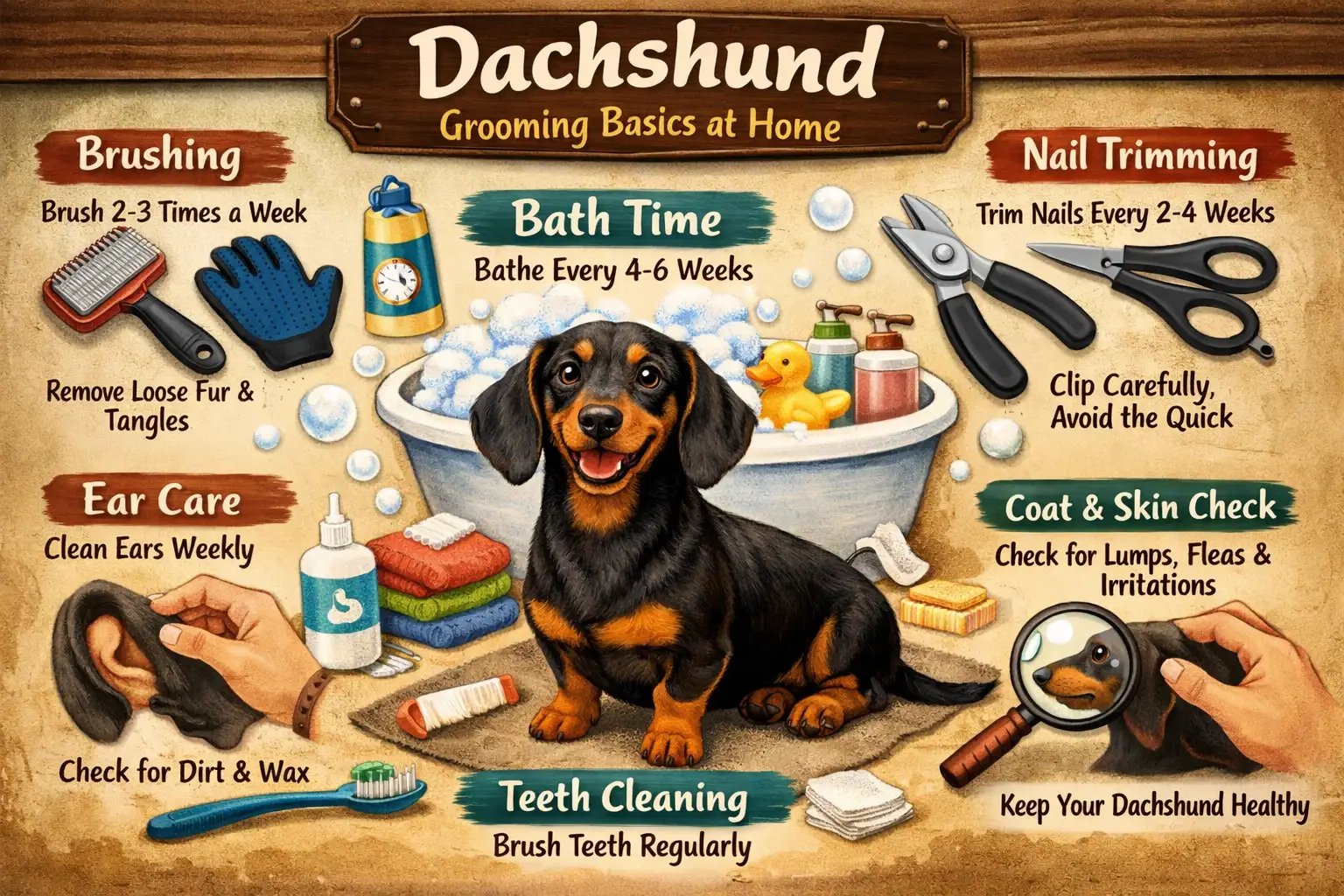
Dachshund grooming is not just about keeping your dog looking neat — it plays a direct role in skin health, comfort, hygiene, and overall well-being. Although Dachshunds are often described as a “low-maintenance” breed, their unique body structure and coat characteristics mean grooming needs are frequently underestimated.
Dachshunds have long bodies, short legs, and very low ground clearance. This makes their chest, belly, and inner legs more likely to collect dirt, moisture, grass seeds, and bacteria during daily walks. Their floppy ears also reduce airflow, creating a warm, humid environment that can quickly lead to wax buildup and ear infections if grooming is inconsistent. Regular grooming helps prevent these problems before they become painful or expensive to treat.
From a skin-health perspective, proper grooming supports the natural skin barrier. Gentle brushing removes debris and loose hair while distributing natural oils across the coat, which helps protect against dryness and irritation. Bathing at the correct frequency (not too often) keeps the skin clean without stripping essential oils, reducing the risk of itching, dandruff, and odor. Over time, consistent grooming also allows owners to notice early warning signs such as redness, flaky skin, unusual hair loss, lumps, or sore spots.
Grooming also improves comfort and mobility. Overgrown nails can alter how a Dachshund walks, putting extra strain on joints and the spine — a serious concern for a breed already prone to back issues. Clean ears, healthy teeth, and a well-maintained coat all contribute to a dog that moves more comfortably and feels better day to day.
Finally, grooming builds familiarity and trust. Regular handling during brushing, nail trims, and cleaning helps Dachshunds become calmer and more cooperative, making both home care and professional grooming visits less stressful. When done correctly, grooming becomes a preventative health routine rather than a reactive fix.
To clearly show how grooming protects Dachshund health, the table below summarizes the most common issues regular grooming helps prevent.
| Grooming Habit | What It Helps Prevent | Why It Matters for Dachshunds |
|---|---|---|
| Regular brushing | Excess shedding, skin irritation | Distributes oils and removes debris from low-hanging areas |
| Proper bathing schedule | Dry skin, strong odor | Prevents buildup without damaging the skin barrier |
| Nail trimming | Joint strain, posture changes | Protects mobility and reduces stress on the spine |
| Ear cleaning | Ear infections, yeast overgrowth | Floppy ears trap moisture and limit airflow |
| Routine skin checks | Undetected sores or infections | Early detection prevents more serious problems |
Dachshund Coat Types and Grooming Needs (Smooth, Long-Haired, Wire-Haired)
Not all Dachshunds have the same coat, and this makes a big difference in how you groom them. Dachshunds come in three coat types: smooth, long-haired, and wire-haired. Each coat needs a slightly different grooming routine. Knowing your dog’s coat type helps you brush, bathe, and care for them the right way.
Smooth Dachshunds have short, flat hair that lies close to the body. They are the easiest to groom. Even though their coat is short, they still shed and collect dirt on their chest and belly. Light brushing keeps loose hair under control and helps the skin stay healthy.
Long-haired Dachshunds have soft, flowing hair that is longer on the ears, chest, belly, legs, and tail. This coat looks beautiful but can tangle and form mats if not brushed often. These Dachshunds need more regular brushing to prevent knots, especially behind the ears and under the arms.
Wire-haired Dachshunds have a rough, wiry coat with a softer undercoat. Their coat does not shed the same way as smooth or long-haired dogs, but it can trap dirt and dead hair. Some wire-haired Dachshunds need hand-stripping to keep the coat texture healthy, while others are clipped for easier care at home.
The table below shows how grooming needs change by coat type. This makes it easy to see what your Dachshund needs at a glance.
| Dachshund Coat Type | Brushing Frequency | Bathing Frequency | Shedding Level | Special Care Notes |
|---|---|---|---|---|
| Smooth coat | 1–2 times per week | Every 6–8 weeks | Low to moderate | Focus on belly and chest where dirt collects |
| Long-haired | 3–4 times per week | Every 6–8 weeks | Moderate | Prevent mats behind ears, legs, and tail |
| Wire-haired | 2–3 times per week | Every 6–8 weeks | Low | May need hand-stripping or light trimming |
No matter the coat type, all Dachshunds benefit from regular grooming. The goal is not to make grooming perfect, but to keep it consistent and gentle. This helps prevent skin problems, heavy shedding, and discomfort.
How to Groom a Dachshund at Home (Simple Step-by-Step Routine)
Grooming a Dachshund at home does not need to be hard or stressful. A simple routine done often works better than long grooming sessions done once in a while. The goal is to keep your dog clean, comfortable, and healthy using basic tools and gentle handling.
Start by setting up a calm space. Choose a quiet area with good light and a non-slip surface. Keep treats nearby so your Dachshund stays relaxed and positive during grooming.
Brushing is the first step for most grooming days. It removes loose hair, dirt, and small tangles. Always brush gently and move in the direction the hair grows. Pay extra attention to the chest, belly, behind the ears, and around the tail, because these areas get dirty and tangled more easily.
Bathing should not be done too often. Too many baths can dry out the skin and cause itching. Use a dog shampoo made for sensitive skin and rinse very well. Leftover shampoo can cause skin problems. After the bath, dry your Dachshund fully, especially the belly and between skin folds.
The tables below make home grooming easier by showing which tools to use and how often each task should be done.
| Grooming Tool | Best For | What It Helps With |
|---|---|---|
| Soft bristle brush | Smooth coats | Removes loose hair and dirt |
| Slicker brush | Long-haired coats | Prevents tangles and small mats |
| Pin brush | Long-haired coats | Keeps hair smooth and neat |
| Undercoat rake | Wire-haired coats | Removes dead undercoat hair |
| Dog shampoo (gentle) | All coat types | Cleans skin without drying |
| Towel or low-heat dryer | All coat types | Dries coat safely after bathing |
| Grooming Task | How Often | Helpful Tip |
|---|---|---|
| Brushing | 1–4 times per week | Short sessions work best |
| Bathing | Every 6–8 weeks | Do not over-bathe |
| Skin check | Weekly | Look for redness or bumps |
| Paw cleaning | After walks | Helps prevent infections |
Keeping a steady routine makes grooming easier over time. Most Dachshunds learn to enjoy grooming when it is calm, gentle, and predictable.
Nail Trimming, Ear Cleaning, Dental Care, and Skin Health
Grooming is not only about the coat. Nails, ears, teeth, and skin also need regular care to keep your Dachshund healthy and comfortable. These steps are simple but very important, especially for small dogs like Dachshunds.
Nail trimming should be done often. Long nails can hurt your dog’s feet and change how they walk. This can put extra pressure on the back and joints. Trim a small amount at a time. If you hear nails clicking on the floor, they are too long.
Ear cleaning is important because Dachshunds have floppy ears. Floppy ears trap moisture and dirt, which can lead to infections. Clean only the visible part of the ear using a dog-safe ear cleaner. Never push anything deep into the ear.
Dental care is often ignored, but it matters a lot. Small breeds are more likely to have dental problems. Brushing your Dachshund’s teeth helps prevent bad breath, gum disease, and tooth loss. Even brushing a few times a week makes a big difference.
Skin checks should be part of grooming. While brushing or bathing, look at the skin. Watch for redness, dry flakes, bumps, or sore spots. Finding problems early makes them easier to treat.
The tables below help you remember how often to do these tasks and when it’s time to get extra help.
| Care Task | How Often | Safety Tip |
|---|---|---|
| Nail trimming | Every 2–4 weeks | Trim small amounts to avoid bleeding |
| Ear cleaning | Every 1–2 weeks | Use only dog ear cleaner |
| Teeth brushing | 2–3 times per week | Use dog toothpaste only |
| Skin check | Weekly | Check belly, ears, and under arms |
| Warning Sign | What It May Mean | What to Do |
|---|---|---|
| Red or smelly ears | Ear infection or yeast | See a vet |
| Bad breath | Dental disease | Start brushing or see a vet |
| Red, itchy skin | Allergy or irritation | Change products or see a vet |
| Lumps or sores | Infection or injury | Get checked by a vet |
Regular care of nails, ears, teeth, and skin helps prevent pain and illness. These small steps also make grooming visits less stressful for your dog.
Professional Grooming, Safety Tips, and Common Dachshund Grooming Questions
Some grooming tasks can be done at home, but professional grooming is also helpful for many Dachshunds. Professional groomers have special tools and training to handle trimming, heavy shedding, and hard-to-reach areas. Long-haired and wire-haired Dachshunds often benefit the most from professional grooming, especially if the coat gets tangled or overgrown.
Home grooming works well for regular brushing, light baths, nail trimming, and basic cleaning. Professional grooming is a better choice if your Dachshund has heavy mats, skin problems, very thick shedding, or if your dog gets nervous during grooming. A groomer can also spot early signs of skin or coat issues.
Safety is very important during grooming. Always be gentle and patient. Never pull on mats, use human shampoo, or force your dog to stay still. Take breaks if your Dachshund becomes scared or restless. Calm grooming helps build trust and makes the process easier over time.
The table below shows when home grooming is enough and when a professional groomer is the better option.
| Grooming Task | Home Grooming | Professional Grooming |
|---|---|---|
| Brushing | Yes | Optional |
| Bathing | Yes | Optional |
| Nail trimming | Yes | Yes (if unsure) |
| Mat removal | No | Yes |
| Coat trimming | No | Yes |
| Hand-stripping (wire coat) | No | Yes |
Many owners have common questions about Dachshund grooming. This quick table gives clear answers.
| Common Question | Short Answer |
|---|---|
| Do Dachshunds need haircuts? | Only long-haired and wire-haired types may need trimming |
| Can you shave a Dachshund? | No, shaving can harm the coat and skin |
| Do Dachshunds shed a lot? | They shed moderately, depending on coat type |
| Are Dachshunds hard to groom? | No, with a simple routine they are easy to maintain |
With regular care, the right tools, and safe handling, grooming becomes a normal and stress-free part of life with your Dachshund. This guide has covered coat care, bathing, brushing, hygiene, safety, and professional grooming choices to help you build a healthy routine.
For more official breed information and care guidance, you can also visit the American Kennel Club’s Dachshund breed profile: https://www.akc.org/dog-breeds/dachshund/

Ata Ur Rehman is the founder of Pet Age in Human Years Calculator, an educational platform that provides age conversion charts and lifespan guides for dogs, cats, birds, and other companion animals. His work focuses on helping pet owners understand how animal ages translate into human years using commonly accepted age conversion formulas and published lifespan averages.
The website compiles breed and species lifespan data from kennel clubs, breed organizations, and general animal lifespan studies to present simple and easy-to-understand guides for pet owners worldwide.
This website was created to centralize animal age conversion charts into one easy reference platform for pet owners.