Many dog owners have heard the old saying that one dog year equals seven human years, but this rule is a vast oversimplification — especially for giant breeds like the Kangal. Kangals, being one of the largest dog breeds, age differently from smaller or medium-sized dogs. Their growth, maturity, and lifespan follow a unique pattern that affects how we interpret their “human age equivalent.”
Kangals grow slowly during the first year compared to small breeds, reaching physical maturity around 18–24 months. However, once they enter adulthood, they tend to age faster in later years, and senior Kangals may show signs of aging earlier than smaller breeds. Understanding these differences is essential for keeping your dog healthy and providing the right care at each life stage.
To make this concept easier to grasp, the following table compares general dog size categories and their aging patterns:
The Science Behind Kangal Aging
Kangals age in a very different way from humans. They grow fast as puppies, reach full size around 1.5–2 years, and then slowly enter adulthood. Giant breeds like Kangals tend to show signs of aging sooner than smaller dogs once they are adults.
Scientists have studied how dogs age and found that the old “1 dog year = 7 human years” rule is not accurate. A 2019 study on dog DNA (epigenetic methylation) showed that dogs age faster early in life and slower later on. This means a one-year-old Kangal is much older in “human years” than the simple 7-year rule suggests.
Other factors also affect a Kangal’s lifespan:
| Factor | Impact on Lifespan | Notes |
|---|---|---|
| Genetics | High | Some Kangals naturally live longer or shorter lives |
| Nutrition | Moderate | Feeding a balanced diet helps maintain health |
| Exercise | Moderate | Helps keep joints and muscles strong |
| Neutering/Spaying | Low-Moderate | Can slightly affect lifespan |
| Lifestyle | Moderate | Safe, stress-free environment is important |
Understanding these factors helps owners provide the right care at the right age. For example, a well-fed Kangal with regular exercise will likely stay healthier longer, while neglecting diet or exercise can lead to earlier signs of aging.
By knowing how Kangals grow and what affects their lifespan, owners can plan for each stage of life, from puppyhood to senior years.
Kangal Dog Age Calculator & Age Chart
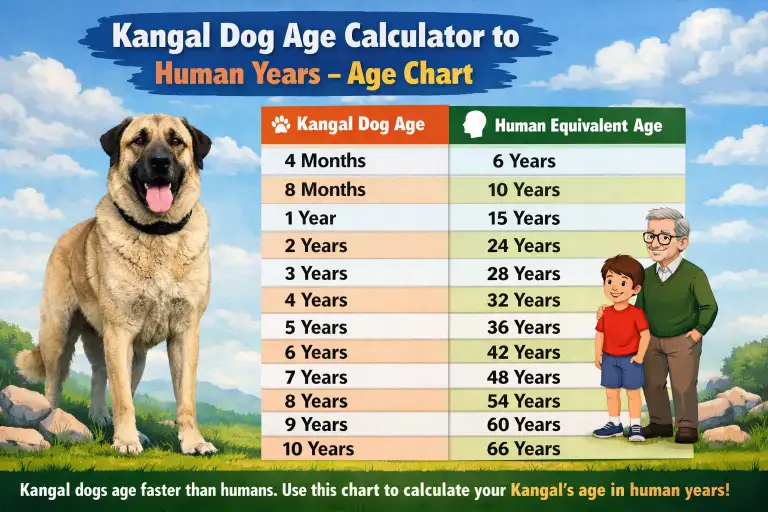
Many Kangal owners want to know how old their dog is in human years. The truth is, Kangals do not age the same every year. Puppies grow fast, adults age slowly, and seniors age faster. Using a chart can make it easy to see the human age equivalent for your Kangal.
Here is a simple Kangal age to human age chart:
| Kangal Age (Years) | Human Age Equivalent | Life Stage | Notes |
|---|---|---|---|
| 0.25 (3 months) | 2 yrs | Puppy | Rapid growth, teething |
| 0.5 (6 months) | 5 yrs | Puppy | Socialization and play |
| 1 | 15 yrs | Puppy/Adolescent | Full size, learning basic commands |
| 3 | 28 yrs | Adult | Strong and active |
| 5 | 38 yrs | Adult | Energy begins to moderate |
| 7 | 50 yrs | Adult/Senior | Early aging signs may appear |
| 10 | 66 yrs | Senior | Slower movement, joint care |
| 12 | 77 yrs | Senior | Regular vet checks recommended |
Using this chart, you can quickly estimate your Kangal’s age in human years. For example, a 5-year-old Kangal is like a 38-year-old human, while a 10-year-old Kangal is like a 66-year-old human.
This table makes it easy for owners to understand when to start senior care, adjust diet, or schedule more vet check-ups.
Kangal Life Stages: Puppy, Adult, and Senior
Kangals go through three main life stages: puppy, adult, and senior. Each stage has important changes in growth, behavior, and health. Knowing these stages helps owners give the right care at the right time.
Here is a simple Kangal life stage table for quick reference:
| Life Stage | Age Range | Key Changes | Owner Actions |
|---|---|---|---|
| Puppy | 0–1 year | Rapid growth, teething, learning social skills | Feed balanced puppy food, start training, vaccinations |
| Adult | 1–6 years | Full size, strong muscles, high energy | Provide exercise, mental games, regular vet care |
| Senior | 6+ years | Slower metabolism, joint stiffness, possible cognitive changes | Senior diet, joint supplements, more vet check-ups |
Signs your Kangal is entering a new stage are easy to spot. Puppies are playful and full of energy. Adults are active but more steady. Seniors may slow down, sleep more, and need joint care.
This table and simple notes help owners see at a glance what their Kangal needs at each stage and adjust care, food, and exercise accordingly.
Tips for Helping Your Kangal Age Healthily
As Kangals grow older, their needs change. Proper care can help your dog stay healthy and active for longer. This includes nutrition, exercise, vet visits, and home care.
Here is a senior care checklist for Kangals:
| Area | Recommended Actions | Frequency/Notes |
|---|---|---|
| Nutrition | Feed senior-specific diet, monitor weight | Daily/weekly |
| Exercise | Low-impact walks, swimming, gentle play | 30–60 min/day |
| Vet Care | Screenings, vaccines, joint check | Every 6–12 months |
| Cognitive Health | Training games, puzzle toys, social interaction | Daily |
| Comfort | Orthopedic bedding, safe environment, easy access to water | Always |
Other tips for healthy aging include:
- Keep your Kangal at a healthy weight to reduce joint problems.
- Provide regular mental stimulation through training or puzzle toys.
- Monitor for signs of aging, like stiffness, slower movement, or changes in behavior.
- Maintain routine vet visits to catch health problems early.
Following these tips helps Kangals enjoy a long, happy, and comfortable life, even in their senior years.
For more expert guidance on giant dog breeds and their care, visit the American Kennel Club’s Kangal breed page at https://www.akc.org/dog-breeds/kangal/.

Ata Ur Rehman is the founder of Pet Age in Human Years Calculator, an educational platform that provides age conversion charts and lifespan guides for dogs, cats, birds, and other companion animals. His work focuses on helping pet owners understand how animal ages translate into human years using commonly accepted age conversion formulas and published lifespan averages.
The website compiles breed and species lifespan data from kennel clubs, breed organizations, and general animal lifespan studies to present simple and easy-to-understand guides for pet owners worldwide.
This website was created to centralize animal age conversion charts into one easy reference platform for pet owners.