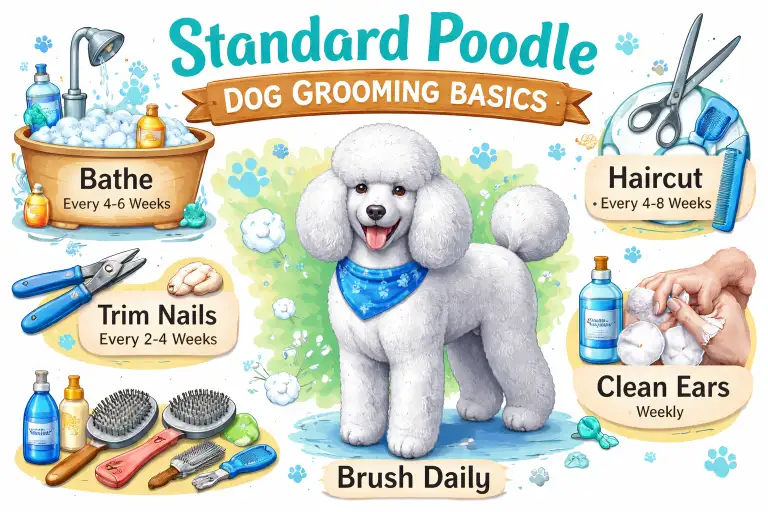
Standard Poodle grooming is not cosmetic or optional care—it is a core part of keeping this breed healthy, comfortable, and mobile. Unlike shedding breeds, Standard Poodles have a continuously growing, curly hair coat that traps loose hair, moisture, debris, and skin oils against the skin. Without regular grooming, this coat quickly mats, tightens, and creates conditions that can lead to pain, skin infections, restricted movement, and behavioral stress.
Proper grooming supports multiple aspects of a Standard Poodle’s well-being. From a physical standpoint, regular brushing and bathing help maintain normal skin barrier function, reduce yeast and bacterial overgrowth, and prevent painful matting that can pull on the skin or hide wounds. Grooming also allows owners to spot early warning signs of health issues such as hot spots, allergies, parasites, lumps, ear infections, or changes in skin condition before they become serious problems.
Comfort and mobility are equally important. Mats often form in high-friction areas like behind the ears, under the legs, around the collar, and along joints. As these mats tighten, they can restrict natural movement, alter gait, and cause chronic discomfort. Many behavior issues seen in poorly groomed Poodles—irritability, resistance to handling, or anxiety during grooming—are rooted in discomfort rather than temperament.
Grooming also plays a major role in hygiene and odor control. Because the Poodle coat holds moisture easily, inadequate drying after baths or exposure to rain can create an environment where yeast thrives, leading to musty odors and skin inflammation. Regular, structured grooming keeps the coat clean, dry, and manageable.
Finally, consistent grooming builds trust and routine. When grooming is introduced early and maintained regularly, Standard Poodles are far more relaxed during handling, brushing, bathing, and professional grooming visits. This reduces stress for both the dog and the owner and prevents grooming from becoming a painful or overwhelming experience later in life.
Understanding the Standard Poodle Coat and Grooming Needs
Standard Poodles have a very special coat that needs regular care. Their coat is made of tight curls and grows continuously, more like human hair than typical dog fur. This is why Standard Poodles are often called “low shedding,” but it does not mean low maintenance. The loose hair does not fall out on its own. Instead, it stays trapped in the curls and can quickly turn into mats if grooming is skipped.
Because the hair keeps growing, a Poodle’s coat needs routine brushing, bathing, drying, and trimming. When brushing is not done often enough, the curls twist together and tighten close to the skin. Mats can form silently, especially in areas that rub a lot, such as behind the ears, under the legs, around the collar, and near the tail. These mats can pull on the skin, cause pain, block air flow, and trap moisture and dirt.
The Poodle coat also holds water easily. If the coat is not dried fully after a bath, rain, or swimming, moisture can stay close to the skin. This can lead to bad smells, itching, redness, yeast growth, and skin infections. This is why air-drying is risky for Poodles and why proper drying is part of grooming, not just bathing.
Another important thing to understand is that Standard Poodles do not “clean themselves” through shedding the way many other breeds do. Regular grooming is the only way to remove dead hair, spread natural skin oils, and keep the coat healthy and comfortable. Grooming also helps owners notice early skin problems, bumps, sore spots, or changes in coat condition.
The table below shows how the Standard Poodle coat affects grooming needs in simple terms.
| Coat Feature | What It Means | Grooming Impact |
|---|---|---|
| Curly, dense hair | Hair grows continuously and traps loose hair | Needs frequent brushing to prevent mats |
| Low shedding | Hair does not fall out on its own | Loose hair must be removed by brushing |
| Holds moisture | Water stays in the coat easily | Must be dried fully after baths |
| Thick around friction areas | Hair rubs and tangles easily | Mats form behind ears, legs, and collars |
| Soft skin under coat | Skin can be sensitive | Gentle tools and proper products are needed |
Understanding how the Standard Poodle coat works makes grooming feel less confusing. Once owners know why grooming is needed, the routine becomes easier to follow and much more effective.
Standard Poodle Grooming Routine at Home (Step-by-Step)
Grooming a Standard Poodle at home works best when it is done in a simple and regular routine. You do not need a full grooming salon at home, but you do need the right tools and a clear plan. Skipping steps or rushing often leads to matting, skin problems, and stress for your dog.
The goal of home grooming is to keep the coat clean, brushed, and free from tight mats between professional grooming visits.
Before starting, always brush before the bath. Bathing a matted coat makes mats tighter and harder to remove. After brushing, bathing and proper drying help keep the curls soft and healthy.
Essential grooming tools for Standard Poodles
| Tool | What It Is Used For | How Often to Use | Common Mistakes |
|---|---|---|---|
| Slicker brush | Removes loose hair and small tangles | 3–5 times per week | Brushing too hard or skipping areas |
| Metal comb | Checks for hidden mats close to the skin | After brushing | Not combing all the way to the skin |
| Dog shampoo | Cleans dirt, oil, and odor | Every 3–6 weeks | Using human shampoo |
| Dog conditioner | Keeps curls soft and reduces matting | Every bath | Skipping conditioner |
| High-velocity or pet dryer | Dries coat fully and fluffs curls | After every bath | Letting the coat air-dry |
| Nail trimmer or grinder | Keeps nails short and safe | Every 2–4 weeks | Cutting too much at once |
Brushing and detangling at home
Brushing is the most important part of Poodle grooming. A quick top-layer brush is not enough. You should brush slowly and gently, working small sections at a time and making sure the brush reaches the skin. Always follow brushing with a metal comb to check for missed tangles.
Focus extra time on problem areas such as behind the ears, under the legs, around the collar, and near the tail. These areas mat first.
Bathing and drying the right way
Most Standard Poodles need a bath every three to six weeks. Use warm water, dog-only shampoo, and rinse very well. Leftover shampoo can cause itching and skin irritation.
Drying is just as important as bathing. The coat must be dried fully using a pet dryer. Air-drying allows curls to tighten and trap moisture, which can lead to mats and skin infections.
Home grooming routine overview
| Grooming Task | How Often | At Home or Professional | What Happens If Skipped |
|---|---|---|---|
| Brushing | 3–5 times per week | At home | Mats form quickly |
| Bathing | Every 3–6 weeks | At home or groomer | Odor and skin buildup |
| Drying | After every bath | At home or groomer | Matting and skin issues |
| Hair trimming | Every 6–8 weeks | Professional | Coat becomes hard to manage |
A steady routine makes grooming easier over time. Dogs that are groomed often stay calmer and more comfortable during each session.
Extra Grooming Care: Nails, Ears, Skin, and Coat Health
Grooming a Standard Poodle is not only about brushing and bathing. Nails, ears, skin, and coat health also need regular care. These areas are often skipped, but problems here can cause pain, infections, and long-term health issues if ignored.
Nail care is very important for large dogs like Standard Poodles. Long nails can change how your dog walks and may cause joint pain over time. Nails should be trimmed or filed every two to four weeks. If you hear clicking sounds on the floor, the nails are already too long. Always trim small amounts at a time to avoid cutting the quick, which can bleed and hurt.
Ear care is another key part of grooming. Standard Poodles have floppy ears with thick hair, which can trap moisture and reduce airflow. This makes ear infections more common. Ears should be checked weekly and cleaned when dirty or smelly. Use a dog ear cleaner only. Never push cotton swabs deep into the ear, and never pour water directly into the ear canal.
Skin and coat checks should be done during brushing and bathing. Run your hands over your dog’s body and look for redness, sores, bumps, flakes, or bad smells. These signs may point to allergies, yeast infections, hot spots, or skin irritation. Early notice makes treatment easier and faster.
The table below helps owners understand common grooming-related warning signs and what they may mean.
| Area | What You May Notice | Possible Problem | Who to Contact |
|---|---|---|---|
| Nails | Limping or licking feet | Nails too long or cracked | Groomer or vet |
| Ears | Bad smell or head shaking | Ear infection or yeast | Vet |
| Skin | Red spots or itching | Allergies or irritation | Vet |
| Coat | Greasy feel or strong odor | Poor drying or skin infection | Groomer or vet |
| Hair loss | Thin or patchy coat | Skin disease or stress | Vet |
Regular care of these areas keeps small problems from becoming serious. Grooming time is also a good chance to build trust and notice health changes early.
Grooming Frequency, Common Mistakes, and Professional Grooming
Standard Poodles need grooming on a regular schedule. Their coat keeps growing, and waiting too long between grooming sessions makes care harder and more stressful for both the dog and the owner. A clear routine helps prevent matting, skin problems, and sudden shave-downs.
Most Standard Poodles need brushing several times a week, bathing every few weeks, and full hair trimming every six to eight weeks. Puppies, adults, and senior dogs may have slightly different needs, but the coat still requires steady care at every age. Puppies should be gently introduced to grooming early so they learn to stay calm. Senior dogs may need shorter sessions and extra care around joints and sensitive skin.
Some grooming tasks can be done safely at home, such as brushing, bathing, drying, nail trimming, and basic ear cleaning. However, full haircuts, mat removal, and breed-style trims are best handled by a professional groomer. Professional groomers have the right tools and training to work safely close to the skin and avoid injuries.
The table below shows a simple grooming frequency guide for Standard Poodles.
| Grooming Task | Ideal Frequency | Notes |
|---|---|---|
| Brushing | 3–5 times per week | More often for longer coats |
| Bathing | Every 3–6 weeks | Always dry fully |
| Nail trimming | Every 2–4 weeks | Short nails protect joints |
| Ear cleaning | Weekly checks | Clean only when dirty |
| Professional grooming | Every 6–8 weeks | Prevents heavy matting |
Many grooming problems come from common mistakes. These mistakes often lead to matting, skin irritation, or painful grooming sessions later.
The table below highlights common Standard Poodle grooming mistakes and how to avoid them.
| Mistake | Why It’s a Problem | Better Approach |
|---|---|---|
| Skipping brushing | Mats form close to the skin | Brush on a set schedule |
| Bathing without brushing | Mats tighten when wet | Brush first, then bathe |
| Air-drying the coat | Moisture causes mats and skin issues | Use a pet dryer |
| Waiting too long between grooms | Severe matting may require shaving | Keep regular appointments |
| Using human products | Can irritate dog skin | Use dog-only products |
Knowing when to ask for help is part of responsible grooming. If mats are tight, skin looks sore, ears smell bad, or your dog seems in pain, a professional groomer or veterinarian should be contacted. Grooming should never hurt your dog.
For additional breed-specific grooming standards and care guidance, you can also refer to the American Kennel Club’s official Standard Poodle grooming resources, which provide trusted, breed-focused information for owners.

Ata Ur Rehman is the founder of Pet Age in Human Years Calculator, an educational platform that provides age conversion charts and lifespan guides for dogs, cats, birds, and other companion animals. His work focuses on helping pet owners understand how animal ages translate into human years using commonly accepted age conversion formulas and published lifespan averages.
The website compiles breed and species lifespan data from kennel clubs, breed organizations, and general animal lifespan studies to present simple and easy-to-understand guides for pet owners worldwide.
This website was created to centralize animal age conversion charts into one easy reference platform for pet owners.