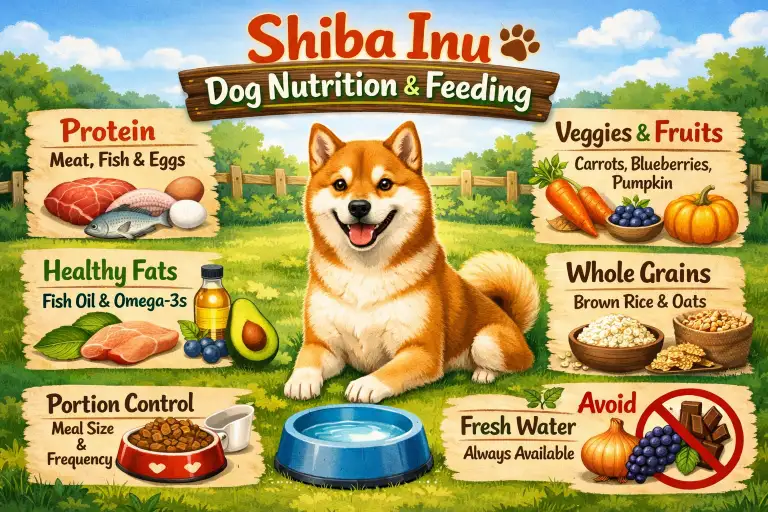
Choosing the best food for a Shiba Inu can feel confusing because there are many options. The good news is that most healthy Shiba Inus do well on a complete and balanced dog food that matches their age, activity level, and health needs.
Shiba Inus are active but efficient dogs. They usually do not need very rich or high-calorie food unless they are extremely active. Food that is too heavy can lead to weight gain, while low-quality food can cause dull coat, itchy skin, or stomach problems.
When picking food, always look for:
- A clear animal protein source (like chicken, turkey, fish, or lamb)
- Moderate fat levels, not too high
- An AAFCO statement saying the food is “complete and balanced”
- Simple ingredients if your Shiba Inu has a sensitive stomach
Below is a simple comparison table to help you understand different food types and how they work for Shiba Inus.
Dog Food Types for Shiba Inus
| Food Type | Best For | Pros | Cons | Good Choice for Shiba Inu? |
|---|---|---|---|---|
| Dry kibble | Most adult Shiba Inus | Easy to store, affordable, helps teeth | Can be low in moisture | Yes, for most dogs |
| Wet/canned food | Picky eaters, seniors | More smell and taste, higher moisture | More expensive, softer texture | Yes, mixed with kibble |
| Fresh cooked food | Owners wanting minimal processing | Fresh ingredients, good digestion | Higher cost, shorter shelf life | Yes, if balanced |
| Freeze-dried food | Travel and picky dogs | Long shelf life, strong taste | Needs rehydration, costly | Yes, as main or topper |
| Raw diet | Experienced owners only | Natural texture, high protein | Safety risks, hard to balance | Use caution |
| Homemade food | Full control over ingredients | Can help allergies | Easy to cause nutrient gaps | Only with vet guidance |
Dry kibble is the most common and practical choice for Shiba Inus. Many owners add a small amount of wet or fresh food on top to improve taste without adding too many calories.
Grain-free food is not required for most Shiba Inus. Unless your dog has a diagnosed grain allergy, grain-inclusive foods are usually safe and often easier to digest. Whole grains like rice or oats can provide energy and fiber.
Always change food slowly over 7–10 days. Switching too fast is one of the most common reasons Shiba Inus get loose stool or stop eating.
How Much to Feed a Shiba Inu (Feeding Chart and Calories)
One of the most common questions Shiba Inu owners ask is, “How much should I feed my dog?” Feeding the right amount is very important because Shiba Inus gain weight easily if portions are too big.
The amount of food your Shiba Inu needs depends on three main things:
- Body weight
- Activity level
- Age
A calm indoor Shiba Inu needs fewer calories than a dog that runs, hikes, or plays a lot every day.
Below is a simple feeding chart to help you estimate daily calorie needs. These are general ranges, not exact numbers. You may need to adjust based on your dog’s body shape and energy level.
Shiba Inu Feeding Chart by Weight and Activity Level
| Shiba Inu Weight | Low Activity Calories / Day | Moderate Activity Calories / Day | High Activity Calories / Day |
|---|---|---|---|
| 15 lbs (7 kg) | 400–450 | 500–550 | 600–650 |
| 20 lbs (9 kg) | 500–550 | 600–650 | 700–750 |
| 25 lbs (11 kg) | 600–650 | 700–750 | 850–900 |
Most adult Shiba Inus do best when fed two meals per day, one in the morning and one in the evening. Puppies need more frequent meals, while seniors may need smaller portions with the same schedule.
Below is a simple guide for feeding frequency by age.
Feeding Frequency by Age
| Life Stage | Meals per Day | Notes |
|---|---|---|
| Puppy (up to 6 months) | 3–4 meals | Small meals help digestion |
| Adult | 2 meals | Best for weight control |
| Senior | 2 meals | May need fewer calories |
A helpful way to check if you are feeding the right amount is to look at your Shiba Inu’s body shape. You should be able to feel the ribs without pressing hard, and your dog should have a small waist when viewed from above. If your Shiba Inu is gaining weight, reduce portions slightly and limit treats.
Treats should make up no more than 10% of daily calories. Many dogs gain weight from treats, not meals.
Special Feeding Needs and Common Shiba Inu Problems
Shiba Inus are known for being picky and strong-willed, especially when it comes to food. Many feeding problems are not serious, but they can worry owners if they are not handled the right way.
Some Shiba Inus have sensitive stomachs. This can show as loose stool, gas, or vomiting when food is changed too fast or when the food is too rich. Others may develop food allergies, which often cause itchy skin, ear infections, or constant licking.
Below is a simple table showing common feeding problems and what you can do.
Common Shiba Inu Feeding Problems and Solutions
| Problem | Possible Cause | What to Do |
|---|---|---|
| Picky eating | Too many treats, free feeding | Set meal times, remove food after 20 minutes |
| Loose stool | Fast food change, rich food | Switch food slowly, choose simple ingredients |
| Weight gain | Too many calories or treats | Reduce portions, limit snacks |
| Skipping meals | Low hunger or stubborn behavior | Do not force feed, keep routine |
| Itchy skin | Possible food allergy | Try limited-ingredient diet, see vet |
If your Shiba Inu is overweight, avoid cutting food too fast. Small portion changes work better and are safer. For underweight dogs, choose food with slightly higher calories instead of feeding large amounts.
When switching foods, always take 7–10 days. Start with mostly old food and slowly add more new food each day. A slow change helps prevent stomach upset.
If your Shiba Inu refuses food for more than 24–48 hours, loses weight, or shows signs of pain, it is best to speak with a veterinarian. Feeding problems can sometimes be linked to health issues.
Treats, Safe Foods, FAQs, and When to See a Vet
Treats are a great way to train and bond with your Shiba Inu, but too many treats can quickly cause weight gain. Treats should be small and should make up no more than 10% of your dog’s daily food. Using tiny training treats or pieces of kibble works well for this breed.
Many owners also wonder if Shiba Inus can eat human food. Some human foods are safe in small amounts, while others are dangerous and should never be given.
Below is a clear table to help you understand what foods are safe and which ones are toxic.
Safe vs Toxic Foods for Shiba Inus
| Food | Safe or Toxic | Notes |
|---|---|---|
| Cooked chicken | Safe | No bones or seasoning |
| Plain rice | Safe | Good for upset stomach |
| Carrots | Safe | Low calorie, crunchy |
| Apples | Safe | Remove seeds |
| Peanut butter | Safe | No xylitol |
| Chocolate | Toxic | Can be deadly |
| Grapes & raisins | Toxic | Can cause kidney failure |
| Onions & garlic | Toxic | Harm red blood cells |
| Alcohol | Toxic | Very dangerous |
| Xylitol | Toxic | Found in sugar-free foods |
Common feeding questions many Shiba Inu owners ask include:
- Why does my Shiba Inu skip meals?
This is often normal behavior. Stick to set meal times and avoid giving extra treats. - Is grain-free food better?
Not usually. Most Shiba Inus do well with grain-inclusive food unless a vet says otherwise. - Can I mix wet and dry food?
Yes, mixing can improve taste, just watch total calories.
For more details on balanced dog nutrition standards, you can review the AAFCO guidelines for complete and balanced dog food, which explain how commercial diets are formulated to meet dogs’ nutritional needs.

Ata Ur Rehman is the founder of Pet Age in Human Years Calculator, an educational platform that provides age conversion charts and lifespan guides for dogs, cats, birds, and other companion animals. His work focuses on helping pet owners understand how animal ages translate into human years using commonly accepted age conversion formulas and published lifespan averages.
The website compiles breed and species lifespan data from kennel clubs, breed organizations, and general animal lifespan studies to present simple and easy-to-understand guides for pet owners worldwide.
This website was created to centralize animal age conversion charts into one easy reference platform for pet owners.