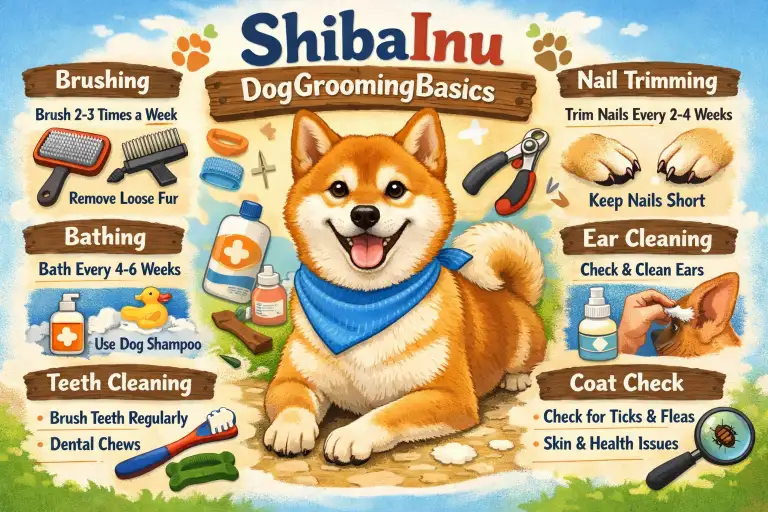
Shiba Inu grooming looks simple on the surface, but this breed’s thick double coat, strong self-cleaning instincts, and intense shedding seasons make proper care more technical than many owners expect. Shiba Inus don’t need haircuts or fancy styling, but they do need consistent, correct grooming to stay comfortable, odor-free, and healthy.
This guide focuses on practical home grooming, explains what actually matters for Shiba Inus, and clears up common myths (especially around shaving and bathing). Whether you’re a first-time Shiba owner or trying to fix grooming mistakes, understanding the basics upfront prevents coat damage and skin problems later.
One important thing to know early: Shiba Inus are naturally clean dogs, but their coat traps loose undercoat when grooming is inconsistent. When that undercoat isn’t removed properly, owners often assume the dog needs more baths or even shaving — both of which can make shedding and skin issues worse.
Shiba Inu Grooming Overview
| Grooming Task | How Often | DIY or Professional | Difficulty Level |
|---|---|---|---|
| Brushing (normal weeks) | 1–2 times per week | At home | Easy |
| Brushing (shedding season) | 3–5 times per week | At home | Moderate |
| Bathing | Every 6–8 weeks | At home or groomer | Easy–Moderate |
| Drying after baths | Every bath | At home or groomer | Moderate |
| Nail trimming | Every 3–4 weeks | At home or groomer | Moderate |
| Ear cleaning | Every 3–4 weeks | At home | Easy |
| Professional deshedding | During heavy coat blow | Professional recommended | High |
This overview helps set realistic expectations: most Shiba Inu grooming can be done at home, but timing and technique matter. Grooming isn’t about doing everything more often — it’s about doing the right things at the right frequency, especially during shedding seasons.
Understanding the Shiba Inu Double Coat and Shedding Cycle
Shiba Inus have a double coat, which means they have two layers of fur that work together to protect their body. This coat is the reason Shiba Inus shed so much, stay clean naturally, and should never be shaved. Once you understand how this coat works, grooming becomes much easier and less stressful.
The top layer is made of stiff guard hairs. These hairs protect your dog from sun, rain, dirt, and heat. Under that is a thick, soft undercoat. The undercoat helps control body temperature and keeps the dog warm in cold weather and cooler in warm weather.
Shiba Inu Coat Structure Explained
| Coat Layer | What It Does | Why Grooming Matters |
|---|---|---|
| Guard hair (top coat) | Protects skin from dirt, moisture, and sun | Should not be cut or shaved |
| Undercoat | Controls temperature and sheds seasonally | Needs regular brushing to remove loose fur |
When owners skip brushing, the loose undercoat gets trapped. This causes heavy shedding, bad smell, itchy skin, and hot spots. Many people think bathing more will fix this, but bathing without brushing first can make shedding worse.
Shiba Inu Shedding and “Coat Blow”
Shiba Inus shed lightly all year, but twice a year they go through a heavy shedding phase, often called a “coat blow.” During this time, large clumps of undercoat come out quickly.
Shiba Inu Shedding Seasons
| Time of Year | What Owners Notice | What Grooming Helps |
|---|---|---|
| Spring | Heavy shedding as winter coat drops | Frequent brushing and deshedding |
| Fall | Coat thickens for winter | Regular brushing to prevent buildup |
| Summer | Lighter shedding | Weekly brushing |
| Winter | Less shedding | Maintenance brushing |
During coat blow, brushing is far more important than bathing. Removing loose undercoat helps the skin breathe and reduces shedding around your home.
Shiba Inu Grooming Routine at Home (Brushing, Bathing, and Drying)
A good home grooming routine keeps a Shiba Inu clean without hurting the coat or skin. You do not need many tools, but you must use the right ones and follow the correct order. For Shiba Inus, brushing always comes before bathing.
Brushing removes loose undercoat, dirt, and dead hair. If you skip brushing and go straight to a bath, the loose fur can pack down near the skin. This can cause more shedding, itching, and bad smell after the bath.
Basic Grooming Tools for Shiba Inus
| Tool | What It Is Used For | How Often to Use |
|---|---|---|
| Slicker brush | Removes loose undercoat and surface hair | 1–2 times a week, more during shedding |
| Undercoat rake | Pulls out thick undercoat during coat blow | During heavy shedding only |
| Metal comb | Checks for leftover loose hair | After brushing |
| Dog shampoo (gentle) | Cleans coat and skin | Every 6–8 weeks |
| Towel + pet dryer | Dries coat fully after bathing | Every bath |
You do not need clippers or scissors for coat cutting. Shiba Inus do not get haircuts.
Brushing and Bathing Frequency
| Grooming Task | Normal Time | Shedding Season |
|---|---|---|
| Brushing | 1–2 times per week | 3–5 times per week |
| Bathing | Every 6–8 weeks | Only if dirty or smelly |
| Drying | After every bath | After every bath |
When bathing a Shiba Inu, always use lukewarm water and a dog-safe shampoo. Human shampoo is too harsh and can dry out the skin. Rinse very well, because leftover soap can cause itching.
Drying is just as important as bathing. A damp undercoat can trap moisture and lead to skin problems. Use towels first, then a pet dryer on low heat. Never use very hot air.
A calm, slow routine works best. Many Shiba Inus dislike baths, so keeping sessions short and gentle helps build trust over time.
Nail Trimming, Ear Cleaning, Dental Care, and Skin Health in Shiba Inus
Brushing and bathing are not the only parts of grooming. Shiba Inus also need regular care for nails, ears, teeth, and skin. These steps are often skipped, but they are very important for comfort and health.
Nails that grow too long can cause pain when walking and may change how a dog stands. Long nails can also crack or break, which is painful and may lead to infection.
Ears should stay clean and dry. Even though Shiba Inus have upright ears, dirt and wax can still build up over time.
Teeth care helps prevent bad breath, gum disease, and tooth loss. Many dogs get dental problems if teeth are never cleaned.
Skin checks help you spot problems early, before they turn serious.
Shiba Inu Hygiene Care Schedule
| Care Area | How Often | Why It Matters |
|---|---|---|
| Nail trimming | Every 3–4 weeks | Prevents pain and joint stress |
| Ear cleaning | Every 3–4 weeks | Reduces risk of infection |
| Teeth brushing | 2–3 times per week | Prevents dental disease |
| Skin check | Weekly | Catches issues early |
When trimming nails, cut a little at a time. If you see a pink area inside the nail, stop before reaching it. This part is called the quick and it can bleed if cut.
For ear cleaning, use a dog-safe ear cleaner and a soft cotton pad. Never push cotton swabs deep into the ear. Gently wipe only what you can see.
For teeth, dog toothbrushes and dog toothpaste are safest. Human toothpaste should never be used because it can upset a dog’s stomach.
Early Skin and Coat Warning Signs
| What You See | What It May Mean | What to Do |
|---|---|---|
| Red or itchy skin | Allergy or irritation | Check grooming routine, see vet if it continues |
| Bad smell after bathing | Damp undercoat or skin issue | Improve drying, watch skin closely |
| Hair loss or thin spots | Skin problem or stress | Vet visit recommended |
| Frequent scratching | Dry skin, allergy, or fleas | Check skin and ask a vet |
If you notice sores, strong smell, or your Shiba Inu seems uncomfortable, it is best to contact a veterinarian. Grooming helps keep the skin healthy, but it cannot replace medical care when problems appear.
Grooming Safety, Common Mistakes, and When Shiba Inus Need a Professional Groomer
Shiba Inus are clean dogs, but grooming mistakes can easily harm their coat or skin. Many problems happen because owners try to groom too much, use the wrong tools, or believe common myths.
One of the biggest mistakes is shaving a Shiba Inu. Shiba Inus have a double coat that protects them from heat and cold. Shaving can damage the coat, cause uneven regrowth, and lead to skin problems. Shaving does not help with shedding or summer heat.
Another common mistake is bathing too often. Too many baths can dry out the skin and cause itching. Most Shiba Inus only need a bath every 6–8 weeks, unless they are very dirty.
Using human shampoo is also unsafe. Human products are too harsh and can irritate a dog’s skin. Always use shampoo made for dogs.
Some Shiba Inus are calm during grooming, while others are very stubborn or nervous. Forcing grooming can create fear and make future sessions harder. Slow, gentle handling works best.
Home Grooming vs Professional Grooming for Shiba Inus
| Grooming Task | Safe to Do at Home | When a Groomer Is Better |
|---|---|---|
| Brushing | Yes | During heavy coat blow if shedding is extreme |
| Bathing | Yes | If coat is packed with loose fur |
| Nail trimming | Yes (with care) | If nails are very long or dog resists |
| Deshedding | Sometimes | Best during seasonal coat blow |
| Skin issues | No | Vet or groomer recommended |
Professional groomers are helpful during heavy shedding seasons, for dogs that resist grooming, or when the coat is badly packed with undercoat. Groomers also have strong dryers that remove loose fur safely.
If you see sores, strong smells, bleeding nails, or skin pain, a veterinarian should be contacted first.
For more breed-specific health and care guidance, you can also refer to the American Kennel Club’s Shiba Inu breed profile:

Ata Ur Rehman is the founder of Pet Age in Human Years Calculator, an educational platform that provides age conversion charts and lifespan guides for dogs, cats, birds, and other companion animals. His work focuses on helping pet owners understand how animal ages translate into human years using commonly accepted age conversion formulas and published lifespan averages.
The website compiles breed and species lifespan data from kennel clubs, breed organizations, and general animal lifespan studies to present simple and easy-to-understand guides for pet owners worldwide.
This website was created to centralize animal age conversion charts into one easy reference platform for pet owners.