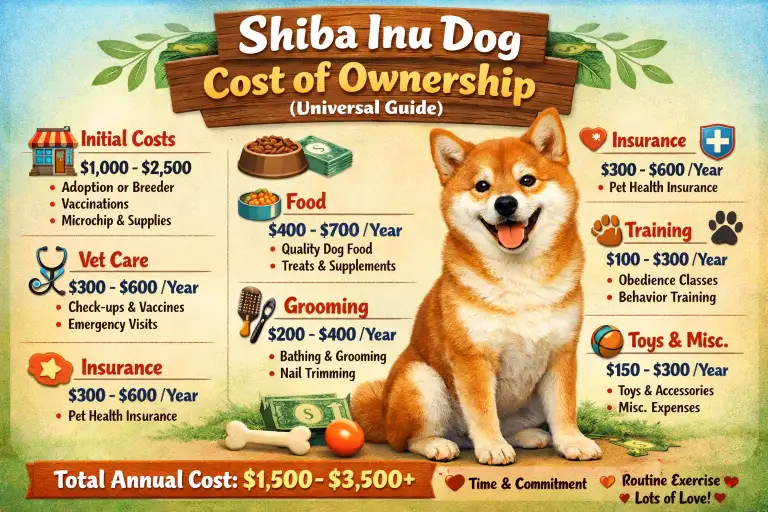
Owning a Shiba Inu is not cheap, even though it is a small to medium-sized dog. Many people think smaller dogs cost Owning a Shiba Inu is not inexpensive, even though the breed is small to medium in size. Many people assume smaller dogs cost less, but Shiba Inus often cost more than expected due to training needs, health care, grooming requirements, and long-term care.
This guide explains the real cost of owning a Shiba Inu, based on responsible, everyday pet care—not luxury spending. The prices reflect what most owners actually pay over time.
Shiba Inus are independent, intelligent, and strong-willed. Because of this, training is essential and sometimes costly. They can also be selective eaters, often requiring higher-quality food. Routine veterinary care, preventive treatments, and occasional emergencies all contribute to the total lifetime expense.
Below is a quick overview of typical Shiba Inu ownership costs.
Shiba Inu Cost Overview
| Cost Period | Estimated Cost Range |
|---|---|
| First-year total | $2,200 – $4,800 |
| Average yearly cost | $1,400 – $3,000 |
| Estimated lifetime cost (12–15 years) | $18,000 – $38,000 |
These estimates reflect proper care. Skipping training, veterinary visits, or quality food often leads to behavior or health problems that cost more to fix later.
Shiba Inu First-Year Costs (Puppy vs Adult Dog)
The first year of Shiba Inu ownership is usually the most expensive. This is when you pay for adoption or purchase, initial veterinary care, training, and essential supplies.
Puppies cost more during the first year because they require additional vaccines, structured training, and closer supervision. Adult dogs typically cost less upfront because some care may already be completed.
First-Year Cost Breakdown
| First-Year Expense | Puppy Cost | Adult Dog Cost |
|---|---|---|
| Purchase or adoption | $1,000 – $2,500 | $200 – $600 |
| Vet visits and vaccines | $300 – $600 | $200 – $400 |
| Spay or neuter surgery | $200 – $500 | $0 – $300 |
| Microchip and registration | $50 – $100 | $50 – $100 |
| Supplies (bed, crate, leash, toys) | $300 – $600 | $200 – $400 |
| Training classes | $200 – $400 | $150 – $300 |
| Total first-year cost | $2,200 – $4,800 | $1,300 – $2,900 |
Buying from a reputable breeder costs more, especially for well-bred Shiba Inu puppies. Adoption is usually more affordable but still requires spending on medical care and supplies.
Training is especially important for this breed. Shiba Inus are smart but stubborn, and early training helps prevent behavior problems that can become expensive later.
Monthly and Annual Costs of Owning a Shiba Inu
After the first year, expenses become more predictable and easier to budget. These ongoing costs are necessary to keep your Shiba Inu healthy and comfortable.
Food is one of the main recurring expenses. Many Shiba Inus do better on higher-quality diets due to sensitive digestion or food allergies.
Routine veterinary care remains important even for healthy dogs. Grooming costs are moderate, but Shiba Inus shed heavily, especially during seasonal coat blows.
Ongoing Ownership Costs
| Ongoing Expense | Monthly Cost | Yearly Cost |
|---|---|---|
| Food and treats | $40 – $70 | $480 – $840 |
| Routine vet care | $25 – $50 | $300 – $600 |
| Flea, tick, heartworm prevention | $20 – $35 | $240 – $420 |
| Grooming and coat care | $20 – $40 | $240 – $480 |
| Training or activities | $10 – $25 | $120 – $300 |
| Licenses and small fees | $5 – $10 | $60 – $120 |
| Total ongoing cost | $120 – $230 | $1,400 – $2,760 |
Not every expense occurs monthly, but setting aside money each month makes larger bills easier to manage when they arise.
Health, Veterinary Care, and Insurance Costs
Health care can be one of the most unpredictable costs of owning a Shiba Inu. Some years are relatively inexpensive, while others may include illness or emergency treatment.
Shiba Inus are generally healthy dogs, but they can be prone to allergies, knee and joint issues, eye conditions, and dental disease. These problems may require long-term management.
Emergency veterinary visits can be costly and often happen without warning.
Pet insurance helps many owners manage large vet bills. While it does not cover everything, it can significantly reduce the cost of major medical care.
Common Health-Related Costs
| Health Expense | Typical Cost |
|---|---|
| Yearly vet checkup | $150 – $300 |
| Allergy treatment (yearly) | $200 – $600 |
| Knee or joint treatment | $500 – $2,000 |
| Emergency vet visit | $500 – $2,500+ |
| Surgery or major care | $1,500 – $5,000+ |
| Pet insurance (monthly) | $30 – $60 |
| Pet insurance (yearly) | $360 – $720 |
Insurance costs vary based on your dog’s age, location, and coverage level. Some owners choose to save money monthly instead of purchasing insurance, but both approaches require planning.
Lifetime Cost, Hidden Expenses, and Budget Planning
Shiba Inus typically live 12 to 15 years. Over time, even small monthly expenses add up to a significant lifetime cost.
Many owners are surprised by hidden expenses—costs that don’t occur regularly but still require budgeting.
Common hidden costs include boarding or pet sitting during travel, dental cleanings, damage to furniture, emergency veterinary visits, and increased care during senior years.
Estimated Lifetime Cost of Owning a Shiba Inu
| Ownership Type | Estimated Lifetime Cost |
|---|---|
| Lower-cost, healthy dog | $18,000 – $22,000 |
| Average care and health | $22,000 – $30,000 |
| High medical needs | $30,000 – $38,000+ |
Saving a small amount each month makes Shiba Inu ownership more manageable and helps reduce financial stress when unexpected costs arise.
A Shiba Inu is not a low-cost breed, but many owners feel the expense is worth it because of their unique personality, independence, and loyalty. Understanding the full financial commitment helps you decide whether this breed truly fits your budget and lifestyle.
For more breed-specific health and care information, see the American Kennel Club’s Shiba Inu breed profile: https://www.akc.org/dog-breeds/shiba-inu/

Ata Ur Rehman is the founder of Pet Age in Human Years Calculator, an educational platform that provides age conversion charts and lifespan guides for dogs, cats, birds, and other companion animals. His work focuses on helping pet owners understand how animal ages translate into human years using commonly accepted age conversion formulas and published lifespan averages.
The website compiles breed and species lifespan data from kennel clubs, breed organizations, and general animal lifespan studies to present simple and easy-to-understand guides for pet owners worldwide.
This website was created to centralize animal age conversion charts into one easy reference platform for pet owners.