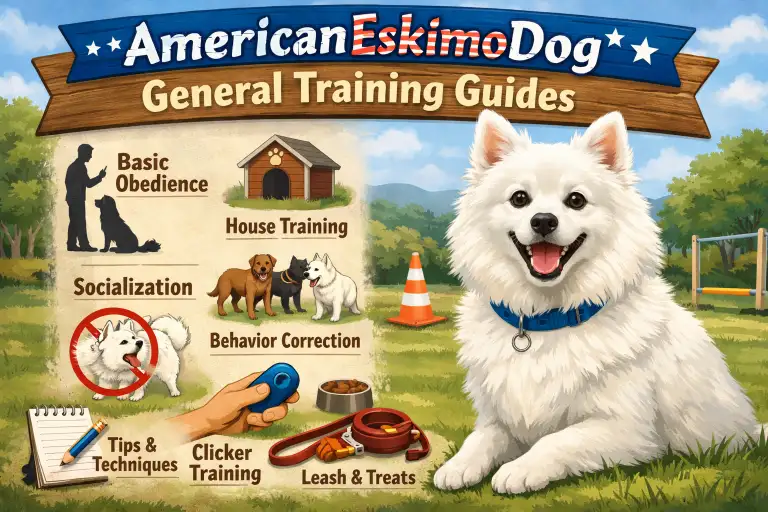
American Eskimo Dog training is often described as “easy” because of the breed’s intelligence, but in real life, it’s only easy when training is done correctly and consistently. American Eskimo Dogs are smart, alert, emotionally sensitive, and quick to notice patterns—both good and bad. This means they can learn obedience skills faster than many breeds, but they can also pick up unwanted habits just as quickly if training is unclear or inconsistent.
This guide is designed for American Eskimo Dog owners who want practical, real-world training advice that actually works at home. Whether you’re raising a puppy, working with an adult rescue, or trying to fix lingering behavior issues, the goal is the same: a calm, responsive dog that understands what’s expected and feels confident in everyday situations.
Unlike generic dog training advice, this guide focuses on how American Eskimo Dogs think and learn. Their alert nature, strong bond with their owners, and tendency toward vocal or overexcited behavior require an approach that combines structure, positive reinforcement, and clear communication. Training isn’t just about teaching commands—it’s about building focus, impulse control, and trust.
By following this American Eskimo Dog training guide, you’ll learn how to set up effective training routines, avoid common mistakes, and adjust your approach based on your dog’s age, energy level, and personality. With the right methods, most Eskies can become well-mannered companions who listen reliably at home and in the real world.
Why American Eskimo Dog Training Matters
Training an American Eskimo Dog is not optional—it is necessary for their safety, behavior, and overall happiness. This breed is naturally alert, vocal, and very aware of its surroundings. Without proper training, these traits can turn into problem behaviors that are hard to control later.
American Eskimo Dogs that are not trained often bark too much, ignore commands, pull on the leash, or become overly excited around people and other dogs. These behaviors are not signs of a “bad dog.” They usually happen because the dog does not clearly understand what is expected.
Training gives your American Eskimo Dog structure. It teaches them how to behave inside the home, how to stay calm in new places, and how to respond when you call or give a command. Dogs that receive regular training are usually more confident and less anxious because they know the rules.
Training also protects your dog. Simple skills like coming when called, waiting at doors, or walking politely on a leash can prevent accidents. A trained dog is less likely to run into traffic, jump on strangers, or react badly in stressful situations.
For owners, training makes daily life easier. Walks become enjoyable. Guests feel comfortable visiting your home. Your dog can be included in more activities instead of being managed or restricted.
Below is a simple table that shows the difference training can make in everyday life.
Untrained vs Trained American Eskimo Dog Behavior
| Without Training | With Proper Training |
|---|---|
| Excessive barking at every noise | Barks less and responds to quiet cues |
| Ignores commands when excited | Listens even with distractions |
| Pulls on the leash | Walks calmly beside the owner |
| Jumps on people | Greets people politely |
| Easily overstimulated | More calm and focused |
Training is not about being strict or harsh. For American Eskimo Dogs, gentle guidance, clear rules, and positive rewards work best. Starting early is helpful, but even adult dogs can learn new behaviors with the right approach.
Understanding the American Eskimo Dog Mind and Behavior
To train an American Eskimo Dog well, you first need to understand how this breed thinks. American Eskimo Dogs are very smart, but they are also sensitive and alert. They notice sounds, movements, and changes around them much faster than many other dogs.
Because they are intelligent, Eskies learn quickly. This is good for training, but it also means they can learn bad habits just as fast. If barking, jumping, or ignoring commands works once, they may repeat it again and again. This is why clear rules and consistency are so important.
American Eskimo Dogs are also people-focused. They like being close to their owners and often want attention. When they feel confused, bored, or ignored, they may bark, act stubborn, or become overexcited. These behaviors are usually signs that the dog needs clearer guidance or more mental activity.
This breed is sensitive to tone and body language. Harsh punishment or yelling can make them fearful or shut down. Positive rewards, calm voices, and clear timing help them understand what behavior is correct. When training feels safe and rewarding, Eskies stay focused and willing to learn.
Puppies and adult American Eskimo Dogs can both be trained, but they learn a little differently. Puppies are easier to shape early, while adult dogs may need more patience to change habits they already learned.
The table below shows common American Eskimo Dog traits and how they affect training.
American Eskimo Dog Traits and Training Meaning
| Breed Trait | What It Means for Training |
|---|---|
| High intelligence | Learns commands fast but also learns bad habits quickly |
| Alert and watchful | May bark often without training |
| Sensitive nature | Responds best to calm, positive methods |
| Strong bond with owners | Trains better with praise and attention |
| Energetic and playful | Needs short, fun training sessions |
When you understand why your American Eskimo Dog behaves a certain way, training becomes much easier. Instead of fighting the breed’s nature, you work with it.
Step-by-Step American Eskimo Dog Training Method
American Eskimo Dogs learn best when training is clear, short, and repeated every day. Long or confusing sessions can make them bored or frustrated. Simple steps and steady practice work much better than trying to teach everything at once.
Start training in a quiet place with no distractions. Once your dog understands a skill, you can slowly practice in busier areas like the yard or on walks. Always reward good behavior right away so your dog knows what they did right.
Keep training sessions short. Five to ten minutes is enough for most American Eskimo Dogs. You can do several short sessions each day instead of one long one. This keeps your dog focused and happy.
Use rewards your dog loves. Many Eskies respond well to small food treats, but praise, toys, and play can also work. Rewards should be given the moment your dog follows a command. This helps the dog connect the action with the reward.
Focus first on basic skills like sit, stay, come, leash walking, and calm behavior. These skills help your dog stay safe and make daily life easier. Once the basics are strong, you can move on to more advanced training.
The table below shows a simple daily training routine that works well for most American Eskimo Dogs.
Daily American Eskimo Dog Training Routine
| Training Element | Recommendation |
|---|---|
| Session length | 5–10 minutes |
| Sessions per day | 2–4 short sessions |
| Best location | Quiet space first, then add distractions |
| Reward type | Small treats, praise, toys |
| Training style | Calm voice, clear cues, positive rewards |
Progress takes time, and every dog learns at a different speed. Some skills improve quickly, while others need weeks of practice. The table below gives a general idea of what progress may look like.
Training Progress Timeline Expectations
| Time Frame | What to Expect |
|---|---|
| First 1–2 weeks | Dog starts understanding basic commands |
| Weeks 3–4 | Better focus, fewer mistakes indoors |
| 1–2 months | Skills improve outside with light distractions |
| 3 months and beyond | More reliable behavior in daily life |
If your dog struggles, go back to an easier step instead of pushing forward. Training should feel successful, not stressful.
Common American Eskimo Dog Training Problems and Solutions
Even with good training, many American Eskimo Dog owners face similar problems. This breed is smart and alert, which is helpful, but it can also lead to challenges if training is not clear or consistent. The good news is that most problems can be fixed with small changes in how you train.
One common issue is excessive barking. American Eskimo Dogs are watchful and often bark to alert their owners. If barking gets rewarded with attention, even by accident, the dog may bark more. Teaching calm behavior and rewarding quiet moments helps reduce this habit over time.
Another problem is ignoring commands when distracted. Eskies may listen well at home but stop responding outside. This usually means training moved too fast. Dogs need to practice skills slowly in new places before they can listen everywhere.
Leash pulling and overexcitement are also common. These dogs have energy and curiosity. If walks feel rushed or exciting, pulling becomes a habit. Slowing down, rewarding calm walking, and practicing often can improve leash manners.
Some owners think their American Eskimo Dog is being stubborn. In most cases, the dog is confused, overexcited, or not motivated by the reward being offered. Clear timing, better rewards, and shorter sessions often solve the problem.
The table below shows common training problems and simple ways to fix them.
Common American Eskimo Dog Training Problems and Practical Fixes
| Problem | What Usually Causes It | Simple Fix |
|---|---|---|
| Excessive barking | Alert nature, boredom, attention rewards | Reward quiet behavior, increase mental activity |
| Ignoring commands | Too many distractions, rushed training | Practice in quiet areas, reward faster |
| Leash pulling | Excitement, lack of structure | Slow walks, reward loose leash |
| Jumping on people | Seeking attention | Ignore jumping, reward calm greetings |
| Slow progress | Sessions too long or unclear | Shorter sessions, clearer timing |
If training problems do not improve after several weeks of steady practice, or if your dog shows fear, aggression, or extreme anxiety, professional help may be needed. A qualified dog trainer or behavior expert can create a plan that fits your dog’s needs.
For more tips on positive dog training methods, visit the American Kennel Club’s training resources here.

Ata Ur Rehman is the founder of Pet Age in Human Years Calculator, an educational platform that provides age conversion charts and lifespan guides for dogs, cats, birds, and other companion animals. His work focuses on helping pet owners understand how animal ages translate into human years using commonly accepted age conversion formulas and published lifespan averages.
The website compiles breed and species lifespan data from kennel clubs, breed organizations, and general animal lifespan studies to present simple and easy-to-understand guides for pet owners worldwide.
This website was created to centralize animal age conversion charts into one easy reference platform for pet owners.