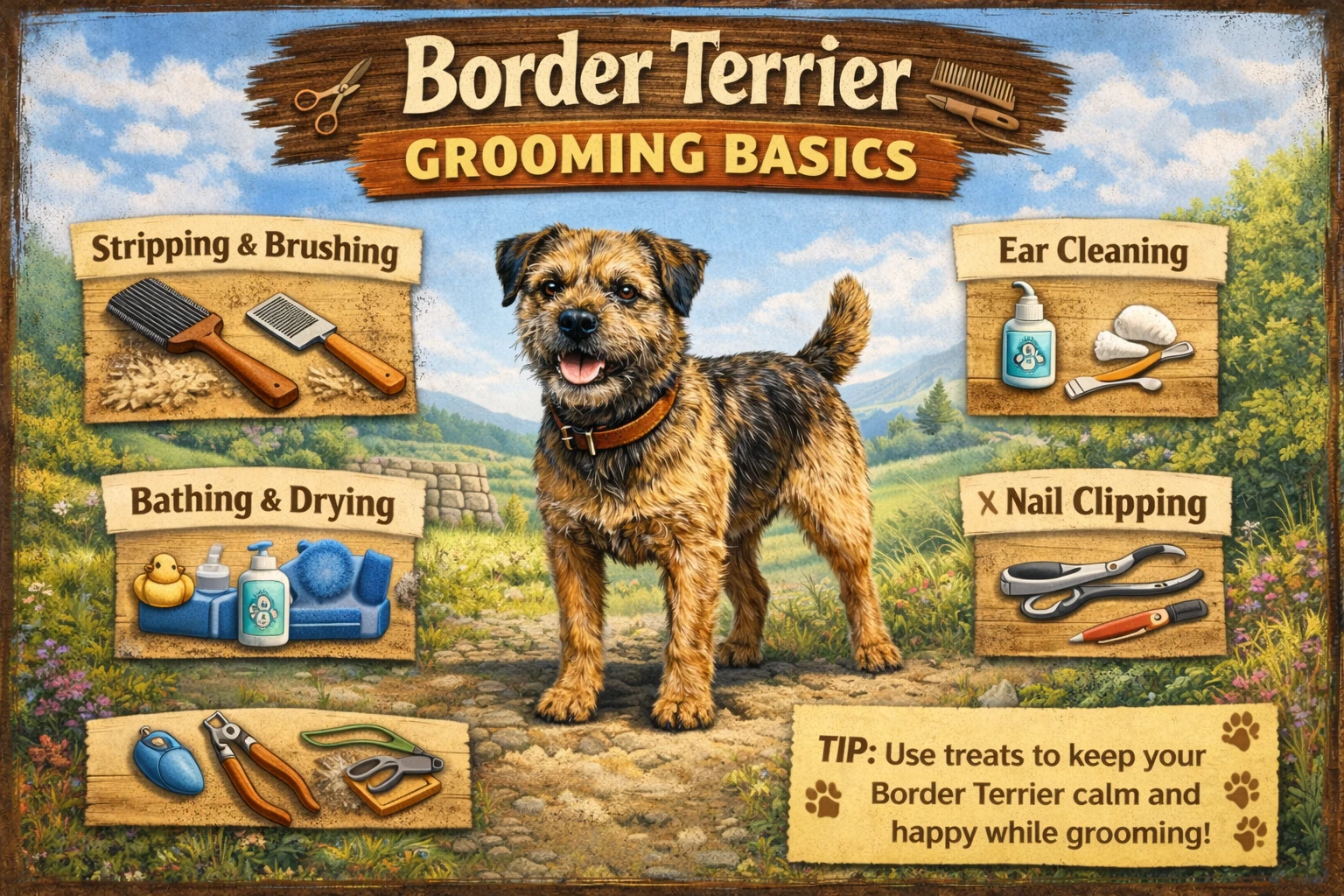
Border Terrier grooming is not about fancy haircuts or heavy styling. It is mainly about protecting the breed’s wiry working coat, removing dead hair, and keeping the skin healthy. A Border Terrier has a harsh outer coat and a softer undercoat, so its grooming routine is different from many smooth-coated or fluffy dog breeds.
If a Border Terrier is groomed the wrong way, especially by repeated clipping or shaving, the coat can become softer, duller, more difficult to manage, and more likely to shed. Good grooming helps maintain the coat’s natural texture, weather resistance, and clean appearance.
This guide explains the basics of how to groom a Border Terrier at home, how often grooming is needed, which tools are useful, when hand stripping matters, and which grooming mistakes owners should avoid.
If you also want to understand how your dog’s age affects grooming needs, activity level, and senior care, you can check our Border Terrier Age Calculator.
Quick Answer: How Often Should a Border Terrier Be Groomed?
A Border Terrier should usually be brushed 1–2 times per week, lightly tidied every few weeks, and hand stripped about 2 times per year if you want to maintain the correct wiry coat texture. Some pet Border Terriers may need light coat maintenance more often, especially during shedding or moulting periods.
The ideal Border Terrier grooming frequency depends on coat condition, lifestyle, age, and whether the dog is hand stripped or clipped. Dogs that spend more time outdoors, roll in dirt, or develop trapped dead hair may need more frequent brushing and coat checks.
| Grooming Task | Recommended Frequency | Why It Matters |
|---|---|---|
| Brushing | 1–2 times per week | Removes loose undercoat and prevents buildup |
| Light coat tidying | Every 4–6 weeks | Keeps the coat neat without over-grooming |
| Hand stripping | About 2 times per year | Removes dead wire hair and preserves coat texture |
| Bathing | Only when needed or every 6–8 weeks | Prevents dryness and protects natural oils |
| Nail trimming | Every 3–4 weeks | Supports healthy walking and posture |
| Ear checks | Monthly or as needed | Helps catch dirt, odor, or irritation early |
Border Terrier Coat Type and Why It Needs Special Grooming
The Border Terrier has a double coat. The top layer is a harsh, wiry outer coat, and underneath it is a softer undercoat. This coat was developed to help protect the breed in rough weather, muddy ground, and outdoor working conditions.
The wiry outer coat helps repel dirt and moisture, while the undercoat provides warmth and insulation. Because of this coat structure, loose and dead hair does not always fall out easily on its own. Instead, it can stay trapped in the coat until it is brushed out or removed through hand stripping.
This is why Border Terriers can look low-maintenance at first, but still need regular coat care. Without proper grooming, the coat may become thick, dull, soft, itchy, or uneven. Some dogs may also develop extra shedding, skin irritation, or coat problems when dead hair builds up for too long.
One of the biggest mistakes is treating the Border Terrier like a normal clipped pet dog. Repeated clipping cuts the hair instead of removing dead coat from the root. Over time, this can make the coat softer, lighter in color, less weather-resistant, and more difficult to restore.
Border Terrier Coat Characteristics and Grooming Impact
| Coat Feature | What It Means | Why Grooming Matters |
|---|---|---|
| Wiry outer coat | Harsh protective hair on top | Needs dead hair removed to keep its texture |
| Soft undercoat | Warm insulating layer underneath | Can trap loose hair if not brushed |
| Double coat | Two coat layers working together | Needs careful grooming, not shaving |
| Slow hair release | Dead hair may stay in the coat | Regular brushing and stripping prevent buildup |
| Natural dirt resistance | Coat helps repel mud and moisture | Over-bathing or clipping can weaken this protection |
Because of this coat type, the best Border Terrier grooming routine is usually light, consistent maintenance instead of heavy grooming all at once. Small grooming habits done regularly help keep the coat clean, healthy, and easier to manage.
How to Groom a Border Terrier at Home
Learning how to groom a Border Terrier at home starts with simple routine care. Most owners do not need many tools or advanced grooming skills. The main goal is to brush out loose hair, check the skin, keep the coat tidy, and avoid damaging the natural wiry texture.
Start with brushing. Use a slicker brush, pin brush, or another suitable Border Terrier grooming brush. Brush gently and work in the direction of coat growth. Do not scrape the skin or force through tangles. The best brush for a Border Terrier is usually one that removes loose undercoat without pulling harshly on the wiry topcoat.
Pay close attention to areas where loose hair and small mats can build up:
- Behind the ears
- Under the front legs
- Around the neck and collar area
- Along the back and sides
- Around the tail and rear area
After brushing, check whether any long, dead wire hairs are loose enough to come out easily. This is where light hand grooming can help. Gently remove only dead hairs that release without pulling hard. If the hair does not come out easily or your dog reacts with discomfort, stop and leave that area alone.
Bathing should be done only when needed. Border Terriers do not need frequent baths because too much bathing can strip natural oils and soften the coat. Use a mild dog shampoo, rinse very well, and dry the coat gently with a towel.
Finish each grooming session with basic health checks:
- Check the skin for redness, flakes, scabs, or irritation
- Look inside the ears for dirt, odor, or discharge
- Check nails and trim them if they touch the floor
- Look for ticks, trapped dirt, or sore areas after outdoor activity
Border Terrier Home Grooming Routine
| Grooming Task | How Often | Owner Notes |
|---|---|---|
| Brushing | 1–2 times a week | Use a gentle brush and focus on hidden areas |
| Light hand grooming | Every 4–6 weeks | Only remove loose dead hairs that come out easily |
| Hand stripping | About twice a year | Best done by someone who understands wire coats |
| Bathing | Every 6–8 weeks or only when dirty | Avoid over-bathing because it can soften the coat |
| Nail trimming | Every 3–4 weeks | Trim small amounts to avoid cutting too short |
| Ear checking | Monthly or as needed | Clean only when dirty and avoid pushing deep into the ear |
This simple routine keeps Border Terrier grooming manageable for most owners while protecting the coat’s natural texture. The key is consistency: regular brushing, light coat checks, and occasional hand stripping are usually better than waiting until the coat becomes overgrown or uncomfortable.
Border Terrier Hand Stripping vs Clipping: What’s Best?
Border Terrier hand stripping is one of the most important parts of correct coat care. This breed has a wiry coat that does not shed dead hair in the same way as many other dogs. Hand stripping removes old, dead wire hair from the coat so new harsh hair can grow in properly.
Hand stripping does not mean pulling healthy live hair. When the coat is ready, dead hair should come out easily with your fingers or a simple stripping tool. If the hair does not release easily, or your dog reacts with pain, the coat is not ready or the technique is wrong.
Clipping a Border Terrier means cutting the coat with electric clippers. This is faster and easier, but it does not remove dead coat from the root. Over time, repeated clipping can make the coat softer, fluffier, lighter in color, and more likely to lose its natural dirt and weather resistance.
So, can you clip a Border Terrier? In some cases, yes. Clipping may be used for older dogs, dogs with medical issues, or pets that cannot tolerate hand stripping. But for maintaining the correct Border Terrier coat texture, hand stripping is usually the better choice.
What Happens If You Don’t Strip a Border Terrier?
If you do not strip a Border Terrier, dead wire hair can stay trapped in the coat. Over time, the coat may become thick, dull, soft, uneven, or uncomfortable. Some dogs may also shed more because loose undercoat and dead topcoat are not being removed properly.
Not every pet Border Terrier needs show-level hand stripping, but most still benefit from regular coat maintenance. Light stripping, brushing, and coat checks help prevent buildup and keep the dog more comfortable.
Hand Stripping vs Clipping a Border Terrier
| Method | What It Does | Benefits | Downsides | Best For |
|---|---|---|---|---|
| Hand stripping | Removes dead wire hair from the coat | Keeps coat harsh, healthy, and more natural-looking | Takes time, patience, and proper technique | Most healthy Border Terriers |
| Clipping | Cuts the coat shorter with clippers | Fast, easy, and useful for some comfort cases | Can soften the coat and increase maintenance over time | Seniors, medical cases, or dogs that cannot tolerate stripping |
| Mixed approach | Uses light stripping with limited trimming | Balances coat health with easier home maintenance | Still needs care to avoid damaging coat texture | Busy pet owners who want a practical routine |
Important things to remember:
- Hand stripping should not hurt when the coat is ready
- Only remove dead hair that comes out easily
- Repeated clipping can change the natural coat texture
- Shaving a Border Terrier very short is usually not recommended
- A professional groomer with wire-coat experience can help if you are unsure
As your dog gets older, grooming comfort may become more important than perfect coat texture. You can use our Border Terrier Age Calculator to better understand your dog’s life stage and adjust care routines as needed.
Border Terrier Grooming Tools: Brushes, Stripping Tools, and Bathing Supplies
You do not need a large grooming kit for a Border Terrier. The best Border Terrier grooming tools are simple tools that help remove loose hair, protect the wiry coat, and keep the skin comfortable. Using too many harsh tools can irritate the skin or damage the coat.
For regular brushing, a slicker brush for a Border Terrier can help remove loose undercoat and small tangles, especially around hidden areas like behind the ears and under the legs. A pin brush may also work for lighter brushing. The best brush for a Border Terrier is one that removes loose hair without scraping the skin or breaking the wiry outer coat.
For dead wire hair, many owners use fingers, a stripping knife, or a stripping stone. These tools should be used carefully. They are meant to help remove dead coat, not cut or scrape the dog’s skin.
For bathing, use a mild dog shampoo only when needed. Human shampoo is too harsh for dog skin, and frequent bathing can remove natural oils from the coat. After bathing, towel dry the coat gently. If using a dryer, keep it on low heat and away from the skin.
Best Grooming Tools for Border Terriers
| Tool | Best Used For | How Often to Use | Owner Notes |
|---|---|---|---|
| Slicker brush | Loose undercoat, small tangles, hidden areas | 1–2 times per week | Use gently and avoid scraping the skin |
| Pin brush | Light brushing and coat tidying | Weekly or as needed | Good for routine maintenance |
| Stripping knife | Removing dead wire hair | When coat is ready | Use carefully or ask a groomer to show you |
| Stripping stone | Light dead-hair removal | As needed | Useful for small touch-ups |
| Dog shampoo | Bathing when dirty | Every 6–8 weeks or only when needed | Choose mild dog-safe shampoo |
| Nail clippers or grinder | Nail trimming | Every 3–4 weeks | Trim small amounts at a time |
| Dog-safe ear cleaner | Cleaning dirty ears | Only when needed | Do not push deep into the ear canal |
The goal is not to over-groom your dog. The right tools should make Border Terrier grooming easier, safer, and more comfortable while protecting the natural coat.
Common Border Terrier Coat Problems and Grooming Mistakes
Border Terrier coat problems often happen when the coat is clipped too often, not stripped when needed, brushed with the wrong tools, or bathed too frequently. The breed’s coat is naturally tough, but the skin underneath still needs careful handling.
One common problem is a soft or fluffy coat. This can happen after repeated clipping because the old dead coat is cut instead of removed. The coat may lose its harsh texture and become harder to manage over time.
Another common issue is extra shedding or moulting. Border Terriers may appear to shed more when dead hair and loose undercoat build up. Regular brushing and proper hand stripping can help reduce this buildup.
Over-bathing is another mistake. Too many baths can wash away natural oils, leaving the skin dry and the coat dull or soft. Border Terriers usually only need bathing when they are dirty, smelly, or after messy outdoor activity.
Owners should also check hidden areas where mats and irritation can form:
- Behind the ears
- Under the front legs
- Around the collar or harness area
- Around the tail and rear area
- Between the toes after outdoor walks
Common Border Terrier Grooming Problems and Fixes
| Problem | Likely Cause | What to Do |
|---|---|---|
| Soft or fluffy coat | Repeated clipping or lack of stripping | Use light hand stripping and avoid frequent clipping |
| Extra shedding or moulting | Loose undercoat and dead hair buildup | Brush weekly and remove dead coat when ready |
| Dull or uneven coat | Old hair trapped in the coat | Improve brushing and consider professional hand stripping |
| Itchy or dry skin | Over-bathing or harsh shampoo | Use mild dog shampoo and bathe less often |
| Bad smell | Dirty coat, ears, or skin irritation | Check ears and skin; bathe only when needed |
| Pain during grooming | Pulling live hair or brushing too harshly | Stop immediately and use gentler technique |
When to See a Professional Groomer or Vet
You should see a professional groomer if your Border Terrier is badly matted, if you want full hand stripping done correctly, or if your dog becomes stressed during grooming. Choose a groomer who understands wire-coated breeds, not just general clipping.
You should speak to a vet if you notice red skin, sores, scabs, hair loss, strong ear smell, constant scratching, or painful areas. Grooming can help prevent small issues from becoming worse, but skin infections, allergies, parasites, and ear problems need proper veterinary care.
Good grooming keeps problems small and easier to manage. The safest approach is regular brushing, careful coat checks, limited bathing, and proper hand stripping when the coat is ready.
Border Terrier Grooming FAQs
How often should a Border Terrier be groomed?
A Border Terrier should usually be brushed 1–2 times per week, lightly tidied every few weeks, and hand stripped about twice a year if you want to maintain the correct wiry coat. Dogs that spend more time outdoors or develop more loose hair may need more frequent coat checks.
Do Border Terriers need hand stripping?
Most Border Terriers benefit from hand stripping because it removes dead wire hair and helps the new harsh coat grow in properly. Pet Border Terriers may not need show-level stripping, but regular dead-coat removal helps keep the coat healthier and easier to manage.
Can you clip a Border Terrier instead of hand stripping?
You can clip a Border Terrier in some cases, especially for older dogs, medical cases, or dogs that cannot tolerate hand stripping. However, repeated clipping can soften the coat, change its texture, and reduce the natural dirt-resistant quality of the wiry outer coat.
What happens if you don’t strip a Border Terrier?
If you do not strip a Border Terrier, dead wire hair can stay trapped in the coat. This may make the coat look thick, dull, uneven, soft, or uncomfortable. It can also lead to extra shedding, moulting, and skin irritation if loose hair builds up for too long.
What is the best brush for a Border Terrier?
The best brush for a Border Terrier is usually a gentle slicker brush or pin brush that removes loose undercoat without scraping the skin or breaking the wiry topcoat. A stripping knife or stripping stone may also be useful for removing dead wire hair when the coat is ready.
How often should you bathe a Border Terrier?
A Border Terrier should only be bathed when needed, or roughly every 6–8 weeks if the dog gets dirty or starts to smell. Frequent bathing can remove natural oils, dry the skin, and soften the coat, so brushing and coat checks are usually more important than regular baths.
How do you trim a Border Terrier’s face?
A Border Terrier’s face should be tidied carefully, not heavily styled. Loose or overgrown hairs around the eyes, cheeks, beard, and muzzle can be lightly shaped, but the natural expression should remain. If you are unsure, ask a groomer experienced with wire-coated terriers to show you the correct technique.
Do Border Terriers shed a lot?
Border Terriers are often considered moderate shedders, but they can shed more when dead coat and loose undercoat build up. Regular brushing, light coat maintenance, and proper hand stripping can help reduce trapped hair and keep shedding easier to manage.
Related Border Terrier Care Guides
Grooming is only one part of keeping a Border Terrier healthy and comfortable. These related guides can help you understand the breed more completely:
- Border Terrier Age Calculator — check your Border Terrier’s age in human years and understand their current life stage.
- Border Terrier Dog Full Guide — learn about the breed’s size, temperament, care needs, and ownership basics.
- Border Terrier Training Guide — understand training, behavior, socialization, and daily routine needs.
- Border Terrier Age Chart — compare Border Terrier age stages from puppyhood to senior years.
- Border Terrier Nutrition and Feeding Guide — learn feeding basics, diet needs, and common nutrition mistakes.
- Border Terrier Cost of Ownership — understand grooming, food, vet care, training, and long-term ownership costs.
Final Thoughts on Border Terrier Grooming
Border Terrier grooming is simple once you understand the coat. This breed does not need heavy styling, frequent bathing, or regular shaving. It needs consistent brushing, careful coat checks, occasional hand stripping, and the right grooming tools to keep the wiry coat healthy.
The most important rule is to protect the natural coat texture. Avoid over-bathing, repeated clipping, and harsh brushing. If the coat becomes soft, dull, itchy, or uncomfortable, review your grooming routine and consider help from a professional groomer who understands wire-coated breeds.
As your Border Terrier moves through different life stages, grooming needs may change. Younger dogs may need more active coat maintenance, while older dogs may need gentler handling and shorter sessions. To understand your dog’s current age stage better, use the Border Terrier Age Calculator.

Ata Ur Rehman is the founder of Pet Age in Human Years Calculator, an educational platform that provides age conversion charts and lifespan guides for dogs, cats, birds, and other companion animals. His work focuses on helping pet owners understand how animal ages translate into human years using commonly accepted age conversion formulas and published lifespan averages.
The website compiles breed and species lifespan data from kennel clubs, breed organizations, and general animal lifespan studies to present simple and easy-to-understand guides for pet owners worldwide.
This website was created to centralize animal age conversion charts into one easy reference platform for pet owners.