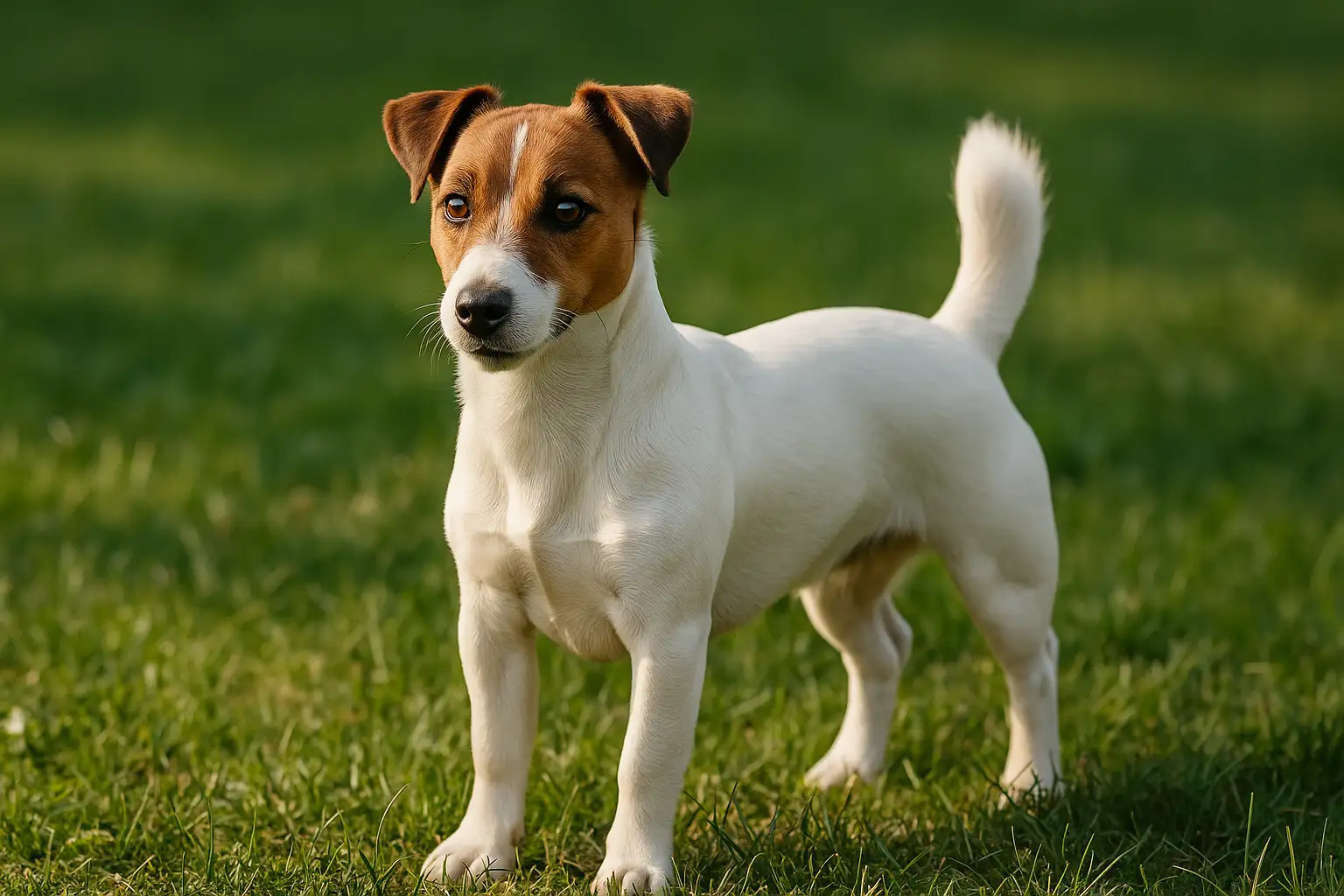
The Jack Russell Terrier is a small, energetic, and intelligent working dog with strong hunting instincts. Originally bred in England for fox hunting, this breed was created to be bold, fast, alert, and independent. Those same traits still shape the modern Jack Russell today, which is why Jack Russell Terrier training needs to be clear, consistent, and started early.
A typical Jack Russell Terrier weighs around 13–17 pounds, stands about 10–12 inches tall, and often lives 13–16 years or more. Because this breed has a long lifespan, high energy, and a sharp mind, training is not something you do once and forget. Jack Russell training works best when it becomes part of your dog’s daily routine through short lessons, clear rules, exercise, and mental stimulation.
Jack Russells learn quickly, but that also means they can learn unwanted habits quickly too. Barking, digging, jumping, chasing, pulling on the leash, and ignoring recall often happen when their energy and instincts are not guided properly. The goal of training a Jack Russell Terrier is not to remove their personality. The goal is to teach them how to use their intelligence and energy in safe, calm, and controlled ways.
If you want a broader overview of the breed’s origin, coat types, colors, size, and general characteristics, you can also read the Jack Russell Terrier Dog Full Guide. This training guide focuses specifically on temperament, behavior, obedience, puppy training, and practical ways to manage common Jack Russell problems.
You can also use the Jack Russell Terrier Age Calculator to understand your dog’s life stage, maturity level, and age in human years. This can help you adjust training expectations for a puppy, adult, or senior Jack Russell.
Jack Russell Terrier Temperament, Personality, and Training Traits
Jack Russell Terriers are known for their big personalities in small bodies. They are brave, fast, curious, playful, and always ready to explore. Because they were bred as hunting dogs, they have a strong instinct to chase moving objects, dig, bark, and stay alert to sounds around them. These traits make them exciting dogs to live with, but they also explain why consistent training is so important.
Most Jack Russells are highly intelligent. This helps them learn commands quickly, but it also means they get bored faster than many other breeds. A bored Jack Russell may create their own entertainment by chewing, barking, digging, jumping on people, or trying to escape the yard. This is why training should include both obedience and mental enrichment.
Jack Russells are also independent thinkers. They may understand what you want but still choose to do something else if the reward is not clear or if the environment is more exciting than you are. For this reason, Jack Russell Terrier training should be reward-based, structured, and repeated often in different situations.
Jack Russell behavior can also change with age. Puppies are usually more playful, mouthy, and easily distracted. Adult Jack Russells may have better focus but still need regular exercise and rules. Senior dogs may slow down physically, but many still enjoy mental games, short training sessions, and calm routines.
Here is a simple look at common Jack Russell traits and how they affect training:
| Trait | What It Means for Training |
|---|---|
| High Energy | Needs daily exercise before expecting calm focus |
| Strong Intelligence | Learns fast but needs variety to avoid boredom |
| Prey Drive | May chase cats, squirrels, birds, bikes, or moving objects |
| Independence | Needs clear rewards, boundaries, and repeated practice |
| Alert Nature | May bark at sounds, visitors, or outdoor movement |
| Problem-Solving Mind | Can figure out how to escape, steal food, or ignore weak rules |
Understanding these traits helps you train your Jack Russell in a way that matches the breed’s natural instincts. Instead of fighting their energy, the best approach is to guide it with structure, rewards, movement, and clear expectations.
Why Jack Russell Terrier Training Matters
Jack Russell Terrier training is not optional. This breed has a strong mind, a fast body, and natural working instincts. Without clear rules, a Jack Russell can easily become noisy, jumpy, destructive, or difficult to control outside. Good training helps your dog stay safe, listen better, and live more calmly with your family.
Many common Jack Russell behavior problems are not signs of a bad dog. Barking, chasing, digging, jumping, and pulling are usually natural instincts mixed with too much unused energy. Training teaches your dog when these behaviors are acceptable, when they are not, and what to do instead.
Training also builds trust. When you teach your Jack Russell with patience, rewards, and consistent boundaries, your dog learns to look to you for direction. This reduces confusion and helps prevent problem behaviors from becoming long-term habits.
Early training is especially important for puppies, but adult Jack Russells can learn too. The key is consistency. A Jack Russell needs the same rules every day, from every family member. If one person allows jumping and another person corrects it, the dog becomes confused and the behavior continues.
In simple terms, training teaches your Jack Russell Terrier how to use their energy in better ways. It helps them listen, settle, walk politely, come when called, and behave more safely around people, pets, and busy environments.
How to Train a Jack Russell Terrier: Step-by-Step Guide
If you are wondering how to train a Jack Russell Terrier, the most important rule is this: keep training short, clear, and rewarding. Jack Russells learn quickly, but they can lose focus if lessons are too long or boring. Short daily sessions work better than occasional long sessions.
The best Jack Russell training plan combines exercise, obedience, mental stimulation, and calm behavior practice. Before asking your dog to focus, make sure they have had a chance to release some energy. A Jack Russell with too much stored energy will usually struggle to listen.
Step 1: Start With a Daily Routine
A clear daily routine helps your Jack Russell understand what to expect. This reduces stress and makes training easier. Try to include exercise, food, toilet breaks, training, play, and rest at predictable times.
A simple daily routine can look like this:
- Morning walk or play session to release energy
- Short 5–10 minute obedience training session
- Mental game, puzzle toy, sniffing activity, or food search
- Calm rest time in a crate, bed, or quiet area
- Evening walk, recall practice, or structured play
- Final short training session before bedtime
Step 2: Use Positive Reinforcement
Jack Russells respond best when training feels rewarding. Use small treats, praise, toys, or play to reward the exact behavior you want. The reward should come immediately, so your dog understands which action earned it.
Avoid shouting, harsh punishment, or confusing corrections. These methods can make a Jack Russell more frustrated, anxious, or stubborn. Clear rewards and calm boundaries work better for this breed.
Step 3: Teach Basic Obedience Cues
Basic obedience gives your Jack Russell a foundation for better behavior at home and outside. Start in a quiet room before practicing in harder places like the yard, street, park, or around other dogs.
Sit:
Hold a treat above your dog’s nose and slowly move it backward. When your dog’s bottom touches the floor, say “sit” and reward immediately.
Down:
Ask your dog to sit. Move the treat from their nose down toward the floor. When they lie down, reward quickly and calmly.
Stay:
Ask your dog to sit or lie down. Say “stay,” take one small step back, then return and reward. Slowly increase distance and time only when your dog succeeds.
Come:
Call your dog’s name in a happy voice and say “come.” When they reach you, reward immediately. Practice indoors first, then in a secure yard, and later with a long leash outside.
Leave It:
Hold a treat in your closed hand. When your dog stops sniffing or pawing at it, say “leave it” and reward with a different treat. This cue is very useful for Jack Russells because of their strong prey drive and curiosity.
Loose Leash Walking:
If your Jack Russell pulls, stop walking. When the leash becomes loose or your dog turns back toward you, start moving again. This teaches that pulling does not make the walk continue.
Settle:
Teach your dog to relax on a mat, bed, or quiet spot. Reward calm lying down. This cue helps with guests, excitement, barking, and over-arousal.
Step 4: Practice in Different Places
A Jack Russell may listen well in the house but ignore you outside. This does not mean the dog is being bad. It means the outside world is more distracting. Practice each command in different places, starting with easy environments and slowly moving to harder ones.
For example, teach “come” in the living room first, then the hallway, then the yard, then outside on a long leash. Do not expect perfect recall around squirrels, cats, or traffic until your dog has had a lot of practice in controlled settings.
Step 5: Adjust Training to Your Dog’s Personality
Not every Jack Russell learns in the same way. Some are food motivated, some prefer toys, and some need movement before they can focus. Adjust the training style based on your dog’s personality.
High-energy Jack Russells:
Give exercise before training so they can focus better.
Fearful or anxious Jack Russells:
Use gentle praise, slow steps, and calm rewards. Do not push too fast.
Stubborn or frustrated Jack Russells:
Keep sessions short and end with an easy success.
Busy households:
Use 5-minute training breaks throughout the day instead of trying to do one long lesson.
Step 6: Keep Training Sessions Short
Training for 5–10 minutes, two or three times a day, is better than one long session. Short lessons keep your Jack Russell interested and reduce frustration. End each session while your dog is still engaged, not after they are already bored or tired.
With patience, consistency, exercise, and rewards, your Jack Russell Terrier can learn strong obedience skills and better daily behavior. The key is to train the dog you actually have: energetic, smart, alert, and full of personality.
Are Jack Russells Easy to Train?
Jack Russells are smart and capable learners, but they are not always easy to train for first-time dog owners. They learn commands quickly, but they can also be independent, easily distracted, and strongly motivated by chasing, digging, barking, and exploring. This means Jack Russell Terrier training needs more consistency than many people expect from a small dog.
The good news is that Jack Russells can become well-trained dogs when training is clear, rewarding, and repeated every day. They usually respond best to short lessons, positive reinforcement, structured exercise, and rules that stay the same across the whole household.
Jack Russells become harder to train when they are under-exercised, bored, overstimulated, or allowed to practice bad habits for too long. For example, if a Jack Russell learns that barking gets attention or pulling makes the walk move faster, the behavior can become stronger quickly.
So, are Jack Russells easy to train? They are easy to teach, but not always easy to manage. Their intelligence helps them learn fast, but their energy and independence mean they need patient, consistent training from an owner who can provide structure.
| Training Factor | What It Means |
|---|---|
| Intelligence | They learn commands quickly |
| Energy Level | They need exercise before focus |
| Prey Drive | They may chase animals or moving objects |
| Independence | They may ignore weak or unclear rules |
| Best Training Style | Short, positive, consistent sessions |
Jack Russell Puppy Training
Jack Russell puppy training should start as soon as your puppy comes home. This breed learns very fast, so early habits matter. A puppy that learns calm greetings, basic commands, toilet routines, crate comfort, and gentle play from the beginning is easier to manage as an adult.
The main goal with a Jack Russell puppy is not advanced obedience. The first goal is to build simple daily structure. Your puppy should learn where to toilet, where to sleep, what to chew, how to respond to their name, and how to settle after play.
Start With Name Response
Say your puppy’s name in a happy voice. When they look at you, reward immediately with praise, a treat, or a toy. This builds attention, which makes future training easier.
Begin Toilet Training Early
Take your Jack Russell puppy outside after waking up, eating, drinking, playing, and before bedtime. Reward them immediately when they toilet in the right place. Do not wait until you are back inside, because the reward needs to connect with the correct behavior.
Teach Bite Control
Jack Russell puppies may nip during play because they are excited or teething. Stop play calmly when biting happens, redirect to a chew toy, and reward gentle play. Avoid rough hand games because they can teach your puppy that biting people is fun.
Introduce Crate or Bed Training
A crate, bed, or quiet rest space helps your puppy learn how to settle. Keep the area positive and comfortable. Use it for naps, calm breaks, and short rest periods after play. This is especially helpful for Jack Russells because they can become over-excited when they do not get enough rest.
Socialize Carefully
Expose your puppy to normal household sounds, gentle handling, different surfaces, visitors, safe dogs, car rides, and outdoor environments in a calm way. Do not overwhelm your puppy. The goal is to create confidence, not fear.
For best results, keep puppy training sessions very short. Two to five minutes at a time is enough for young puppies. Repeat small lessons several times a day and end before your puppy becomes tired or frustrated.
| Puppy Skill | Why It Matters | Training Tip |
|---|---|---|
| Name Response | Builds attention | Reward when your puppy looks at you |
| Toilet Training | Prevents house accidents | Take outside after meals, naps, and play |
| Bite Control | Reduces rough play | Pause play and redirect to toys |
| Crate or Bed Training | Teaches calm rest | Use short, positive rest periods |
| Socialization | Builds confidence | Introduce new things slowly and safely |
7-Day Jack Russell Training Schedule for Beginners
A simple training schedule can help you stay consistent. This 7-day Jack Russell training plan is designed for beginners and can be used for puppies or adult dogs. Keep each session short, reward success, and repeat the same skills throughout the week.
Before each session, give your Jack Russell a short walk, play session, or sniffing activity. A dog with too much unused energy will usually struggle to focus, especially during obedience training.
| Day | Training Focus | What to Practice |
|---|---|---|
| Day 1 | Name response and attention | Say your dog’s name, reward eye contact, practice 5 minutes |
| Day 2 | Sit and calm greetings | Teach “sit” before food, play, doors, and attention |
| Day 3 | Come when called | Practice recall indoors with high-value rewards |
| Day 4 | Loose leash basics | Stop when your dog pulls, move when the leash is loose |
| Day 5 | Leave it | Reward your dog for ignoring food, toys, or distractions |
| Day 6 | Settle training | Reward calm lying down on a bed or mat |
| Day 7 | Review and repeat | Practice sit, come, leave it, leash walking, and settle |
This schedule is only a starting point. Most Jack Russells need repeated practice for several weeks before new behaviors become reliable. Once your dog understands a command indoors, practice in slightly harder places such as the yard, driveway, quiet street, or park on a leash.
The best training results come from small daily wins. A few short sessions every day will usually work better than one long session once a week.
Jack Russell Terrier Training Mistakes to Avoid
Jack Russell Terrier training becomes harder when owners are inconsistent, unclear, or too slow to guide problem behaviors. This breed learns quickly, so both good and bad habits can become strong if they are repeated often.
Avoiding common training mistakes can make your Jack Russell easier to manage, especially if your dog struggles with barking, jumping, chasing, pulling, or ignoring commands.
Waiting Too Long to Start Training
Many owners wait until behavior problems appear before starting training. With a Jack Russell, it is better to begin early. Puppies should learn name response, toilet habits, gentle play, calm greetings, and simple commands as soon as they come home.
Using Long Training Sessions
Jack Russells can become bored or frustrated during long lessons. Short sessions of 5–10 minutes work better than one long session. For puppies, even 2–5 minutes can be enough.
Skipping Exercise Before Training
A Jack Russell with too much stored energy may struggle to focus. Before obedience training, give your dog a short walk, play session, sniffing activity, or simple game. This helps your dog listen better during training.
Rewarding Bad Behavior by Accident
Jack Russells quickly learn what gets attention. If barking, jumping, pawing, or whining gets a reaction every time, your dog may repeat it. Reward calm behavior instead, and avoid giving attention to behavior you do not want.
Expecting Reliable Recall Too Soon
Because Jack Russells have a strong prey drive, recall takes time. Do not expect your dog to come back around squirrels, cats, dogs, bikes, or traffic before practicing in easier places first. Start indoors, then move to a secure yard, then use a long leash outdoors.
Using Harsh Punishment
Harsh punishment can make a Jack Russell anxious, defensive, or more stubborn. Clear rules, rewards, calm redirection, and consistency are safer and more effective for this breed. If your dog shows aggression, fear, or biting, get professional help instead of using force.
| Mistake | Better Approach |
|---|---|
| Waiting until problems appear | Start basic training early |
| Training for too long | Use short 5–10 minute sessions |
| Skipping exercise | Release energy before training |
| Reacting to barking or jumping | Reward calm behavior instead |
| Practicing recall only outside | Start indoors and build slowly |
| Using harsh corrections | Use rewards, structure, and safe guidance |
Tools You Need for Jack Russell Training
You do not need expensive equipment to train a Jack Russell Terrier. The most important tools are consistency, patience, rewards, and a daily routine. However, a few simple items can make training safer and easier.
Choose tools that help you guide your dog without causing fear or pain. Jack Russells are active, curious, and fast-moving, so training tools should support control, safety, and positive learning.
| Training Tool | Why It Helps |
|---|---|
| Small training treats | Useful for rewarding fast responses |
| Favorite toy | Helpful for dogs motivated by play |
| Standard leash | Supports daily walking and basic control |
| Long training line | Useful for recall practice in open areas |
| Comfortable harness | Helps with safer leash training |
| Mat or dog bed | Useful for teaching the “settle” cue |
| Puzzle toy | Provides mental stimulation and reduces boredom |
| Chew toys | Helps redirect nipping, chewing, and mouthiness |
For best results, keep rewards small and easy to eat. If your Jack Russell is too excited by treats, use calm praise or a toy instead. The best reward is whatever your dog finds motivating in that moment.
Avoid tools that rely on fear, pain, or strong correction. They may stop a behavior temporarily, but they do not teach your Jack Russell what to do instead. For most training goals, rewards, structure, leash control, and calm repetition work better.
How to Calm a Jack Russell Terrier
Many owners want to know how to calm a Jack Russell Terrier because this breed can seem hyper, restless, or constantly ready for action. A calm Jack Russell is usually not a tired dog only. It is a dog that has enough exercise, mental stimulation, rest, and clear rules.
The goal is not to remove your dog’s energy. The goal is to teach your Jack Russell when it is time to play, when it is time to listen, and when it is time to relax.
Give Exercise Before Calm Training
A short walk, play session, or sniffing activity can help reduce stored energy. After exercise, guide your Jack Russell into a calmer activity such as mat training, chewing, or a short obedience session.
Use Sniffing Games
Sniffing helps many dogs relax because it uses their brain and nose at the same time. Hide small treats around a room, scatter food in the grass, or let your Jack Russell search for a toy. This can calm the mind better than constant running.
Teach the “Settle” Cue
Choose a mat, bed, or quiet spot. When your dog lies down calmly, reward them. Start with a few seconds, then slowly build the time. This teaches your Jack Russell that calm behavior also earns rewards.
Avoid Rewarding Over-Excitement
If your Jack Russell jumps, barks, or grabs at you for attention, wait for a calmer moment before giving attention. Rewarding calm behavior teaches your dog that quiet choices work better than wild behavior.
Create a Predictable Routine
Jack Russells often behave better when they know what to expect. Regular times for walks, food, training, play, toilet breaks, and rest can reduce stress and make your dog easier to manage.
If your Jack Russell cannot calm down even after exercise, training, rest, and routine, there may be anxiety, pain, overstimulation, or another issue involved. In that case, professional guidance can help you understand what is really causing the behavior.
Common Jack Russell Terrier Behavior Problems and How to Fix Them
Jack Russell Terrier behavior problems usually come from high energy, boredom, strong prey drive, unclear rules, or lack of daily training. This breed is not usually difficult because they are “bad.” They are difficult when their intelligence and working instincts are not guided properly.
The good news is that most Jack Russell training problems can improve with exercise, structure, positive reinforcement, and consistent rules. The key is to understand why the behavior is happening first, then teach your dog what to do instead.
Barking
Jack Russells often bark because they are alert, excited, bored, frustrated, or reacting to sounds outside. Because they were bred to be active working dogs, barking can become a habit if it gets attention or if the dog has too much unused energy.
Fix: Give your Jack Russell enough daily exercise before expecting quiet behavior. Teach a simple “quiet” cue by rewarding silence the moment your dog stops barking. If windows, visitors, other dogs, or outdoor noises trigger barking, reduce the trigger first and then reward calm behavior. Do not shout back, because many Jack Russells see loud reactions as part of the excitement.
Jumping on People
Jack Russells may jump on people because they are excited, want attention, or have learned that jumping gets a reaction. This can become a problem around children, guests, or older people.
Fix: Ask your dog to “sit” before anyone gives attention. If your Jack Russell jumps, turn away and pause interaction until all four paws are on the ground. Reward calm greetings immediately. Everyone in the home should follow the same rule, because mixed reactions make jumping harder to stop.
Chasing and Hunting Behavior
Chasing is one of the most common Jack Russell Terrier behavior issues because the breed has a strong prey drive. Many Jack Russells want to chase cats, squirrels, birds, bikes, cars, or anything that moves quickly.
Fix: Do not rely on off-leash control until your dog has strong recall in safe places. Use a secure leash or long line outdoors. Practice “come,” “leave it,” and “watch me” in quiet areas before trying them around bigger distractions. Structured games like fetch, tug with rules, scent games, and controlled chase games can give your dog a safer outlet for this instinct.
Ignoring Recall or Not Coming When Called
Many owners search for how to train a Jack Russell to come when called because this breed can become very focused on smells, movement, and outdoor distractions. A Jack Russell may understand the command indoors but ignore it outside if the environment is more rewarding than the owner.
Fix: Start recall training indoors with high-value rewards. Call your dog once in a happy voice, reward quickly when they come, and avoid calling them for things they dislike. Then practice in a secure yard and later on a long leash. Never punish your Jack Russell after they finally come back, even if they took too long. Coming to you should always feel rewarding.
Nipping or Mouthiness
Jack Russell puppies often nip during play, teething, or excitement. Adult Jack Russells may also become mouthy when over-aroused or frustrated. This behavior should be guided early so it does not become rough play.
Fix: Stop play calmly when nipping happens. Redirect your dog to a chew toy, rope toy, or training cue. Reward gentle behavior and calm play. Avoid rough hand play, because it teaches your Jack Russell that biting hands is part of the game.
Digging
Digging is natural for many Jack Russells. They may dig because they are bored, trying to hunt, looking for a cool spot, hiding toys, or releasing energy. Because this breed was developed for hunting around dens, digging can feel very rewarding to them.
Fix: Increase physical exercise and mental stimulation first. Use puzzle toys, sniffing games, and training sessions to reduce boredom. If your dog has access to a yard, create one allowed digging area and reward them for using it. Block access to unsafe digging spots and avoid leaving an under-exercised Jack Russell alone in the yard for long periods.
Over-Arousal and Too Much Excitement
Over-arousal can look like zooming, barking, jumping, grabbing clothes, pulling hard, spinning, or being unable to settle. Many owners describe this as their Jack Russell being “too hyper,” but it usually means the dog needs better balance between activity and calm training.
Fix: Use calm routines, slow sniff walks, short training sessions, and a “settle” cue on a bed or mat. Reward calm behavior before your dog becomes too excited. Avoid using only high-energy games, because too much chasing and rough play can make some Jack Russells even more worked up.
Pulling on the Leash
Jack Russells often pull because they want to move fast, follow smells, or chase things. Their small size can make owners ignore leash pulling at first, but it can become stressful and unsafe over time.
Fix: Stop walking when your dog pulls. Start moving again only when the leash becomes loose. Reward your Jack Russell for checking in with you and walking near your side. Practice in quiet places before expecting good leash manners around dogs, traffic, or squirrels.
Here is a quick table to make the most common Jack Russell Terrier behavior fixes easier to follow:
| Problem | Why It Happens | What Helps |
|---|---|---|
| Barking | Boredom, alerting, excitement, outdoor triggers | Exercise, “quiet” cue, calm rewards, trigger control |
| Jumping | Excitement and attention-seeking | Ask for “sit,” ignore jumping, reward calm greetings |
| Chasing | Strong prey drive and movement instinct | Long leash, recall practice, “leave it,” structured games |
| Ignoring Recall | Outdoor distractions are more rewarding | High-value rewards, indoor practice, long-line training |
| Nipping | Play, teething, frustration, over-excitement | Stop play, redirect to toys, reward gentle behavior |
| Digging | Instinct, boredom, hunting drive, stored energy | Digging spot, more activity, puzzle toys, scent games |
| Over-Arousal | Too much excitement and poor calm control | Settle training, sniff walks, short lessons, calm routines |
| Leash Pulling | Excitement, smells, chasing, fast movement | Stop-and-go walking, loose leash rewards, quiet practice areas |
With steady practice, most Jack Russell Terrier behavior problems become easier to manage. The key is to stay calm, use the same rules every day, and reward the behavior you want your dog to repeat.
When to Get Professional Help With a Jack Russell Terrier
Most Jack Russell Terriers can improve with regular home training, but some situations need extra support. Because this breed is strong-minded, energetic, and quick to react, certain behavior problems may become difficult or unsafe without professional guidance.
Getting help does not mean you failed as an owner. It simply means your dog needs a more structured training plan, especially if the behavior is intense, repeated, or connected to fear, anxiety, aggression, or safety risks.
Signs You May Need a Dog Trainer
Consider working with a qualified dog trainer if your Jack Russell shows any of these signs:
- Keeps barking even after consistent training
- Does not come when called and often runs off
- Pulls strongly on the leash and becomes hard to control
- Jumps on people in a way that feels unsafe
- Chases animals, bikes, cars, or people outdoors
- Cannot settle even after exercise and calm routines
- Shows no improvement after several weeks of steady training
A good trainer can observe your dog’s behavior, identify what is reinforcing the problem, and help you build a realistic plan for your home, schedule, and dog’s personality.
When to Call a Veterinary Behaviorist
Some behavior problems may be connected to fear, anxiety, stress, pain, or medical issues. In these cases, training alone may not be enough. A veterinary behaviorist or your veterinarian can help rule out health-related causes and create a safer behavior plan.
Seek professional help quickly if your Jack Russell shows any of these signs:
- Growling, snapping, lunging, or biting
- Sudden behavior changes without a clear reason
- Severe fear of people, dogs, sounds, or normal environments
- Separation anxiety, such as panic, shaking, barking, or destructive behavior when left alone
- Resource guarding around food, toys, beds, or people
- Aggression toward children, visitors, dogs, or other pets
These issues should not be handled with punishment or force. Harsh corrections can make fear and aggression worse. A safer approach is to get professional guidance early and use a structured plan based on your dog’s triggers and comfort level.
Trust Your Instinct
If something feels unsafe, unpredictable, or too stressful to manage alone, ask for help early. Early support often prevents behavior problems from becoming stronger habits. With the right guidance, even a challenging Jack Russell can learn better manners, safer responses, and calmer daily routines.
Jack Russell Terrier Training FAQs
How do you train a Jack Russell Terrier?
Train a Jack Russell Terrier with short daily sessions, positive rewards, clear rules, and enough exercise before training. Start with basic commands like sit, come, stay, leave it, loose leash walking, and settle. Practice first in quiet places, then slowly move to more distracting environments.
Are Jack Russells hard to train?
Jack Russells are not hard to teach, but they can be hard to manage if they are bored, under-exercised, or allowed to build bad habits. They are intelligent and learn quickly, but their energy, prey drive, and independence mean they need consistent training.
How do you train a Jack Russell puppy?
Start Jack Russell puppy training with name response, toilet training, bite control, crate or bed training, calm greetings, and short obedience lessons. Keep sessions around 2–5 minutes for young puppies and reward good behavior immediately.
How do you stop a Jack Russell from barking?
To reduce Jack Russell barking, first identify the trigger. Barking may come from boredom, excitement, alerting, or frustration. Give enough daily exercise, teach a “quiet” cue, reduce window or outdoor triggers, and reward calm silence instead of reacting loudly.
How do you train a Jack Russell to come when called?
Start recall training indoors with high-value rewards. Call your Jack Russell once in a happy voice and reward immediately when they come. Then practice in a secure yard and later outdoors with a long leash. Do not punish your dog after they return, even if they were slow.
How do you calm down a Jack Russell Terrier?
Calm a Jack Russell Terrier by balancing exercise, sniffing games, mental stimulation, predictable routines, and settle training. Reward calm behavior on a bed or mat, avoid rewarding over-excitement, and give your dog regular rest after play or walks.
What is the best age to start Jack Russell training?
The best age to start Jack Russell training is as soon as your puppy comes home. Early training should focus on simple habits like toilet routines, name response, gentle play, calm handling, and short obedience lessons. Adult Jack Russells can also learn with consistent practice.
Why does my Jack Russell ignore me outside?
A Jack Russell may ignore you outside because smells, animals, movement, and sounds are more exciting than the command. Practice commands indoors first, then in a quiet yard, then outside on a long leash. Build difficulty slowly instead of expecting perfect focus immediately.
Final Thoughts on Jack Russell Terrier Training
Jack Russell Terrier training works best when you understand the breed’s real nature. These dogs are energetic, intelligent, bold, curious, and independent. They need more than basic commands. They need daily structure, exercise, mental stimulation, calm routines, and clear rules that stay consistent over time.
The most important training goals are simple: teach your Jack Russell to listen, come when called, walk calmly, settle when needed, control barking, and use their energy in safe ways. With short sessions, positive reinforcement, and patience, most Jack Russells can become well-behaved family dogs.
Training should also match your dog’s life stage. A puppy needs short lessons, toilet training, bite control, and socialization. An adult Jack Russell may need stronger recall, leash control, and behavior correction. A senior dog may need gentler routines and mental enrichment.
To better understand your dog’s maturity level and training expectations by age, use the Jack Russell Terrier Age Calculator. You can also explore the Jack Russell Terrier Age Chart for life stage guidance, the Jack Russell Terrier Grooming Basics guide for care routines, and the Jack Russell Terrier Nutrition and Feeding Guide to support your dog’s health and energy needs.
For a full breed overview, including origin, size, coat, temperament, and general care, visit the Jack Russell Terrier Dog Full Guide.

Ata Ur Rehman is the founder of Pet Age in Human Years Calculator, an educational platform that provides age conversion charts and lifespan guides for dogs, cats, birds, and other companion animals. His work focuses on helping pet owners understand how animal ages translate into human years using commonly accepted age conversion formulas and published lifespan averages.
The website compiles breed and species lifespan data from kennel clubs, breed organizations, and general animal lifespan studies to present simple and easy-to-understand guides for pet owners worldwide.
This website was created to centralize animal age conversion charts into one easy reference platform for pet owners.