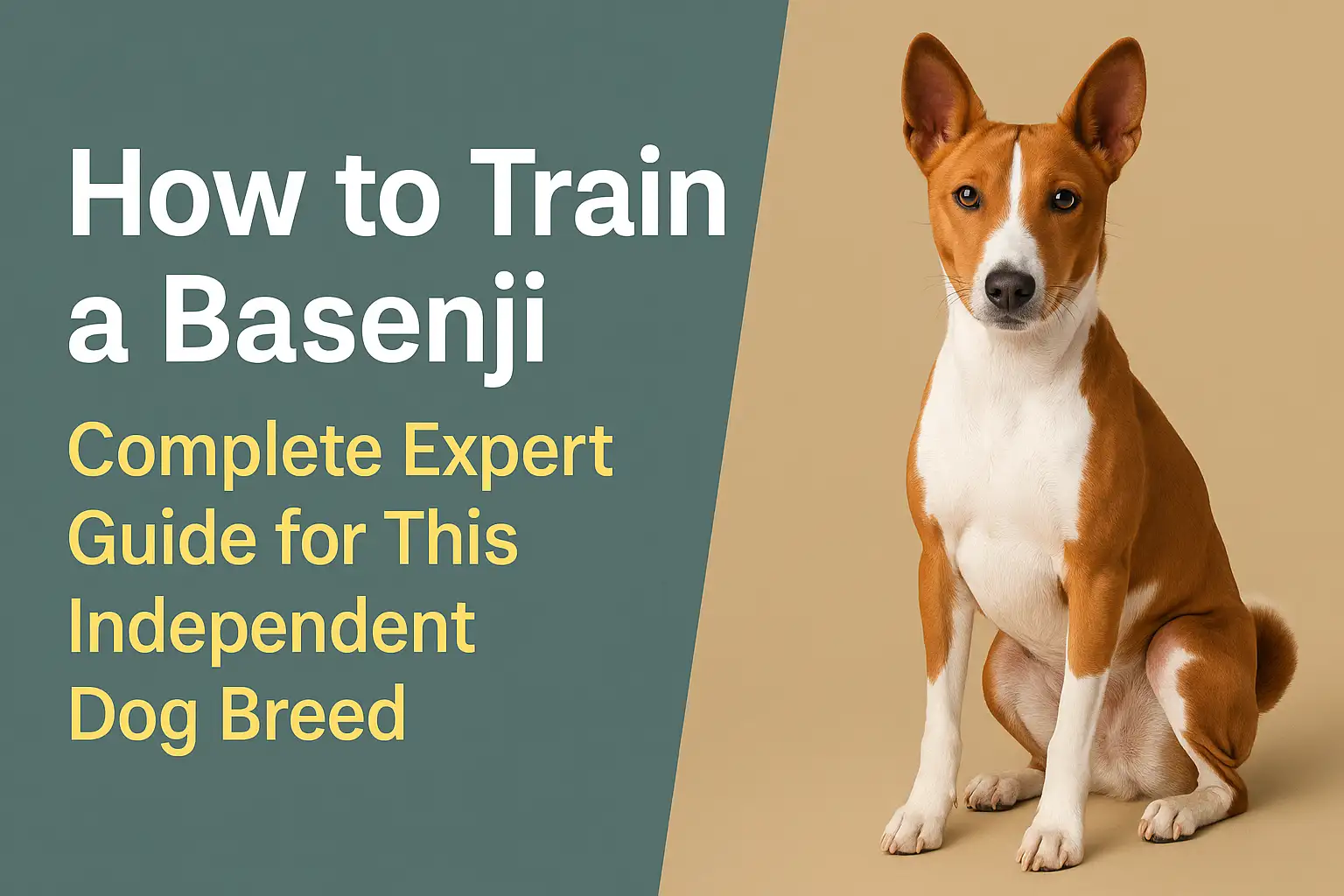
Training a Basenji requires a different approach from training more people-focused dog breeds. Basenjis are intelligent, independent, curious, and strongly driven by instinct, so they respond best to short sessions, high-value rewards, clear routines, and consistent behavior management. This guide explains how to train a Basenji using practical steps for engagement, recall, leash manners, crate training, impulse control, and daily enrichment.
If you are training your Basenji based on their life stage, you can also check their age using our Basenji Age Calculator. For complete breed background, visit our Basenji Dog Breed Guide.
Basenji Training Guide Overview
- Why Basenji Training Matters
- Understanding Basenji Behavior
- What You Need Before Training a Basenji
- Step-by-Step Basenji Training Method
- Basenji Training by Temperament
- Training a Basenji by Age
- Common Basenji Training Mistakes to Avoid
- Basenji Training Troubleshooting and Real-Life Scenarios
- How Long Basenji Training Takes
- When to Seek Professional Help
- Basenji Training FAQs
- Quick Basenji Training Plan
- Continue Your Basenji Care Plan
- Final Thoughts on Training a Basenji
Why Basenji Training Matters
Basenji training matters because this breed relies heavily on instinct, quick decision-making, and self-directed behavior. Without structure, a Basenji may develop common problems such as escaping, chasing wildlife, ignoring recall, counter-surfing, destructive chewing, or becoming overstimulated indoors.
Proper training helps channel the Basenji’s independence into predictable routines. It improves safety around doors, outdoor spaces, other pets, and distractions. Early training also builds better impulse control, calmer indoor behavior, and more reliable responses during daily handling, walks, feeding, and crate time.
Understanding Basenji Behavior
Basenji behavior is shaped by the breed’s history as an independent hunting dog. Unlike many obedience-focused breeds, Basenjis often observe, evaluate, and make their own decisions before responding to a cue. This does not mean they cannot be trained; it means the training method must match the breed’s temperament.
Most Basenjis learn best when sessions are short, rewards are valuable, and distractions are introduced gradually. Their strong prey drive can make outdoor recall difficult, while their curiosity can make repetitive drills boring. For this reason, successful Basenji training should focus on engagement, reward timing, consistency, and environmental control rather than force or punishment.
What You Need Before Training a Basenji
Before training a Basenji, prepare the right tools and a controlled environment. A well-fitted harness, long line, crate, high-value treats, chew items, and puzzle toys are useful because Basenji training depends on safety, motivation, and management. These tools help prevent unwanted behavior while giving your dog clear outlets for energy and curiosity.
Start in a quiet indoor space before moving to a yard, sidewalk, park, or high-distraction area. Because Basenjis are fast, alert, and skilled at finding escape routes, secure doors, windows, fences, and gates before training begins. A calm setup helps your Basenji focus and reduces situations where instinct overrides learning.
Step-by-Step Basenji Training Method
| Step | Training Focus | What To Do |
|---|---|---|
| 1 | Build engagement and name recognition | Start indoors with no distractions. Say your Basenji’s name once, then reward the moment they look at you. Repeat in short sets of 5–10 reps. Avoid repeating the name or using it during scolding. The goal is to make the name mean immediate attention. |
| 2 | Introduce a marker word or clicker | Choose a marker such as “yes” or use a clicker. Mark the exact moment your Basenji performs the desired behavior, then reward immediately. This helps your dog understand which action earned the reward. |
| 3 | Teach sit, down, and impulse control | Use a treat lure to guide your Basenji into position. Mark and reward the correct movement. Once consistent, add short waits before meals, doorways, and walks to build everyday self-control. |
| 4 | Build leash walking foundations | Begin indoors or in a quiet yard using a harness. Reward your Basenji for staying near you and checking in. If they pull, stop moving and wait for slack before continuing. Focus on rewarding loose-leash behavior instead of correcting pulling. |
| 5 | Practice recall with a long line | Use a long line in a fenced or low-distraction area. Call your Basenji with a cheerful cue, move backward, and reward generously when they come. Avoid calling when they are unlikely to respond. Build distance and distraction slowly. |
| 6 | Develop crate training and alone-time skills | Make the crate positive by feeding meals inside and offering special chews there. Keep the door open at first, then slowly build short closed-door sessions. Use crate time to support calm behavior and prevent destructive habits. |
| 7 | Practice socialization and handling | Introduce your Basenji to calm people, friendly dogs, household sounds, surfaces, and gentle handling. Reward calm behavior. Briefly touch paws, ears, collar, and body areas, then reward before your dog becomes uncomfortable. |
| 8 | Add daily mental enrichment | Use puzzle feeders, scent games, chew toys, and short trick sessions. Multiple 3–5 minute sessions usually work better than one long session because Basenjis can lose interest in repetitive training. |
Basenji Training by Temperament
Basenjis do not all respond to training the same way. Some are bold and highly independent, while others are more sensitive, cautious, or easily distracted. The best Basenji training plan should match the dog’s temperament instead of forcing one method on every dog.
| Basenji Temperament | Training Challenge | Best Training Approach |
|---|---|---|
| Highly independent | Loses interest quickly or ignores repeated cues | Use short sessions, high-value rewards, and clear boundaries. End training before boredom starts. |
| Anxious or noise-sensitive | May shut down, avoid handling, or react to new sounds | Train in a calm space, introduce changes slowly, and reward relaxed behavior. |
| Strong prey drive | Pulls, chases, or ignores recall outdoors | Use a long line, practice recall in controlled areas, and reward check-ins before increasing distractions. |
| High-energy or restless | Struggles to settle or focus for long | Use exercise, puzzle toys, scent games, and multiple short training sessions throughout the day. |
| Multi-dog household Basenji | May become distracted, competitive, or tense around other dogs | Train separately first, manage feeding spaces, and avoid reward competition during early lessons. |
Training a Basenji by Age
Basenji training should change as your dog moves from puppyhood to adulthood and then into the senior stage. Puppies need foundation habits, adult Basenjis need consistency and behavior control, and senior Basenjis may need gentler routines that match their energy level. To understand your dog’s current life stage, use the Basenji Age Calculator.
Basenji Puppy Training
Basenji puppy training should focus on engagement, name recognition, crate comfort, gentle handling, socialization, and basic impulse control. Puppies learn best through short, positive sessions before habits become fixed. At this stage, preventing problems such as counter-surfing, door-dashing, chewing, and poor recall is easier than correcting them later.
Adult Basenji Training
Adult Basenjis may already have established habits, so training often means reshaping routines instead of starting from zero. Use consistent rules, controlled environments, crates, gates, long lines, and reward-based practice to replace unwanted behaviors. Rescue Basenjis may also need a decompression period before structured training begins.
Senior Basenji Training
Senior Basenjis still benefit from training, but sessions should be gentle, short, and realistic. Focus on calm routines, mental enrichment, light recall practice, handling comfort, and easy cues that support daily care. Avoid physically demanding drills if your Basenji shows stiffness, fatigue, or reduced interest.
Basenji Training Mistakes by Age
Some Basenji training mistakes are more common at specific life stages. Puppies usually need prevention and foundation work, adult Basenjis need consistency, and senior Basenjis need gentler expectations.
| Basenji Age Stage | Common Mistake | Better Approach |
|---|---|---|
| Puppy | Allowing chewing, door-dashing, jumping, or poor recall to become habits | Start early with crate comfort, name response, handling, socialization, and short reward-based lessons. |
| Adult | Expecting quick behavior changes after habits are already established | Use consistent rules, controlled spaces, long-line recall practice, and repeated reinforcement of calm behavior. |
| Senior | Training with the same physical intensity used for younger dogs | Keep sessions short, gentle, and focused on comfort, simple cues, mental enrichment, and easy daily routines. |
Basenji Training Troubleshooting and Real-Life Scenarios
If your Basenji ignores you outdoors
Move to a quieter area, use a long line, and reward every check-in. Outdoor distractions are often more powerful than early training, so build reliability indoors first before increasing difficulty.
If your Basenji pulls toward wildlife
Increase distance from the trigger and reward your dog for looking back at you. Use stop-and-go walking and do not allow chasing to become self-rewarding.
If your Basenji becomes destructive when alone
Add more enrichment before alone time, rotate puzzle toys, provide safe chews, and use a crate or gated area to limit access to problem spaces. Build alone time gradually instead of leaving for long periods suddenly.
If your Basenji resists grooming or handling
Use slow reward-based desensitization. Touch paws, ears, collar, or nails briefly, reward immediately, and stop before resistance builds. Increase duration only when your dog stays relaxed.
If your Basenji lives in an apartment
Use structured walks, indoor enrichment, scent games, chew items, and short training sessions to prevent restlessness. Apartment Basenjis need mental outlets as much as physical exercise.
If your Basenji lives in a house
Check fences, gates, doors, windows, and weak escape points. Basenjis are agile and curious, so secure management is part of training.
If your Basenji lives with other pets
Train separately at first, feed pets in separate spaces, manage introductions, and supervise interactions. With cats or small pets, use separation unless your Basenji has proven safe and calm around them.
How Long Basenji Training Takes
Basenji training does not follow a fixed timeline because this breed is independent, alert, and easily influenced by distractions. Some skills, such as name recognition and basic engagement, may improve within a few days of consistent practice. Other skills, such as loose-leash walking, impulse control, recall, and calm behavior around triggers, usually take several weeks or months.
The goal is not instant obedience. The goal is steady progress, better decision-making, and safer daily behavior. Puppies may learn new routines quickly, but they still need consistency as they mature. Adult Basenjis may need more time if pulling, escaping, destructiveness, or poor recall has already become a habit.
| Training Skill | Expected Timeline | What Progress Looks Like |
|---|---|---|
| Name recognition | A few days to 1 week | Your Basenji looks at you when their name is called in a quiet space. |
| Basic cues | 1–3 weeks | Your dog can respond to simple cues like sit, down, wait, or come indoors. |
| Crate training | 1–4 weeks | Your Basenji enters the crate willingly and settles for short periods. |
| Loose-leash walking | Several weeks | Your dog checks in more often and pulls less in low-distraction areas. |
| Recall training | Several months | Your Basenji comes reliably in controlled areas while using a long line. |
| Impulse control | Ongoing | Your dog waits more calmly at doors, meals, gates, and before walks. |
When to Seek Professional Help
Professional help is recommended when a Basenji’s behavior affects safety, daily routine, or quality of life. This includes persistent aggression, severe fear, escalating reactivity, resource guarding, destructive behavior that does not improve, intense prey-driven lunging, or repeated escape attempts.
Choose a trainer who understands independent breeds and uses reward-based methods. If your Basenji shows fear, anxiety, aggression, or sudden behavior changes, speak with a qualified professional before the behavior becomes harder to manage. Early support can prevent long-term habits and make training safer for both the dog and the owner.
Basenji Training FAQs
Why are Basenjis hard to train?
Basenjis are hard to train because they are independent thinkers with strong instincts. They often respond better to short, rewarding sessions than repetitive obedience drills.
Can Basenjis be trained?
Yes, Basenjis can be trained, but they need structure, patience, high-value rewards, and consistent routines. Training works best when it focuses on engagement, management, and practical daily behavior.
Can Basenjis be trusted off-leash?
Most Basenjis should not be trusted off-leash in open areas. Their prey drive and quick reactions can override recall, especially around wildlife, movement, or unfamiliar surroundings.
What treats work best for Basenji training?
High-value treats usually work best for Basenji training. Soft meat-based treats, cheese, or small strong-smelling rewards often hold attention better than dry kibble.
How do I stop destructive Basenji behavior?
Use more mental enrichment, provide safe chew items, rotate puzzle toys, increase structured activity, and manage access with a crate or gated space when your Basenji cannot be supervised.
How much exercise does a Basenji need before training?
A short walk, light play session, or scent game before training can help reduce excess energy. Avoid overexercising before lessons because a tired or overstimulated Basenji may lose focus.
Why does my Basenji resist grooming or handling?
Some Basenjis dislike restraint or sudden handling. Use gradual desensitization by touching paws, ears, collar, or nails briefly, rewarding calm behavior, and stopping before resistance increases.
When should I start training a Basenji puppy?
Start training as soon as your Basenji puppy comes home. Begin with name recognition, crate comfort, gentle handling, socialization, and short reward-based sessions.
Quick Basenji Training Plan
| Training Area | Key Action |
|---|---|
| Daily structure | Use multiple 3–5 minute sessions instead of one long session. |
| Engagement | Reward eye contact, name response, and voluntary check-ins. |
| Leash manners | Practice in quiet areas first and reward loose-leash walking. |
| Recall | Use a long line and build reliability slowly in controlled spaces. |
| Crate training | Make the crate positive with meals, chews, and short calm sessions. |
| Impulse control | Practice waiting at doors, before meals, and before going outside. |
| Enrichment | Use puzzle feeders, scent games, chew items, and short trick sessions. |
| Progress tracking | Monitor recall distance, leash tension, calmness, and response around distractions. |
Continue Your Basenji Care Plan
Training is only one part of raising a healthy Basenji. To build a complete care routine, use these related Basenji resources:
- Basenji Age Calculator
- Basenji Dog Age Chart
- Basenji Dog Breed Guide
- Basenji Dog Grooming Basics
- Basenji Dog Nutrition and Feeding Guide
- Basenji Dog Cost of Ownership
Final Thoughts on Training a Basenji
Training a Basenji requires patience, structure, and realistic expectations. This breed is intelligent and capable, but it often learns best when training feels purposeful, rewarding, and consistent. Short sessions, strong rewards, clear routines, and smart management are more effective than force or repetition.
Focus on building engagement first, then gradually improve recall, leash manners, crate comfort, impulse control, and calm behavior around distractions. When training matches the Basenji’s age, temperament, and energy level, this independent breed becomes easier to guide, safer to manage, and more enjoyable to live with.

Ata Ur Rehman is the founder of Pet Age in Human Years Calculator, an educational platform that provides age conversion charts and lifespan guides for dogs, cats, birds, and other companion animals. His work focuses on helping pet owners understand how animal ages translate into human years using commonly accepted age conversion formulas and published lifespan averages.
The website compiles breed and species lifespan data from kennel clubs, breed organizations, and general animal lifespan studies to present simple and easy-to-understand guides for pet owners worldwide.
This website was created to centralize animal age conversion charts into one easy reference platform for pet owners.