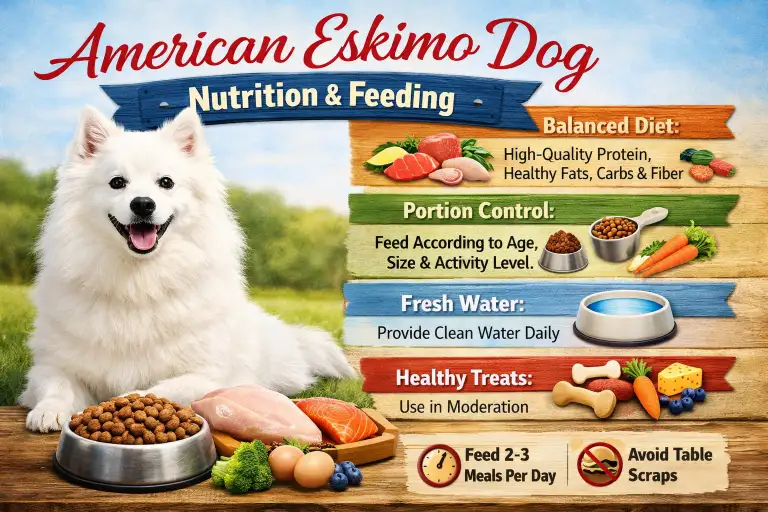
Feeding an American Eskimo Dog isn’t just about filling the bowl—it’s about supporting a breed with a spitz metabolism, dense double coat, high intelligence, and a tendency to gain weight if overfed. Whether you have a Toy, Miniature, or Standard Eskie, the right nutrition directly affects coat quality, energy levels, digestion, behavior, and long-term health.
This guide is designed to help you make clear, practical, and evidence-aligned feeding decisions, not to push trends or brand hype. By the end, you should understand what your American Eskimo Dog actually needs in the bowl—and why.
Why nutrition is especially important for American Eskimo Dogs
American Eskimo Dogs are active companion dogs that thrive on routine and consistency. They’re typically food-motivated, which makes training easier—but it also means portion control matters. Many Eskies live in apartments or suburban homes and don’t burn as many calories as their fluffy appearance might suggest. Over time, even small overfeeding errors can lead to weight gain, joint stress, and reduced lifespan.
Their thick white double coat also places higher nutritional demands on fat quality and micronutrients. Diets too low in essential fatty acids or built around poor-quality ingredients often show up first as dull coat, shedding issues, or itchy skin.
Core nutritional needs of American Eskimo Dogs
| Nutrient | Why It Matters for American Eskimo Dogs |
|---|---|
| Protein | Supports lean muscle, alert posture, and energy; helps maintain healthy weight when properly portioned |
| Fats | Essential for coat shine, skin health, and energy; quality matters more than quantity |
| Carbohydrates | Provide controlled energy; excess or poor-quality carbs can contribute to weight gain |
| Omega-3 & Omega-6 fatty acids | Support skin barrier, coat condition, and inflammation control |
| Vitamins & minerals | Support immune health, metabolism, bone strength, and overall vitality |
| Fiber | Aids digestion and helps regulate appetite in food-motivated dogs |
A balanced diet for an Eskie should meet established canine nutritional standards (such as AAFCO or FEDIAF) while being appropriate for their size, age, and activity level.
Breed traits that influence feeding decisions
| Breed Trait | Nutrition Impact |
|---|---|
| Double coat | Requires adequate fat quality and micronutrients for skin and coat health |
| High intelligence | Food motivation is useful for training but increases obesity risk if treats aren’t controlled |
| Small to medium size | Overfeeding has a faster impact compared to large breeds |
| Moderate activity level | Calorie needs are often lower than owners expect, especially in adult dogs |
| Dental sensitivity (common in small dogs) | Food texture and dental health support matter |
What this section means for you as an owner
If your American Eskimo Dog:
- Gains weight easily
- Acts hungry all the time
- Has a dull coat or excessive shedding
- Develops soft stool with food changes
…the issue often starts with portion size, ingredient quality, or feeding habits, not a lack of food.
Best Diet for an American Eskimo Dog (Puppy, Adult, Senior)
The best diet for an American Eskimo Dog depends on age, size, and daily activity. A puppy, an adult dog, and a senior Eskie all need different nutrition—even if they look similar. Feeding the right diet at the right stage helps prevent weight gain, stomach problems, weak bones, and coat issues later in life.
American Eskimo Dogs come in Toy, Miniature, and Standard sizes, but the nutrition rules are mostly the same. The difference is how much they eat and how fast they burn calories.
Basic diet rules for all American Eskimo Dogs
A healthy Eskie diet should:
- Be complete and balanced (meet AAFCO standards)
- Use animal-based protein as the main ingredient
- Include healthy fats for coat and skin
- Avoid excess fillers and empty calories
- Match the dog’s life stage
Life-stage diet differences
| Life Stage | What the Diet Should Focus On | Why It Matters |
|---|---|---|
| Puppy | Higher protein, higher fat, more calories | Supports growth, brain development, and strong bones |
| Adult | Balanced protein and fat, controlled calories | Maintains energy without weight gain |
| Senior | Moderate protein, lower fat, joint support | Supports aging muscles and prevents obesity |
Puppies grow fast and need more fuel. Adults need balance. Seniors usually need fewer calories, not more food.
Recommended protein and fat ranges
| Life Stage | Protein Range | Fat Range |
|---|---|---|
| Puppy | 22–30% | 10–18% |
| Adult | 18–26% | 8–15% |
| Senior | 20–25% | 6–12% |
Higher numbers are not always better. Too much fat can cause weight gain, especially in indoor or low-activity Eskies.
Size differences: Toy, Miniature, and Standard Eskies
| Size Type | Weight Range | Feeding Notes |
|---|---|---|
| Toy | 6–10 lbs | Small meals, careful portion control |
| Miniature | 10–20 lbs | Easy to overfeed, treats add up fast |
| Standard | 25–35 lbs | Needs more calories but still prone to weight gain |
Smaller Eskies gain weight quickly if portions are too large. Measuring food matters more than eyeballing it.
Grain-free vs grain-inclusive diets
Grains are not bad for American Eskimo Dogs unless your dog has a proven allergy. Whole grains like rice or oats can provide energy and fiber. Grain-free diets are not needed for most Eskies and should only be used if recommended by a vet.
Supplements: do Eskies need them?
Most American Eskimo Dogs do not need supplements if they eat a complete and balanced diet. Adding supplements without guidance can cause problems. Only consider supplements if:
- A vet recommends them
- Your dog has a diagnosed health issue
- You feed a properly formulated homemade diet under guidance
Simple takeaway for owners
- Puppies need more fuel
- Adults need balance
- Seniors need fewer calories
- Portion size matters more than brand names
- Quality ingredients beat trendy labels
How Much to Feed an American Eskimo Dog and How Often
Many American Eskimo Dogs are overfed without their owners realizing it. This breed is smart, food-motivated, and very good at acting hungry. Feeding the right amount keeps your dog active, lean, and healthy.
The correct food amount depends on weight, size, age, and activity level. Measuring food is much better than guessing.
Daily calorie needs for American Eskimo Dogs
| Dog Weight | Low Activity | Moderate Activity | High Activity |
|---|---|---|---|
| 6–10 lbs (Toy) | 200–300 calories | 250–350 calories | 300–400 calories |
| 10–20 lbs (Miniature) | 300–450 calories | 400–550 calories | 500–650 calories |
| 25–35 lbs (Standard) | 500–650 calories | 600–800 calories | 750–1,000 calories |
If your dog lives indoors, sleeps a lot, or is neutered, use the low to moderate activity range.
How often to feed your American Eskimo Dog
| Age | Meals Per Day |
|---|---|
| Puppy (under 6 months) | 3–4 meals |
| Puppy (6–12 months) | 2–3 meals |
| Adult | 2 meals |
| Senior | 2 smaller meals |
Splitting food into two meals helps control hunger and digestion.
Portion control and weight management
American Eskimo Dogs gain weight easily. Use these tips:
- Measure every meal with a cup or scale
- Reduce food if treats are used often
- Avoid free-feeding (leaving food out all day)
- Adjust portions if your dog gains weight
Using body condition at home
You should:
- Feel the ribs easily but not see them
- See a waist when looking from above
- See a tummy tuck from the side
If ribs are hard to feel, your dog is likely overweight. If ribs are very visible, your dog may be underfed.
Adjusting food for special cases
| Situation | What to Do |
|---|---|
| Neutered dog | Reduce daily food by 10–15% |
| Overweight dog | Cut calories slowly, not all at once |
| Very active dog | Increase calories, not treats |
| Senior dog | Reduce fat, keep protein steady |
Simple feeding reminders
- More food does not mean more love
- Treats count as calories
- Small daily overfeeding adds up over time
- Regular weight checks help catch problems early
Best Food Types for American Eskimo Dogs (Kibble, Fresh, Raw, Homemade)
There are many food options for American Eskimo Dogs. No single food type is perfect for every dog. The best choice depends on your dog’s health, your budget, and how much time you can spend on feeding.
What matters most is that the food is complete, balanced, and safe.
Common dog food types and how they compare
| Food Type | Good Points | Things to Watch |
|---|---|---|
| Dry food (kibble) | Easy to store, affordable, helps clean teeth | Some brands use low-quality fillers |
| Wet food (canned) | Tasty, good for picky eaters, high moisture | Higher cost, spoils fast after opening |
| Fresh food | Uses whole ingredients, easy to digest | Expensive, must be well-balanced |
| Raw food | High protein, popular trend | Risk of bacteria, not safe for all dogs |
| Homemade food | Full ingredient control | Very risky if not properly balanced |
For most American Eskimo Dogs, high-quality kibble or vet-approved fresh food works very well.
What to look for on a dog food label
| Label Item | What It Should Say |
|---|---|
| First ingredient | Real meat (chicken, turkey, beef, fish) |
| Nutrition statement | “Complete and balanced” |
| Life stage | Puppy, adult, or all life stages |
| Protein source | Clearly named animal protein |
| Fillers | Limited corn, soy, or by-products |
Avoid foods with vague terms like “meat meal” or “animal digest” as main ingredients.
Grain-free or grain-inclusive food?
Most American Eskimo Dogs do well on grain-inclusive food. Grains like rice and oats can help digestion and energy. Grain-free diets are only needed if a vet confirms a food allergy.
Safe human foods vs toxic foods
| Safe in Small Amounts | Never Feed |
|---|---|
| Cooked chicken | Chocolate |
| Cooked rice | Grapes and raisins |
| Carrots | Onions and garlic |
| Apples (no seeds) | Xylitol (sugar-free gum) |
| Plain yogurt | Alcohol |
Human food should be treats, not meals.
Treat rules for American Eskimo Dogs
| Rule | Why It Matters |
|---|---|
| Treats under 10% of calories | Prevents weight gain |
| Small training treats | Eskies are food-motivated |
| Avoid table scraps | Too much fat and salt |
| Count treats as food | Calories add up fast |
Simple food choice advice
- Pick food made for small to medium dogs
- Choose quality over trends
- Change foods slowly
- Watch your dog’s stool and energy level
Special Diets, Common Feeding Problems, and FAQs
Many American Eskimo Dog owners face feeding problems at some point. These issues are common and usually fixable with small changes. Understanding why the problem happens helps you choose the right solution.
Special diet needs in American Eskimo Dogs
| Situation | What to Change |
|---|---|
| Sensitive stomach | Simple ingredients, slow food changes |
| Food allergies | One protein source, vet guidance |
| Overweight dog | Lower calories, strict portions |
| Very active dog | More calories from food, not treats |
| Senior dog | Lower fat, joint support nutrients |
Do not change diets too often. Stick with one food and adjust portions first.
Common feeding problems and solutions
| Problem | Likely Cause | What Helps |
|---|---|---|
| Dog refuses food | Too many treats or table food | Set meal times, remove leftovers |
| Always hungry | Overfeeding treats | Measure meals, reduce snacks |
| Loose stool | Food change too fast | Switch food over 7–10 days |
| Weight gain | Too many calories | Reduce food by 10% |
| Itchy skin | Possible food reaction | Vet check, simple diet |
How to switch dog food safely
| Day | Old Food | New Food |
|---|---|---|
| 1–2 | 75% | 25% |
| 3–4 | 50% | 50% |
| 5–6 | 25% | 75% |
| 7+ | 0% | 100% |
If stool becomes very loose, slow the switch.
Feeding more than one dog
If you have more than one dog:
- Feed separately to prevent food stealing
- Measure food for each dog
- Do not feed based on who begs more
When to see a vet
You should talk to a vet if your American Eskimo Dog:
- Loses weight without reason
- Has long-term diarrhea or vomiting
- Refuses food for more than two days
- Has ongoing skin or ear problems
Quick answers to common questions
| Question | Short Answer |
|---|---|
| Can Eskies eat human food? | Yes, in small amounts |
| Is raw food safe? | Not for most dogs |
| Do they need supplements? | Usually no |
| How often should I feed? | Twice a day |
| Are grains bad? | No, unless allergic |
For more detailed canine nutrition standards, you can visit the official AAFCO website here.

Ata Ur Rehman is the founder of Pet Age in Human Years Calculator, an educational platform that provides age conversion charts and lifespan guides for dogs, cats, birds, and other companion animals. His work focuses on helping pet owners understand how animal ages translate into human years using commonly accepted age conversion formulas and published lifespan averages.
The website compiles breed and species lifespan data from kennel clubs, breed organizations, and general animal lifespan studies to present simple and easy-to-understand guides for pet owners worldwide.
This website was created to centralize animal age conversion charts into one easy reference platform for pet owners.