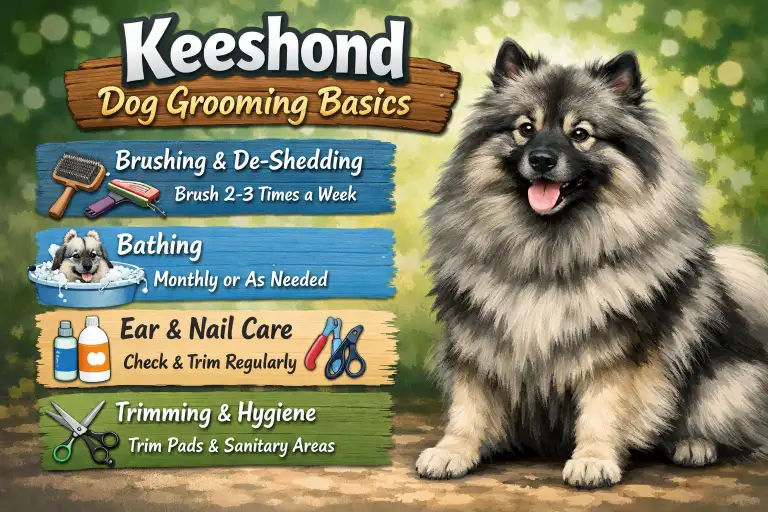
Keeshond grooming isn’t just about keeping the coat fluffy and attractive — it’s a core part of maintaining this breed’s comfort, skin health, and overall well-being. While Keeshonds are often described as “naturally clean” dogs, their dense double coat makes them far more grooming-dependent than many first-time owners expect.
This guide is designed to help you understand what Keeshond grooming actually involves, how much time it realistically takes, and why skipping or mishandling grooming can quickly lead to shedding problems, matting, skin irritation, and even painful hot spots.
Why Keeshond grooming is different from many breeds
Keeshonds are a double-coated spitz breed, meaning they have:
- A long, harsh outer coat (guard hairs) that repels dirt and moisture
- A thick, woolly undercoat that insulates the body and sheds heavily
This coat type does not behave like short coats or hair-type coats (such as Poodles). It:
- Sheds year-round, with intense seasonal “coat blows”
- Mats easily if brushing is inconsistent
- Traps moisture close to the skin if not dried properly
- Can be permanently damaged by shaving or improper grooming tools
Because of this, Keeshond grooming focuses less on haircuts and more on coat preservation, thorough brushing, controlled shedding, and skin protection.
How grooming affects comfort, health, and behavior
From a groomer’s perspective, many behavior and health issues in Keeshonds trace back to grooming problems rather than temperament. Poorly maintained coats often lead to:
- Overheating due to compacted undercoat
- Skin inflammation hidden beneath dense fur
- Painful mats forming behind the ears, under the collar, and in the armpits
- Increased itching, licking, and irritability
Regular, correct grooming helps:
- Regulate body temperature naturally
- Reduce excessive shedding inside the home
- Prevent mats before they tighten against the skin
- Catch skin and ear issues early, before veterinary treatment is needed
What owners should realistically expect
Keeshond grooming is manageable at home, but it is not low-maintenance. Most owners need:
- Consistent weekly brushing (more during shedding seasons)
- Occasional baths with proper drying
- Routine nail, ear, and skin checks
- Periodic professional grooming, especially during heavy coat blow
Understanding this upfront prevents frustration and helps owners build a grooming routine that keeps the coat healthy rather than fighting against it.
Understanding the Keeshond Double Coat and Shedding Cycle
The Keeshond has a thick double coat, and understanding how this coat works makes grooming much easier. Many grooming problems happen simply because owners treat this coat like normal fur. It is not.
A Keeshond’s coat has two layers, and each one has a job.
Keeshond coat layers and what they do
| Coat layer | What it does | Why it matters for grooming |
|---|---|---|
| Outer coat (guard hairs) | Protects from dirt, sun, and moisture | Must stay long and intact to protect the skin |
| Undercoat | Keeps the dog warm or cool depending on weather | Sheds heavily and needs regular brushing |
The outer coat should feel a bit harsh, not soft. The undercoat feels fluffy and dense. When loose undercoat is not brushed out, it packs tightly against the skin. This can trap heat and moisture and lead to skin problems.
Why Keeshonds shed so much
Keeshonds shed all year, but shedding becomes much heavier once or twice a year. This is called a coat blow. During a coat blow, large amounts of undercoat fall out in clumps.
Shedding increases:
- In spring and fall
- When daylight changes
- After stress, illness, or poor grooming
This is normal for the breed and not a sign of bad health.
Normal shedding vs problem shedding
| Type of shedding | What it looks like | What to do |
|---|---|---|
| Normal shedding | Loose fur comes out when brushing | Brush regularly and increase brushing during shedding season |
| Seasonal coat blow | Large clumps of undercoat fall out | Brush more often and use proper deshedding tools |
| Problem shedding | Bald spots, red skin, or bad smell | Stop home grooming and see a vet |
If shedding comes with itching, redness, or sores, grooming alone is not enough. These signs may point to allergies or skin infections.
Why shaving a Keeshond is a bad idea
Shaving a Keeshond does not help with heat or shedding. In fact, it can cause serious problems:
- The coat may grow back uneven or not at all
- The skin loses protection from sun and bugs
- The dog may overheat more easily
- Undercoat can grow thicker and mat faster
Once a double coat is damaged, it can take months or years to recover. Some coats never fully return to normal.
What this means for your grooming routine
Because of this coat type, Keeshond grooming should focus on:
- Brushing out loose undercoat, not cutting hair
- Keeping air flowing to the skin
- Preventing mats before they tighten
- Supporting healthy skin and coat growth
How to Groom a Keeshond at Home: Tools, Brushing, and Bathing
You can groom a Keeshond at home if you use the right tools and follow a simple routine. The goal is not to cut the coat, but to remove loose fur, prevent mats, and keep the skin clean and dry.
Grooming tools you really need
Using the wrong tools can damage the coat or hurt your dog. These are the basic tools most Keeshond owners need.
| Tool | What it is used for | How often to use |
|---|---|---|
| Slicker brush | Removes loose fur and small tangles | 2–3 times a week |
| Undercoat rake | Pulls out thick, loose undercoat | Weekly or during heavy shedding |
| Metal comb | Checks for hidden mats close to skin | After brushing |
| Dog shampoo (gentle) | Cleans coat and skin | Every 4–8 weeks |
| High-velocity or strong dryer | Dries coat fully and blows out loose fur | After every bath |
Never use human brushes or shampoos. Dog skin has a different pH and can get irritated easily.
How to brush a Keeshond the right way
Brushing is the most important part of Keeshond grooming. Always brush on dry fur, not wet.
Basic brushing steps:
- Start at the feet and work upward
- Brush small sections at a time
- Go down to the skin, not just the top layer
- Use gentle pressure and take breaks
Pay close attention to common mat areas:
- Behind the ears
- Under the collar
- Armpits and back legs
- Around the tail
If you feel a tight mat, do not pull hard. Slow brushing prevents pain and stress.
How often to brush and bathe a Keeshond
| Grooming task | Normal schedule | During heavy shedding |
|---|---|---|
| Brushing | 2–3 times per week | Daily or every other day |
| Undercoat removal | Once a week | 2–3 times per week |
| Bathing | Every 4–8 weeks | As needed, not too often |
Bathing too often can dry out the skin. A dirty-looking Keeshond usually needs brushing, not a bath.
Bathing and drying tips
When you do bathe your Keeshond:
- Use lukewarm water
- Rinse very well to avoid residue
- Always dry the coat completely
A damp undercoat can cause:
- Bad smell
- Skin infections
- Hot spots
Air drying is usually not enough. A strong dryer helps separate the coat and remove loose fur.
What home grooming can and cannot do
Home grooming works well for regular care, but some situations need extra help:
- Heavy seasonal coat blow
- Thick matting close to the skin
- Dogs that hate brushing or drying
Extra Grooming Care: Nails, Ears, Skin, and Common Coat Problems
Grooming a Keeshond is more than brushing and bathing. Nails, ears, and skin need regular care too. These areas are often missed, but ignoring them can cause pain and health problems.
Nail care for Keeshonds
Long nails can change how your dog walks and may cause joint pain. Most Keeshonds need nail trimming every 3–4 weeks.
Signs nails are too long:
- Clicking sound on the floor
- Nails touching the ground when standing
- Dog pulling feet away
Use dog nail clippers or a grinder. Trim small amounts at a time to avoid hitting the quick, which can bleed and hurt.
Ear cleaning basics
Keeshonds have fluffy ears that can trap dirt and moisture. This can lead to infections if not checked.
| Ear condition | What owners may notice | What to do |
|---|---|---|
| Healthy ears | Clean, no smell | Check weekly |
| Dirty ears | Brown wax, mild smell | Clean with dog ear cleaner |
| Problem ears | Red, bad smell, head shaking | See a vet |
Never push cotton swabs deep into the ear. Clean only what you can see.
Skin and coat problems to watch for
Because the coat is so thick, skin problems can hide easily.
Common issues include:
- Hot spots from trapped moisture
- Dry or flaky skin
- Red patches or sores
- Strong odor
| Problem | Early signs | Action to take |
|---|---|---|
| Hot spots | Wet, red patches | Clip hair around area and see a vet |
| Allergies | Itching, licking | Vet check and proper shampoo |
| Matting | Hard clumps near skin | Gentle brushing or professional help |
Early care is always easier than fixing serious problems later.
When grooming becomes a health issue
If you notice hair loss, sores, strong smells, or constant scratching, grooming alone may not help. These signs often mean:
- Allergies
- Yeast or bacterial infections
- Hormone problems
A vet can check the skin and recommend proper treatment.
Keeshond Grooming Schedule, Mistakes to Avoid, and Professional Grooming
A clear grooming schedule makes Keeshond care much easier. When tasks are spread out, grooming feels simple instead of stressful. This section also covers common mistakes and when a professional groomer is the better choice.
Simple Keeshond grooming schedule
| Grooming task | How often | Notes |
|---|---|---|
| Brushing | 2–3 times per week | Increase during shedding season |
| Undercoat removal | Weekly | More often during coat blow |
| Bathing | Every 4–8 weeks | Do not over-bathe |
| Nail trimming | Every 3–4 weeks | Check nails weekly |
| Ear check | Weekly | Clean only if dirty |
| Full professional groom | Every 8–12 weeks | Helpful during heavy shedding |
Sticking to this schedule helps prevent mats, skin problems, and heavy shedding indoors.
Common grooming mistakes Keeshond owners make
| Mistake | Why it’s harmful | Better choice |
|---|---|---|
| Shaving the coat | Damages coat and skin | Brush and deshed instead |
| Skipping brushing | Causes mats and skin issues | Short, regular sessions |
| Bathing too often | Dries out skin | Brush before bathing |
| Not drying fully | Leads to hot spots | Dry coat completely |
| Using human shampoo | Irritates skin | Use dog shampoo only |
Most grooming problems come from rushing or using the wrong tools.
Home grooming vs professional grooming
Home grooming works well for:
- Regular brushing
- Light bathing
- Nail and ear care
Professional grooming is best when:
- The coat is heavily shedding
- Mats are tight near the skin
- The dog is anxious or hard to handle
- You need a deep blow-out during shedding season
Professional groomers have strong dryers, special tools, and experience working with thick double coats.
Final thoughts
Keeshond grooming is about care, not cutting. With regular brushing, proper bathing, and attention to skin health, most owners can keep their Keeshond comfortable and clean at home. Knowing when to ask for professional help protects the coat and prevents long-term damage.
For more science-backed information on caring for double-coated breeds, the American Kennel Club (AKC) provides detailed guidance on coat health and grooming best practices: https://www.akc.org

Ata Ur Rehman is the founder of Pet Age in Human Years Calculator, an educational platform that provides age conversion charts and lifespan guides for dogs, cats, birds, and other companion animals. His work focuses on helping pet owners understand how animal ages translate into human years using commonly accepted age conversion formulas and published lifespan averages.
The website compiles breed and species lifespan data from kennel clubs, breed organizations, and general animal lifespan studies to present simple and easy-to-understand guides for pet owners worldwide.
This website was created to centralize animal age conversion charts into one easy reference platform for pet owners.