If you’ve ever wondered how old your Keeshond really is in human years, you’re not alone. Many owners still hear the old rule that one dog year equals seven human years — but that shortcut is inaccurate, especially for a medium-sized breed like the Keeshond.
A Keeshond’s body develops very quickly during the first year of life, then ages more gradually compared to humans. That means a 1-year-old Keeshond is already comparable to a young adult human, while later years add human age more slowly. This is why breed-specific calculators are far more reliable than generic dog age charts.
A Keeshond age calculator uses modern canine aging research and medium-breed lifespan data to give a realistic human-year estimate. Instead of a flat multiplier, it accounts for how dogs mature fast as puppies and slow down as adults. The result is a clearer picture of your dog’s life stage, health needs, and expected changes.
| Keeshond Age | Human Age (Approx.) | Life Stage |
|---|---|---|
| 1 year | ~15 human years | Young adult |
| 5 years | ~36 human years | Adult |
| 10 years | ~56 human years | Senior |
Using an accurate age conversion helps you make better decisions about training, nutrition, exercise, and veterinary care. As you move through this guide, you’ll see exactly how Keeshonds age, why their timeline differs from humans, and what each stage of life typically looks like for this breed.
Keeshond Age Chart by Life Stage (Puppy to Senior)
This section shows a clear and simple Keeshond age chart so you can quickly see how dog years compare to human years. Many readers come here looking for fast answers, so the table below is designed to be easy to scan and understand, even if you are new to dog ownership.
Keeshonds are medium-sized dogs. They grow very fast in their first year, then age more slowly as adults. Because of this, their age does not increase in a straight line like humans. The chart below reflects those changes.
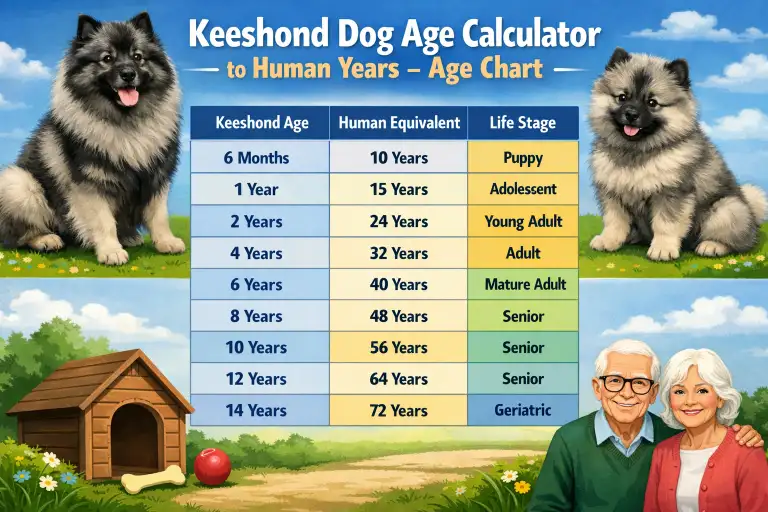
| Keeshond Age | Human Age Equivalent | Life Stage |
|---|---|---|
| 2 months | ~3 years | Puppy |
| 4 months | ~6 years | Puppy |
| 6 months | ~10 years | Puppy |
| 1 year | ~15 years | Young adult |
| 2 years | ~24 years | Adult |
| 3 years | ~28 years | Adult |
| 4 years | ~32 years | Adult |
| 5 years | ~36 years | Adult |
| 6 years | ~40 years | Adult |
| 7 years | ~44 years | Mature adult |
| 8 years | ~48 years | Senior |
| 9 years | ~52 years | Senior |
| 10 years | ~56 years | Senior |
| 11 years | ~60 years | Senior |
| 12 years | ~64 years | Senior |
| 13 years | ~68 years | Senior |
| 14 years | ~72 years | Senior |
| 15 years | ~76 years | Senior |
To make this even easier, the table below explains what each life stage usually means for a Keeshond. This helps you understand not just the number, but what changes you may see in your dog.
| Life Stage | Age Range | What to Expect |
|---|---|---|
| Puppy | 0–12 months | Fast growth, high energy, training and social learning |
| Adult | 1–6 years | Strong body, stable behavior, high activity |
| Mature adult | 7–8 years | Slight slowing, more rest needed |
| Senior | 9+ years | Lower energy, joint stiffness, more health checks |
These age ranges are averages. Some Keeshonds may act younger or older than their chart age depending on health, weight, and lifestyle.
Why Keeshonds Age Differently Than Humans (And Other Dogs)
Many people still believe that one dog year equals seven human years, but this idea is not correct. Dogs do not age at the same speed as humans, and they also do not all age the same way as each other. A Keeshond’s age depends on how fast dogs grow early in life and how their body changes as they get older.
Dogs grow up much faster than humans in their first year. A Keeshond puppy reaches physical maturity far earlier than a human child. After that fast start, aging slows down. This is why a straight 7-year rule gives the wrong answer, especially for medium-sized breeds like the Keeshond.
The table below shows why the old rule does not work.
| Common Belief | What Really Happens |
|---|---|
| 1 dog year = 7 human years | Dog aging is not a straight line |
| All dogs age the same | Size and breed change aging speed |
| Dogs age evenly every year | Dogs age fast early, slower later |
Another reason Keeshonds age differently is their breed size. Small dogs often live longer, while very large dogs usually age faster. Keeshonds sit in the middle. They tend to have a balanced aging speed, which means they stay active for many years but still show senior signs earlier than tiny breeds.
This comparison table helps show where Keeshonds fit compared to other dogs.
| Dog Type | Average Lifespan | Aging Speed |
|---|---|---|
| Small dogs | 14–16 years | Slow aging |
| Keeshond (medium breed) | 12–15 years | Moderate aging |
| Large dogs | 8–12 years | Faster aging |
Because of these differences, using a breed-specific age chart gives much better results than using a one-size-fits-all rule. It helps owners understand their dog’s real life stage and care needs.
Keeshond Lifespan, Senior Age, and Aging Milestones
Keeshonds are known as a healthy and long-living medium dog breed. Most Keeshonds live between 12 and 15 years, though some may live longer with good care, healthy weight, and regular vet visits. Knowing your dog’s age in human years helps you understand when changes may start to appear.
Most Keeshonds are considered senior dogs around 8 to 9 years old. This does not mean they are old and frail right away. Many Keeshonds stay playful and alert well into their senior years, but small changes often begin during this stage.
The table below shows common aging milestones you may notice as your Keeshond gets older.
| Keeshond Age | Life Stage | Common Changes |
|---|---|---|
| 1–3 years | Young adult | High energy, strong body |
| 4–6 years | Adult | Stable behavior, peak health |
| 7–8 years | Mature adult | Slight slowing, more rest |
| 9–11 years | Senior | Joint stiffness, lower stamina |
| 12+ years | Senior | More sleep, vision or hearing changes |
The table below highlights areas owners often focus on at different life stages.
| Life Stage | Health Focus |
|---|---|
| Adult | Weight control, dental care |
| Mature adult | Joint support, regular checks |
| Senior | Mobility, vision, heart health |
Not every Keeshond ages the same way. Diet, exercise, genetics, and overall lifestyle all play a role. Watching for small changes early can help keep your dog comfortable and happy as they grow older.
How to Help Your Keeshond Age Healthily and Live Longer
Helping your Keeshond age well is not about doing one big thing. It is about many small, steady habits that support their body and mind over time. Good care can help your dog stay active, comfortable, and happy through every life stage.
Food plays a big role in healthy aging. Keeshonds should stay at a healthy weight, because extra weight puts stress on joints and the heart. As dogs get older, they often need fewer calories but more support for joints and digestion.
Daily movement is also important. Even senior Keeshonds benefit from gentle walks and play. Mental activity, like simple training or puzzle toys, helps keep their brain sharp as they age.
Regular vet visits help catch problems early. Adult dogs usually need a yearly checkup, while senior dogs often benefit from visits every six months. Dental care is also important, as dental disease can affect the heart and other organs.
The table below gives a simple healthy aging checklist for Keeshond owners.
| Care Area | What Helps |
|---|---|
| Nutrition | Age-appropriate food, healthy weight |
| Exercise | Daily walks, light play |
| Mental health | Training, puzzle toys |
| Vet care | Regular exams, dental checks |
| Home comfort | Soft bedding, easy access to stairs |
The table below shows common warning signs and what to do.
| Sign | What to Do |
|---|---|
| Sudden weight loss or gain | Schedule a vet visit |
| Stiffness or limping | Ask about joint support |
| Behavior changes | Check for pain or confusion |
| Loss of appetite | Rule out illness |
For more trusted, breed-specific information, you can also review the American Kennel Club’s official Keeshond breed guide, which covers lifespan, health, and general care in detail: https://www.akc.org/dog-breeds/keeshond/

Ata Ur Rehman is the founder of Pet Age in Human Years Calculator, an educational platform that provides age conversion charts and lifespan guides for dogs, cats, birds, and other companion animals. His work focuses on helping pet owners understand how animal ages translate into human years using commonly accepted age conversion formulas and published lifespan averages.
The website compiles breed and species lifespan data from kennel clubs, breed organizations, and general animal lifespan studies to present simple and easy-to-understand guides for pet owners worldwide.
This website was created to centralize animal age conversion charts into one easy reference platform for pet owners.