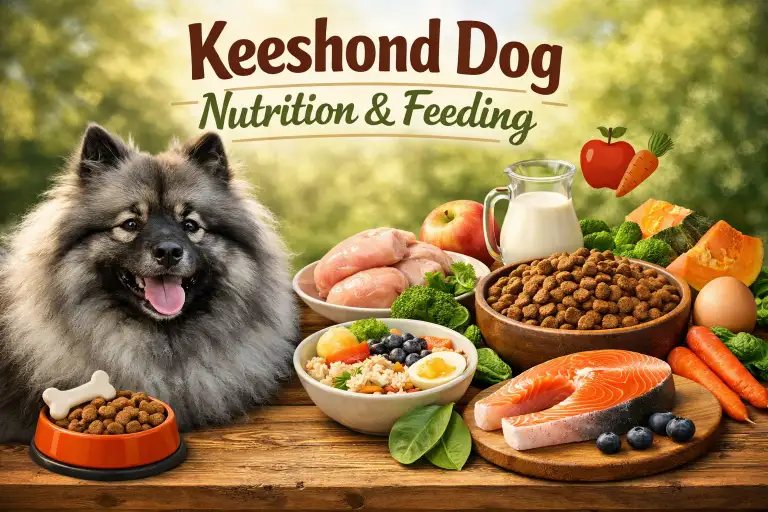
Feeding a Keeshond isn’t just about filling a bowl—it’s about supporting a breed with a thick double coat, a moderate but efficient metabolism, and a real tendency toward weight gain if portions aren’t managed carefully. While Keeshonds are not extreme working dogs, they are alert, energetic, and mentally active, which means their diet needs to provide steady energy without excess calories.
Proper nutrition plays a direct role in a Keeshond’s coat quality, skin health, digestion, immune function, and long-term mobility. Owners often notice that when diet quality drops, the first signs show up as dull fur, excessive shedding, itchy skin, soft stools, or gradual weight gain hidden under that plush coat. Because the breed’s dense fur can mask body changes, nutrition mistakes often go unnoticed until health issues appear.
A well-balanced Keeshond diet should be complete and formulated to meet established canine nutrition standards, such as those set by AAFCO or FEDIAF. These standards ensure that the food provides the right balance of protein, fats, carbohydrates, vitamins, and minerals—without relying on guesswork or trends. Diets that are “natural,” “holistic,” or “premium” in name only don’t automatically meet these requirements.
Keeshonds also tend to be food-motivated and enthusiastic eaters, which makes portion control just as important as ingredient quality. Overfeeding, too many treats, or frequent table scraps can quickly lead to excess weight, even if the food itself is high quality. On the other hand, underfeeding or choosing a poorly balanced diet can affect coat condition, energy levels, and overall vitality.
This guide is designed to help you make confident, practical feeding decisions for your Keeshond—whether you’re raising a puppy, managing an adult dog’s weight, or adjusting nutrition for a senior. By understanding why nutrition matters for this specific breed, you’ll be better equipped to choose the right food, feed the right amount, and spot problems early before they turn into long-term health concerns.
Best Dog Food for Keeshonds: Ingredients, Nutrients, and Food Types
Choosing the best food for a Keeshond starts with understanding what their body actually needs. This breed does best on a balanced, moderate-calorie diet that supports coat health, digestion, and steady energy without causing weight gain. Fancy labels and trends matter less than proper nutrition and quality ingredients.
Keeshonds need enough protein to keep muscles strong and their thick double coat healthy, but not so much fat that calories add up too fast. Fiber also matters because it helps digestion and can prevent loose stool, which some Keeshonds are prone to.
Ideal nutrient ranges for a healthy Keeshond
| Nutrient | Recommended Range | Why it matters |
|---|---|---|
| Protein | 22–28% (adult) | Supports muscles and coat |
| Fat | 12–16% | Provides energy without excess weight |
| Fiber | 3–6% | Helps digestion and stool quality |
| Omega-3 & 6 fats | Balanced | Keeps skin healthy and coat shiny |
A good-quality dog food should clearly say it is complete and balanced according to AAFCO or FEDIAF standards. This tells you the food meets basic nutrition needs and is not missing key vitamins or minerals.
When reading the ingredient list, look for real animal protein (like chicken, fish, or lamb) near the top. Avoid foods that rely heavily on fillers or vague terms like “meat by-products” without clear sources. Marketing words such as “premium,” “natural,” or “grain-free” do not guarantee quality.
Common dog food types for Keeshonds
| Food type | Pros | Cons | Best for |
|---|---|---|---|
| Dry kibble | Easy to measure, affordable | Easy to overfeed | Most homes |
| Wet food | Tasty, adds moisture | Higher cost | Picky eaters |
| Fresh food | High-quality ingredients | Expensive | Health-focused owners |
| Raw diet | Minimal processing | Safety risks | Experienced owners only |
| Homemade | Full control | Risk of imbalance | Vet-formulated plans |
Dry kibble works well for most Keeshonds when portions are controlled. Wet or fresh food can help picky eaters but must be measured carefully. Raw and homemade diets should only be used if guided by a vet or canine nutritionist, as mistakes can cause serious nutrient gaps.
Grain-free vs grain-inclusive diets
| Diet type | When it may help | When to avoid |
|---|---|---|
| Grain-inclusive | Most Keeshonds | Rare allergies only |
| Grain-free | Vet-diagnosed grain issues | Routine feeding |
Most Keeshonds do not need grain-free food. In fact, grain-inclusive diets are safe and often better studied. Grain-free should only be used when a vet confirms a true intolerance.
The best food for a Keeshond is one that keeps a healthy weight, firm stools, good energy, and a thick, shiny coat. No single brand fits every dog, so results matter more than labels.
How Much to Feed a Keeshond: Portions, Calories, and Feeding Schedule
Keeshonds gain weight easily, and their thick coat can hide extra fat. This makes feeding the right amount just as important as choosing the right food. Even a high-quality diet can cause problems if portions are too large or treats are given too often.
Most adult Keeshonds weigh between 30 and 40 pounds, but how much they should eat depends on age, activity level, and whether they are spayed or neutered. A calm, indoor dog needs fewer calories than a very active dog that walks or plays a lot each day.
Daily calorie needs for Keeshonds
| Weight | Low activity | Moderate activity | High activity |
|---|---|---|---|
| 30 lbs | ~700 calories | ~850 calories | ~1,000 calories |
| 40 lbs | ~850 calories | ~1,000 calories | ~1,200 calories |
These numbers are guides, not exact rules. If your Keeshond gains weight, reduce food by about 10 percent. If they seem thin or tired, small increases may help.
Feeding schedule by life stage
| Life stage | Meals per day |
|---|---|
| Puppy (2–6 months) | 3–4 meals |
| Puppy (6–12 months) | 2–3 meals |
| Adult | 2 meals |
| Senior | 2 smaller meals |
Feeding twice a day works best for most adult Keeshonds. Puppies need more frequent meals to support growth, while seniors do better with smaller portions spread across the day.
Checking body condition under a thick coat
| Body check | What you should notice |
|---|---|
| Ribs | Easy to feel, not sharp |
| Waist | Visible from above |
| Belly | Slight tuck from the side |
You should be able to feel your dog’s ribs with gentle pressure. If you can’t find them easily, your Keeshond may be overweight—even if they look fluffy rather than fat.
Fresh, clean water should always be available, especially if you feed dry kibble. Some Keeshonds drink more when water bowls are placed in quiet, easy-to-reach spots.
Special Diets and Common Feeding Problems in Keeshonds
Not every Keeshond eats the same way or has the same needs. Age, health, and lifestyle can all change what type of food works best. This section covers the most common diet changes and feeding problems Keeshond owners face.
Puppy Keeshonds need food that supports slow, steady growth. Overfeeding puppies or using very high-calorie food can lead to joint and weight problems later. Large puppy meals should be avoided. Senior Keeshonds, on the other hand, often need fewer calories but more support for joints and digestion.
Feeding adjustments for common Keeshond situations
| Situation | What to change |
|---|---|
| Puppy | Use puppy formula, measure meals carefully |
| Senior dog | Lower calories, easier-to-digest food |
| Overweight dog | Reduce calories by 10–15% |
| Very active dog | Slightly higher calories and protein |
| Low-activity dog | Smaller portions, fewer treats |
Weight gain is one of the most common problems in Keeshonds. Because they love food, owners often give too many treats or table scraps without noticing the impact. Treats should make up no more than 10 percent of daily calories.
Some Keeshonds have sensitive stomachs. Signs include loose stool, gas, or frequent stomach upset. In these cases, a limited-ingredient diet or food with moderate fiber can help. Always change food slowly to avoid making stomach problems worse.
Safe way to switch dog food
| Days | Old food | New food |
|---|---|---|
| 1–2 | 75% | 25% |
| 3–4 | 50% | 50% |
| 5–6 | 25% | 75% |
| 7 | 0% | 100% |
Picky eating is also common. Some Keeshonds skip breakfast, eat better at night, or lose interest if treats are given too often. Feeding at set times and removing the bowl after 15–20 minutes helps build healthy eating habits.
Fast eating and food obsession can be managed with slow-feeder bowls or spreading meals into smaller portions. These tools help digestion and reduce begging behavior.
Treats, Human Foods, FAQs, and When to See a Vet
Treats are useful for training and bonding, but they can also cause weight gain if used too often. Keeshonds are food-motivated, so it’s easy to give more than needed. Treats should stay small and make up no more than 10 percent of daily calories. If your dog gets many treats, reduce meal portions slightly to balance it out.
Some human foods are safe for Keeshonds in small amounts, while others are dangerous and should never be given.
Safe and unsafe human foods for Keeshonds
| Safe foods (plain, cooked) | Unsafe or toxic foods |
|---|---|
| Chicken | Chocolate |
| Turkey | Grapes and raisins |
| Carrots | Onions and garlic |
| Apples (no seeds) | Xylitol (sugar-free foods) |
| Blueberries | Alcohol |
| Plain yogurt | Cooked bones |
Always introduce new foods slowly and watch for stomach upset. Even safe foods can cause problems if given in large amounts.
Common feeding questions owners ask
| Question | Simple answer |
|---|---|
| My Keeshond is always hungry | Check portions and treats |
| My dog skips breakfast | Feed at set times, avoid snacks |
| Loose stool after new food | Switch food more slowly |
| Weight gain but same food | Reduce calories slightly |
Feeding problems that last more than a short time should not be ignored. Changes in appetite, weight, or stool can be early signs of health issues.
When to see a vet or nutrition expert
| Warning sign | What to do |
|---|---|
| Sudden loss of appetite | See a vet |
| Fast weight gain | Review diet with vet |
| Ongoing diarrhea | Vet check needed |
| Signs of food allergy | Vet-guided diet trial |
A veterinarian or veterinary nutritionist can help if your Keeshond needs a special diet, has long-term stomach problems, or struggles with weight control despite careful feeding.
For more details on balanced dog diets and nutrition standards, you can review the official AAFCO dog food guidelines here: https://www.aafco.org/consumers/understanding-pet-food/

Ata Ur Rehman is the founder of Pet Age in Human Years Calculator, an educational platform that provides age conversion charts and lifespan guides for dogs, cats, birds, and other companion animals. His work focuses on helping pet owners understand how animal ages translate into human years using commonly accepted age conversion formulas and published lifespan averages.
The website compiles breed and species lifespan data from kennel clubs, breed organizations, and general animal lifespan studies to present simple and easy-to-understand guides for pet owners worldwide.
This website was created to centralize animal age conversion charts into one easy reference platform for pet owners.