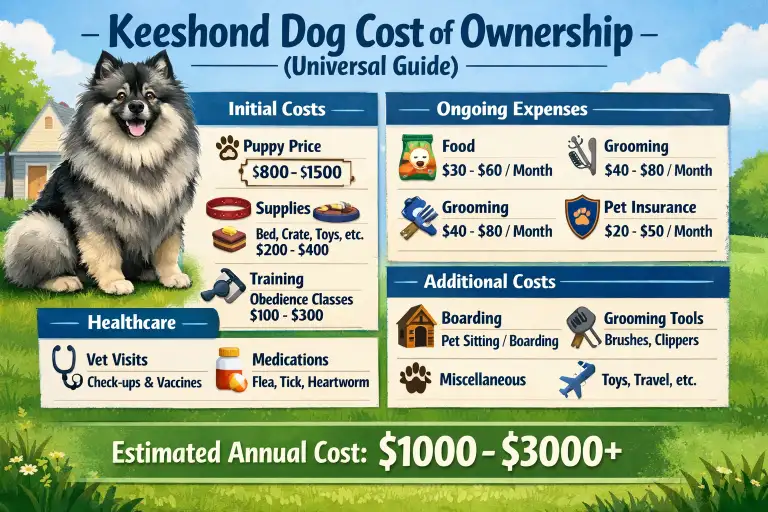
Owning a Keeshond is not just about the upfront puppy price—it’s a long-term financial commitment shaped by grooming needs, healthcare, food quality, and lifestyle choices. While Keeshonds are a medium-sized breed, their dense double coat, social temperament, and typical lifespan mean their costs often surprise first-time owners.
This guide breaks down the true cost of owning a Keeshond, from the first year through adulthood and into lifetime expenses, so you can decide whether this breed fits your budget realistically—not optimistically.
Quick Cost Snapshot (What Most Owners Actually Spend)
| Cost Category | Typical Range (USD) |
|---|---|
| Keeshond purchase price (breeder) | $1,200 – $2,500 |
| First-year total cost | $3,000 – $5,500 |
| Average annual cost (adult years) | $1,800 – $3,200 |
| Estimated lifetime cost (12–15 years) | $25,000 – $45,000+ |
These numbers assume responsible care—quality food, routine veterinary visits, proper grooming, and basic training. Cutting corners (skipping dental care, poor nutrition, no grooming) may lower short-term spending but often increases long-term veterinary bills.
Why Keeshonds Cost More Than Many People Expect
Keeshonds are often mistaken for “moderate-cost” dogs because of their size, but several breed-specific factors raise ownership expenses:
- Heavy double coat: Regular grooming is not optional. Even owners who groom at home still invest in professional tools or periodic professional sessions.
- Longevity: Many Keeshonds live 13–15 years, increasing lifetime costs compared to shorter-lived breeds.
- Health monitoring: While generally healthy, Keeshonds can be prone to conditions that benefit from early detection and ongoing care.
- Social needs: Their people-oriented nature often means higher training, enrichment, or pet-sitting costs if owners travel or work long hours.
Who This Cost Guide Is For
This article is designed for:
- Prospective Keeshond puppy buyers comparing breeds
- Families considering adoption or rehoming
- Owners budgeting for their dog’s first year
- Long-term planners estimating lifetime pet costs
Keeshond Price and First-Year Costs (Puppy vs Adult Dog)
The first year of owning a Keeshond is the most expensive year. This is when you pay for the dog itself, early vet care, training, grooming tools, and all basic supplies. Many new owners underestimate this part, which leads to budget stress later.
Below is a clear breakdown of what most owners spend during the first year.
Keeshond Price: Buying vs Adopting
| Source | Typical Cost (USD) |
|---|---|
| Reputable breeder (puppy) | $1,200 – $2,500 |
| Breed-specific rescue or shelter | $200 – $600 |
| Rehoming from a private owner | $300 – $800 |
A lower price does not always mean lower total cost. Puppies from poor breeders often come with higher vet bills later.
First-Year Veterinary Costs
| Veterinary Expense | Estimated Cost |
|---|---|
| Initial exams and vaccines | $300 – $600 |
| Spay or neuter surgery | $200 – $500 |
| Microchip and registration | $45 – $75 |
| Parasite prevention (yearly) | $150 – $300 |
| Total first-year vet cost | $700 – $1,400 |
Puppies usually sit at the higher end of this range. Adult dogs may already be fixed and vaccinated, which lowers the cost.
Setup Supplies and Grooming Tools
| Item | Estimated Cost |
|---|---|
| Crate or playpen | $75 – $200 |
| Bed, bowls, leash, collar | $75 – $150 |
| Toys and chews | $50 – $100 |
| Grooming tools for double coat | $80 – $200 |
| Total setup cost | $280 – $650 |
Keeshonds shed heavily. Proper brushes and coat tools are not optional.
Puppy vs Adult First-Year Cost Comparison
| Dog Type | First-Year Cost Range |
|---|---|
| Keeshond puppy | $3,500 – $5,500 |
| Adult Keeshond | $2,200 – $3,800 |
Puppies cost more because of training classes, extra vet visits, and higher grooming needs as the coat grows.
Why First-Year Costs Matter
Most financial surprises happen in the first year. Once this stage passes, monthly and yearly costs become easier to predict.
Monthly and Annual Keeshond Ownership Expenses
After the first year, Keeshond costs become more regular and predictable. These are the expenses you should expect every month and every year as long as you own the dog. Planning for these costs early makes dog ownership much less stressful.
Average Monthly Keeshond Costs
| Monthly Expense | Typical Cost (USD) |
|---|---|
| Dog food and treats | $50 – $90 |
| Flea, tick, and heartworm prevention | $15 – $30 |
| Grooming (home + occasional pro help) | $30 – $60 |
| Training, toys, and enrichment | $20 – $40 |
| Pet insurance (optional) | $30 – $60 |
| Average monthly total | $145 – $280 |
Food costs depend on brand quality and how active your dog is. Grooming costs are higher for Keeshonds than many other medium dogs because of their thick coat.
Average Annual Keeshond Costs
| Annual Expense | Typical Cost (USD) |
|---|---|
| Routine vet visit and vaccines | $200 – $400 |
| Preventatives (year total) | $180 – $360 |
| Professional grooming visits | $300 – $700 |
| License and ID renewal | $15 – $30 |
| Replacement supplies | $100 – $250 |
| Average yearly total | $1,800 – $3,200 |
These numbers do not include emergency vet care. A single emergency visit can add hundreds or even thousands of dollars.
What Makes Monthly Costs Go Up or Down
Monthly costs are higher if:
- You buy premium food
- You live in a large city
- You use professional grooming often
- Your dog needs special food or medicine
Monthly costs are lower if:
- You groom mostly at home
- Your dog stays healthy
- You do not use daycare or pet sitters often
Why Budgeting Monthly Costs Matters
Small monthly expenses add up fast. Many owners feel comfortable with food costs but forget grooming, preventatives, and toy replacement.
What Makes Keeshonds More or Less Expensive to Own
Not all Keeshond owners spend the same amount. Some dogs cost much more than others, even within the same breed. This section explains why costs change and what factors raise or lower your total spending.
Cost Differences Based on Lifestyle
| Situation | Cost Impact |
|---|---|
| Apartment living | Higher grooming and enrichment costs |
| House with yard | Lower daycare and exercise costs |
| Hot climate | Higher grooming and cooling costs |
| Cold or mild climate | Lower coat-related costs |
| Frequent travel | Higher boarding or pet-sitting costs |
Keeshonds do best in cooler weather. In hot areas, owners often pay more for grooming, air conditioning, and summer care.
Common Keeshond Health Costs
| Health Issue | Typical Treatment Cost |
|---|---|
| Routine dental cleaning | $300 – $800 |
| Allergies or skin issues | $200 – $1,000 per year |
| Thyroid problems | $400 – $900 per year |
| Emergency vet visit | $800 – $3,000+ |
Keeshonds are generally healthy, but long life means more years of vet care, which raises lifetime costs.
Pet Insurance Costs for Keeshonds
| Insurance Type | Monthly Cost |
|---|---|
| Accident-only plan | $20 – $35 |
| Accident and illness plan | $30 – $60 |
| Higher coverage plans | $60 – $90 |
Insurance does not lower regular costs, but it can protect you from large surprise bills. It helps most when your dog needs emergency or long-term care.
Size and Coat Impact on Costs
| Factor | Cost Effect |
|---|---|
| Medium body size | Moderate food cost |
| Thick double coat | High grooming cost |
| Heavy shedding | More tools and time |
| Long lifespan | Higher lifetime spending |
Keeshonds are not giant eaters, but their coat care makes them more expensive than many other medium dogs.
Lifetime Keeshond Cost, Hidden Expenses, and Final Budget Reality
Owning a Keeshond is a long-term commitment. Most Keeshonds live 12 to 15 years, and small yearly costs add up over time. This section shows what owners usually spend over a lifetime and what costs people often forget.
Lifetime Cost Estimates for a Keeshond
| Ownership Scenario | Estimated Lifetime Cost (USD) |
|---|---|
| Low-cost owner (mostly home grooming, healthy dog) | $25,000 – $30,000 |
| Average owner | $30,000 – $40,000 |
| High-cost owner (health issues, frequent grooming) | $40,000 – $45,000+ |
These numbers include food, vet care, grooming, training, and basic supplies over the dog’s life.
Hidden and Often Forgotten Keeshond Costs
| Hidden Expense | Typical Cost |
|---|---|
| Boarding or pet sitting | $30 – $75 per day |
| Dental care over lifetime | $1,000 – $3,000 |
| Replacing chewed items | $200 – $600 |
| Emergency vet fund | $1,000 – $3,000 |
| Senior dog care | $300 – $1,000 per year |
Many owners forget to plan for travel, dental care, and emergencies. These costs can hit suddenly.
Budget Reality Check for Future Owners
You may be ready for a Keeshond if:
- You can afford monthly costs without stress
- You have savings for emergencies
- You can pay for grooming regularly
- You plan for long-term care, not just puppy years
You may want to wait if:
- You struggle with surprise bills
- You cannot commit to grooming and vet care
- You expect costs to stay low every year
Keeshonds are loving, smart, and loyal dogs—but they are not low-cost pets. Planning ahead protects both your dog and your finances.
For broader, research-backed insights on overall dog ownership expenses, the ASPCA’s breakdown of the cost of owning a dog provides trusted national averages and long-term cost considerations for pet owners.

Ata Ur Rehman is the founder of Pet Age in Human Years Calculator, an educational platform that provides age conversion charts and lifespan guides for dogs, cats, birds, and other companion animals. His work focuses on helping pet owners understand how animal ages translate into human years using commonly accepted age conversion formulas and published lifespan averages.
The website compiles breed and species lifespan data from kennel clubs, breed organizations, and general animal lifespan studies to present simple and easy-to-understand guides for pet owners worldwide.
This website was created to centralize animal age conversion charts into one easy reference platform for pet owners.