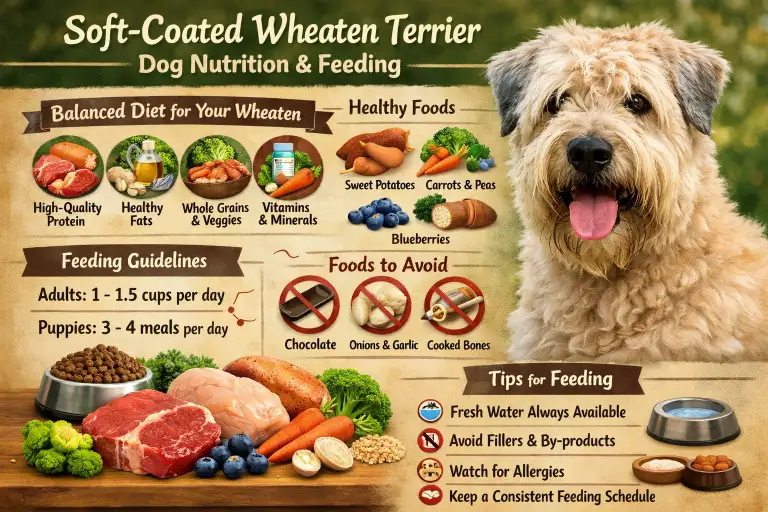
Proper nutrition plays a much bigger role in the health of a Soft Coated Wheaten Terrier than many owners initially realize. While Wheatens are energetic, affectionate, and generally hardy dogs, the breed has well-documented sensitivities to certain foods and nutrients that make diet especially important from puppyhood through the senior years.
One of the defining traits of the Soft Coated Wheaten Terrier is a digestive system that can be less forgiving than that of many other medium-sized breeds. Wheatens are over-represented in gastrointestinal disorders such as food intolerances, chronic soft stools, inflammatory bowel conditions, and protein-losing enteropathy (PLE). In practical terms, this means that a diet that works well for another terrier or similarly sized dog may cause digestive upset, poor nutrient absorption, or long-term health issues in a Wheaten.
Nutrition also has a direct impact on the Wheaten’s signature soft, silky coat. Inadequate protein quality, imbalanced fats, or micronutrient deficiencies often show up first as a dull coat, excessive matting, flaky skin, or increased shedding. Owners frequently assume these are grooming issues, when in reality they are early dietary warning signs. A well-formulated diet supports not only coat appearance, but also skin barrier health and immune function.
Behavior and energy levels are another area where diet matters. Wheatens are playful and alert by nature, but inconsistent feeding, inappropriate calorie intake, or poor-quality ingredients can contribute to hyperactivity, food fixation, or lethargy. Stable blood sugar, adequate fat for sustained energy, and appropriate portion control help Wheatens maintain balanced behavior and a healthy activity level throughout the day.
This guide is designed to help Wheaten Terrier owners understand how to feed this breed safely and effectively, using veterinary-aligned nutrition principles rather than trends or marketing claims. It focuses on practical, real-world feeding decisions: what nutrients matter most, how much to feed at different life stages, which food types tend to work best for sensitive digestion, and when dietary changes should involve a veterinarian. Whether you are raising a Wheaten puppy, managing an adult with a sensitive stomach, or supporting a senior dog’s changing needs, the right nutritional foundation can make a measurable difference in long-term health and quality of life.
Core Nutritional Needs of a Soft Coated Wheaten Terrier
A Soft Coated Wheaten Terrier needs a balanced, gentle, and well-controlled diet to stay healthy. This breed does not usually do well on extreme diets or foods with poor-quality ingredients. Understanding the basics makes feeding much safer and easier.
Wheatens need high-quality protein, not just “high protein.” Protein helps maintain muscles, supports the immune system, and keeps the coat strong and soft. For most healthy Wheatens, protein should come from named animal sources like chicken, turkey, lamb, fish, or eggs. Very low protein diets can weaken the coat and muscles, while poorly balanced high-protein diets may stress dogs with digestive disease or PLE.
Fats are another key nutrient. Healthy fats provide energy and keep the skin and coat healthy. Omega-3 and omega-6 fatty acids are especially important for Wheatens, as they help reduce inflammation and support gut and skin health. Too much fat, however, can worsen diarrhea or cause weight gain, so balance matters.
Carbohydrates are not bad for Wheatens when chosen wisely. Easily digestible carbs such as rice, oats, or sweet potatoes can provide energy and help support digestion. Highly processed fillers or poorly tolerated grains may cause gas, itching, or loose stool in sensitive dogs.
Vitamins and minerals support almost every system in the body. Most complete commercial dog foods already include these in the right amounts. Adding supplements without guidance can sometimes do more harm than good, especially for Wheatens with digestive conditions.
Below are quick-reference tables to make this information easier to scan and understand.
Ideal Macronutrient Ranges for Soft Coated Wheaten Terriers
| Nutrient | Recommended Range | Why It Matters |
|---|---|---|
| Protein | 22–30% (dry matter) | Muscle strength, coat health, immune support |
| Fat | 10–16% | Energy, skin and coat condition |
| Carbohydrates | Balance, not fixed | Energy and digestion support |
Key Vitamins and Minerals That Support Wheaten Health
| Nutrient | Why It’s Important | Common Sources |
|---|---|---|
| Zinc | Skin and coat health | Meat, fish, fortified foods |
| Vitamin E | Immune and skin support | Plant oils, balanced dog food |
| B Vitamins | Energy and digestion | Meat, whole grains |
| Omega-3s | Reduce inflammation | Fish oil, fish-based foods |
One area that often confuses owners is grain-free vs grain-inclusive diets. Many Wheatens are placed on grain-free food due to digestive problems, but grain-free is not always better. Some Wheatens tolerate grains very well, while others react poorly to certain proteins instead. Current veterinary guidance does not recommend grain-free diets unless there is a clear medical reason.
Grain-Inclusive vs Grain-Free Diets for Wheatens
| Diet Type | Possible Benefits | Possible Risks |
|---|---|---|
| Grain-Inclusive | Better nutrient balance, vet-supported | Some dogs sensitive to certain grains |
| Grain-Free | Helpful for specific allergies | Risk if poorly formulated, not always needed |
Learning how to read a dog food label is one of the most important skills for Wheaten owners. Look for named proteins, clear fat sources, and a statement that the food meets AAFCO or FEDIAF standards. Avoid foods that rely heavily on vague terms like “meat meal” or make extreme health claims without evidence.
How Much to Feed a Soft Coated Wheaten Terrier (By Age, Weight & Activity)
Feeding the right amount is just as important as choosing the right food. Soft Coated Wheaten Terriers can gain weight easily if portions are too large, but they can also lose muscle and energy if they are underfed. The goal is to keep your dog lean, active, and well-muscled, not round or skinny.
A Wheaten’s food needs depend on body weight, age, and activity level. A young, active dog will need more calories than an older dog that spends most of the day indoors. Neutered dogs usually need fewer calories than intact dogs.
Below is a simple calorie guide to help owners understand daily needs. These are general ranges, not exact rules. Always watch your dog’s body shape and energy level.
Daily Calorie Needs for Soft Coated Wheaten Terriers
| Body Weight | Low Activity | Moderate Activity | High Activity |
|---|---|---|---|
| 30 lb (14 kg) | 650–750 kcal | 800–900 kcal | 950–1,050 kcal |
| 35 lb (16 kg) | 700–800 kcal | 850–950 kcal | 1,000–1,100 kcal |
| 40 lb (18 kg) | 750–850 kcal | 900–1,000 kcal | 1,050–1,200 kcal |
Calories should be split across meals, not fed all at once. Feeding too much in one meal can stress digestion, especially in sensitive Wheatens.
Age also plays a big role in feeding amounts and routines.
Feeding Amount Guide by Life Stage
| Life Stage | General Feeding Approach |
|---|---|
| Puppy | Higher calories, controlled growth, vet-approved puppy food |
| Adult | Balanced calories, steady portions |
| Senior | Slightly fewer calories, easy-to-digest food |
Puppies need enough food to grow, but overfeeding can cause stomach issues and poor growth patterns.
Adult Wheatens do best on steady portions with little day-to-day change.
Senior Wheatens often need fewer calories but higher-quality nutrients.
How often you feed also matters.
Feeding Frequency by Age
| Age | Meals Per Day |
|---|---|
| Puppy (under 6 months) | 3 meals |
| Adult | 2 meals |
| Senior | 2 smaller meals |
Feeding twice a day helps prevent hunger spikes, begging, and digestive upset. Some Wheatens may skip breakfast occasionally, which is common and not always a problem if weight and energy stay normal.
A helpful daily tool is Body Condition Score (BCS). You should be able to feel your dog’s ribs without pressing hard, and there should be a visible waist when viewed from above. If ribs are hard to feel or the waist disappears, portions should be reduced. If ribs are very sharp and energy is low, portions may need to increase.
Avoid free-feeding (leaving food out all day). This often leads to weight gain and picky eating habits in Wheatens.
Best Food Choices for Soft Coated Wheaten Terriers
Many owners ask, “What is the best food for a Soft Coated Wheaten Terrier?” The answer depends on the dog’s digestion, health, and lifestyle. Wheatens do best on simple, balanced, and well-made diets, not extreme or trendy ones.
There are several types of dog food, and each has good and bad points for this breed.
Dog Food Types Compared for Wheatens
| Food Type | Benefits | Possible Concerns |
|---|---|---|
| Dry Kibble | Easy to feed, affordable, balanced | Some formulas are hard to digest |
| Canned Food | High moisture, good taste | Higher cost, richer for sensitive stomachs |
| Fresh Food | High quality ingredients | Must be balanced correctly |
| Raw Diet | Appealing to some dogs | Higher risk, not ideal for sensitive digestion |
| Freeze-Dried | Convenient, less processed | Expensive, needs rehydration |
| Homemade | Full control of ingredients | Risk of nutrient imbalance |
For most Wheatens, a high-quality commercial food that meets AAFCO or FEDIAF standards is the safest choice. Raw and homemade diets should only be used with veterinary guidance, especially for dogs with digestive disease.
Wheaten owners also need to be careful with human foods. Some are safe in small amounts, while others are dangerous.
Safe Human Foods vs Toxic Foods for Wheatens
| Safe in Small Amounts | Must Avoid |
|---|---|
| Cooked chicken | Chocolate |
| Plain rice | Grapes and raisins |
| Carrots | Onions and garlic |
| Apples (no seeds) | Xylitol |
| Pumpkin | Alcohol |
Treats should make up no more than 10% of daily calories. Too many treats can cause weight gain, loose stool, and picky eating.
Treat Guidelines for Soft Coated Wheaten Terriers
| Treat Type | Best Use |
|---|---|
| Single-ingredient treats | Training and rewards |
| Low-fat treats | Sensitive stomachs |
| Dental chews | Occasional use |
| Table scraps | Rare or avoid |
Fresh water should always be available. Wheatens that eat dry food especially need good hydration to support digestion and kidney health.
Avoid switching foods often or mixing too many types at once. This breed does better with routine and consistency.
Special Diets, Digestive Issues, and Common Feeding Problems in Wheatens
Soft Coated Wheaten Terriers are known for having sensitive stomachs, and some develop serious digestive conditions. This makes careful feeding very important. Many common problems can be managed, or even avoided, with the right diet and early action.
Food allergies and intolerances are common in Wheatens. Signs include loose stool, vomiting, gas, itchy skin, ear infections, or poor coat quality. In many cases, the problem is not the amount of food, but which ingredients are used. Diets with fewer ingredients and a single protein source often work better for sensitive dogs.
One serious condition seen in this breed is protein-losing enteropathy (PLE). This condition causes the dog to lose protein through the gut, which can lead to weight loss, swelling, weakness, and chronic diarrhea. PLE should always be managed with a veterinarian. Diets for these dogs usually focus on controlled fat levels, easy digestion, and careful protein balance.
Common Wheaten Feeding Problems and Diet Solutions
| Problem | Likely Cause | Diet Adjustment |
|---|---|---|
| Chronic soft stool | Poor digestion or food intolerance | Simplify diet, switch proteins |
| Itchy skin and ears | Food allergy | Limited-ingredient diet |
| Weight gain | Overfeeding or too many treats | Reduce portions, limit snacks |
| Low energy | Poor nutrient balance | Improve food quality |
| Picky eating | Too many food changes | Stick to one routine |
Some Wheatens struggle with weight. Overweight dogs need fewer calories, more fiber, and strict treat limits. Underweight dogs may need slightly higher calories and better-quality protein, not larger random meals.
Diet Considerations for Wheatens With PLE or Digestive Disease
| Diet Focus | Why It Helps |
|---|---|
| Moderate protein | Supports muscles without stress |
| Lower fat | Reduces digestive strain |
| Highly digestible foods | Improves nutrient absorption |
| Vet supervision | Prevents nutrient deficiencies |
Owners often worry when their dog skips meals or becomes picky. Many Wheatens will skip breakfast sometimes, especially during hot weather or low activity days. This is usually normal if weight and energy stay stable. The biggest mistake owners make is changing foods too often, which often makes picky eating worse.
Feeding multiple dogs can be tricky. Wheatens should be fed separately to avoid stress, food guarding, or stealing. During travel or schedule changes, try to keep feeding times and food type the same to avoid stomach upset.
You should contact a veterinarian if your Wheaten has ongoing diarrhea, weight loss, swelling, repeated vomiting, or sudden appetite changes. These are not normal and should not be ignored.
For veterinary-backed feeding standards and nutrient requirements, you can also review the official AAFCO Dog Food Nutrient Profiles, which outline minimum nutrition guidelines used by reputable dog food manufacturers worldwide.

Ata Ur Rehman is the founder of Pet Age in Human Years Calculator, an educational platform that provides age conversion charts and lifespan guides for dogs, cats, birds, and other companion animals. His work focuses on helping pet owners understand how animal ages translate into human years using commonly accepted age conversion formulas and published lifespan averages.
The website compiles breed and species lifespan data from kennel clubs, breed organizations, and general animal lifespan studies to present simple and easy-to-understand guides for pet owners worldwide.
This website was created to centralize animal age conversion charts into one easy reference platform for pet owners.