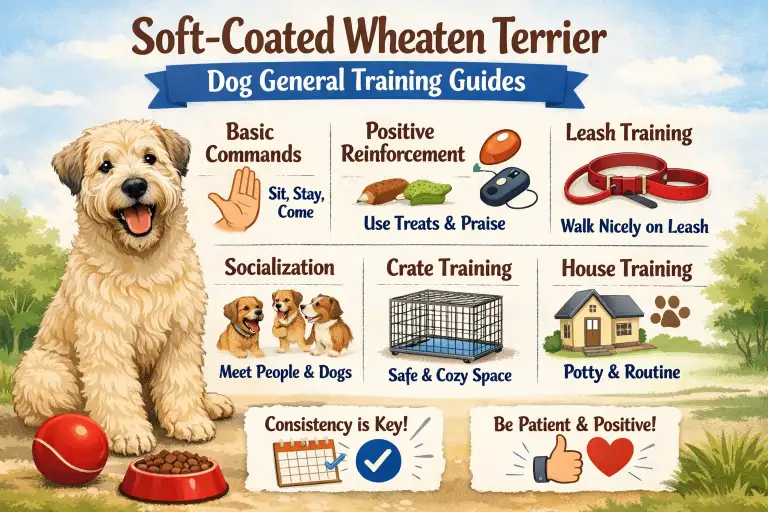
Training a Soft Coated Wheaten Terrier is rewarding—but it’s not always straightforward. This breed is intelligent, affectionate, and eager to be part of everything you do, yet many owners are caught off guard by how energetic, excitable, and selective Wheatens can be when it comes to listening. This guide is designed to set realistic expectations and show you how to train your Wheaten effectively, without frustration or outdated methods.
This article is for:
- New Wheaten owners raising a puppy
- Families dealing with adolescent “out-of-control” energy
- Owners of adult or rescue Wheatens who missed early training
- Anyone who feels their dog is friendly but “doesn’t listen”
Soft Coated Wheaten Terriers are not stubborn in the traditional sense. More often, they are overwhelmed, overstimulated, or confused by inconsistent training. Their friendly nature, high energy, and sensitivity mean that generic dog-training advice often falls short for this breed.
Throughout this guide, you’ll learn what makes Wheaten training different, why positive and structured methods work best, and how to build real-life obedience that holds up around people, distractions, and excitement. The focus is on practical, humane training that fits into normal family life—not perfection or rigid drill-style obedience.
Why Soft Coated Wheaten Terrier Training Matters
Training is not just about teaching tricks or commands. For a Soft Coated Wheaten Terrier, training helps shape how they behave, feel, and react in everyday life. This breed is friendly and loving, but without training, that friendliness can turn into problems.
Wheatens are known for jumping on people, getting overly excited, pulling on the leash, and ignoring commands when distracted. These behaviors are not signs of a “bad dog.” They usually happen because the dog does not know what is expected, or because excitement takes over before thinking.
Good training helps your Wheaten:
- Stay safe around roads, doors, and visitors
- Control excitement instead of reacting instantly
- Understand rules inside the home
- Build focus even in busy or noisy places
- Feel calm and confident, not frustrated
Because Wheatens are sensitive dogs, training also affects their emotional health. Harsh corrections or shouting can make them anxious or shut down. Clear, calm, and consistent training helps them learn faster and trust you more.
Early training is especially important. Puppies who learn basic rules early are less likely to develop bad habits like jumping, barking for attention, or pulling hard on the leash. Waiting too long often means you have to fix problems later instead of preventing them.
Below is a simple look at common Wheaten behavior problems and how training helps prevent them.
| Behavior Problem | Why It Happens | What Happens If Ignored | How Training Helps |
|---|---|---|---|
| Jumping on people | High excitement and friendly nature | Knocked-over kids or guests | Teaches calm greetings |
| Ignoring commands | Overstimulation or weak training | Unsafe off-leash behavior | Builds focus and response |
| Leash pulling | Too much energy and no guidance | Stressful walks | Teaches walking calmly |
| Overexcitement indoors | No clear rules or routine | Chaos in the home | Creates structure and calm |
| Mouthy play | Puppy habits not redirected | Rough play with hands | Teaches gentle behavior |
Training does not take away your Wheaten’s personality. Instead, it helps them enjoy life without stress, confusion, or constant correction.
Understanding Soft Coated Wheaten Terrier Behavior and Temperament
To train a Soft Coated Wheaten Terrier well, you first need to understand how they think and feel. Many training problems happen because owners expect Wheatens to behave like calmer or more serious breeds. This breed is different.
Soft Coated Wheaten Terriers are:
- Very friendly and people-loving
- High in energy, especially when young
- Smart but easily distracted
- Emotionally sensitive to tone and mood
Wheatens often get excited before they stop to think. When they see people, other dogs, or new places, their emotions can take over. This is why they may jump, pull, or ignore commands—even if they already know them.
They are not trying to be disobedient. In most cases, they are overstimulated. When excitement is too high, listening becomes hard.
Another key trait is sensitivity. Wheatens do not respond well to yelling, harsh corrections, or punishment. These methods can make them nervous, confused, or shut down. Calm voices, clear rules, and rewards work much better.
Many owners also mistake friendliness for good manners. A Wheaten may love everyone, but without training, they do not know how to greet people politely or stay calm in busy homes.
The table below shows common Wheaten behavior traits and how they affect training.
| Behavior Trait | What It Looks Like at Home | Training Challenge | Best Training Approach |
|---|---|---|---|
| High excitement | Jumping, spinning, barking | Hard to focus | Short, calm sessions |
| Strong people focus | Following guests everywhere | Over-greeting | Teach calm greetings |
| Sensitivity | Shuts down when scolded | Fear or confusion | Gentle, reward-based training |
| Intelligence | Learns fast | Gets bored easily | Keep training fun and varied |
| Independence | Chooses fun over commands | Selective listening | Build value for rewards |
Understanding these traits helps you train smarter, not harder. When you match your training style to your Wheaten’s temperament, progress becomes faster and less stressful for both of you.
Step-by-Step Soft Coated Wheaten Terrier Training Method
Training a Soft Coated Wheaten Terrier works best when it is simple, short, and consistent. This breed learns fast, but only if training feels clear and rewarding. Long or strict sessions often lead to frustration for both the dog and the owner.
Start with short sessions. Most Wheatens do best with training that feels like a game, not a lesson.
Key training rules to follow:
- Train when your dog is calm, not overly excited
- Keep sessions short and positive
- Reward good behavior right away
- Practice daily, even if only for a few minutes
Focus first on basic skills like sit, come, stay, walking on a leash, and calm greetings. These skills help control excitement and keep your dog safe.
Below is a simple daily training plan based on age.
| Dog Age | Session Length | Sessions per Day | Training Focus |
|---|---|---|---|
| Young puppy | 3–5 minutes | 3–4 times | Name, sit, potty habits |
| Older puppy | 5–8 minutes | 2–3 times | Leash walking, recall |
| Adolescent | 8–10 minutes | 2 times | Focus, calm greetings |
| Adult dog | 10 minutes | 1–2 times | Obedience and manners |
Rewards are very important for this breed. Wheatens work best when training feels worth it to them. Praise alone is often not enough, especially in exciting places.
Use rewards that truly matter to your dog.
| Reward Type | Best Used For | When to Avoid | Trainer Notes |
|---|---|---|---|
| Small treats | Learning new skills | Overfeeding | Use tiny pieces |
| Verbal praise | Calm behaviors | High distractions | Keep voice calm |
| Play | High-energy dogs | Overexcitement | Use briefly |
| Toys | Focus games | Resource guarding | Rotate toys |
| Life rewards | Real-life manners | Early training | Use after basics |
Always reward right after the good behavior. If you wait too long, your dog may not understand what they did right.
Training will look different depending on age. Puppies need more patience and repetition. Adolescent Wheatens may act like they forgot everything they learned. This is normal. Stay consistent and calm. Adult dogs can still learn well, but progress may be slower at first.
If your Wheaten gets too excited during training, pause the session. Let them calm down, then try again later. Calm focus is more important than finishing a session.
Common Soft Coated Wheaten Terrier Training Problems and Solutions
Even with good training, many Soft Coated Wheaten Terrier owners face the same problems. These issues are common for the breed and do not mean you are failing. Most problems happen because excitement is higher than focus.
One of the most well-known Wheaten behaviors is jumping on people. Many owners think their dog will grow out of it. In reality, jumping often gets stronger if it is not trained early.
Another common issue is ignoring commands. Your Wheaten may listen well at home but stop responding outside or around guests. This usually means distractions are too strong, not that your dog is being stubborn.
Leash pulling is also common. Wheatens are curious and energetic. Without training, walks can quickly turn into a struggle.
Busy homes can make training harder. Kids running, visitors coming in, or other pets can push a Wheaten into constant excitement mode. In these homes, clear rules matter even more.
Below is a table showing common training problems and simple ways to fix them.
| Training Problem | Why It Happens | Common Owner Mistake | What to Do Instead |
|---|---|---|---|
| Jumping on people | Excitement and attention | Petting or laughing | Ignore jumping, reward calm |
| Not listening | Too many distractions | Repeating commands | Train in quiet places first |
| Leash pulling | Excess energy | Letting pulling work | Stop walking when leash tight |
| Overexcitement | No calm routine | Overstimulating play | Add calm breaks |
| Mouthy play | Puppy habit | Using hands as toys | Redirect to toys |
Training problems improve with time, patience, and clear rules. Stay calm, reward the behavior you want, and avoid reacting emotionally. Your Wheaten learns best when training feels safe and predictable.
When to Seek Professional Training Help for a Wheaten Terrier
Most Soft Coated Wheaten Terriers can be trained at home with time and patience. However, some situations need extra help. Knowing when to ask for support can save stress for both you and your dog.
You may want professional help if:
- Training is not improving after several weeks
- Your dog seems fearful, stressed, or shuts down
- Excitement turns into snapping or growling
- Leash pulling or jumping is getting worse
- You feel frustrated or overwhelmed
Professional trainers can help guide you through problems safely. They also help you learn better timing, clearer signals, and calmer handling.
Some dogs need a trainer, while others need a behavior expert. The table below explains the difference.
| Situation | Best Professional | Why |
|---|---|---|
| Basic obedience issues | Dog trainer | Teaches skills and manners |
| Jumping and leash pulling | Dog trainer | Improves everyday behavior |
| Fear or anxiety | Behavior specialist | Addresses emotional causes |
| Aggression signs | Veterinary behaviorist | Creates safe treatment plans |
| Training confusion | Trainer or coach | Helps owner skills |
Always choose a professional who uses kind, reward-based methods. Avoid trainers who rely on fear, pain, or punishment. These methods can harm sensitive dogs like Wheatens and often make problems worse.
Training should build trust, not fear. Getting help early often leads to faster and safer results.
For more science-based, humane training guidance, you can also explore the American Veterinary Society of Animal Behavior (AVSAB) resources, which explain why reward-based training works best for dogs like the Soft Coated Wheaten https://avsab.org/resources/position-statements/

Ata Ur Rehman is the founder of Pet Age in Human Years Calculator, an educational platform that provides age conversion charts and lifespan guides for dogs, cats, birds, and other companion animals. His work focuses on helping pet owners understand how animal ages translate into human years using commonly accepted age conversion formulas and published lifespan averages.
The website compiles breed and species lifespan data from kennel clubs, breed organizations, and general animal lifespan studies to present simple and easy-to-understand guides for pet owners worldwide.
This website was created to centralize animal age conversion charts into one easy reference platform for pet owners.