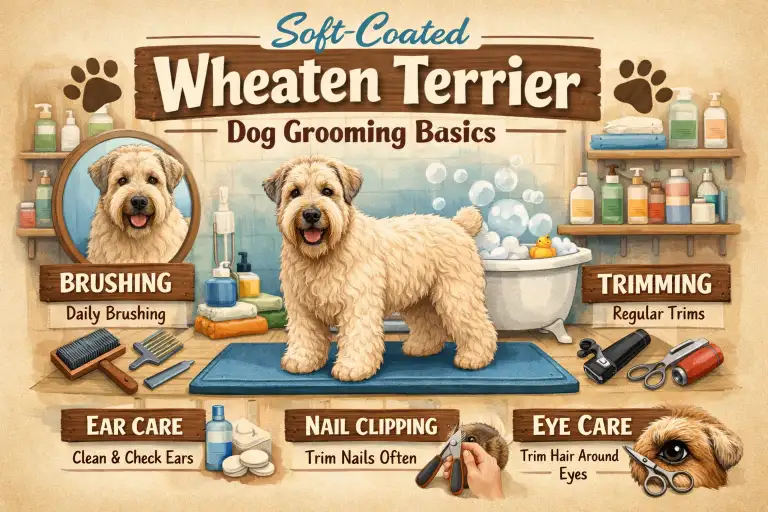
maintenance. Proper grooming is essential for this breed, not just for appearance, but for comfort, skin health, and long-term coat quality. Many grooming problems seen in Wheatens don’t come from neglect, but from owners simply not understanding how this unique coat behaves.
Unlike double-coated breeds, the Soft Coated Wheaten Terrier has a single, continuously growing coat that is soft, fine, and prone to tangling. This means loose hair does not fall out on its own. Instead, it stays trapped in the coat, where it can quickly form mats if brushing is inconsistent. Without regular grooming, these mats tighten against the skin, pulling painfully and restricting airflow, which can lead to skin irritation, hot spots, and infections.
Good grooming also plays a major role in behavior and quality of life. On the grooming table, uncomfortable coats often translate into restless, sensitive, or reactive dogs. At home, owners may notice increased scratching, head shaking, or resistance to handling—often early signs that the coat or skin is already compromised. Consistent grooming keeps the coat light, clean, and flexible, making daily handling easier and far less stressful for both dog and owner.
From a skin-health perspective, proper grooming helps maintain the dog’s natural skin barrier. Overgrown, dirty, or poorly dried coats trap moisture and debris close to the skin, creating the perfect environment for yeast and bacteria—issues that are relatively common in Wheatens, especially around the ears, feet, and armpits. Regular brushing and correctly spaced baths help remove allergens, improve air circulation, and allow owners to spot skin changes early.
This guide is designed to give Soft Coated Wheaten Terrier owners a clear, realistic grooming framework—what needs to be done, how often, and why it matters. Whether you plan to groom entirely at home or work with a professional groomer, understanding the basics of Wheaten coat care is the foundation for keeping this breed comfortable, healthy, and looking the way it should.
Understanding the Soft Coated Wheaten Terrier Coat
The Soft Coated Wheaten Terrier has a single-layer coat, which makes grooming very different from breeds with thick undercoats. There is no seasonal “blowout” where hair falls out on its own. Instead, loose hair stays trapped in the coat. If it is not brushed out regularly, it twists together and forms mats close to the skin.
This coat is soft, silky, and constantly growing, similar to human hair. That is why Wheatens need frequent brushing and trimming. It is also why skipping grooming for even a short time can cause problems. Mats often start in hidden areas like behind the ears, under the collar, in the armpits, and around the legs and belly. Once mats tighten, they pull on the skin and hold moisture, which can quickly lead to redness, itching, and infection.
Many owners are told that Wheatens are “low shedding” or “hypoallergenic.” While they do shed less than double-coated dogs, they still lose hair. The difference is that the hair stays in the coat instead of falling onto furniture. This makes regular brushing even more important, not less. Grooming is what removes that trapped hair safely.
Another important detail is the puppy coat change. Young Wheatens usually have a fluffy, cotton-like puppy coat. Between about 9 and 24 months, this coat slowly changes into the softer adult coat. During this stage, matting becomes much more common because two coat textures are mixing together. Many severe mats seen by groomers happen during this transition period.
Below is a simple table to help you understand how the Wheaten coat behaves and what it means for grooming.
Soft Coated Wheaten Terrier Coat Characteristics and Grooming Impact
| Coat Feature | What It Means | Grooming Impact |
|---|---|---|
| Single-layer coat | No undercoat to shed naturally | Loose hair must be brushed out by hand |
| Soft, fine texture | Hair tangles easily | Frequent brushing is needed to prevent mats |
| Continuous growth | Coat keeps getting longer | Regular trims are required |
| Traps moisture and dirt | Water and debris stay close to skin | Proper drying and coat cleaning are essential |
| Puppy-to-adult coat change | Two textures mix together | Higher matting risk, daily brushing recommended |
Understanding how this coat works helps owners make better grooming choices. It explains why shaving is rarely the best option, why brushing cannot be skipped, and why Wheatens need a consistent routine rather than occasional grooming sessions.
How to Groom a Soft Coated Wheaten Terrier at Home
Grooming a Soft Coated Wheaten Terrier at home works best when it follows a simple and regular routine. This breed does not do well with “once in a while” grooming. Small, frequent sessions are much easier for the dog and help prevent painful mats and skin problems.
Brushing is the most important part of Wheaten grooming. The coat should be brushed at least three to four times a week, and daily during the puppy-to-adult coat change. Always brush on a clean, dry coat. Lightly misting the coat with water or a dog-safe detangling spray helps reduce breakage. Start at the skin and work outward in small sections so hidden tangles are removed before they turn into tight mats. Pay extra attention behind the ears, under the collar, in the armpits, and around the legs.
Bathing should be done about every three to four weeks, or sooner if the dog gets dirty. Use a gentle, dog-specific shampoo made for sensitive or normal skin. Human shampoo is too harsh and can dry out the skin. After bathing, the coat must be fully dried. Leaving the coat damp allows mats to form and increases the risk of yeast and skin infections. Towel drying alone is not enough for this breed. A low-heat dryer with steady airflow works best.
Trimming helps keep the coat manageable, even if you do not do full haircuts at home. Many owners lightly trim around the eyes, feet, and sanitary areas between professional grooming visits. This keeps the dog clean and comfortable while reducing matting in problem areas.
Wheaten Terrier Home Grooming Routine and Frequency
| Grooming Task | How Often | Tools Needed | Important Notes |
|---|---|---|---|
| Brushing | 3–4 times a week (daily during coat change) | Slicker brush, metal comb | Always brush down to the skin |
| Bathing | Every 3–4 weeks | Dog shampoo, conditioner, towels | Rinse well and dry fully |
| Drying | After every bath | Towel, low-heat dryer | Never leave coat damp |
| Light trimming | Every 2–4 weeks | Safety scissors or clippers | Focus on eyes, feet, and hygiene areas |
| Mat checks | Every session | Fingers, comb | Stop and address mats early |
Home grooming keeps the coat healthy between professional visits, but it does not replace them completely. Most Soft Coated Wheaten Terriers still need a full professional groom every six to eight weeks to keep their coat in good condition and shaped correctly.
Common Grooming Mistakes, Professional Grooming, and FAQs
Many grooming problems in Soft Coated Wheaten Terriers happen because of simple mistakes. These mistakes are common, even among caring owners. Knowing what to avoid can save your dog pain and prevent expensive grooming or vet visits.
One of the biggest mistakes is brushing only the top of the coat. This makes the dog look neat on the surface, but loose hair underneath keeps tangling and turns into tight mats near the skin. Another common mistake is bathing without brushing first. Water makes small tangles tighten, which can turn minor knots into solid mats after the coat dries.
Shaving is also often misunderstood. Some owners shave their Wheaten to “start fresh” or keep them cool. Shaving may remove mats, but it does not fix the cause of the problem. In some cases, the coat can grow back uneven, rough, or more prone to matting. Shaving should be a last option for severe matting and done by a professional groomer.
Skipping professional grooming is another issue. Even with good home care, most Wheatens still need a full professional groom every six to eight weeks. Professional groomers have the tools and training to trim the coat safely, handle mats, and keep the dog comfortable during the process.
Common Wheaten Terrier Grooming Mistakes and Consequences
| Mistake | Why It Happens | What Can Go Wrong | Better Choice |
|---|---|---|---|
| Brushing only the top coat | Saves time | Painful mats near skin | Line brush to the skin |
| Bathing before brushing | Dog looks dirty | Mats tighten after drying | Brush fully before bathing |
| Over-bathing | Want a clean smell | Dry, itchy skin | Bathe every 3–4 weeks |
| Skipping drying | Dog air-dries | Skin infections | Dry coat fully |
| Avoiding professionals | Cost concerns | Severe matting | Schedule regular grooming |
Below are answers to questions many Wheaten owners ask.
Wheaten Terriers should be brushed three to four times a week, and daily during coat changes. Bathing every three to four weeks works for most dogs. Professional grooming is usually needed every six to eight weeks.
Wheatens do shed, but less than many breeds. Loose hair stays in the coat instead of falling out, which is why brushing is so important.
A Soft Coated Wheaten Terrier can be shaved if the coat is severely matted, but shaving should not be the regular grooming plan. Preventing mats through brushing is always better.
Soft Coated Wheaten Terriers are not low-maintenance dogs when it comes to grooming. Their coat is beautiful, but it requires time and consistency.
For additional guidance on breed standards and general care, you can also review the Soft Coated Wheaten Terrier information provided by the American Kennel Club.https://www.akc.org/dog-breeds/soft-coated-wheaten-terrier/

Ata Ur Rehman is the founder of Pet Age in Human Years Calculator, an educational platform that provides age conversion charts and lifespan guides for dogs, cats, birds, and other companion animals. His work focuses on helping pet owners understand how animal ages translate into human years using commonly accepted age conversion formulas and published lifespan averages.
The website compiles breed and species lifespan data from kennel clubs, breed organizations, and general animal lifespan studies to present simple and easy-to-understand guides for pet owners worldwide.
This website was created to centralize animal age conversion charts into one easy reference platform for pet owners.