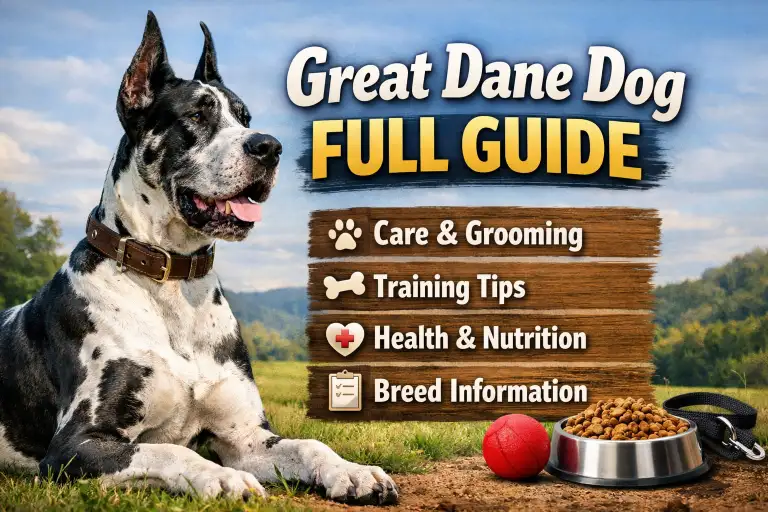
The Great Dane is one of the most instantly recognizable dog breeds in the world, not just because of its towering height, but because of the unique mix of power, elegance, and calm confidence it carries. Understanding where this breed came from and how it is built physically is essential, because a Great Dane’s history and structure directly influence its temperament, health risks, space needs, and overall care requirements.
Historically, the Great Dane originated in Germany, where it was developed several centuries ago as a boar-hunting dog. Early versions of the breed were far more aggressive and muscular than today’s Dane, bred to take down dangerous game such as wild boar. Over time, as boar hunting declined, breeders began selecting for a calmer, more reliable temperament. This shift transformed the Great Dane from a fierce hunter into an estate guardian and eventually a companion dog for nobility. By the late 19th century, the breed had been standardized in Germany and recognized internationally, with kennel clubs emphasizing size, balance, and a stable temperament rather than raw aggression.
This history explains why modern Great Danes combine impressive physical strength with an unusually gentle demeanor. They are not clumsy giants by design; they were bred to move efficiently, cover ground smoothly, and remain alert without being reactive. When well bred, a Great Dane should look powerful yet refined, never bulky or sluggish.
In terms of size, the Great Dane is officially classified as a giant breed, and it holds the title of the tallest dog breed in the world. Adult males typically stand at least 30 inches at the shoulder, with many exceeding this height, while females are usually slightly smaller but still imposing. Weight varies widely depending on sex, genetics, and overall build, and this variation has real-world consequences for feeding costs, joint health, and housing needs. It’s also important to understand that Great Danes grow extremely fast during puppyhood, often reaching near-adult height long before their bones and joints are fully developed.
Physically, the breed is defined by a long, rectangular body, deep chest, strong but not overly heavy bone structure, and long, straight legs. The chest depth is especially notable, as it allows for large lung capacity but also increases the risk of gastric dilatation-volvulus (bloat), a serious health concern later discussed in care sections. A well-built Great Dane should move with a smooth, ground-covering gait, showing balance rather than exaggerated reach or lift.
The coat is short, smooth, and lies close to the body, giving the breed its sleek, polished appearance. Despite being low-maintenance in length, this coat does shed year-round and offers minimal insulation against cold weather. Great Danes come in several recognized colors, including fawn, brindle, blue, black, harlequin, and mantle. Some color patterns, particularly harlequin and merle-related genetics, are associated with specific health and hearing risks, making responsible breeding especially important.
Distinctive features of the Great Dane include its long, narrow head, expressive eyes, and naturally floppy ears, which are sometimes cropped in certain countries for cosmetic reasons. The tail is long and tapers toward the tip, often acting like an unintended “coffee-table sweeper” in the home. When standing, the breed’s height alone can be startling, but when observed closely, a correct Great Dane should appear calm, balanced, and surprisingly graceful for its size.
the table below summarizes the key size and appearance characteristics of the Great Dane.
| Feature | Typical Range / Description |
|---|---|
| Height | Males: 30–34+ inches, Females: 28–32 inches |
| Weight | 110–175 pounds (varies widely by sex and build) |
| Body Type | Tall, muscular, elegant, deep-chested |
| Coat Type | Short, smooth, close-lying |
| Common Colors | Fawn, brindle, blue, black, harlequin, mantle |
| Growth Rate | Very rapid during first 12–18 months |
Understanding the Great Dane’s origins and physical structure sets the foundation for everything else about the breed, from temperament and exercise needs to health risks and cost of ownership. This is not simply a “big dog,” but a carefully shaped giant whose size demands thoughtful, informed ownership.
Great Dane Temperament, Personality, and Behavior
The Great Dane is often called a “gentle giant,” and in many homes, this description is very accurate. Despite their huge size, most Great Danes are calm, friendly, and deeply attached to their people. They are not a high-energy or constantly busy breed, but they are very people-focused and prefer being close to their family rather than spending long hours alone.
In everyday life, Great Danes are usually affectionate and soft-hearted. Many will lean their full body weight against their owner for comfort, sit on laps even when they clearly do not fit, and follow family members from room to room. This strong attachment makes them loving companions, but it can also lead to separation stress if they are left alone too often or for long periods. They are happiest in homes where someone is around most of the day.
With family members, Great Danes tend to be patient and gentle. They usually do well in calm households and enjoy predictable routines. Because they are sensitive dogs, they respond poorly to shouting, harsh corrections, or rough handling. A stressed or frightened Great Dane may shut down emotionally rather than act out, which is why calm leadership and kindness matter so much with this breed.
Great Danes are generally good with children, especially when raised with them. Many are tolerant and careful, but their size creates a safety issue. A friendly Dane can accidentally knock over a small child simply by turning too fast or wagging its tail. Supervision is always important, and children should be taught how to interact calmly and respectfully with such a large dog.
When it comes to strangers, most Great Danes are alert but not aggressive. They may bark when someone approaches the home, which makes them good natural watchdogs. However, they are not true guard dogs by nature. Well-socialized Danes usually warm up quickly once they see that a visitor is welcome. Poor socialization, on the other hand, can lead to fearfulness or nervous behavior, which looks very different from confidence.
With other dogs and pets, Great Danes are often friendly, especially if they are socialized early. Many live peacefully with other dogs and even cats. Issues are more likely when a Dane is poorly trained, undersocialized, or placed with another dominant dog of the same sex. Because of their size, even playful behavior must be managed carefully.
Some common behavior challenges in Great Danes are directly linked to their size and sensitivity. Jumping, leaning, pulling on the leash, and lack of body awareness are frequent problems when training is delayed. These behaviors may seem harmless in a puppy but become dangerous in an adult that weighs well over 100 pounds. Another common issue is clinginess, where the dog struggles to be alone.
There are also many myths about Great Danes. They are not naturally aggressive, and they are not lazy couch dogs that need no guidance. In reality, they are calm but powerful dogs who need structure, training, and social exposure to become stable adults.
The table below gives a quick, skimmable overview of Great Dane temperament traits and what they mean in daily life.
| Trait | Level | What This Means for Owners |
|---|---|---|
| Affection | High | Loves close contact and family time |
| Energy Level | Low to Moderate | Calm indoors, enjoys daily walks |
| Trainability | Moderate | Learns well with patience and consistency |
| Sensitivity | High | Needs gentle handling and positive methods |
| Protectiveness | Low to Moderate | Will alert but not a true guard dog |
| Compatibility with Pets | Usually Good | Best with early socialization |
Understanding the Great Dane’s personality helps set realistic expectations. This breed is loving, gentle, and loyal, but its emotional sensitivity and massive size mean it needs thoughtful handling and early guidance to thrive.
Great Dane Care Needs: Exercise, Training, Grooming, and Health
Caring for a Great Dane is very different from caring for a small or medium dog. Their giant size affects how much exercise they need, how they should be trained, how their body handles stress, and how health problems can develop. While Great Danes are not high-energy dogs, they still need daily care and smart routines to stay healthy and calm.
Great Danes need regular but controlled exercise. Adult Danes usually do well with daily walks and light play. Long runs, jumping, or rough play are not good for growing puppies because their bones and joints are still soft. Too much hard exercise at a young age can lead to joint damage later in life. Mental exercise is just as important. Puzzle toys, short training sessions, and calm games help prevent boredom and bad habits.
Training is extremely important for this breed. A Great Dane that pulls on the leash or jumps on people can easily knock someone over, even without meaning to. Training should start early and focus on calm behavior, good manners, and body awareness. Great Danes learn best with kind words, treats, and clear rules. Yelling or harsh punishment often makes them scared or stubborn instead of obedient.
Grooming a Great Dane is simple compared to many breeds, but it should not be ignored. Their short coat sheds year-round and brushing once or twice a week helps control loose hair. Baths are only needed when the dog is dirty. Nails grow fast and must be trimmed often, because long nails can cause pain and joint stress. Teeth cleaning and ear checks should also be part of the regular routine.
Health is one of the most serious concerns with Great Danes. Sadly, giant breeds do not live as long as smaller dogs. Most Great Danes live around 7 to 10 years. One of the biggest dangers is bloat, a life-threatening stomach condition that can happen suddenly. Heart disease, joint problems, and certain cancers are also more common in this breed. Regular vet visits, proper feeding routines, and early screening can make a big difference.
The table below shows a quick overview of daily care needs for a Great Dane.
| Care Area | Level | What Owners Should Know |
|---|---|---|
| Exercise | Moderate | Daily walks, avoid hard impact |
| Training | Very Important | Start early due to size |
| Grooming | Low | Short coat but regular upkeep |
| Shedding | Moderate | Year-round shedding |
| Health Risk | High | Needs regular vet care |
| Lifespan | Shorter | Usually 7–10 years |
The next table lists common health problems seen in Great Danes and why owners should be aware of them.
| Health Issue | Risk Level | Why It Matters |
|---|---|---|
| Bloat (GDV) | Very High | Can be fatal without fast treatment |
| Heart Disease | High | Common in large and giant breeds |
| Hip Dysplasia | Moderate | Affects movement and comfort |
| Joint Problems | Moderate | Linked to fast growth |
| Cancer | Moderate to High | Shortens lifespan in some dogs |
Great Dane care is not difficult, but it must be taken seriously. Small mistakes can become big problems when a dog is this large. Owners who understand their needs early are much more likely to enjoy a calm and healthy companion.
Is a Great Dane Right for You? Cost, Pros & Cons, and Alternatives
Before choosing a Great Dane, it is very important to look honestly at your lifestyle, space, time, and budget. This breed can be loving and calm, but its giant size brings real challenges that many people do not expect until they are already owners.
Great Danes usually do best in homes where there is enough indoor space for a very large dog to move around safely. They do not need a big yard, but they do need room inside the house. Apartment living is possible for some Great Danes, but only if the owner is committed to daily walks and calm routines. Tight spaces, stairs, and slippery floors can be hard on their joints.
For families, Great Danes can be wonderful companions. They are often gentle, patient, and friendly with children. Still, supervision is always needed because an excited Dane can knock over a child without meaning to. First-time dog owners may struggle with this breed because training must start early and mistakes are harder to fix once the dog is fully grown.
Cost is another major factor. Great Danes eat much more food than average dogs, need larger beds and crates, and often have higher vet bills. Medical care can be expensive because medicine doses, surgery, and anesthesia all cost more for giant breeds. Many owners choose pet insurance to help manage these costs.
The table below shows a simple estimate of the cost of owning a Great Dane.
| Expense Type | Estimated Cost |
|---|---|
| Puppy Price | Medium to High |
| Monthly Food | High |
| Vet Care | High |
| Grooming | Low |
| Supplies | High |
| Insurance | Strongly Recommended |
The table below makes it easier to see the pros and cons of owning a Great Dane.
| Pros | Cons |
|---|---|
| Very gentle and loving | Short lifespan |
| Calm indoors | High food and vet costs |
| Good family dog | Large space needs |
| Low grooming needs | High health risks |
| Loyal and people-focused | Size can cause accidents |
The table below compares Great Danes with similar large dogs.
| Breed | Size | Energy Level | Lifespan |
|---|---|---|---|
| Great Dane | Very Large | Low to Moderate | 7–10 years |
| Mastiff | Very Large | Low | 6–10 years |
| Irish Wolfhound | Very Large | Moderate | 6–8 years |
| Saint Bernard | Very Large | Moderate | 8–10 years |
A Great Dane is best for owners who want a calm, loving dog and are ready for the responsibility that comes with a giant breed. They are not ideal for people with limited budgets, very small living spaces, or no time for training and vet care.
For more authoritative information on Great Dane health and breed standards, visit the American Kennel Club: https://www.akc.org/dog-breeds/great-dane/

Ata Ur Rehman is the founder of Pet Age in Human Years Calculator, an educational platform that provides age conversion charts and lifespan guides for dogs, cats, birds, and other companion animals. His work focuses on helping pet owners understand how animal ages translate into human years using commonly accepted age conversion formulas and published lifespan averages.
The website compiles breed and species lifespan data from kennel clubs, breed organizations, and general animal lifespan studies to present simple and easy-to-understand guides for pet owners worldwide.
This website was created to centralize animal age conversion charts into one easy reference platform for pet owners.