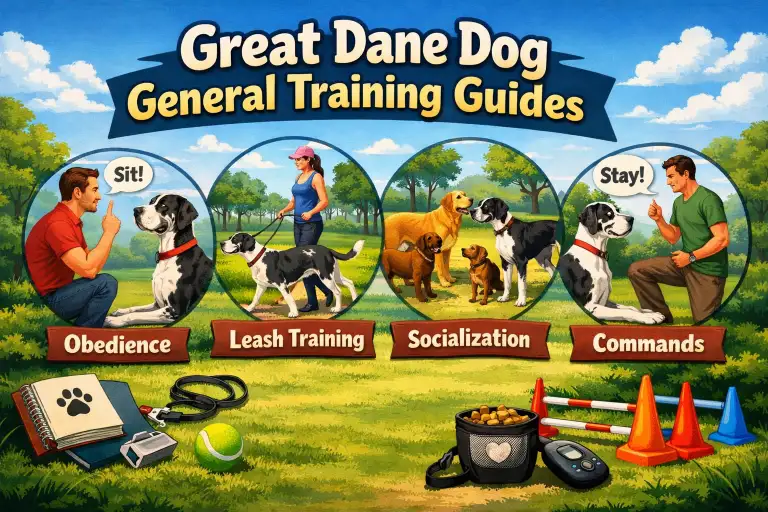
Training a Great Dane isn’t about teaching tricks—it’s about teaching safe, reliable behavior in a very large body. A well-trained Great Dane is calm, controllable, and confident in everyday situations. An untrained one, even with a gentle temperament, can accidentally knock people over, pull an adult off balance, or become difficult to manage in public simply because of size and strength.
This guide is designed for Great Dane puppies, adolescents, adult dogs, and rescues, including first-time giant-breed owners. It focuses on real-world training—what actually works in busy households, on sidewalks, around visitors, and in daily life. You won’t find punishment-based methods or vague advice here. Instead, this guide uses clear structure, positive reinforcement, and behavior science adapted specifically for giant breeds.
Great Danes mature differently than smaller dogs. They grow fast, stay mentally immature longer, and are often more sensitive to pressure and correction. That combination means training must start early, stay consistent, and prioritize calm control over force. When done correctly, Great Danes are attentive, eager to please, and surprisingly responsive learners.
By the end of this article, you’ll understand how to train a Great Dane safely and effectively, what mistakes to avoid, and how to build obedience and good manners that last into adulthood—without overwhelming your dog or yourself.
Why Great Dane Training Is Different From Other Dogs
Great Danes are often called “gentle giants,” but this name can be misleading. Their calm nature does not mean they train like smaller dogs or that training is optional. Because of their huge size, fast growth, and emotional sensitivity, training a Great Dane needs a different mindset from the start.
A behavior that looks minor in a small dog can become a real safety problem in a Great Dane. Pulling on the leash, jumping when excited, or leaning on people may seem harmless at first—but once your dog weighs more than most adults, these habits can cause injuries, fear, or loss of control in public places.
Great Danes are also very sensitive learners. They respond best to calm voices, clear rules, and rewards. Harsh corrections, yelling, or physical force often make them shut down, become fearful, or avoid training altogether. Many owners mistake this response for stubbornness, when it is actually stress or confusion.
Another key difference is growth. Great Danes grow rapidly but their joints and coordination develop slowly. This means training must protect their bodies while still teaching manners early. Waiting until a Great Dane is “fully grown” to train often leads to long-term behavior problems that are much harder to fix.
Great Dane Training vs Average Dog Training (Table)
| Training Factor | Great Dane | Average-Sized Dog |
|---|---|---|
| Adult size & strength | Very high, safety-focused | Moderate, easier to manage |
| Emotional sensitivity | High, easily stressed | Medium |
| Reaction to harsh methods | Fear, shutdown, avoidance | May tolerate mild pressure |
| Risk of untrained behavior | High due to size | Lower physical risk |
| Training priority | Early control & calm manners | Basic obedience first |
Understanding these differences helps you train smarter, not harder. When training matches the breed’s needs, Great Danes become polite, reliable, and a joy to live with.
Understanding Great Dane Behavior and Learning Style
Great Danes may look calm and confident, but many of them are emotion-driven dogs. This means their behavior is strongly shaped by how safe, relaxed, or stressed they feel in a moment. Understanding this helps you train faster and avoid common mistakes.
Most Great Danes want to please their owners. They learn best with positive reinforcement, which means rewarding the behavior you like right when it happens. Because they are sensitive, even small mistakes in timing or tone can confuse them. A calm voice and clear signals work better than loud commands.
Great Danes often go through confidence changes as they grow. Puppies may be bold at first, then suddenly become unsure during adolescence. Adult rescues may appear stubborn when they are actually fearful or overwhelmed. When a Great Dane freezes, ignores cues, or walks away, it usually means the training is too hard or the environment is too busy.
Another common trait is low frustration tolerance. If training feels boring, confusing, or stressful, a Great Dane may shut down instead of pushing through. Short sessions, clear rewards, and simple steps keep learning fun and successful.
Common Great Dane Behaviors and What They Mean (Table)
| Behavior You See | What Owners Often Think | What It Usually Means | Best Training Response |
|---|---|---|---|
| Leaning on people | “My dog is being silly” | Seeking comfort or balance | Teach calm standing and reward space |
| Ignoring commands | “My dog is stubborn” | Overstimulated or confused | Reduce distractions and simplify |
| Freezing on walks | “My dog refuses to move” | Fear or uncertainty | Pause, reward calm, avoid forcing |
| Jumping when excited | “Just being friendly” | Poor impulse control | Reward four paws on the floor |
| Pulling on leash | “Too strong to control” | No loose-leash skills yet | Train slowly with rewards |
Once you understand how your Great Dane thinks and feels, training becomes clearer and less frustrating for both of you.
Step-by-Step Great Dane Training Method
Great Dane training works best when it is simple, calm, and consistent. Because of their size and sensitivity, short and clear sessions are more effective than long or strict ones. The goal is to teach good habits early and practice them every day.
Start with basic skills that control movement and excitement. These include sit, down, stay, come, and loose-leash walking. Train in a quiet place first, like your home, before moving to busy areas. Always reward the behavior you want the moment it happens.
Keep training sessions short and frequent. Most Great Danes learn best with 5 to 10 minute sessions, two or three times a day. End sessions on a success so your dog stays confident and interested.
Leash training is one of the most important skills. A Great Dane should learn early that walking calmly brings rewards. Pulling should never move the walk forward. Stop, wait, and reward when the leash becomes loose.
Training must also match your dog’s age. Puppies need gentle control and body safety. Adult dogs need clear rules and patience, especially if they missed early training.
Daily Great Dane Training Plan (Table)
| Training Part | What to Do | How Long |
|---|---|---|
| Morning session | Basic cues and calm focus | 5–10 minutes |
| Walk training | Loose leash practice | During daily walks |
| Midday session | Short review or fun skill | 5 minutes |
| Evening session | Impulse control and calm behavior | 5–10 minutes |
| Rewards | Use treats, praise, or toys | Every success |
Puppy vs Adult Great Dane Training Adjustments (Table)
| Training Area | Great Dane Puppy | Adult Great Dane |
|---|---|---|
| Attention span | Very short | Short but improving |
| Physical limits | Protect joints, no jumping | Build strength slowly |
| Rewards | Soft treats and praise | Food, praise, calm play |
| Training pace | Slow and gentle | Steady and consistent |
| Focus | Manners and safety | Control and reliability |
With steady practice, Great Danes learn quickly and become calm, well-mannered companions.
Common Great Dane Training Problems and Solutions
Even well-meaning owners can struggle with Great Dane training. Most problems are not caused by a “bad dog,” but by size, excitement, fear, or unclear rules. The good news is that these issues can be improved with the right approach.
Pulling on the leash is one of the most common problems. Great Danes are strong, and if pulling works even once, they will keep doing it. The fix is to stop moving when the leash tightens and reward calm walking. Never drag or jerk the leash.
Jumping and leaning on people often come from excitement, not aggression. Because of their height, even friendly jumping can be dangerous. Teach your dog that four paws on the floor earns attention and rewards. Ignore jumping and reward calm greetings.
Some Great Danes freeze, shut down, or refuse to move. This usually means fear or stress. Forcing them forward makes the problem worse. Instead, give them space, reward calm behavior, and lower the difficulty of the situation.
Owners also make common mistakes, like training only when problems happen or expecting fast results. Great Danes need daily practice, even when things seem fine.
Great Dane Training Problems and Fixes (Table)
| Problem | Why It Happens | What Not to Do | What Works Better |
|---|---|---|---|
| Pulling on leash | No leash skills yet | Yanking or dragging | Stop, reward loose leash |
| Jumping on people | Overexcitement | Pushing or yelling | Reward calm greetings |
| Leaning on owners | Seeking comfort | Allowing it sometimes | Teach standing calmly |
| Freezing on walks | Fear or overload | Forcing movement | Pause and reward calm |
| Ignoring commands | Too many distractions | Repeating loudly | Reduce distractions |
With patience and clear rules, most training problems improve steadily over time.
For more expert tips on dog behavior and training, visit the American Kennel Club’s Great Dane resources here.

Ata Ur Rehman is the founder of Pet Age in Human Years Calculator, an educational platform that provides age conversion charts and lifespan guides for dogs, cats, birds, and other companion animals. His work focuses on helping pet owners understand how animal ages translate into human years using commonly accepted age conversion formulas and published lifespan averages.
The website compiles breed and species lifespan data from kennel clubs, breed organizations, and general animal lifespan studies to present simple and easy-to-understand guides for pet owners worldwide.
This website was created to centralize animal age conversion charts into one easy reference platform for pet owners.