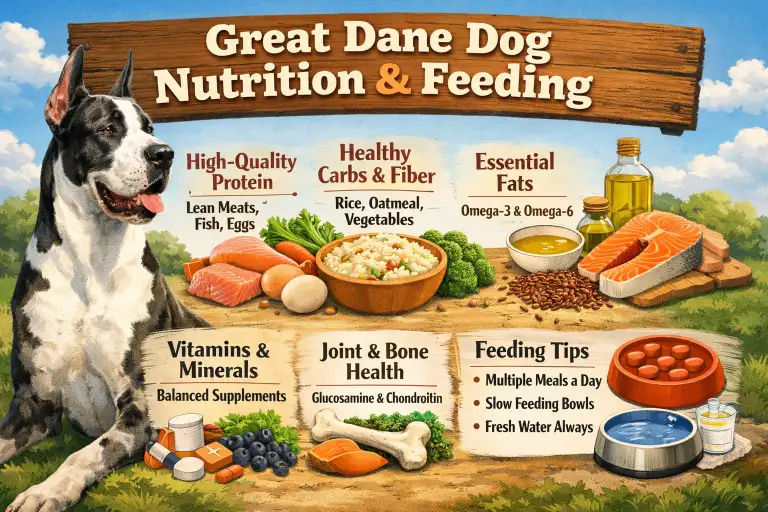
Great Danes are not just “large dogs.” They are a true giant breed with unique nutritional vulnerabilities that make feeding decisions far more important than they appear. What and how you feed a Great Dane directly influences growth rate, joint health, digestion, heart function, behavior, and even lifespan.
One of the biggest differences is growth speed. Great Dane puppies grow extremely fast, gaining massive amounts of body weight and height in a short time. Nutrition that is too calorie-dense, too high in calcium, or improperly balanced can push this growth beyond what their developing bones and joints can safely handle. This is why Great Danes are at higher risk for orthopedic conditions such as hip dysplasia, osteochondrosis, and panosteitis when fed incorrectly during puppyhood.
Adult Great Danes face a different set of risks. Their large body mass puts constant stress on joints and connective tissue, making weight control critical. Even a few extra pounds can significantly worsen joint pain, mobility issues, and early arthritis. At the same time, underfeeding or low-quality diets can lead to muscle loss, poor coat condition, and reduced stamina.
Another major concern unique to giant breeds is bloat, also known as gastric dilatation-volvulus (GDV). While bloat is influenced by genetics and anatomy, feeding practices play a role. Large meals, rapid eating, improper meal timing, and certain feeding habits can increase risk. Nutrition alone cannot prevent bloat, but thoughtful feeding strategies can help reduce contributing factors.
Great Danes also tend to have sensitive digestive systems compared to many smaller breeds. Sudden food changes, overly rich diets, or excessive treats often lead to loose stool, gas, or inconsistent appetite. This makes diet consistency, gradual transitions, and ingredient quality especially important.
Finally, nutrition affects more than physical health. Owners often notice differences in energy levels, behavior, and even anxiety based on how and what their Great Dane eats. Diets that are poorly balanced can contribute to hyperactivity, lethargy, or constant hunger signals, while well-matched nutrition supports steady energy and better overall well-being.
Understanding these breed-specific realities is the foundation of feeding a Great Dane correctly. follow, we’ll break down what to feed, how much to feed, and how to adjust nutrition across life stages and real-life situations—always with the goal of supporting healthy growth, controlled weight, and long-term quality of life.
What to Feed a Great Dane: Best Diet Types and Safe Foods
Choosing the right food for a Great Dane is about balance, safety, and consistency, not trends or marketing claims. Because Great Danes grow fast and carry a lot of weight, the food in their bowl must support strong bones, healthy joints, steady energy, and good digestion.
A high-quality diet for a Great Dane should be made for large or giant breeds, meet recognized nutrition standards, and provide enough protein and fat without pushing growth or weight gain too fast.
Best diet types for Great Danes
Great Danes can do well on different types of diets, as long as the food is properly balanced and fed correctly.
| Food type | Pros for Great Danes | Cons / cautions |
|---|---|---|
| Dry kibble (large/giant breed) | Easy to measure, affordable, balanced, widely available | Low-quality brands may be too high in calories or calcium |
| Fresh or gently cooked food | Highly digestible, appealing for picky eaters | Expensive, must be nutritionally complete |
| Canned (wet) food | High moisture, good for hydration | Easy to overfeed, higher cost |
| Freeze-dried / air-dried | Nutrient-dense, convenient | Very calorie-rich, portions must be controlled |
| Raw diets | High protein, some dogs digest well | High risk if not properly formulated, not recommended without vet guidance |
| Homemade diets | Full ingredient control | Dangerous if not formulated by a veterinary nutritionist |
For most owners, a large- or giant-breed commercial food that meets AAFCO or FEDIAF standards is the safest and most practical choice.
Ideal nutrient ranges for Great Danes
Great Danes do not need extreme protein or fat levels. Too much can cause problems, especially in puppies.
| Nutrient | General target range | Why it matters |
|---|---|---|
| Protein | Moderate to high (not excessive) | Supports muscle without forcing rapid growth |
| Fat | Moderate | Provides energy without excess weight gain |
| Calcium | Carefully controlled | Too much increases joint and bone disease risk |
| Phosphorus | Balanced with calcium | Supports proper bone development |
| Fiber | Moderate | Helps digestion and stool quality |
Avoid foods that advertise “extra calcium” or “maximum growth,” especially for puppies.
Foods Great Danes can eat and foods to avoid
Many owners like to share food with their dogs. This is fine in small amounts, but safety matters.
| Safe foods (plain, small amounts) | Foods to avoid (toxic or risky) |
|---|---|
| Cooked chicken or turkey (no bones) | Chocolate |
| Plain rice or oatmeal | Grapes and raisins |
| Carrots, green beans, pumpkin | Onions and garlic |
| Apples (no seeds) | Xylitol (found in gum, candy) |
| Eggs (fully cooked) | Alcohol, caffeine |
Treats and human food should make up no more than 10% of daily calories. Over-treating is a common reason Great Danes gain weight.
Treats and chews for Great Danes
Choose treats that are:
- Low in calories
- Easy to break into small pieces
- Not overly hard (to protect teeth)
Large dogs do not need large treats. Small rewards work just as well and are much safer for long-term health.
How Much to Feed a Great Dane and How Often
How much food a Great Dane needs depends on body weight, age, and activity level. Feeding too much can cause fast weight gain and joint stress. Feeding too little can lead to muscle loss and low energy. The goal is to feed enough to keep your dog lean, strong, and active, not heavy.
Great Danes should not be free-fed all day. Measured meals help control weight and reduce digestive problems.
Daily calorie needs for Great Danes
| Adult weight | Low activity | Moderate activity | High activity |
|---|---|---|---|
| 100 lb (45 kg) | 2,200–2,500 kcal | 2,600–3,000 kcal | 3,200+ kcal |
| 120 lb (54 kg) | 2,500–2,800 kcal | 3,000–3,400 kcal | 3,600+ kcal |
| 140 lb (64 kg) | 2,800–3,100 kcal | 3,400–3,800 kcal | 4,000+ kcal |
Always adjust food based on body condition, not just the numbers.
Portion size guidance
| Calories per cup | Approx. cups/day for a 120 lb adult |
|---|---|
| 350 kcal/cup | 8–9 cups |
| 400 kcal/cup | 7–8 cups |
| 450 kcal/cup | 6–7 cups |
Split the daily amount into meals. Do not feed it all at once.
How often to feed a Great Dane
| Life stage | Meals per day |
|---|---|
| Great Dane puppy (under 6 months) | 3 meals |
| Growing puppy (6–18 months) | 2–3 meals |
| Adult Great Dane | 2 meals |
| Senior Great Dane | 2 smaller meals |
Feeding at least two meals per day is safer for digestion and may help lower bloat risk.
Using body condition to adjust food
You should be able to:
- Feel ribs easily with light pressure
- See a waist when looking from above
- See a tummy tuck from the side
| Body condition | What to do |
|---|---|
| Too thin | Increase food slowly |
| Ideal | Keep portions the same |
| Overweight | Reduce food by 10–15% |
Check body condition every 2–4 weeks and adjust portions slowly.
Water needs for Great Danes
Great Danes drink a lot of water because of their size. Always provide fresh, clean water. Limit heavy water intake right before and after meals to help digestion.
Feeding Great Danes by Life Stage: Puppy, Adult, and Senior
Great Danes need different food at different ages. Feeding the wrong way at the wrong stage can cause long-term health problems. This is especially true for puppies, who grow very fast.
Great Dane puppies should grow slowly, not as fast as possible. Fast growth puts stress on bones and joints and can lead to serious problems later in life.
Feeding a Great Dane puppy
| Puppy age | Meals per day | Feeding focus |
|---|---|---|
| 8–12 weeks | 3 | Controlled calories, steady growth |
| 3–6 months | 3 | Balanced nutrients, no extra calcium |
| 6–12 months | 2–3 | Joint support, growth control |
| 12–18 months | 2 | Prepare for adult feeding |
Puppies should eat a large- or giant-breed puppy food. Do not add calcium or supplements unless a vet tells you to.
The goal is a lean puppy, not a chunky one.
Growth control for Great Dane puppies
| Healthy signs | Warning signs |
|---|---|
| Ribs easy to feel | Thick fat over ribs |
| Smooth movement | Stiff walking or limping |
| Steady height gain | Sudden growth spurts |
If your puppy is gaining weight too fast, reduce portions slightly and talk to your vet.
Adult Great Danes usually do best on a giant-breed adult food.
Feeding an adult Great Dane
| Adult age | Feeding goal |
|---|---|
| 18 months–5 years | Maintain lean muscle |
| 5–7 years | Support joints and digestion |
Keep adults lean. Extra weight quickly leads to joint pain.
Feeding a senior Great Dane
| Senior needs | Why it matters |
|---|---|
| Fewer calories | Prevents weight gain |
| Easy-to-digest food | Helps sensitive stomachs |
| Joint support | Reduces stiffness and pain |
Watch appetite, weight, and energy closely. Sudden changes should be checked by a vet.
Special Diets, Common Feeding Problems, and Real-Life Scenarios
Not every Great Dane eats the same way or needs the same diet. Health issues, activity level, and daily routine all affect how and what you should feed.
Feeding Great Danes with special needs
| Situation | Feeding adjustment |
|---|---|
| Food allergies | Limited-ingredient or vet-approved diet |
| Sensitive stomach | Simple recipes, slow food changes |
| Joint problems | Healthy weight, joint-support nutrients |
| Overweight | Lower calories, measured meals |
| Underweight | Slightly higher calories, vet check |
Never switch to a special diet without watching how your dog reacts.
Bloat (GDV) risk and feeding habits
| Safer feeding habits | Habits to avoid |
|---|---|
| Feed 2 meals per day | One very large meal |
| Slow down fast eaters | Eating too fast |
| Calm time after meals | Heavy exercise after eating |
| Consistent routine | Stress during meals |
Food alone cannot prevent bloat, but smart feeding helps.
Common feeding problems and fixes
| Problem | What usually helps |
|---|---|
| Picky eating | Keep meals short, avoid constant treats |
| Always hungry | Check portions and calorie needs |
| Loose stool | Slow food changes, simpler diet |
| Weight gain | Reduce food by 10–15% |
Avoid changing foods often unless there is a real reason.
Real-life feeding situations
| Situation | Simple advice |
|---|---|
| Multiple dogs | Feed separately if needed |
| Travel | Bring regular food |
| Fast eaters | Use slow-feeding bowls |
| Schedule changes | Adjust meal times slowly |
When to see a veterinarian
Contact a vet if your Great Dane:
- Stops eating for more than a day
- Loses or gains weight quickly
- Has ongoing diarrhea or vomiting
- Shows pain, stiffness, or low energy
For more guidance on giant breed health and nutrition, visit the American Kennel Club’s Great Dane breed page.

Ata Ur Rehman is the founder of Pet Age in Human Years Calculator, an educational platform that provides age conversion charts and lifespan guides for dogs, cats, birds, and other companion animals. His work focuses on helping pet owners understand how animal ages translate into human years using commonly accepted age conversion formulas and published lifespan averages.
The website compiles breed and species lifespan data from kennel clubs, breed organizations, and general animal lifespan studies to present simple and easy-to-understand guides for pet owners worldwide.
This website was created to centralize animal age conversion charts into one easy reference platform for pet owners.