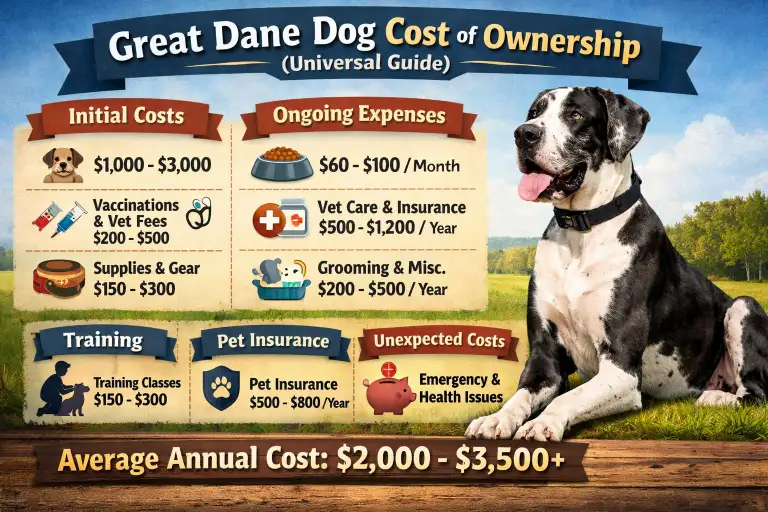
Owning a Great Dane is very different from owning an average dog — and the costs reflect that. Great Danes are gentle, affectionate, and famously called “gentle giants,” but their giant size, shorter lifespan, and higher medical risks make them one of the most expensive dog breeds to own long-term.
Many first-time owners assume that a large dog simply costs “a bit more food.” In reality, nearly every expense scales up with a Great Dane: food portions, medication dosages, anesthesia, boarding, crates, beds, and even vehicle restraints. Veterinary care alone can be significantly higher than for small or medium breeds, especially when emergency procedures are involved.
To set realistic expectations, here’s a high-level snapshot of what most owners can expect financially:
| Cost Category | Typical Range |
|---|---|
| First-year cost | $3,500 – $7,000+ |
| Average annual cost (after year one) | $2,500 – $5,000+ |
| Estimated lifetime cost | $15,000 – $30,000+ |
These numbers vary widely based on location, lifestyle, health, and whether major medical events occur, but they highlight an important truth: Great Dane ownership requires intentional financial planning, not casual budgeting.
This guide is designed to give you a clear, honest, and data-driven breakdown of Great Dane ownership costs — from the first year to lifetime expenses. It covers realistic price ranges, explains why certain costs are higher for this breed, and helps you decide whether owning a Great Dane fits your long-term budget, not just your heart.
If you’re looking for a sugar-coated answer, this isn’t it. If you want to know what it really costs to own a Great Dane — and whether you can afford one responsibly — you’re in the right place.
One-Time and First-Year Costs of a Great Dane
The first year with a Great Dane is the most expensive year for most owners. This is when you pay for adoption or purchase, early vet care, training, and large setup items that must fit a giant breed.
Many owners underestimate these early costs and feel financial pressure later. Planning ahead makes a big difference.
Here is a simple breakdown of one-time and first-year expenses most Great Dane owners face.
Adoption or purchase cost
A Great Dane puppy from a breeder usually costs more than many other breeds because of size, health screening, and breeding care. Adoption is cheaper, but still comes with early medical costs.
| Type | Typical Cost |
|---|---|
| Adoption fee | $200 – $600 |
| Reputable breeder puppy | $1,200 – $3,000+ |
First-year veterinary care
Great Danes need full puppy vaccines, parasite prevention, wellness exams, and usually spay or neuter surgery. Because they are large, medications and anesthesia cost more.
| Vet Service (First Year) | Estimated Cost |
|---|---|
| Initial exams & vaccines | $300 – $600 |
| Spay or neuter surgery | $500 – $1,000 |
| Microchip & basic tests | $75 – $200 |
| First-year vet total | $900 – $1,800 |
Giant-breed setup supplies
Normal dog supplies often don’t work for Great Danes. Beds collapse, crates must be extra large, and bowls must be raised for comfort.
| Item | Cost Range |
|---|---|
| Extra-large crate | $150 – $350 |
| Orthopedic dog bed | $120 – $300 |
| Heavy-duty leash & collar | $40 – $80 |
| Raised food & water bowls | $40 – $100 |
| Toys & chews | $50 – $150 |
| Setup total | $400 – $900 |
Puppy first year vs adult first year
A puppy costs more than an adult Great Dane in the first year due to vaccines, training, and growth needs.
| Expense Type | Puppy First Year | Adult First Year |
|---|---|---|
| Vet care | $900 – $1,800 | $400 – $800 |
| Food | $800 – $1,200 | $900 – $1,400 |
| Training | $200 – $600 | $100 – $300 |
| Supplies | $400 – $900 | $200 – $500 |
| Total | $2,300 – $4,500+ | $1,600 – $3,000+ |
By the end of the first year, most Great Dane owners spend between $3,000 and $7,000 or more, depending on health, food choices, and training needs.
Monthly and Annual Expenses of Owning a Great Dane
After the first year, Great Dane costs become more predictable, but they stay higher than average because of the dog’s giant size. Most of these expenses happen every month or every year, so they must be part of your regular budget.
Food and nutrition
Great Danes eat a lot, but feeding them the right food matters even more than quantity. Poor-quality food can lead to joint problems, stomach issues, and higher vet bills later.
A healthy adult Great Dane usually eats 6 to 10 cups of food per day, depending on age, weight, and activity level.
| Food Type | Monthly Cost |
|---|---|
| Standard large-breed food | $80 – $120 |
| High-quality or giant-breed food | $120 – $180 |
| Average monthly food cost | $100 – $160 |
Preventatives and basic medications
Most Great Danes need monthly flea, tick, and heartworm prevention. Some also need joint supplements or allergy medicine.
| Item | Monthly Cost |
|---|---|
| Flea & tick prevention | $15 – $30 |
| Heartworm prevention | $10 – $20 |
| Supplements or meds | $10 – $40 |
| Monthly total | $35 – $90 |
Routine veterinary care
Even healthy Great Danes should see the vet at least once a year. Because of their size, exams, blood work, and medications often cost more.
| Routine Vet Care | Annual Cost |
|---|---|
| Wellness exam | $75 – $150 |
| Vaccines & testing | $100 – $250 |
| Basic blood work | $100 – $200 |
| Annual vet total | $300 – $600 |
Grooming and basic care
Great Danes have short coats and do not need frequent haircuts, but they still need nail trims, baths, and ear care.
| Grooming Service | Cost |
|---|---|
| Nail trim | $15 – $30 |
| Bath | $30 – $60 |
| Home grooming supplies (yearly) | $50 – $100 |
Training, licenses, and small fees
Many owners take at least one training class or refresher course, especially for a large dog that must be well behaved.
| Expense | Annual Cost |
|---|---|
| Training classes | $100 – $300 |
| License & registration | $20 – $50 |
| Annual total | $120 – $350 |
Monthly and yearly cost summary
When you add everything together, this is what most owners can expect:
| Cost Period | Estimated Range |
|---|---|
| Average monthly cost | $200 – $350 |
| Average annual cost | $2,500 – $5,000+ |
These costs do not include emergencies or serious medical problems, which can raise expenses fast.
Major Cost Drivers That Make Great Danes Expensive
Great Danes cost more than most dogs for a few clear reasons. Their huge size, health risks, and medical needs all increase spending over time. Many owners are surprised by how fast costs can rise when something goes wrong.
The biggest cost driver is size. A Great Dane needs more food, higher medicine doses, larger equipment, and more space. Even simple vet visits often cost more because tests, drugs, and anesthesia are based on body weight.
Another major factor is health risk. Great Danes are more likely to face serious medical problems that require emergency care.
Here are some common medical costs Great Dane owners should be aware of:
| Medical Issue | Typical Cost Range |
|---|---|
| Emergency vet visit | $300 – $800 |
| Bloat (GDV) surgery | $2,500 – $7,000+ |
| Heart testing & treatment | $500 – $2,000 |
| Joint or bone problems | $800 – $3,000+ |
Bloat, also called GDV, is one of the most dangerous and expensive risks for Great Danes. It can happen suddenly and often needs immediate surgery to save the dog’s life. This is why many vets recommend an emergency fund or insurance for this breed.
Living situation also affects cost. A Great Dane in a small apartment may need extra training, dog walkers, or boarding help. Transportation costs can be higher too, because not all cars fit a giant dog comfortably.
Pet insurance is another important cost factor
| Insurance Type | Monthly Cost |
|---|---|
| Basic accident-only plan | $40 – $70 |
| Accident & illness plan | $70 – $120 |
| High-coverage plan | $120 – $180+ |
Insurance does not remove all costs, but it can lower the financial shock of emergencies like surgery or long-term illness. Some owners choose to self-save instead, but that requires strict budgeting.
All these factors explain why Great Danes are often listed among the most expensive dog breeds to own, even though they are calm and gentle at home.
Lifetime Cost, Hidden Expenses, and Budgeting for a Great Dane
Owning a Great Dane is a long-term financial commitment, not a short one. While they usually live 7 to 10 years, the costs during that time can be high, especially if health problems appear.
Many owners plan for food and vet visits, but forget about hidden expenses that slowly add up over the years.
Estimated lifetime cost
The total lifetime cost of a Great Dane depends on health, lifestyle, and medical care. Below is a realistic look at what owners may spend.
| Ownership Scenario | Estimated Lifetime Cost |
|---|---|
| Low-cost, healthy dog | $15,000 – $18,000 |
| Average ownership | $20,000 – $25,000 |
| High medical needs | $28,000 – $35,000+ |
Hidden expenses owners often forget
These costs don’t happen every month, but when they do, they can hurt your budget.
| Hidden Expense | Typical Cost |
|---|---|
| Emergency vet fund | $1,500 – $3,000 |
| Dental cleanings | $300 – $800 each |
| Boarding or pet sitting | $40 – $90 per day |
| Replacing beds & crates | $200 – $600 |
| Home or furniture damage | $200 – $1,000+ |
Budgeting tips for Great Dane owners
A simple plan can prevent financial stress:
- Set aside money every month for vet care
- Keep an emergency fund just for your dog
- Buy quality food to avoid health problems later
- Compare insurance and savings options early
Ways to save money safely
Saving money does not mean skipping care. Safe ways to lower costs include:
- Preventive vet visits to catch problems early
- Training to avoid damage and injury
- Home grooming between professional visits
- Buying supplies that last longer, even if they cost more upfront
Final reality check
Great Danes are loving, calm, and wonderful companions, but they are not budget dogs. If paying several thousand dollars for an emergency would be a serious problem, this breed may not be the right fit.
For more detailed veterinary cost guidance and pet insurance tips, visit the American Veterinary Medical Association: https://www.avma.org/resources-tools/pet-owners

Ata Ur Rehman is the founder of Pet Age in Human Years Calculator, an educational platform that provides age conversion charts and lifespan guides for dogs, cats, birds, and other companion animals. His work focuses on helping pet owners understand how animal ages translate into human years using commonly accepted age conversion formulas and published lifespan averages.
The website compiles breed and species lifespan data from kennel clubs, breed organizations, and general animal lifespan studies to present simple and easy-to-understand guides for pet owners worldwide.
This website was created to centralize animal age conversion charts into one easy reference platform for pet owners.