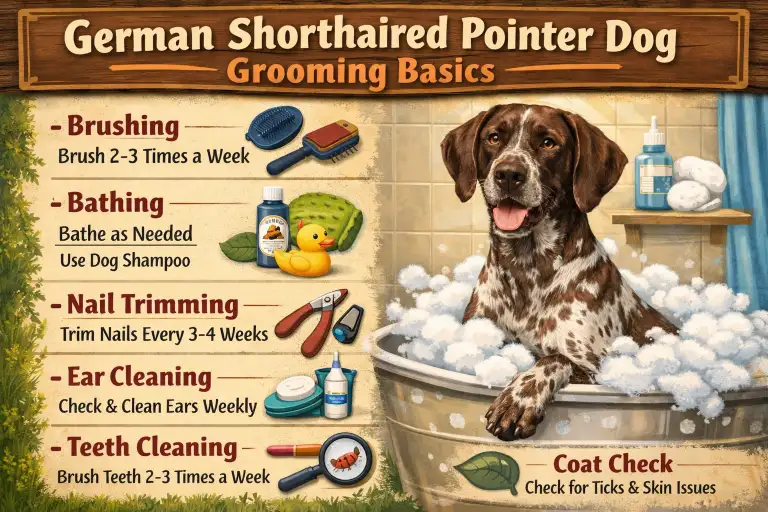
German Shorthaired Pointers are often called “low-maintenance dogs,” but they still need regular grooming. Their short, dense coat sheds year-round and can develop odor if not properly maintained. While they do not have a thick undercoat like double-coated breeds, routine brushing and ear care are essential to control shedding, reduce smell, and keep their skin healthy.
If you want a broader overview of temperament, exercise needs, and long-term care, explore our detailed German Shorthaired Pointer breed profile for a complete breakdown.
Regular grooming helps remove loose hair, dirt, and dead skin. It also spreads natural oils across the coat, which keeps the skin healthy and reduces dryness and dandruff. Many skin problems in this breed start because owners assume grooming is optional.
Grooming is also a chance to check your dog closely. While brushing or bathing, you may notice lumps, rashes, ticks, sore spots, or signs of allergies early. Catching these issues sooner can save your dog pain and save you vet bills later.
Because they are highly energetic and intelligent, structured German Shorthaired Pointer training methods help prevent behavioral problems and destructive habits.
German Shorthaired Pointer Shedding and Coat Type
German Shorthaired Pointers have a short, dense, single coat. The hair lies flat and feels firm to the touch. There is no thick undercoat like you see in double-coated breeds, but this does not mean they do not shed.
This breed sheds lightly all year and more heavily during seasonal changes, especially in spring and fall. The short hairs can stick into clothes, furniture, and carpets, which surprises many owners.
Because the coat is short, dirt and oil sit closer to the skin. This means poor grooming can lead to greasy smell, clogged pores, and skin irritation. Regular brushing helps lift dirt and loose hair before it causes problems.
German Shorthaired Pointers can also have sensitive skin. Over-bathing or using harsh shampoos can strip natural oils and lead to itching, redness, or flaky skin.
Do German Shorthaired Pointers Have an Undercoat?
German Shorthaired Pointers do not have a thick double coat. They have a short, dense single coat that lies flat against the body. Unlike double-coated breeds, they do not have a heavy insulating undercoat, which makes grooming simpler but does not eliminate regular shedding.
Because there is no thick undercoat, heavy deshedding tools are usually unnecessary. Regular brushing with a rubber grooming mitt is enough to manage loose hair and maintain coat health.
Do German Shorthaired Pointers Smell?
German Shorthaired Pointers are not naturally smelly dogs. However, because they are very active and have short, dense coats, they can develop odor if brushing and ear care are neglected. Regular grooming helps control natural skin oils, dirt buildup, and moisture that can cause a strong dog smell.
Common reasons a German Shorthaired Pointer may smell include:
- Oil buildup from infrequent brushing
- Wet ears after swimming or bathing
- Skin irritation or allergies
- Rolling in dirt or outdoor debris
Brushing once or twice per week, cleaning ears regularly, and avoiding over-bathing usually keeps odor under control for this breed.
Here is a simple look at how their coat affects care:
| Coat Feature | What It Means for Grooming |
|---|---|
| Short, dense hair | Easy brushing, but sheds often |
| No undercoat | No heavy deshedding tools needed |
| Skin close to surface | Gentle products are important |
| Active outdoor breed | More dirt, smell, and skin checks |
German Shorthaired Pointer Grooming Routine at Home
A simple routine done often works better than long grooming sessions done rarely. Most grooming for this breed can be done at home.
Brushing should be done one to two times per week. Use a rubber grooming brush, grooming mitt, or soft bristle brush. These tools remove loose hair and massage the skin without scratching. Brush in the direction of hair growth using light pressure.
Bathing is usually needed every 6 to 8 weeks, or sooner if your dog gets very dirty or smelly. Use a dog-specific shampoo made for sensitive skin. Human shampoo is not safe because it can dry out your dog’s skin. Rinse very well, since leftover soap can cause itching.
Dry your dog with a towel first. If you use a dryer, keep it on a low heat setting and never aim hot air at one spot for too long.
Shedding control mostly comes from brushing, not bathing. Regular brushing keeps hair off your couch and clothes better than frequent baths.
Basic grooming tools you will need:
| Tool | Purpose |
|---|---|
| Rubber brush or grooming mitt | Removes loose hair and dirt |
| Soft bristle brush | Smooths coat and spreads oils |
| Dog shampoo (gentle) | Cleans without drying skin |
| Towels | Safe drying after baths |
| Nail clippers or grinder | Nail maintenance |
| Ear cleaner for dogs | Ear hygiene |
Nail, Ear, Dental, and Skin Care for German Shorthaired Pointers
Nail care is very important for active dogs. Long nails can change how your dog walks and may cause joint pain over time. Check nails every 2 to 3 weeks. If you hear nails clicking on the floor, they are too long.
Ear care matters because German Shorthaired Pointers have floppy ears. Moisture and dirt can get trapped inside, which raises the risk of ear infections. Clean ears once every 2 to 4 weeks using a vet-approved ear cleaner. Never push cotton swabs deep into the ear.
Dental care is often ignored but very important. Brush your dog’s teeth several times a week using dog toothpaste. Dental chews can help, but they do not replace brushing.
Skin checks should be part of grooming. Look for redness, scabs, bald spots, strong odor, or constant scratching. These can be signs of allergies, infection, or parasites.
German Shorthaired Pointer nutrition and diet guide
Common signs that need vet attention include:
- Constant itching or licking
- Red or oozing skin
- Bad ear smell or discharge
- Hair loss or sores
Grooming Schedule, Mistakes to Avoid, and When to Get Professional Help
A clear schedule makes grooming easy to follow.
| Grooming Task | How Often |
|---|---|
| Brushing | 1–2 times per week |
| Bathing | Every 6–8 weeks |
| Nail trimming | Every 2–3 weeks |
| Ear cleaning | Every 2–4 weeks |
| Teeth brushing | Several times per week |
Common grooming mistakes include bathing too often, using human products, skipping ear care, and ignoring nails. Another mistake is assuming short hair means no grooming is needed.
Quick Grooming Tips for German Shorthaired Pointers
- Brush after outdoor runs to remove dirt and reduce odor.
- Check and dry ears after swimming to prevent infections.
- Trim nails before they begin clicking on hard floors.
- Avoid over-bathing to protect natural skin oils.
- Use gentle, dog-specific products made for sensitive skin.
Professional groomers are helpful if you are nervous about nails, need a deep clean, or want help during heavy shedding seasons. Vets should be involved if there are skin infections, chronic itching, or painful ears.
If you’re planning long-term care, understanding German Shorthaired Pointer ownership costs can help you budget for grooming supplies, vet visits, and professional care.
With a simple routine, German Shorthaired Pointer grooming stays easy and stress-free for both you and your dog, especially when brushing, shedding control, and odor prevention are done consistently.
Frequently Asked Questions About German Shorthaired Pointer Grooming
How often should you bathe a German Shorthaired Pointer?
Most German Shorthaired Pointers only need a bath every 6 to 8 weeks. Because they have a short, dense coat without a heavy undercoat, frequent bathing is unnecessary and can dry out their skin. Bathe sooner only if your dog becomes very dirty or develops strong odor.
How much do German Shorthaired Pointers shed?
German Shorthaired Pointers shed lightly throughout the year and more heavily during seasonal changes in spring and fall. Even without a thick undercoat, their short hairs can stick to clothing and furniture. Brushing once or twice per week helps manage shedding effectively.
Are German Shorthaired Pointers high-maintenance to groom?
No, German Shorthaired Pointers are considered low to moderate maintenance. Their short coat makes grooming simple, but regular brushing, nail trimming, and ear cleaning are still necessary to prevent odor, skin irritation, and discomfort.
If you’re curious how your dog’s life stage affects grooming and care needs, you can use our German Shorthaired Pointer age calculator tool to better understand their development stage.
For additional breed-specific care standards, you can review the official American Kennel Club breed profile.

Ata Ur Rehman is the founder of Pet Age in Human Years Calculator, an educational platform that provides age conversion charts and lifespan guides for dogs, cats, birds, and other companion animals. His work focuses on helping pet owners understand how animal ages translate into human years using commonly accepted age conversion formulas and published lifespan averages.
The website compiles breed and species lifespan data from kennel clubs, breed organizations, and general animal lifespan studies to present simple and easy-to-understand guides for pet owners worldwide.
This website was created to centralize animal age conversion charts into one easy reference platform for pet owners.