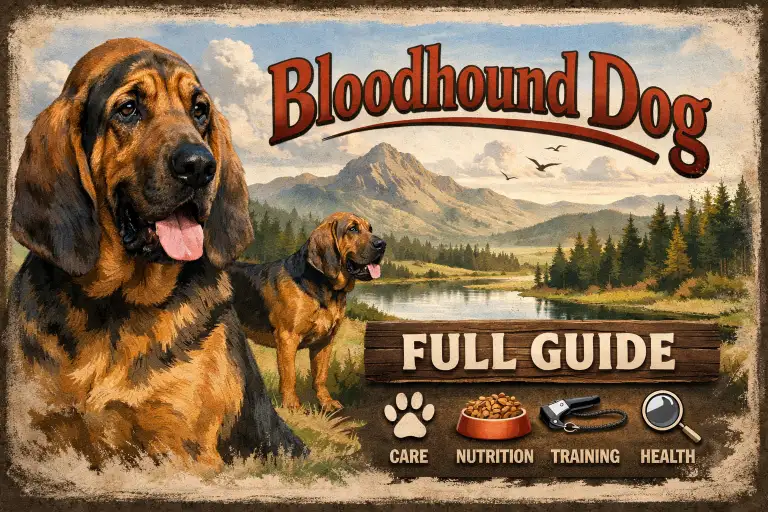
The Bloodhound has a long and respected history as a scent-tracking dog. This breed was developed hundreds of years ago in Europe, mainly by monks who bred dogs with strong noses and great endurance. These early Bloodhounds were used to track people and animals over long distances, even when the scent was very old. Over time, the breed became known for its accuracy and reliability, especially in search and rescue and law-enforcement work.
Everything about the Bloodhound’s appearance is built for one job: following scent. Their loose skin helps trap scent particles, and their long ears sweep smells from the ground toward the nose. Their body is large, strong, and made for long hours of slow, steady movement rather than speed or jumping.
Bloodhounds are one of the largest scent hounds. They may look heavy, but they are powerful and athletic in a steady, controlled way. Their size can surprise new owners, especially when combined with their strength on a leash.
Bloodhound Size and Weight
| Sex | Height | Weight |
|---|---|---|
| Male | 25–27 inches | 90–110 lb |
| Female | 23–25 inches | 80–100 lb |
Because of their size, Bloodhounds need enough space to move comfortably. Tight living areas can feel stressful for them, especially when they are young and still learning leash manners.
Bloodhounds have a short, dense coat that lies close to the body. The coat is easy to maintain, but it does shed year-round. Their skin is loose, especially around the face and neck, which gives them their serious, wrinkled expression.
Bloodhound Physical Traits
| Feature | What It Means for Owners |
|---|---|
| Coat Type | Short and dense, easy to brush |
| Shedding | Moderate year-round |
| Drooling | High, especially after eating or drinking |
| Ears | Very long; need regular cleaning |
| Skin Folds | Can trap moisture and dirt |
| Body Type | Large, strong, built for endurance |
The Bloodhound’s look is unique and often charming, but it also comes with responsibility. Ear care, skin cleaning, and managing drool are part of daily life with this breed.
Bloodhound Temperament, Personality, and Behavior
The Bloodhound is known for being gentle, calm, and friendly, especially with people it knows. This breed is not aggressive and is usually very patient, which is why many families love them. At the same time, Bloodhounds are very independent thinkers. They do not rush to obey and often follow their nose instead of their owner’s voice.
Inside the home, most Bloodhounds are relaxed and easygoing. They enjoy being near their family and often follow people from room to room. They are not usually clingy, but they do like company and do poorly when left alone for long hours.
Outside, their behavior can change quickly. Once a Bloodhound smells something interesting, it may ignore commands completely. This is normal for the breed and not a sign of bad behavior. Their nose is simply stronger than their desire to listen.
Bloodhound Temperament Overview
| Trait | What Owners Usually See |
|---|---|
| Friendliness | Very friendly with people |
| Independence | Thinks for itself, not eager to please |
| Stubbornness | Common, especially outdoors |
| Sensitivity | Gentle, does not respond well to harsh training |
| Vocal Behavior | May howl or bay, especially when bored |
| Energy Style | Calm indoors, focused outdoors |
Bloodhounds are usually good with children because of their patient nature. However, their large size means they can accidentally knock over small kids. Supervision is important, especially during play.
With strangers, Bloodhounds are often welcoming rather than protective. This makes them poor guard dogs, but excellent social companions. They are more likely to greet a stranger than warn about one.
Bloodhound Compatibility
| Situation | How Bloodhounds Usually Do |
|---|---|
| Families with children | Good, with supervision |
| Other dogs | Usually friendly |
| Cats and small pets | Risky due to strong scent drive |
| First-time owners | Challenging but possible |
| Being left alone | Not ideal |
| Off-leash freedom | Not recommended |
Because of their scent drive, Bloodhounds may chase smaller animals if given the chance. Secure fencing and leash control are very important for this breed.
Bloodhound Exercise, Training, and Care Needs
Bloodhounds need more than just short walks. They were bred to work for hours using their nose, so both body and mind must stay busy. A bored Bloodhound can become loud, stubborn, or destructive.
Most adult Bloodhounds need daily walks plus time to sniff and explore. Sniffing is not a bonus for this breed—it is a basic need. Slow walks where they can smell the ground are often better than fast walks with no stops.
Bloodhound Daily Needs
| Need | What This Means |
|---|---|
| Daily Exercise | Long walks and outdoor time |
| Mental Work | Scent games and tracking |
| Leash Use | Always needed outdoors |
| Yard | Secure, fenced area |
| Alone Time | Should be limited |
Training a Bloodhound can be challenging. They are smart, but they do not like repeating commands. They learn best with patience, food rewards, and calm guidance. Shouting or force usually makes things worse. Recall training is very hard, and most Bloodhounds are never safe off-leash in open areas.
Grooming is simple in some ways and demanding in others. Their coat is short and easy to brush, but their ears and skin folds need regular care. Drool is also part of daily life with this breed.
Bloodhound Grooming and Care
| Care Area | Level of Care Needed |
|---|---|
| Brushing | Once a week |
| Bathing | As needed |
| Ear Cleaning | Very important, weekly |
| Skin Folds | Check and clean often |
| Drool Control | Daily wiping |
Bloodhounds are generally healthy, but their size and body shape come with risks. Ear infections are common, and stomach twisting (bloat) is a serious emergency. Regular vet visits and preventive care are important.
Common Bloodhound Health Concerns
| Health Issue | Why It Matters |
|---|---|
| Ear Infections | Long ears trap moisture |
| Hip Problems | Large body size |
| Bloat | Life-threatening emergency |
| Skin Irritation | Loose skin folds |
| Eye Issues | Droopy eyelids |
Is a Bloodhound the Right Dog for You? (Pros, Cons, Cost, and Alternatives)
The Bloodhound is not an easy dog for everyone, but it can be a wonderful match for the right home. Before choosing this breed, it is important to look at daily life, costs, and long-term commitment. Bloodhounds grow large, live for many years, and need patient owners who understand their strong instincts.
This breed does best in homes with space, time, and routine. Bloodhounds enjoy family life, but they do not do well with busy owners who are away all day. They are not a good choice for people who want a dog that listens quickly or can walk off-leash.
Bloodhound Pros and Cons
| Pros | Cons |
|---|---|
| Gentle and friendly nature | Very stubborn at times |
| Good with families | Hard to train recall |
| Loyal and affectionate | Strong pulling on leash |
| Calm indoors as adults | Heavy drooling |
| Great scent ability | Needs secure fencing |
Cost is another important factor. Bloodhounds are not cheap dogs to own. Their size means higher food bills, and their health risks can lead to vet expenses. Many owners choose pet insurance to help manage costs.
Bloodhound Cost Overview
| Expense Type | What to Expect |
|---|---|
| Puppy Price | Medium to high |
| Food Costs | High due to size |
| Grooming Costs | Low to medium |
| Vet Care | Medium to high |
| Insurance | Strongly recommended |
If you love the idea of a scent hound but want something smaller or easier to manage, there are other breeds to consider. Some hounds share the Bloodhound’s gentle nature but need less space or training effort.
Bloodhound vs Similar Breeds
| Breed | Key Difference |
|---|---|
| Basset Hound | Smaller, slower, less powerful |
| Coonhound | More athletic, easier recall |
| Otterhound | Rare, similar coat and scent skills |
A Bloodhound may be right for you if you enjoy slow outdoor walks, scent games, and calm companionship at home. This breed is best for patient owners who value personality over obedience and understand that the nose always comes first.
For more official breed information, you can visit the American Kennel Club’s Bloodhound breed profile here:

Ata Ur Rehman is the founder of Pet Age in Human Years Calculator, an educational platform that provides age conversion charts and lifespan guides for dogs, cats, birds, and other companion animals. His work focuses on helping pet owners understand how animal ages translate into human years using commonly accepted age conversion formulas and published lifespan averages.
The website compiles breed and species lifespan data from kennel clubs, breed organizations, and general animal lifespan studies to present simple and easy-to-understand guides for pet owners worldwide.
This website was created to centralize animal age conversion charts into one easy reference platform for pet owners.