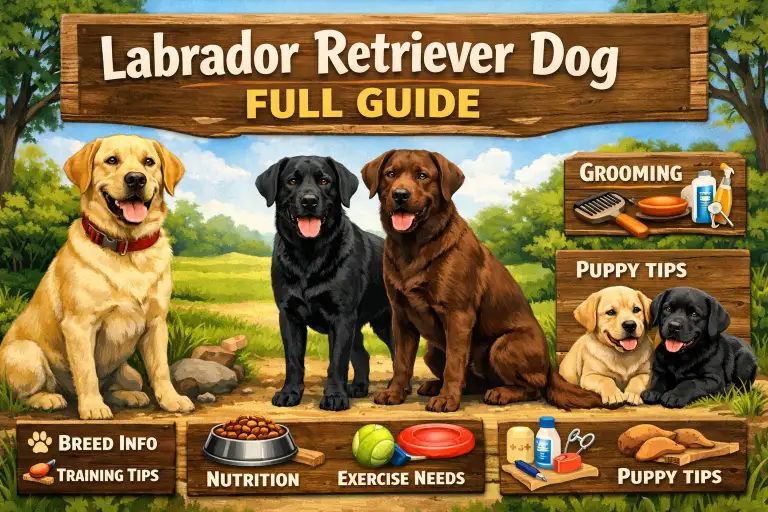
The Labrador Retriever is one of the most recognizable and widely loved dog breeds in the world. Originally developed as a working retriever and water dog, today’s Labrador is best known as a friendly family companion, dependable service dog, and versatile sporting breed. What makes Labradors so popular is not just their looks, but their adaptable nature, intelligence, and strong desire to work closely with people.
Despite their reputation as an “easy” dog, Labradors are a powerful, energetic breed with specific physical traits and care needs that directly affect daily life with them. Understanding where the breed came from and how it is built helps explain why Labradors behave the way they do today.
Labrador Retriever Quick Facts
| Trait | Typical Range |
|---|---|
| Breed group | Sporting (Retriever) |
| Height | 21.5–24.5 inches |
| Weight | 55–80 lbs |
| Lifespan | 10–12 years |
| Energy level | High |
| Shedding | Heavy, year-round |
| Coat type | Short, dense double coat |
Labrador Retrievers originated in Newfoundland, where their ancestors—often referred to as St. John’s water dogs—were used by fishermen to retrieve nets, ropes, and escaped fish from cold waters. These dogs were later brought to the United Kingdom, where they were refined into the modern Labrador Retriever we recognize today. Their historical role as tireless retrievers explains many of their defining traits, including their love of water, strong retrieving instinct, and people-oriented working style.
Physically, the Labrador is a medium-to-large, athletic dog built for endurance rather than speed. They are strong without being bulky, and their bodies are designed to move efficiently over long distances. One of the breed’s most distinctive features is the thick, tapered “otter tail,” which acts as a powerful rudder when swimming. Their slightly webbed feet further support their reputation as exceptional water dogs.
Labrador Retriever Size and Appearance Overview
| Feature | Description |
|---|---|
| Male size | Larger, broader head and chest |
| Female size | Slightly smaller, more refined build |
| Build type | Athletic, sturdy, well-balanced |
| Coat colors | Black, yellow, chocolate |
| Distinctive traits | Otter tail, webbed feet, expressive eyes |
Labradors have a short, dense double coat that is water-resistant and designed to protect them in harsh weather. While the coat is easy to maintain compared to long-haired breeds, it sheds heavily throughout the year, with noticeable seasonal blowouts. Coat color—black, yellow, or chocolate—has no proven effect on temperament, despite persistent myths suggesting otherwise.
In terms of lifespan, most Labradors live between 10 and 12 years. Genetics, body condition, exercise habits, and preventive veterinary care all play major roles in how long and how well a Labrador lives. Maintaining a healthy weight is especially important for this breed, as excess weight places additional strain on joints and can shorten overall lifespan.
At a glance, the Labrador Retriever appears simple and straightforward. In reality, every aspect of their physical design reflects their working origins, and those traits continue to influence their energy levels, behavior, and care needs throughout their lives.
Labrador Retriever Temperament and Personality in Real Life
Labrador Retrievers are known for being friendly, social, and people-loving dogs. Most Labradors enjoy being around humans more than anything else. They are not the type of dog that likes to be left alone for long hours. This strong need for company is one reason they do so well as family dogs, service dogs, and therapy dogs.
In real life, Labradors are usually happy, excited, and full of energy. They greet people with wagging tails and often try to say hello to everyone they meet. This friendly nature makes them poor guard dogs. While a Labrador may bark when someone arrives, most will quickly welcome strangers instead of protecting the home.
Labrador Retriever Temperament at a Glance
| Trait | Level | What This Means in Daily Life |
|---|---|---|
| Friendliness | Very High | Loves people and attention |
| Energy | High | Needs daily exercise to stay calm |
| Trainability | High | Learns fast, especially with food rewards |
| Independence | Low | Prefers staying close to owners |
| Aggression | Very Low | Rare when well trained and socialized |
With family members, Labradors form strong bonds. They often follow their owners from room to room and enjoy being part of daily activities. This close bond can turn into problem behavior if their needs are ignored. Bored Labradors may chew furniture, dig, or become overly loud.
Labradors are usually very good with children. They are patient, playful, and tolerant, which makes them popular in homes with kids. However, their excitement and size can be a problem with small children. Young Labradors may jump, knock kids over, or grab toys with too much force. Supervision and early training are important.
With other dogs, Labradors are generally friendly and social. They enjoy play and often do well in multi-dog homes. Most Labradors can also live peacefully with cats if introduced properly. They do have a natural retrieving instinct, but this is not the same as a strong prey drive. Problems usually come from excitement, not aggression.
One common mistake new owners make is thinking Labradors will naturally calm down without training. In reality, Labradors stay playful and energetic well into adulthood. Their friendly personality is a strength, but without guidance, it can lead to jumping, pulling on the leash, and ignoring commands when distracted.
Overall, the Labrador Retriever’s temperament is one of the main reasons the breed is so popular. They are loving, loyal, and eager to please, but they need structure, exercise, and attention to show their best behavior.
Exercise, Training, and Daily Care Needs of a Labrador Retriever
Labrador Retrievers are active dogs that need daily movement and mental work. A Labrador that does not get enough exercise often becomes bored and frustrated. This can lead to bad habits like chewing, digging, barking too much, or pulling hard on the leash.
Most Labradors are not calm couch dogs by nature. They were bred to work for many hours, especially outdoors. Daily exercise helps them stay healthy, happy, and easier to manage at home.
Daily Exercise Needs by Life Stage
| Life Stage | Daily Activity Needed | What Happens If Needs Are Not Met |
|---|---|---|
| Puppy | Short walks, play, training games | Chewing, biting, too much excitement |
| Adult | 60–90 minutes of activity | Weight gain, bad behavior, stress |
| Senior | Gentle walks, light play | Stiff joints, muscle loss |
| All ages | Mental games and training | Boredom and problem behaviors |
Exercise is not just about long walks. Labradors also need mental work. Simple games like fetch, hide-and-seek, food puzzles, and basic training sessions help tire their minds. A tired Labrador is usually a well-behaved Labrador.
Labradors are known for being easy to train, but this does not mean training happens by magic. They learn fast because they love food and praise. This food love can be helpful, but it can also cause problems if owners overfeed. Labradors will often act hungry even when they are not.
Common training challenges include jumping on people, pulling on the leash, and ignoring commands when excited. These issues usually come from high energy, not stubbornness. Short, positive training sessions work best for this breed. Harsh training methods often make Labradors confused or anxious.
Daily care also includes grooming, even though Labradors have short coats. Many people think short hair means no shedding, but Labradors shed a lot all year.
Grooming and Maintenance Snapshot
| Care Area | Typical Need |
|---|---|
| Shedding | Heavy, year-round |
| Brushing | 2–3 times per week |
| Bathing | Every 1–2 months or as needed |
| Ear care | Weekly checks and cleaning |
| Nail trimming | Every 3–4 weeks |
Their ears need special care because Labradors love water. Wet ears can trap moisture and lead to infections. Regular ear checks help prevent problems. Nail trimming is also important, especially for Labradors that do not walk on hard surfaces often.
Daily care for a Labrador is not difficult, but it does require time and consistency. When exercise, training, and grooming are handled well, Labradors are much calmer and easier to live with.
Labrador Retriever Health, Lifespan, and Cost of Ownership
Labrador Retrievers are strong dogs, but like all breeds, they have health risks that owners should understand. Knowing these risks early helps owners take better care of their dog and avoid surprises later in life.
Most Labradors live between 10 and 12 years. Some live longer, especially when they stay at a healthy weight and get regular vet care. Labradors love food, so weight gain is one of the biggest health problems in this breed. Extra weight puts stress on the joints and heart and can shorten a dog’s life.
Common Labrador Retriever Health Issues
| Health Issue | How Common | Why It Matters |
|---|---|---|
| Hip dysplasia | Common | Causes pain and trouble walking |
| Elbow dysplasia | Common | Leads to limping and arthritis |
| Obesity | Very common | Raises risk of many diseases |
| Ear infections | Common | Linked to water and floppy ears |
| Exercise-induced collapse | Less common | Weakness after hard exercise |
| Eye problems | Moderate | Can affect vision over time |
Regular vet visits, weight control, and proper exercise help lower many of these risks. Many breeders also test parent dogs for hip, elbow, and eye problems. This makes a big difference in long-term health.
Owning a Labrador also comes with ongoing costs. While Labradors are not the most expensive breed, they are not cheap either. Their size, energy level, and health needs all affect the total cost.
Estimated Cost to Own a Labrador Retriever
| Expense Type | Typical Cost Range |
|---|---|
| Puppy price | Moderate to high |
| Yearly vet care | Medium |
| Food | Medium to high |
| Grooming supplies | Low to medium |
| Training | Medium |
| Insurance | Medium |
Labradors often eat more than smaller dogs and may need joint care as they age. Vet bills can also rise if weight is not managed well. Pet insurance is often helpful for this breed because joint and injury problems can be costly.
When planned for properly, the cost of owning a Labrador is manageable. Most owners find the time, money, and care worth it for a healthy and happy dog.
Is the Labrador Retriever Right for You? Pros, Cons, and Alternatives
The Labrador Retriever is a great dog for many people, but it is not the right choice for everyone. Before choosing this breed, it is important to look at both the good and the challenging parts of living with a Labrador.
Labradors do best with owners who can give them time, exercise, and attention. They love being part of the family and do not like being ignored. If their needs are met, they are loving, loyal, and fun dogs to live with.
Labrador Retriever Pros and Cons
| Pros | Cons |
|---|---|
| Very friendly and social | Needs daily exercise |
| Great with families and kids | Sheds a lot all year |
| Easy to train | Can gain weight easily |
| Good with other pets | Gets bored if left alone |
| Loyal and loving | Can be too energetic for some homes |
Labradors are a good match for active families, people who enjoy outdoor activities, and owners who want a social dog. They are often a good choice for first-time owners, but only if the owner is ready to commit time to training and exercise.
This breed may not be ideal for people who want a calm, low-energy dog. Labradors can also struggle in small apartments if they do not get enough outdoor time. Seniors or very busy owners may find their energy level hard to manage.
Some people consider similar breeds if a Labrador feels like too much work. Golden Retrievers, Flat-Coated Retrievers, and other sporting dogs share many traits but may differ in grooming needs, energy level, or personality. Comparing breeds helps people choose a dog that fits their lifestyle best.
Labradors are loving dogs, but they are not effortless dogs. When chosen for the right reasons and cared for properly, they are one of the most rewarding breeds to own.
For official breed standards and detailed historical background, you can also review the Labrador Retriever profile from the American Kennel Club: https://www.akc.org/dog-breeds/labrador-retriever/

Ata Ur Rehman is the founder of Pet Age in Human Years Calculator, an educational platform that provides age conversion charts and lifespan guides for dogs, cats, birds, and other companion animals. His work focuses on helping pet owners understand how animal ages translate into human years using commonly accepted age conversion formulas and published lifespan averages.
The website compiles breed and species lifespan data from kennel clubs, breed organizations, and general animal lifespan studies to present simple and easy-to-understand guides for pet owners worldwide.
This website was created to centralize animal age conversion charts into one easy reference platform for pet owners.