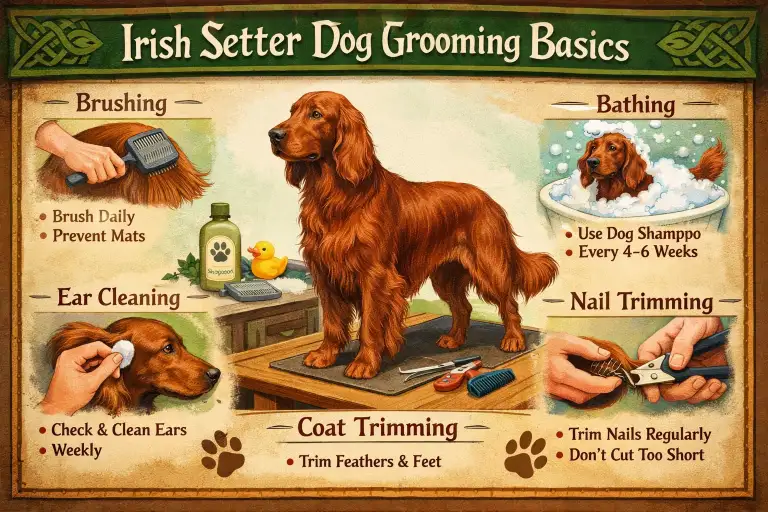
Irish Setters are known for their elegant red coats, athletic build, and high energy—but that beautiful appearance doesn’t maintain itself. Proper grooming is not just about looks for this breed; it plays a direct role in comfort, skin health, coat condition, and even behavior. When grooming is neglected, Irish Setters commonly develop painful mats, skin irritation, recurrent ear problems, and increased shedding throughout the home.
From a groomer’s perspective, Irish Setters often arrive at the salon with issues that could have been prevented with simple at-home care: compacted feathering behind the ears, tight mats under the arms, inflamed ears from trapped moisture, and dry or itchy skin caused by improper bathing. These problems are rarely due to laziness—most owners simply aren’t shown what correct Irish Setter grooming actually involves.
You’ll learn how to groom an Irish Setter in a way that:
- Protects the natural texture and shine of the coat
- Reduces shedding and prevents painful matting
- Supports healthy skin and ears
- Makes grooming easier and less stressful for both dog and owner
Rather than focusing on show grooming or unnecessary styling, this article centers on practical, real-world coat care that works for family dogs. The routines explained here are based on professional grooming experience, veterinary dermatology principles, and what consistently keeps Irish Setters comfortable and healthy over the long term.
Whether you’re caring for a puppy, an active adult, or a senior Irish Setter, the goal is the same: a clean, well-maintained coat that supports your dog’s health—not one that becomes a grooming problem waiting to happen.
Irish Setter Coat Type, Shedding, and Grooming Frequency
Irish Setters have a long, silky, feathered coat. This coat is soft, smooth, and lies close to the body, with longer hair on the ears, chest, legs, belly, and tail. Unlike double-coated breeds, Irish Setters have a single coat, which means they do not blow their coat seasonally in thick clumps. However, their fine hair tangles easily and can form painful mats if grooming is skipped.
Shedding in Irish Setters is moderate. You will see loose hair year-round, with heavier shedding during spring and fall. Most shedding problems in this breed come from loose hair getting trapped in the long coat instead of falling out on its own. Regular brushing removes this loose hair before it turns into mats or ends up on furniture.
Grooming frequency is one of the most common questions owners ask. Irish Setters need consistent care, but it does not have to be complicated. Short, frequent grooming sessions work much better than long, rushed ones.
Irish Setter Grooming Frequency Overview
| Grooming Task | How Often |
|---|---|
| Brushing | 3–4 times per week |
| Bathing | Every 4–6 weeks |
| Nail trimming | Every 3–4 weeks |
| Ear cleaning | Every 2–3 weeks |
| Professional grooming | Every 8–12 weeks |
Certain areas of the Irish Setter coat need extra attention because they rub together or trap moisture. These spots are where mats form first, even in well-cared-for dogs.
High-Risk Matting Areas on Irish Setters
| Body Area | Why Mats Form |
|---|---|
| Behind the ears | Soft hair and constant movement |
| Under the front legs | Rubbing while walking and running |
| Chest and belly | Long feathering and moisture |
| Behind the collar | Friction from collars or harnesses |
Skipping grooming in these areas can lead to tight mats that pull on the skin. Over time, this can cause redness, sores, and infection. Brushing these spots gently and often is one of the best ways to keep an Irish Setter comfortable.
How to Groom an Irish Setter at Home: Brushing, Bathing, and Tools
You can groom an Irish Setter at home if you use the right tools and follow a simple routine. Home grooming helps keep the coat healthy between professional grooming visits and prevents painful mats from forming.
Brushing is the most important part of Irish Setter grooming. Always brush before bathing. Brushing a wet, tangled coat can make mats tighter and harder to remove. Start at the legs and work your way up the body using slow, gentle strokes. Pay close attention behind the ears, under the front legs, and along the chest and belly. These areas mat first.
You do not need many tools, but the tools you use must match the coat type. Using the wrong brush can damage the coat or miss hidden tangles.
Best grooming tools for Irish Setters:
| Tool | What It Is Used For | How Often |
|---|---|---|
| Slicker brush | Removes tangles and loose hair | Regular brushing |
| Pin brush | Light daily brushing | Between full grooming |
| Metal comb | Finds small mats close to skin | After brushing |
| Dog-safe dryer | Dries coat without heat damage | After baths |
Bathing should be done only when needed. Bathing too often strips natural oils from the coat and can cause dry skin. Before bathing, remove all tangles. Use lukewarm water and a dog shampoo made for long or sensitive coats. Always rinse very well, as leftover shampoo can cause itching.
Bathing and product guidance for Irish Setters:
| Situation | Bathing Schedule | Product Type |
|---|---|---|
| Normal coat | Every 4–6 weeks | Mild dog shampoo |
| Active outdoor dog | As needed | Gentle shampoo + conditioner |
| Sensitive skin | Every 6–8 weeks | Hypoallergenic shampoo |
Drying is just as important as bathing. Towel-dry first, then use a dog dryer or a cool air setting. Never use hot air. Damp feathering can lead to skin problems and mats if left wet.
Irish Setters do not need full haircuts. Light trimming around the feet, hocks, and feather edges helps keep the coat neat and clean. Shaving the coat is not recommended and can damage coat texture and skin health.
Nail, Ear, Skin, and Coat Health Care for Irish Setters
Grooming is not only about the coat. Nails, ears, and skin need regular care to keep an Irish Setter healthy and comfortable. These steps are simple but often skipped by owners.
Nail care is important for active dogs like Irish Setters. Long nails can cause pain when walking or running and may lead to joint problems over time. If you hear nails clicking on the floor, they are too long. Trim a small amount at a time, or use a nail grinder if your dog is nervous. Many dogs prefer short, frequent trims instead of long sessions.
Ear care is very important for Irish Setters because they have long, floppy ears. These ears can trap moisture and dirt, which creates a warm place for infections. Check the ears once a week. Clean only the visible part of the ear using a dog-safe ear cleaner. Never push anything deep into the ear.
Skin and coat health should be checked during every grooming session. Run your hands over the body and look for redness, bumps, scabs, or hair loss. Catching problems early can prevent serious skin infections and vet visits.
Common nail, ear, and skin issues to watch for:
| Sign You See | What It May Mean | What To Do |
|---|---|---|
| Long or curled nails | Nails not wearing down | Trim or grind nails |
| Bad ear smell | Yeast or bacteria | Clean ears, see vet |
| Red or itchy skin | Allergies or irritation | Stop new products, see vet |
| Hot spots | Moisture and friction | Clip area, keep dry, see vet |
Irish Setters can develop hot spots, especially during warm or wet weather. These sore areas often appear under mats, around the chest, or behind the ears. Keeping the coat clean, dry, and mat-free lowers this risk.
Dental care is also part of grooming, even though it is often forgotten. Brushing your dog’s teeth a few times a week helps prevent bad breath and gum disease. Dental chews can help, but they do not replace brushing.
Puppy Grooming, Seasonal Care, Professional Grooming, and Common Mistakes
Grooming an Irish Setter is different depending on your dog’s age, the season, and whether you do it at home or at a professional salon. Understanding these differences helps keep your dog comfortable and healthy.
Puppies need gentle, short grooming sessions. Their coat is softer and thinner, so they are more sensitive. Focus on light brushing, short baths, and getting them used to nail trims and ear cleaning. Start early to make grooming a positive experience.
Adult Irish Setters need more regular brushing to prevent mats and tangles, especially in feathered areas. Bathing should follow the schedule we discussed earlier. Seasonal shedding usually happens in spring and fall, when the coat may be heavier. Extra brushing during these times helps reduce loose hair and mats.
Professional grooming can be useful for tasks that are tricky at home, such as removing large mats, trimming feathering evenly, or styling for shows. Even if you groom at home, a professional visit every 2–3 months keeps the coat in top condition.
Common grooming mistakes to avoid:
| Mistake | Why It’s a Problem |
|---|---|
| Shaving the coat | Damages coat texture and may cause skin problems |
| Over-bathing | Removes natural oils, dries skin, can cause itching |
| Skipping brushing | Leads to mats, discomfort, and skin irritation |
| Ignoring nails or ears | Can cause pain, infections, or mobility issues |
By avoiding these mistakes and following a consistent routine, grooming becomes easier for you and less stressful for your Irish Setter. Remember, the goal is a healthy, shiny coat and a happy dog.
For more expert advice on canine skin and coat health, visit the American Kennel Club’s grooming resources.

Ata Ur Rehman is the founder of Pet Age in Human Years Calculator, an educational platform that provides age conversion charts and lifespan guides for dogs, cats, birds, and other companion animals. His work focuses on helping pet owners understand how animal ages translate into human years using commonly accepted age conversion formulas and published lifespan averages.
The website compiles breed and species lifespan data from kennel clubs, breed organizations, and general animal lifespan studies to present simple and easy-to-understand guides for pet owners worldwide.
This website was created to centralize animal age conversion charts into one easy reference platform for pet owners.