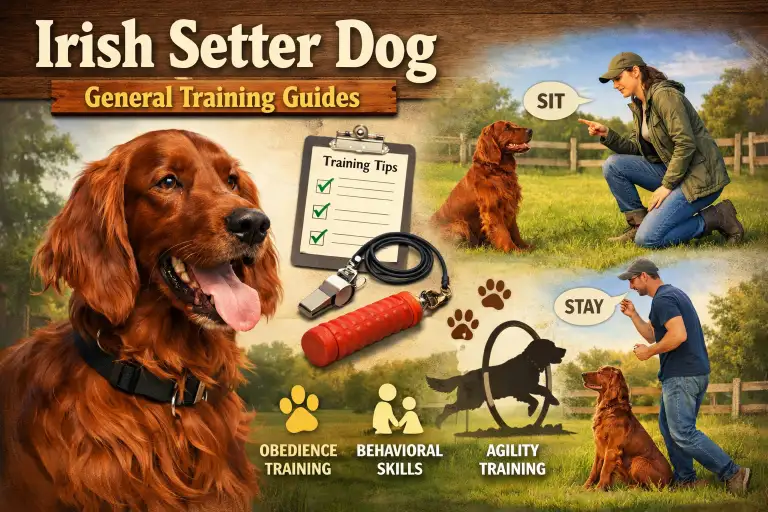
Irish Setters are intelligent, affectionate, and full of enthusiasm—but training them successfully requires more than generic dog training advice. Their high energy, sensitivity, and strong desire to explore can make everyday obedience feel challenging, especially for first-time owners or busy households.
This guide is designed to help you train an Irish Setter in a practical, realistic way, whether you’re raising a puppy, working through the adolescent phase, or improving behavior in an adult dog. Instead of rigid rules or one-size-fits-all methods, this article focuses on how Irish Setters actually learn, why certain training approaches work better for this breed, and how to build reliable behavior without frustration.
Many Irish Setter owners struggle with issues like poor recall, overexcitement, jumping, or a dog that “listens at home but ignores you outside.” These problems are common—and they’re not signs of stubbornness or low intelligence. They’re usually the result of mismatched training expectations, timing issues, or methods that don’t suit a sensitive, high-drive sporting breed.
By the end of this guide, you’ll understand how to:
- Train your Irish Setter for better focus and obedience
- Channel energy into calm, manageable behavior
- Avoid common training mistakes that slow progress
- Set realistic expectations based on age and temperament
Why Irish Setter Training Is Different (And Why It Matters)
Irish Setters are not difficult dogs, but they are very different from calm or low-energy breeds. They were bred to run, explore, and work closely with people. Because of this, they feel emotions strongly and react quickly to what is happening around them.
Many owners follow general dog training tips and then feel confused when their Irish Setter:
- Gets overexcited very fast
- Listens indoors but ignores commands outside
- Jumps, pulls, or runs off when distracted
This does not mean your dog is stubborn or untrainable. It usually means the training style does not match the breed.
Irish Setters need training that:
- Teaches self-control, not just commands
- Uses rewards and calm guidance instead of pressure
- Starts early and stays consistent
- Works in real life, not only inside the house
Without proper training, common problems can grow worse over time. A young Irish Setter that pulls on the leash can become an adult dog that is hard to manage. Poor recall can turn into serious safety risks near roads or open spaces. Overexcitement can lead to jumping, knocking people over, or stress inside the home.
Training is not only about obedience. It helps your Irish Setter feel calmer, safer, and more confident in everyday situations.
Irish Setter Traits and Their Training Impact
| Irish Setter Trait | What It Looks Like at Home | Why Training Matters |
|---|---|---|
| High energy | Constant movement, restlessness | Needs impulse control and calm skills |
| Strong curiosity | Running off, sniffing everything | Recall training is critical for safety |
| Sensitive nature | Shuts down with harsh methods | Gentle, reward-based training works best |
| Social personality | Jumping, overfriendly behavior | Manners training prevents accidents |
| Slow emotional maturity | Acts “puppy-like” longer | Owners need realistic expectations |
Understanding these traits early helps prevent frustration. When training matches the Irish Setter’s nature, progress becomes faster and more enjoyable for both dog and owner.
Understanding Irish Setter Behavior and Learning Style
Irish Setters are smart dogs, but they do not learn the same way as calm or serious breeds. They learn best when training feels fun, clear, and rewarding. If training is boring, rushed, or too strict, they lose focus very quickly.
This breed is also very sensitive. Harsh voices, punishment, or sudden corrections can make an Irish Setter shut down or act more wild. Calm guidance and rewards help them feel safe and ready to learn.
Irish Setters are slow to fully mature. Many still act like puppies well into their second or even third year. This is normal for the breed. Knowing this helps owners stay patient and avoid giving up too early.
Common behavior traits owners notice include:
- Short attention span when excited
- Strong interest in smells, people, and movement
- Big energy bursts followed by tired moments
- Friendly behavior that turns into jumping or pulling
These behaviors are not bad habits. They are natural traits that need direction and structure through training.
Irish Setter Behavior by Age
| Age Stage | Common Behavior | What Training Should Focus On |
|---|---|---|
| Puppy (8 weeks–6 months) | Biting, jumping, short focus | Basic cues, calm handling, routine |
| Adolescent (6–18 months) | Ignoring commands, high energy | Impulse control, recall, consistency |
| Young adult (18–36 months) | Strong confidence, testing limits | Reliability, distractions, calm behavior |
| Adult (3+ years) | More stable but still active | Maintenance, mental exercise |
Understanding how your Irish Setter thinks and grows helps you train with less stress. When owners match training to the dog’s age and learning style, results improve faster and last longer.
Step-by-Step Irish Setter Training Approach
Training an Irish Setter works best when it is simple, short, and consistent. Long or hard sessions often lead to frustration for both the dog and the owner. This breed learns faster through clear steps and regular practice.
Start with short training sessions. Five to ten minutes is enough, especially for puppies and young dogs. You can train two or three times a day instead of doing one long session. Always end training on a good note, even if progress feels small.
Focus on skills that help daily life first:
- Paying attention when you speak
- Coming when called
- Walking calmly
- Settling down indoors
Training should happen in real places. A dog that listens only at home is not fully trained. Practice slowly in new areas like the yard, quiet streets, or parks with few distractions.
Daily Irish Setter Training Schedule (Example)
| Time of Day | What to Train | Why It Helps |
|---|---|---|
| Morning | Short focus and recall practice | Uses fresh energy in a good way |
| Afternoon | Calm leash walking | Builds control outside the home |
| Evening | Settle and calm behavior | Helps prevent evening chaos |
Keep training fun and positive. Use food, praise, toys, or play as rewards. Reward your dog right after they do the right thing so they understand what earned the reward.
Training Focus Areas and Methods
| Training Goal | Simple Method | What to Avoid |
|---|---|---|
| Focus | Reward eye contact | Repeating commands many times |
| Recall | Call once, reward fast | Chasing the dog |
| Calm behavior | Reward quiet moments | Only rewarding excitement |
| Leash manners | Stop when pulling | Yanking the leash |
Progress will not be perfect every day. Irish Setters have good days and distracted days. This is normal. Stay calm, stay consistent, and keep training fair.
Common Irish Setter Training Problems and Solutions
Irish Setters are smart and friendly, but their energy and curiosity can lead to common training challenges. Most problems are not because the dog is “bad,” but because the training does not match their breed traits or age.
Here are the main problems owners face and how to fix them.
Common Irish Setter Training Problems and Fixes
| Problem | What It Looks Like | Why It Happens | How to Fix It |
|---|---|---|---|
| Overexcitement | Jumping, running around, knocking things over | High energy, low impulse control | Teach calm behavior, reward quiet moments, short frequent training sessions |
| Poor recall | Comes only sometimes or ignores calls | Distractions, inconsistent rewards | Practice recall in low-distraction areas first, reward immediately, gradually increase distractions |
| Pulling on leash | Pulls ahead during walks | High curiosity, desire to explore | Stop when pulling, reward slack leash, short walks if needed |
| Selective listening | Obeys at home but ignores outside | Lack of distractions training | Gradually add distractions, reward attention in real-world settings |
| Training plateau | No progress after weeks | Repetition without engagement, inconsistent timing | Change rewards, keep sessions short, vary training exercises |
| Owner mistakes | Overcorrecting, repeating commands, harsh tone | Miscommunication, frustration | Stay calm, be consistent, use positive reinforcement |
Most of these problems can be solved with patience, consistency, and correct timing. Avoid harsh punishments, long sessions, or repeating commands too many times. Training should always end positively to keep the Irish Setter motivated.
Knowing common problems and their fixes makes training smoother. Owners who understand the breed’s nature and follow structured methods see faster progress and a happier, calmer dog.
For more expert guidance on positive reinforcement techniques, visit the American Kennel Club’s dog training resources.

Ata Ur Rehman is the founder of Pet Age in Human Years Calculator, an educational platform that provides age conversion charts and lifespan guides for dogs, cats, birds, and other companion animals. His work focuses on helping pet owners understand how animal ages translate into human years using commonly accepted age conversion formulas and published lifespan averages.
The website compiles breed and species lifespan data from kennel clubs, breed organizations, and general animal lifespan studies to present simple and easy-to-understand guides for pet owners worldwide.
This website was created to centralize animal age conversion charts into one easy reference platform for pet owners.