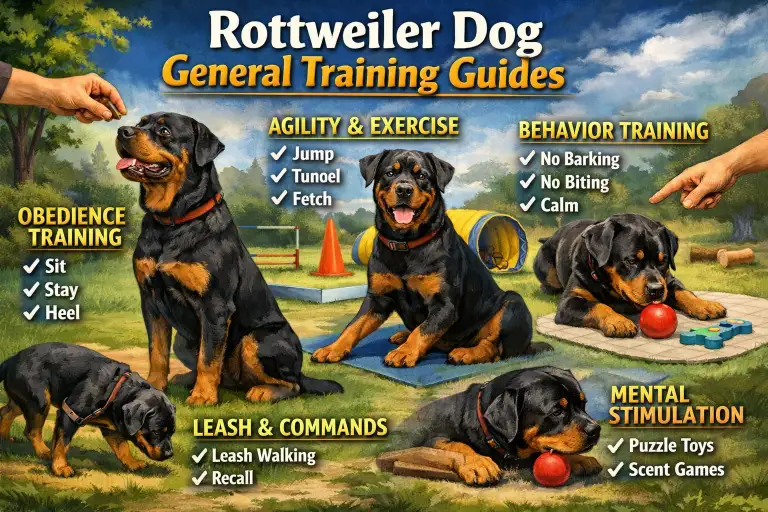
Training a Rottweiler is not about control, dominance, or force—it’s about building clear structure, trust, and reliable communication with a powerful, intelligent working breed. This Rottweiler training guide is designed to help you raise (or retrain) a dog that is calm, confident, obedient, and safe to live with in the real world.
Rottweilers are naturally loyal, protective, and people-focused, but those same traits can turn into leash pulling, stubbornness, over-guarding, or reactivity if training is inconsistent or delayed. Because of their size and strength, even small training mistakes can lead to big problems—both at home and in public.
This guide covers general Rottweiler dog training for:
- Rottweiler puppies building foundations
- Adolescent Rottweilers going through testing phases
- Adult or rescue Rottweilers needing structure and clarity
Rather than generic dog-training advice, this article focuses on breed-specific behavior, realistic owner situations, and proven, reward-based training methods that work with the Rottweiler mindset—not against it. Whether you’re a first-time Rottweiler owner or correcting issues that have already started, this guide will show you how to train your Rottweiler safely, humanely, and effectively.
Why Proper Rottweiler Training Matters
Rottweilers are strong, confident dogs with natural guarding instincts. When they are trained the right way, they are calm, loyal, and easy to manage. When training is skipped or inconsistent, small behavior problems can quickly become serious issues.
Proper training is not just about good manners. It is about safety, control, and responsibility. A large dog that pulls on the leash, ignores commands, or reacts strongly to strangers can be stressful for owners and risky in public places. Training helps your Rottweiler understand what is expected and how to behave in everyday life.
Good training also protects your dog. Rottweilers are often judged more harshly than smaller breeds. A well-trained Rottweiler is less likely to be labeled as “aggressive” and more likely to be welcomed in public, around guests, and in family settings.
Below is a simple comparison that shows why training matters so much for this breed.
| Area | Poorly Trained Rottweiler | Properly Trained Rottweiler |
|---|---|---|
| Leash behavior | Pulls, lunges, hard to control | Walks calmly, responds to cues |
| Stranger response | Overprotective or suspicious | Calm, neutral, confident |
| Obedience | Listens only at home | Obeys commands anywhere |
| Family life | Stressful, unpredictable | Relaxed and reliable |
| Owner confidence | Constant worry | Clear control and trust |
Training also builds a stronger bond. Rottweilers are people-focused dogs. They want guidance and clear rules. When training is fair and consistent, your dog feels more secure and behaves better because they trust you.
Skipping training or using harsh methods can lead to fear, shutdown behavior, or defensive reactions. This is why modern, reward-based training is especially important for Rottweilers. It teaches them how to make good choices instead of forcing them to obey.
Understanding Rottweiler Behavior and Learning
Rottweilers are confident, loyal, and smart dogs. They are bred to work closely with people, not to act on their own. Because of this, they do best when they have clear rules, calm guidance, and daily structure.
Many owners think Rottweilers are stubborn. In real life, most Rottweilers are not stubborn—they are strong-minded and very aware of their surroundings. If training is unclear or inconsistent, they may decide to ignore commands. This is not disobedience. It is confusion or lack of motivation.
Rottweilers learn best through reward-based training. This means giving rewards right after the dog does something right. Rewards can be food, praise, toys, or play. Timing matters. The reward should come within a few seconds so the dog understands what behavior earned it.
Harsh training, yelling, or punishment often backfires with this breed. It can cause fear, stress, or defensive behavior. A calm and confident approach builds trust and helps your Rottweiler learn faster.
Age also affects how your Rottweiler learns. Training expectations should match their life stage.
| Rottweiler Age | What’s Happening Mentally | Common Challenges | Training Focus |
|---|---|---|---|
| Puppy (8 weeks–6 months) | Curious and learning fast | Biting, accidents, short focus | Basic commands, social skills |
| Adolescent (6–18 months) | Testing limits, high energy | Ignoring cues, pulling | Consistency, impulse control |
| Adult (18+ months) | More stable and confident | Habit-based behavior | Reliability and calm behavior |
| Rescue / Untrained Adult | Learning trust and rules | Fear or confusion | Structure and confidence |
Rottweilers are also sensitive to their owner’s emotions. If you are nervous, angry, or unsure, your dog will feel it. Calm leadership helps them stay calm too.
Training works best when it is short and regular. Five to ten minutes, one or two times a day, is better than long sessions once in a while. Training in different places helps your Rottweiler learn to listen anywhere, not just at home.
Understanding how your Rottweiler thinks makes training easier and less stressful for both of you.
Step-by-Step Rottweiler Training Approach
Training a Rottweiler works best when it is simple, clear, and consistent. You do not need long or hard sessions. Short daily practice builds better habits and keeps your dog focused.
Start with basic skills first. Every Rottweiler should learn sit, down, stay, come, and loose leash walking. These commands create control and safety in daily life. Practice them at home before using them outside.
Keep training sessions short. Five to ten minutes is enough. Train one or two times a day. Stop before your dog gets tired or bored. Ending on a good note helps your Rottweiler stay excited for the next session.
Use rewards your dog truly likes. Many Rottweilers work best for food, but praise, toys, or play can also work. Give the reward right away when your dog does the right thing. Fast timing helps your dog understand what behavior you want.
Be calm and clear with your commands. Say the word once. If your dog does not listen, guide them gently and reward when they succeed. Repeating commands many times teaches your dog to ignore you.
Practice in different places. Start in a quiet room, then move to the yard, sidewalk, and busier areas. Rottweilers need to learn that commands still matter when there are people, dogs, or noise around.
Leash training is very important for this breed. Teach your Rottweiler that pulling does not move them forward. Reward calm walking near your side. If your dog pulls, stop walking and wait for the leash to loosen before moving again.
Stay consistent as a family. Everyone should use the same commands and rules. Mixed messages slow down training and confuse your dog.
Training is not a one-time task. Rottweilers need regular practice, even as adults. Short daily training keeps behavior strong and prevents problems from coming back.
Common Rottweiler Training Problems and When to Get Help
Even well-trained Rottweilers can have problems at times. Most issues happen because of confusion, missed training, or changes in routine. The good news is that many problems can be fixed early with the right approach.
Some common issues include pulling on the leash, ignoring commands outside the home, jumping on people, or acting overprotective. These behaviors often appear during adolescence or when training stops too soon.
Rottweilers may also react strongly if they feel unsure or stressed. Loud places, strangers, or other dogs can be hard for them if they were not slowly trained around these situations.
The table below helps you understand common problems, why they happen, and what to do next.
| Problem | Common Cause | What You Can Do | When to Get Help |
|---|---|---|---|
| Leash pulling | Excitement or no leash training | Stop walking, reward calm steps | If pulling becomes lunging |
| Ignoring commands | Distractions or weak training | Practice in quiet places again | If dog never responds |
| Overprotective behavior | Poor social training | Teach calm behavior around people | If growling or snapping |
| Reacting to dogs | Fear or frustration | Create distance and reward calm | If reactions get worse |
| Fearful behavior | Stress or bad past experience | Go slow and build confidence | If fear causes aggression |
Do not wait too long to get help. Large breeds like Rottweilers are safer when problems are handled early. A professional trainer can help you improve skills, timing, and confidence.
If your dog shows signs like snapping, biting, extreme fear, or sudden behavior changes, contact a professional right away. In some cases, a veterinary behavior expert may be needed to rule out pain or health issues.
Getting help is not a failure. It is a smart step that protects your dog, your family, and others.
American Kennel Club (AKC) – Rottweiler Breed Information
https://www.akc.org/dog-breeds/rottweiler/

Ata Ur Rehman is the founder of Pet Age in Human Years Calculator, an educational platform that provides age conversion charts and lifespan guides for dogs, cats, birds, and other companion animals. His work focuses on helping pet owners understand how animal ages translate into human years using commonly accepted age conversion formulas and published lifespan averages.
The website compiles breed and species lifespan data from kennel clubs, breed organizations, and general animal lifespan studies to present simple and easy-to-understand guides for pet owners worldwide.
This website was created to centralize animal age conversion charts into one easy reference platform for pet owners.