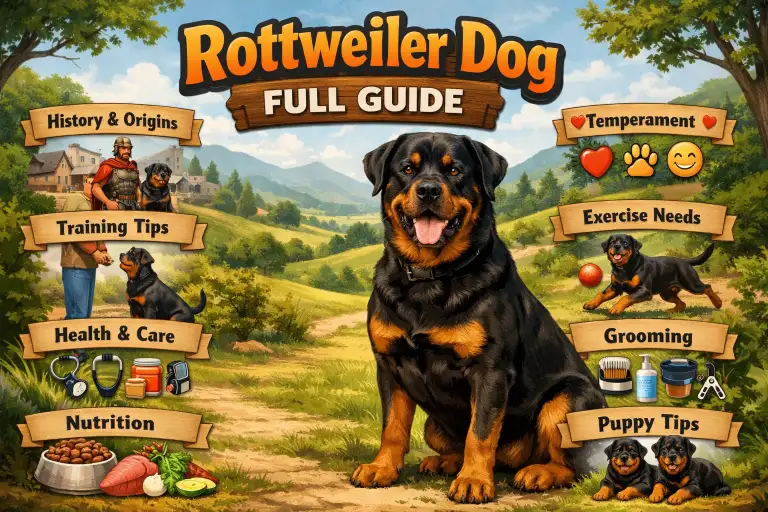
The Rottweiler dog breed is a powerful, confident working dog developed for strength, control, and reliability rather than speed or flash. At its best, a Rottweiler is calm, self-assured, and deeply loyal to its people—traits that come directly from the breed’s long history as a utilitarian guardian and cattle-driving dog. Understanding where the breed comes from and how it is physically built is essential to understanding how a Rottweiler thinks, moves, and behaves today.
Historically, the Rottweiler traces its roots back to the mastiff-type dogs used by Roman legions to drive and guard livestock as armies moved across Europe. These dogs were not bred for companionship but for endurance, courage, and judgment. When the Romans settled in what is now southern Germany, particularly the town of Rottweil, these dogs were refined into dependable cattle drovers and property guardians. Over generations, breeders selected dogs that could control stubborn livestock, protect money pouches from thieves, and remain composed in busy market environments. This background explains why modern Rottweilers are naturally territorial, observant, and slow to react rather than impulsive.
Physically, the Rottweiler is built for power and efficiency. It is a medium-to-large breed with a broad chest, strong bone structure, and dense musculature. The body is slightly longer than tall, giving the dog balance and stability rather than a square, upright outline. When properly built, a Rottweiler moves with an effortless, ground-covering gait that reflects strength without heaviness. Excess bulk, poor angulation, or weak rear structure are signs of poor breeding and often correlate with health and mobility issues later in life.
The coat is short, dense, and close-lying, designed to protect the dog during outdoor work without requiring heavy maintenance. Color is always black with clearly defined rust or mahogany markings on the cheeks, muzzle, chest, legs, and above the eyes. These markings are not decorative; historically, they helped handlers read the dog’s expression and body language at a distance. While pet owners may encounter variations in shade or marking size, deviation from the standard can signal careless breeding rather than harmless cosmetic difference.
Below is a quick-reference table summarizing the Rottweiler’s physical characteristics, which many readers look for early when deciding if the breed fits their expectations and living situation.
| Feature | Male Rottweiler | Female Rottweiler |
|---|---|---|
| Height (at shoulder) | ~24–27 inches | ~22–25 inches |
| Weight range | ~95–135 lbs | ~80–110 lbs |
| Build | Heavy-boned, muscular, broad chest | Slightly lighter but still powerful |
| Coat type | Short, dense, straight | Short, dense, straight |
| Color | Black with rust/mahogany markings | Black with rust/mahogany markings |
A well-bred Rottweiler should never look sloppy, exaggerated, or intimidating for the sake of appearance alone. The breed’s structure exists to support function: controlled strength, physical confidence, and the ability to stand its ground when necessary. When these traits are preserved correctly, the result is a dog that is visually impressive without being unstable—a key distinction that separates true Rottweilers from poorly bred imitations.
Rottweiler Temperament, Personality, and Behavior in Real Life
The Rottweiler is often called a “dangerous” dog, but this label is misleading and incomplete. A well-bred, properly raised Rottweiler is calm, steady, and confident, not nervous or out of control. This breed was developed to think before acting, which is why good Rottweilers are usually quiet observers rather than loud or reactive dogs. They watch their surroundings carefully and respond only when they believe action is needed.
Rottweilers are deeply loyal to their families. Once bonded, they tend to stay close to their people and prefer being involved in daily life instead of being left alone outside or in a yard. Many owners describe their Rottweiler as “serious” but affectionate, showing love through presence and protection rather than constant excitement. This strong bond is one reason they can become protective if not taught clear rules from an early age.
With strangers, Rottweilers are usually reserved. They do not rush to greet new people and may stand back quietly while watching. This behavior is normal and should not be confused with aggression. Problems often begin when owners force social interactions or fail to guide the dog calmly during introductions. A well-socialized Rottweiler should accept guests once it sees that the owner is relaxed and in control.
Rottweilers can live safely with children, but supervision is always necessary. These dogs are very strong, and even friendly play can accidentally knock over a small child. They tend to be patient and tolerant, but they are not soft or fragile dogs. Families do best when children are taught how to respect the dog’s space and the dog is taught basic impulse control from a young age.
When it comes to other pets, Rottweilers vary more than many people expect. Some get along well with other dogs, while others may show dominance or tension, especially with dogs of the same sex. Early socialization helps, but genetics also play a role. Smaller animals such as cats may be accepted if raised together, but chasing behavior can appear if introductions are rushed or unmanaged.
The table below helps summarize common Rottweiler temperament traits and what they look like in everyday life. This allows readers to quickly scan behavior expectations before reading deeper details.
| Trait | Typical Level | What It Looks Like in Real Life | Owner Considerations |
|---|---|---|---|
| Loyalty | Very high | Stays close to family, follows routines | Needs time and attention |
| Guarding instinct | High | Watches visitors, alerts to changes | Requires calm leadership |
| Confidence | High | Calm in new places when socialized | Poor handling can cause reactivity |
| Sociability | Medium | Polite but not overly friendly | Do not force interactions |
| Prey drive | Low to moderate | May chase small animals | Supervise with pets |
| Energy level | Moderate | Enjoys activity, rests well indoors | Needs daily structure |
Many problems blamed on the breed are actually caused by lack of training, poor socialization, or owners who do not understand the breed’s mental needs. A Rottweiler without guidance may try to make decisions on its own, which can lead to unwanted behaviors. With clear rules, steady leadership, and early exposure to people and environments, most Rottweilers grow into stable, trustworthy companions.
Training, Exercise, and Daily Care Requirements
Rottweilers are smart dogs, but they are not push-button easy. They learn quickly, yet they like clear rules and fair leadership. If training is weak or confusing, a Rottweiler may test limits or ignore commands. This does not mean the dog is “bad.” It usually means the dog is unsure who is in charge. Calm, steady training works best for this breed.
Training should start early and focus on basic manners like walking on a leash, coming when called, and staying calm around people and other dogs. Harsh punishment often causes fear or stubborn behavior. On the other hand, being too soft can also create problems. Rottweilers respond best to firm but kind handling, clear routines, and rewards for good behavior.
Exercise is important, but Rottweilers are not nonstop athletes. They need daily activity to stay healthy and relaxed, but endless running is not required. Most adult Rottweilers do well with structured walks, short training sessions, and playtime. Mental work is just as important as physical movement. Simple tasks like obedience practice, scent games, or learning new commands help prevent boredom.
Daily care goes beyond training and exercise. Rottweilers need regular grooming, even though their coat is short. They also need basic health care like nail trimming, ear checks, and dental care. Because of their size and strength, small problems can become big ones if ignored.
The table below gives a quick look at the daily care needs of a Rottweiler and what can happen if those needs are not met.
| Care Area | Typical Need | How Often | What Happens If Ignored |
|---|---|---|---|
| Exercise | Moderate | Daily | Restlessness, weight gain |
| Training | Structured basics | Daily or weekly | Disobedience, control issues |
| Mental stimulation | Games and learning | Several times a week | Boredom, destructive behavior |
| Grooming | Brushing | Weekly | Excess shedding, skin issues |
| Nail care | Trimming | Every 3–4 weeks | Pain, posture problems |
| Dental care | Teeth cleaning | Weekly | Bad breath, dental disease |
Rottweilers do best when their days have structure. Feeding, walking, training, and rest should happen around the same time each day. This predictability helps them feel secure and reduces unwanted behavior. A bored or under-exercised Rottweiler may chew furniture, bark more than usual, or act stubborn, not because it wants to misbehave, but because its needs are not being met.
Health, Lifespan, and Cost of Owning a Rottweiler
Rottweilers are strong dogs, but their size and build can put stress on their bodies over time. A healthy Rottweiler usually lives between 8 and 10 years, though some live longer with good care, healthy weight, and proper breeding. Like many large breeds, they tend to age faster than smaller dogs.
Health problems in Rottweilers are often linked to genetics. This is why responsible breeding matters so much. Some issues may not show up when the dog is young but can appear later in life. Regular vet visits and early testing help catch problems before they become serious.
The table below shows common health concerns seen in Rottweilers and what owners should know about them.
| Health Issue | How Common | What It Means for the Dog | What Owners Can Do |
|---|---|---|---|
| Hip dysplasia | Common | Pain, trouble walking | Keep healthy weight, vet checks |
| Elbow dysplasia | Common | Front leg pain, stiffness | Avoid hard jumping when young |
| Heart problems | Moderate | Tiredness, breathing issues | Heart screening, regular exams |
| Cancer | Higher risk | Can shorten lifespan | Early vet visits, awareness |
| Obesity | Common if overfed | Joint stress, low energy | Proper diet and exercise |
Owning a Rottweiler also comes with higher costs compared to smaller breeds. They eat more food, need strong equipment, and may have higher vet bills due to their size. While grooming costs are low, medical care and prevention should be planned for in advance.
The table below gives a simple idea of the costs involved in owning a Rottweiler. Prices can vary by location and quality of care.
| Expense Type | Typical Cost Range | Notes |
|---|---|---|
| Puppy price | Medium to high | Ethical breeders cost more |
| Food | High | Large dogs eat more |
| Routine vet care | Medium | Vaccines, checkups |
| Health treatments | Medium to high | Joint or heart care |
| Insurance | Medium | Often higher for large breeds |
Many health and cost problems can be reduced by choosing a good breeder, keeping the dog at a healthy weight, and staying consistent with preventive care. Cheap puppies and skipped vet visits often lead to much higher costs later.
Is a Rottweiler Right for You? Pros, Cons, and Breed Comparisons
A Rottweiler can be an amazing dog for the right person, but this breed is not a good fit for everyone. They are strong, serious dogs that need time, training, and clear rules. Before choosing a Rottweiler, it is important to look honestly at both the good and the hard parts of owning one.
Rottweilers are best for owners who want a loyal companion that stays close to the family. They often do well in homes where someone is around most of the day. They are not ideal for people who want an easy, low-effort dog. First-time owners can succeed, but only if they are ready to learn and stay consistent.
Apartment living can work with a Rottweiler, but only if daily exercise and training are taken seriously. A yard alone is not enough. These dogs need walks, mental work, and human attention. Seniors or people with limited strength may struggle to control a large Rottweiler, especially if the dog is not well trained.
The table below shows the main pros and cons to help readers quickly decide if this breed matches their lifestyle.
| Pros | Cons | Who This Affects Most |
|---|---|---|
| Very loyal and protective | Very strong and powerful | Small or elderly owners |
| Calm and confident | Needs early training | First-time dog owners |
| Good family guardian | Can be stubborn | Inconsistent handlers |
| Short, easy-care coat | Health risks in large breeds | Budget-focused owners |
Many people also compare Rottweilers to other large working breeds before deciding. The table below shows how Rottweilers compare to similar dogs in a simple way.
| Breed | Temperament | Exercise Needs | Best For |
|---|---|---|---|
| Rottweiler | Calm, protective | Moderate | Structured family homes |
| German Shepherd | Alert, active | High | Active owners, training work |
| Doberman Pinscher | Loyal, sensitive | High | Experienced handlers |
| Cane Corso | Serious, dominant | Moderate | Very experienced owners |
A Rottweiler is a great choice for people who want a stable, confident dog and are willing to put in the effort. It is not the best choice for owners looking for a laid-back or low-responsibility pet. When raised correctly, Rottweilers are steady, loving, and trustworthy dogs that stay devoted to their families for life.
For official breed standards and responsible breeding guidelines, you can also review the Rottweiler profile published by the American Kennel Club, which explains the breed’s history, structure, and temperament expectations in detail.

Ata Ur Rehman is the founder of Pet Age in Human Years Calculator, an educational platform that provides age conversion charts and lifespan guides for dogs, cats, birds, and other companion animals. His work focuses on helping pet owners understand how animal ages translate into human years using commonly accepted age conversion formulas and published lifespan averages.
The website compiles breed and species lifespan data from kennel clubs, breed organizations, and general animal lifespan studies to present simple and easy-to-understand guides for pet owners worldwide.
This website was created to centralize animal age conversion charts into one easy reference platform for pet owners.