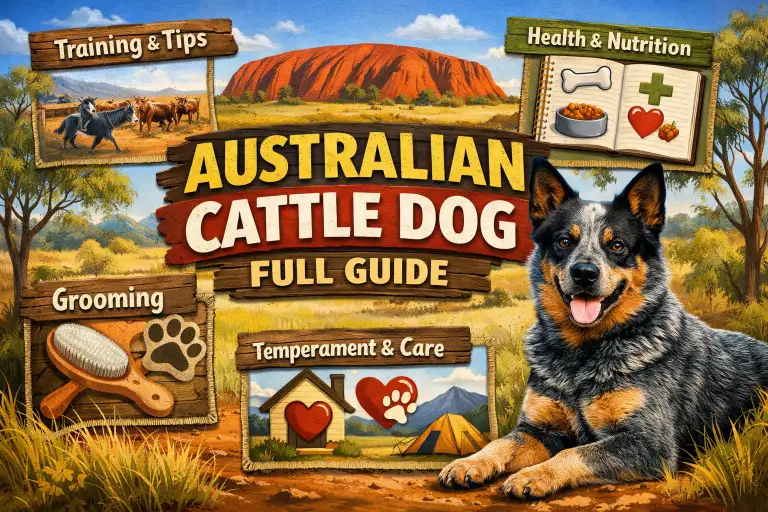
The Australian Cattle Dog, often called the Blue Heeler or Red Heeler, is not a casual companion breed. It was developed to think independently, work long hours, and make fast decisions around large, stubborn livestock. That background still defines the breed today and explains why Australian Cattle Dogs are intensely loyal, exceptionally intelligent, and far more demanding than their compact size suggests.
This is a dog that forms deep bonds with its people, often attaching most strongly to one primary handler. In real life, that loyalty shows up as constant awareness of where their owner is, quick responsiveness to routine, and a strong desire to be involved in everything happening around the home. Many owners describe them as “velcro dogs,” but unlike softer companion breeds, that attachment is paired with confidence, vigilance, and a strong sense of control over their environment.
Intelligence is one of the Australian Cattle Dog’s defining traits, but it is not passive intelligence. These dogs do not simply wait for instructions. They analyze situations, anticipate patterns, and will often test boundaries if rules are inconsistent. This is why they excel in advanced obedience, agility, herding, and problem-solving tasks, yet can quickly become frustrating for owners who expect automatic compliance. A bored Australian Cattle Dog will almost always invent its own job, and that job is rarely one the owner appreciates.
Emotionally, the breed is steady and resilient rather than soft or needy. Australian Cattle Dogs are not typically anxious, clingy, or overly sensitive, but they are alert and naturally suspicious of unfamiliar people and situations. This does not mean the breed is aggressive by default. Instead, it reflects a built-in watchfulness and a tendency to assess before engaging. Well-bred, well-socialized individuals are controlled and confident, while poorly managed dogs can become overly reactive or pushy.
A common misconception is that Blue Heelers and Red Heelers differ in temperament. In reality, coat color has no meaningful impact on behavior. Differences seen between individual dogs almost always come down to genetics, early socialization, and how much mental and physical work the dog is given. Both color variations share the same high drive, endurance, and need for purpose.
Overall, the Australian Cattle Dog is best understood as a working mind in a compact, athletic body. For the right owner, this translates into an incredibly capable, devoted partner. For the wrong home, it can become an overwhelming and difficult dog. Understanding the breed’s core temperament and intelligence is the foundation for deciding whether life with a Cattle Dog will be rewarding or exhausting.
History, Origin & Physical Characteristics
The Australian Cattle Dog was created for one clear purpose: to move stubborn cattle across long distances in harsh Australian conditions. Early farmers needed a dog that could work all day, think on its own, and survive heat, dust, and rough terrain. To achieve this, breeders crossed British herding dogs with the Australian Dingo, which added toughness, endurance, and sharp instincts. The result was a compact but powerful working dog that could control livestock without constant direction from humans.
This working history still explains much of the breed’s behavior today. Australian Cattle Dogs are not followers by nature. They were bred to solve problems on their own, make quick choices, and push back when animals were larger and stronger than them. Modern kennel clubs such as the AKC and FCI recognize the breed, but even today there is a clear difference between working-line dogs and those bred mainly for companionship. Working lines tend to be more intense, driven, and physically rugged.
Physically, the Australian Cattle Dog is built for endurance, not speed alone. The body is compact, muscular, and balanced, allowing the dog to turn quickly and keep going for hours without tiring.
Size, Weight & Build
| Feature | Typical Range |
|---|---|
| Height | 17–20 inches |
| Weight | 35–50 pounds |
| Body type | Compact, muscular, athletic |
| Build purpose | Endurance and agility |
The coat is short and dense, designed to protect the dog from heat, cold, and rough environments. Australian Cattle Dogs have a double coat that sheds year-round, with heavier shedding during seasonal changes. Despite the short coat, shedding is not low, which surprises many new owners.
Coat, Colors & Shedding
| Trait | Details |
|---|---|
| Coat type | Short, dense double coat |
| Common colors | Blue mottled, red speckled |
| Shedding level | Moderate to heavy |
| Weather tolerance | High heat and cold tolerance |
| Grooming difficulty | Low to moderate |
Blue Heelers and Red Heelers differ only in coat color. Their physical structure, strength, and working ability are the same. Ears are upright, eyes are alert, and the overall look of the dog reflects constant awareness and readiness to move. Nothing about the breed’s appearance is decorative. Every feature serves a working purpose.
These physical traits help explain why Australian Cattle Dogs are so capable but also why they struggle in inactive homes. Their bodies are designed to move, work, and respond quickly, not to stay idle for long periods.
Temperament in Real Life (Family, Kids, Strangers & Other Pets)
Australian Cattle Dogs are very loyal and very alert. They watch their people closely and like to know what is happening around them. This is not a laid-back breed. Most Cattle Dogs want to be involved, busy, and mentally active. When their needs are met, they are steady and reliable. When they are bored or confused, behavior problems often appear.
With their family, these dogs are deeply devoted. Many Australian Cattle Dogs bond strongest with one person, but they still protect and care about the whole household. They like routine and clear rules. Owners often notice that the dog follows them from room to room and reacts quickly to tone of voice or small changes in mood.
Australian Cattle Dog Temperament by Scenario
| Situation | Typical Behavior |
|---|---|
| With family | Loyal, alert, very attached |
| With children | Protective but may nip or herd |
| With strangers | Reserved, cautious, watchful |
| With other dogs | Can be dominant or selective |
| With cats | Depends on training and exposure |
| In busy homes | Can become overstimulated |
With children, Australian Cattle Dogs need careful handling. They are not naturally gentle like some family breeds. Their herding instinct may cause them to chase, block movement, or nip at heels, especially with running or noisy kids. This does not mean the breed is dangerous, but it does mean adult supervision and early training are required. They usually do better with older children who understand dog boundaries.
Around strangers, most Cattle Dogs are reserved. They do not rush to greet new people. Instead, they observe first and decide if the situation is safe. Poor socialization can turn this natural caution into fear or over-protective behavior, which is why early exposure is important.
With other pets, behavior varies. Some Australian Cattle Dogs live peacefully with other dogs and cats, while others struggle, especially with same-sex dogs or small animals. Their prey drive and desire to control movement are strong, so early training and clear rules matter a lot.
Many people think Australian Cattle Dogs are aggressive. In most cases, this is not true. What people often see is control-driven behavior, not true aggression. These dogs like order and may react when they feel things are out of control.
Common Myths vs Reality
| Myth | Reality |
|---|---|
| Australian Cattle Dogs are aggressive | They are alert and controlling, not naturally aggressive |
| They are bad with kids | They need training and supervision, not avoidance |
| They cannot live in homes | They can, with enough work and structure |
| They are stubborn | They are independent thinkers |
When raised with guidance, exercise, and purpose, Australian Cattle Dogs are confident and dependable. When those needs are ignored, behavior problems often follow. Understanding this difference is key to living successfully with the breed.
Exercise, Training & Daily Management Needs
Australian Cattle Dogs need much more than short walks. This breed was built to work for hours, not minutes. Without enough movement and mental challenges, they often become restless, noisy, or destructive. Many behavior problems in this breed come from boredom, not from bad temperament.
Daily exercise must include both physical activity and brain work. Running, hiking, structured play, and problem-solving games are all important. Simply letting the dog run in a yard is usually not enough. These dogs need tasks that make them think.
Daily Exercise Requirements
| Type of Activity | Minimum Need | Ideal Amount |
|---|---|---|
| Physical exercise | 60 minutes | 90–120 minutes |
| Mental stimulation | 20 minutes | 30–45 minutes |
| Structured training | Short daily sessions | Multiple focused sessions |
Training an Australian Cattle Dog can be very rewarding, but it is not always easy. They learn commands fast, but they do not obey blindly. If training feels pointless or unfair, they may ignore it. Clear rules, consistency, and calm leadership work best. Harsh methods often lead to fear or resistance, while weak training leads to a dog that tries to take control.
Common challenges include pulling on the leash, ignoring recall, chasing moving objects, and nipping when excited. These behaviors are not signs of a “bad dog.” They are signs of a working breed without enough guidance.
Common Training Challenges & Solutions
| Challenge | What Helps |
|---|---|
| Poor recall | High-value rewards and practice |
| Leash pulling | Structured walks and consistency |
| Nipping | Early redirection and calm control |
| Over-excitement | Mental work before physical play |
| Stubborn behavior | Clear rules and routine |
Daily management also matters. Australian Cattle Dogs do best with schedules. Feeding, exercise, training, and rest should happen at similar times each day. Crate training, place commands, and calm indoor rules help the dog learn when to work and when to relax.
When their energy is used correctly, Australian Cattle Dogs are focused and well-behaved. When it is not, they often create their own activities, which usually cause problems for the owner.
Health, Lifespan, Cost & Who This Breed Is (Not) For
Australian Cattle Dogs are known for being tough and long-living, but they are not free from health problems. On average, this breed lives between 12 and 16 years. Some live even longer when they are well cared for, properly exercised, and bred responsibly.
Even though they are strong, certain health issues appear more often in this breed. Responsible breeders test for these problems early, which helps reduce risk.
Common Health Issues & Recommended Screening
| Health Issue | What It Affects | Recommended Test |
|---|---|---|
| Deafness | Hearing ability | BAER hearing test |
| Hip dysplasia | Hip joints | OFA or PennHIP |
| Progressive retinal atrophy | Vision | Eye exam |
| Elbow issues | Front leg joints | Orthopedic screening |
Regular vet checkups, proper exercise, and weight control play a big role in keeping Australian Cattle Dogs healthy as they age.
Owning this breed is not extremely expensive, but it is not cheap either. The biggest costs often come from activity-related injuries, preventive care, and training needs.
Cost to Own an Australian Cattle Dog
| Expense Type | Typical Cost Range |
|---|---|
| Puppy price | Moderate to high |
| Annual vet care | Moderate |
| Food | Moderate |
| Grooming | Low |
| Training | Moderate to high |
| Insurance | Often recommended |
Grooming costs are low because of the short coat, but training and activity costs can add up. Many owners choose pet insurance because this breed is active and injury-prone.
Australian Cattle Dogs are not the right choice for everyone. They need time, structure, and daily effort.
Owner Suitability Snapshot
| Good Match For | Poor Match For |
|---|---|
| Active owners | Low-energy lifestyles |
| Experienced dog owners | First-time dog owners |
| People who enjoy training | People wanting easy dogs |
| Structured homes | Unpredictable schedules |
| Homes with older kids | Homes with toddlers |
This breed thrives with owners who enjoy working with their dog and setting clear rules. They struggle in homes where exercise is limited or leadership is unclear.
Australian Cattle Dogs can be amazing companions for the right person. For the wrong home, they can be frustrating and overwhelming. Being honest about your lifestyle before choosing this breed is the best way to avoid problems later.
For official breed standards and background information, you can also review the Australian Cattle Dog profile from the American Kennel Club: https://www.akc.org/dog-breeds/australian-cattle-dog/

Ata Ur Rehman is the founder of Pet Age in Human Years Calculator, an educational platform that provides age conversion charts and lifespan guides for dogs, cats, birds, and other companion animals. His work focuses on helping pet owners understand how animal ages translate into human years using commonly accepted age conversion formulas and published lifespan averages.
The website compiles breed and species lifespan data from kennel clubs, breed organizations, and general animal lifespan studies to present simple and easy-to-understand guides for pet owners worldwide.
This website was created to centralize animal age conversion charts into one easy reference platform for pet owners.