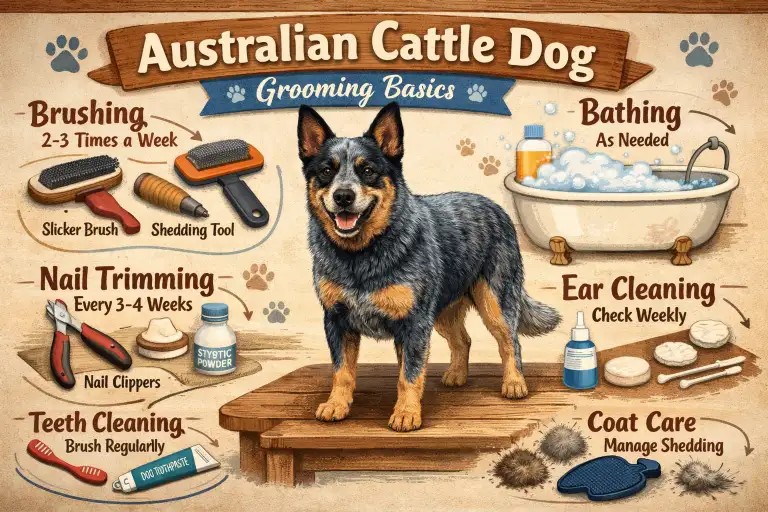
Australian Cattle Dogs (also called Blue Heelers and Red Heelers) are often described as low-maintenance, but that label is misleading. While they don’t need haircuts or frequent baths, their short double coat still requires consistent grooming to control shedding, support skin health, and keep them comfortable—especially in changing seasons.
This guide focuses on practical, realistic grooming for Australian Cattle Dogs: what actually matters, how often to do it, and what owners can safely skip. If you’ve ever wondered why your heeler sheds so much despite having short hair, or whether you’re grooming too little (or too much), you’re not alone—these are some of the most common misconceptions I see from owners.
Proper grooming for this breed isn’t about appearance. It’s about:
- Managing heavy seasonal shedding
- Protecting the skin barrier under the coat
- Preventing odor, dandruff, and irritation
- Catching skin or health issues early
- Making grooming stress-free at home
Australian Cattle Dogs are active, outdoorsy, and often exposed to dirt, allergens, and weather extremes. A simple, consistent grooming routine goes a long way in keeping them healthy without turning grooming into a full-time job.
Australian Cattle Dog Grooming at a Glance
| Grooming Aspect | What to Expect |
|---|---|
| Coat type | Short double coat (dense undercoat + harsh topcoat) |
| Shedding level | Moderate year-round, heavy during seasonal sheds |
| Grooming difficulty | Easy with the right tools and routine |
| Brushing frequency | Weekly; 2–4× per week during shedding season |
| Bathing frequency | Every 6–10 weeks or when truly dirty |
| Haircuts needed | No |
| Shaving recommended | No (can damage the coat and skin) |
This overview sets the baseline. In the next sections, we’ll break down how the Australian Cattle Dog coat works, why shedding happens, and exactly how to groom them properly at home without overdoing it.
Australian Cattle Dog Coat Type and Shedding Explained
Australian Cattle Dogs have a short double coat, and this coat is the main reason grooming is needed, even though their hair looks short. A double coat has two layers that work together to protect the dog.
The top layer, called the guard coat, is rough and weather-resistant. It helps block dirt, sun, and moisture. Under that is a soft, thick undercoat. The undercoat keeps the dog warm in cold weather and helps control body temperature in heat. Because of this design, Australian Cattle Dogs do not need haircuts, but they do shed.
Shedding is normal for this breed. Most of the year, shedding is moderate. Twice a year, usually in spring and fall, shedding becomes heavy. During these times, the dog releases large amounts of undercoat. This is often called “blowing coat,” and it can feel like hair is everywhere in the house.
Many owners think short hair means low shedding. That is not true for Australian Cattle Dogs. Their undercoat sheds in large amounts, even though the hair itself is short. This is why brushing is so important.
Shaving an Australian Cattle Dog is a common mistake. Shaving removes the protective topcoat and can damage how the coat grows back. It also makes it harder for the dog to stay cool in summer and warm in winter. In many cases, the coat grows back uneven or patchy after shaving.
Seasonal changes affect shedding more than bathing does. When daylight hours change, the coat naturally adjusts. During heavy shedding periods, brushing more often helps remove loose hair and keeps the skin healthy.
Australian Cattle Dog Shedding by Season
| Season | Shedding Level | What’s Happening | What Owners Should Do |
|---|---|---|---|
| Winter | Low to moderate | Undercoat stays dense for warmth | Brush once a week |
| Spring | Heavy | Undercoat is released | Brush 3–4 times per week |
| Summer | Moderate | Lighter coat remains | Brush 1–2 times per week |
| Fall | Heavy | New undercoat grows in | Brush 3–4 times per week |
Understanding the coat and shedding cycle makes grooming much easier. When you work with the coat instead of against it, grooming takes less time and causes less stress for both you and your dog.
How to Groom an Australian Cattle Dog at Home
Grooming an Australian Cattle Dog at home is simple when you use the right tools and follow a basic routine. You do not need fancy equipment or long grooming sessions. Short, regular care works best for this breed.
Brushing is the most important part of grooming. It removes loose undercoat hair, spreads natural oils, and keeps the skin healthy. For most of the year, brushing once a week is enough. During heavy shedding seasons, brushing several times a week helps control hair around the house and keeps the coat comfortable.
Bathing should not be done too often. Too many baths can dry out the skin and cause itching. Australian Cattle Dogs usually only need a bath when they are dirty or start to smell. A clean coat should feel firm and smooth, not soft or greasy.
Drying matters just as much as bathing. Leaving the coat damp can cause skin problems or a musty smell. Towel-drying is often enough, but during cold weather or heavy shedding, a low-heat dryer helps remove loose hair faster.
Best Grooming Tools for Australian Cattle Dogs
| Tool | What It Does | When to Use It | Notes |
|---|---|---|---|
| Rubber brush | Loosens surface hair | Weekly brushing | Gentle and easy to use |
| Slicker brush | Removes loose undercoat | Shedding season | Use light pressure |
| Undercoat rake | Pulls out thick undercoat | Heavy shedding only | Do not overuse |
| Dog shampoo | Cleans skin and coat | Every 6–10 weeks | Use dog-only shampoo |
| Towel or low-heat dryer | Dries coat fully | After baths | Avoid hot air |
Australian Cattle Dog Bathing Guide
| Bathing Step | What to Do | Common Mistakes |
|---|---|---|
| Before the bath | Brush out loose hair | Bathing a dirty coat |
| Water temperature | Use warm, not hot water | Water that is too hot |
| Shampoo | Mild, dog-safe formula | Using human shampoo |
| Rinsing | Rinse very well | Leaving soap behind |
| Drying | Towel or low heat | Letting coat stay damp |
Home grooming should be calm and positive. Short sessions work better than long ones, especially for energetic dogs. Praise and treats help your dog stay relaxed and make grooming easier over time.
Nail, Ear, Teeth, and Skin Care for Australian Cattle Dogs
Brushing and bathing are not the only parts of grooming. Nails, ears, teeth, and skin also need regular care. These steps are often skipped, but they help prevent pain, infections, and vet visits later.
Nail care is very important for Australian Cattle Dogs. Even active dogs may not wear their nails down enough on their own. Long nails can cause pain, change how a dog walks, and even lead to joint problems. Nails should be trimmed when you hear clicking on the floor. Short, regular trims are safer than waiting too long.
Ear care is usually simple for this breed because they have upright ears. Still, dirt, pollen, and wax can build up. Ears should look clean and smell normal. Redness, bad smell, or constant head shaking can be signs of infection and should not be ignored.
Dental care is one of the most overlooked parts of grooming. Tartar builds up quickly and can lead to bad breath, gum disease, and tooth loss. Brushing teeth a few times a week makes a big difference, even if it feels hard at first.
Skin care ties all grooming together. Healthy skin should not be flaky, red, or very oily. Too much bathing, wrong shampoo, or poor brushing habits can damage the skin. Early signs of skin trouble include itching, licking, hair thinning, and small bumps.
Australian Cattle Dog Extra Care Schedule
| Care Area | How Often | What to Look For | When to Get Help |
|---|---|---|---|
| Nails | Every 3–4 weeks | Clicking sounds, long nails | If nails bleed or dog resists |
| Ears | Every 2–4 weeks | Redness, bad smell | Head shaking, pain |
| Teeth | 2–3 times per week | Bad breath, yellow buildup | Bleeding gums, loose teeth |
| Skin | Weekly check | Itching, flakes, redness | Hot spots, sores, hair loss |
Keeping up with these small tasks helps your dog stay comfortable and healthy. Most problems are easier to fix when they are caught early.
Grooming Mistakes, FAQs, and When to See a Professional
Many grooming problems happen because owners get bad advice or try to do too much. Australian Cattle Dogs are tough dogs, but their coat and skin can still be damaged by the wrong grooming habits.
One of the biggest mistakes is shaving the coat. Shaving does not reduce shedding and can harm how the coat grows back. It also removes protection from heat, cold, and sun. Another common mistake is bathing too often. This dries out the skin and can cause itching and dandruff.
Using the wrong tools is also a problem. Very sharp or aggressive brushes can scratch the skin. Human shampoos can irritate the skin because they are not made for dogs. Grooming should feel gentle, not painful.
Some owners avoid professional groomers because they think this breed does not need one. While many Australian Cattle Dogs can be groomed at home, a professional groomer can help during heavy shedding seasons, nail problems, or when skin issues appear.
Common Australian Cattle Dog Grooming Mistakes
| Mistake | Why It’s a Problem | What to Do Instead |
|---|---|---|
| Shaving the coat | Damages coat and skin | Brush and deshed instead |
| Bathing too often | Dries out skin | Bathe only when needed |
| Using human shampoo | Causes irritation | Use dog-safe shampoo |
| Skipping nail trims | Leads to pain and injury | Trim nails regularly |
| Ignoring skin signs | Problems get worse | Act early and seek help |
Common Owner Questions
| Question | Short Answer |
|---|---|
| Do Australian Cattle Dogs need haircuts? | No, they do not need haircuts |
| Do they shed a lot? | Yes, especially in spring and fall |
| Can I groom my dog at home? | Yes, with the right tools |
| How often should I groom? | Weekly, more during shedding |
| When should I see a groomer? | Heavy shedding or nail issues |
You should see a professional groomer or veterinarian if you notice ongoing skin redness, sores, strong odors, hair loss, or if grooming causes pain or fear. These signs can point to health problems that need expert care.
For more information on dog skin, coat health, and safe grooming practices, the American Veterinary Medical Association provides helpful guidance for pet owners: https://www.avma.org/resources-tools/pet-owners/petcare/skin-and-coat-care-dogs

Ata Ur Rehman is the founder of Pet Age in Human Years Calculator, an educational platform that provides age conversion charts and lifespan guides for dogs, cats, birds, and other companion animals. His work focuses on helping pet owners understand how animal ages translate into human years using commonly accepted age conversion formulas and published lifespan averages.
The website compiles breed and species lifespan data from kennel clubs, breed organizations, and general animal lifespan studies to present simple and easy-to-understand guides for pet owners worldwide.
This website was created to centralize animal age conversion charts into one easy reference platform for pet owners.